
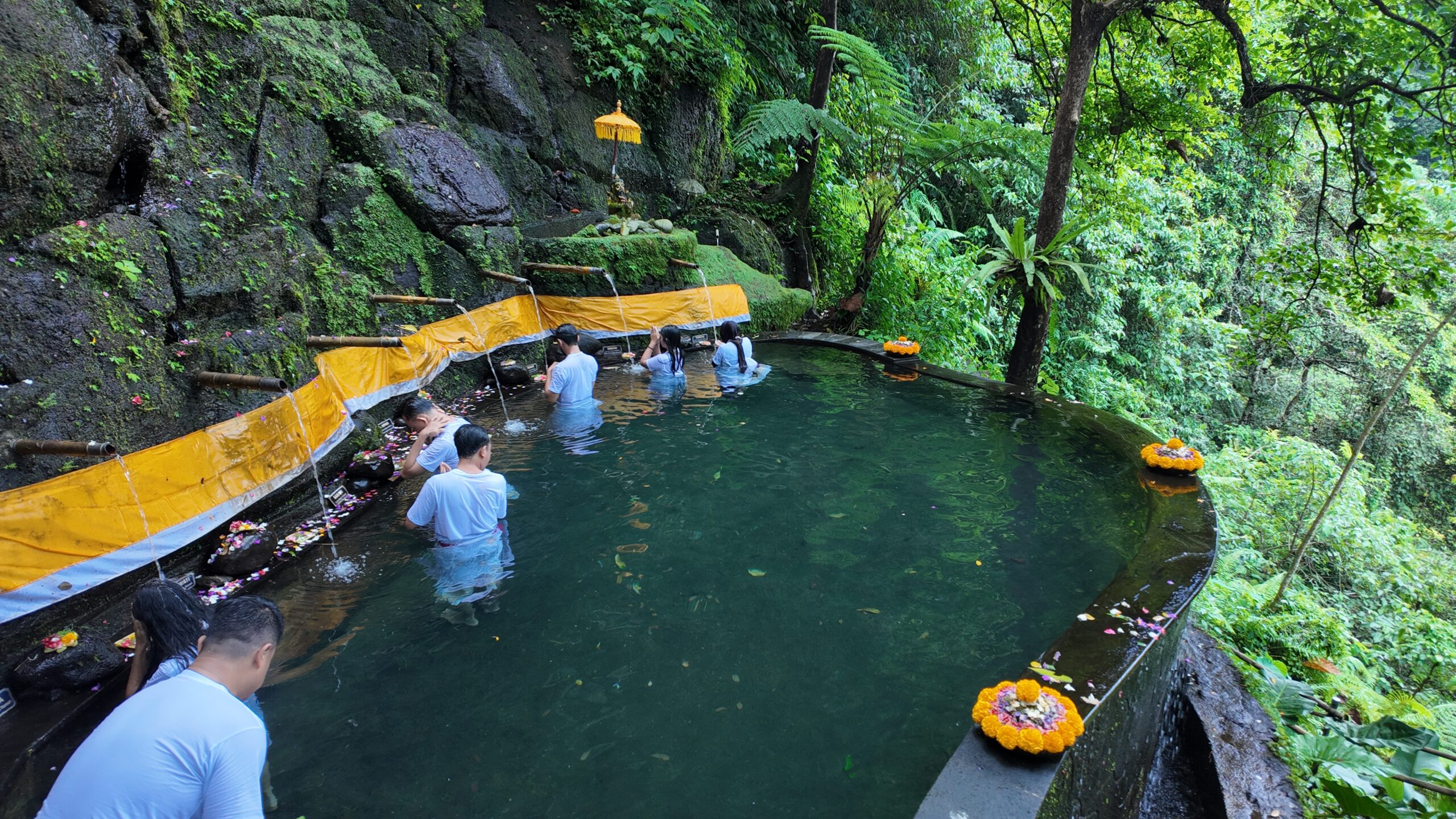
About Melukat: The Balinese Hindu Purification Ritual
Melukat is one of the most important purification rituals in Balinese Hinduism. It is a spiritual cleansing ceremony using holy water (tirta), intended to purify the body, mind, and soul from negative influences or impurities. It is performed both as a regular spiritual practice and during significant life events.
The origin of the word “Melukat”, derived from the Sanskrit word “lukat”, meaning “to cleanse” or “to release”. The prefix “me-” in Balinese grammar turns the root into a verb form, therefore the word “Melukat” literally means “to perform the act of purification” or “to cleanse oneself.” The purpose is to purify body and soul, remove bad luck or negative energy, heal emotional or spiritual imbalance, and restore harmony. It is based on the Balinese Hindu concept of Tri Hita Karana—the harmony between humans, nature, and the divine.
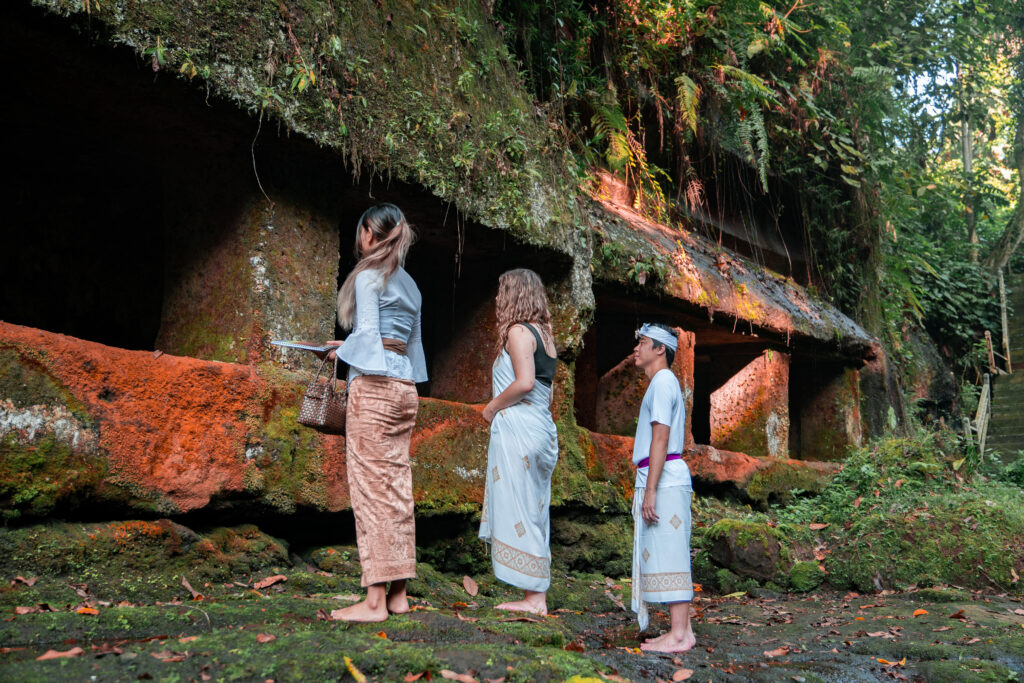
Common locations for “Melukat” are sacred springs and water temples, usually conducted by a Balinese Hindu priest (Pemangku) or a respected elder within the family or community. For attire, white clothing (Kamen/Sarong) is necessary, which signifies purity.
The General Flow of the Ritual is as follows.
1. Prayers
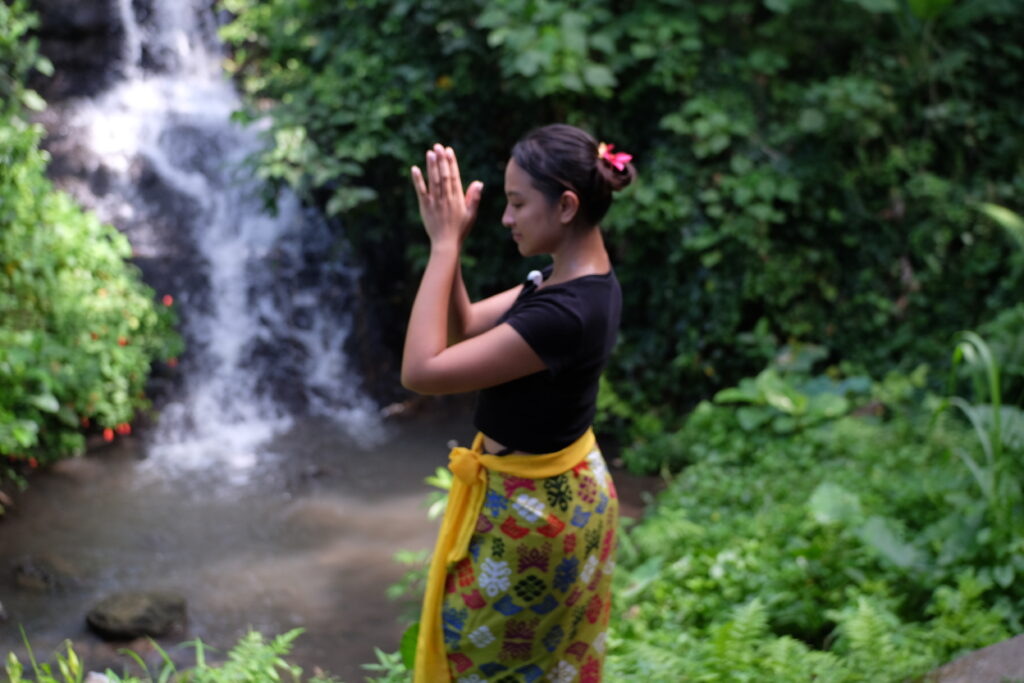
Participants begin by offering Canang Sari (small offerings of flowers and incense) and praying at the temple to prepare their minds and hearts.
2. Purification with Holy Water (Tirta)
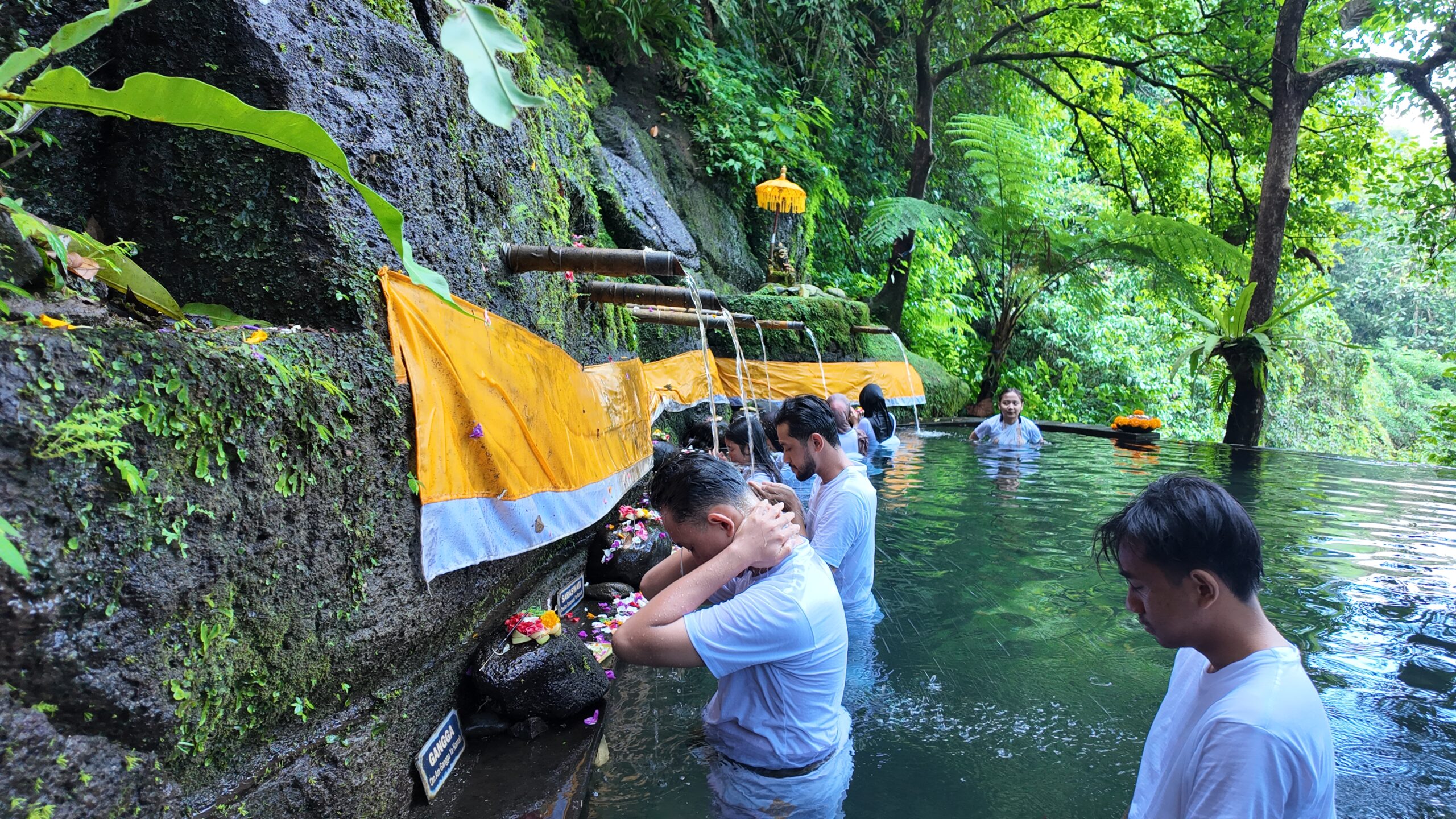
At the holy spring, participants move from one water spout to another, washing their face, head, mouth, and body. Each spout has a specific symbolic meaning—such as purifying the mind, removing misfortune, or spiritual rebirth.
3. Offering and Final Prayer
After bathing, they return to the shrine to present offerings and express gratitude for the cleansing.
4. Blessing by the Priest
The Pemangku sprinkles holy water (tirta) onto participants, followed by placing grains of rice (bija) on their forehead as a sign of blessing and completion.
My Experience of Melukat at Taman Beji Samuan
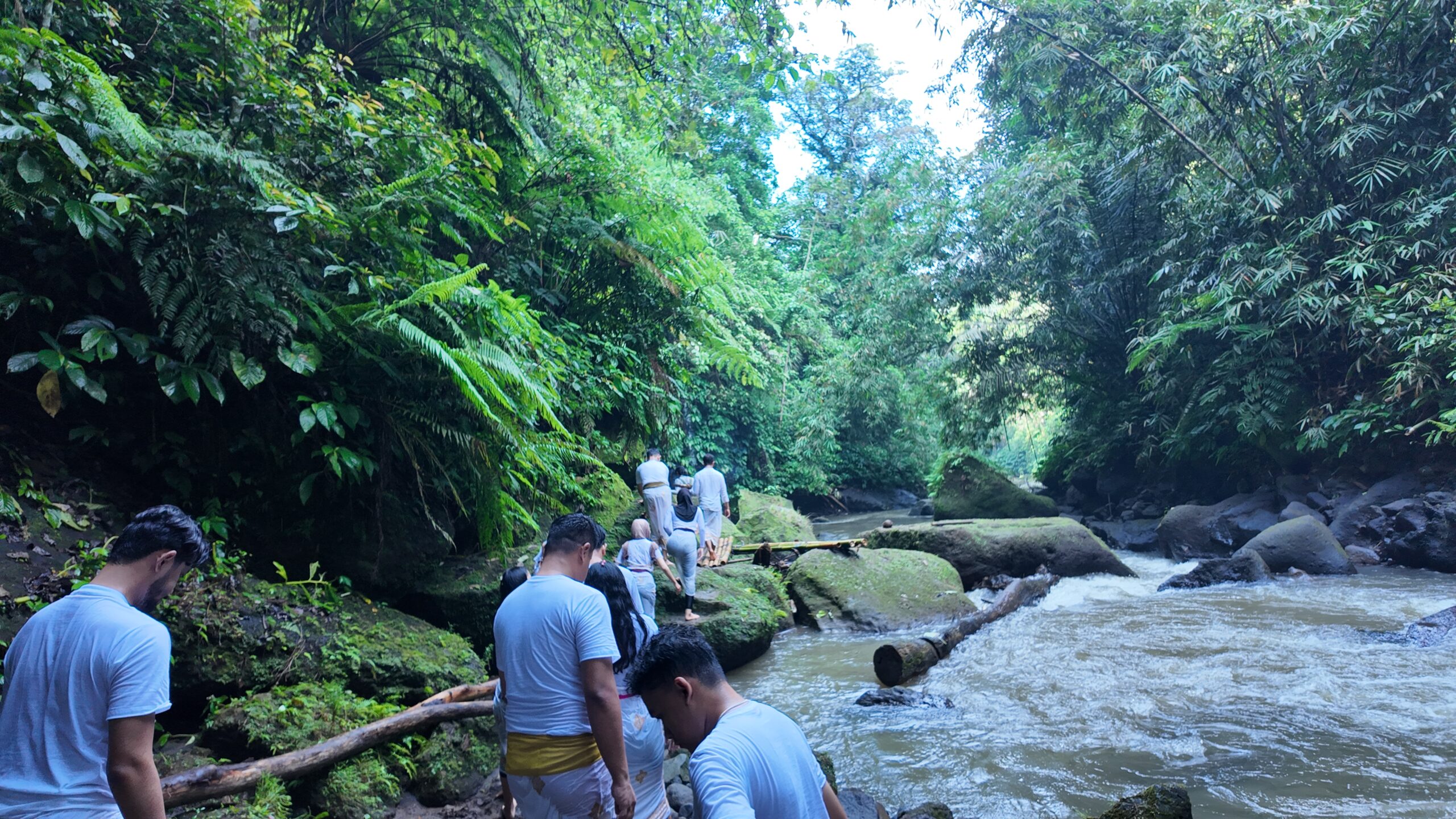
It was my first ever experience of conducting a Melukat. The location was “Taman Beji Samuan”, near the Sangeh district. The name of the location, means “the sacred (Beji) garden (Taman) of the holy spring where divine forces meet (Samuan).” It is in fact the place where three rivers meet, which is an ideal condition for the Melukat.
The ritual started with changing into traditional white attire and a prayer. While the priest was giving us a prayer, we started pouring the smoke on our head, and praying for each of the flowers inside the Canang Sari. From this point, I steadily felt the initiation of the ritual and start of concentration and relaxation inside myself. I suppose every colleague was feeling the same way as well. The purification with holy water was mainly divided into three parts. Firstly, we went down to the river to dip our bodies and wash our heads. We appreciated the fountain naturally flowing from the rocks. Despite the Bali heat, the water was cool enough to calm our body and soul from everyday life. Secondly, we walked to the waterfall and fountain flowing from the cave. As we have a similar ritual in Japan, it was my first time purifying under a waterfall. As the waterfall seemed relatively calm, the pressure of the water was surprisingly powerful, just as nature was disciplining me and relieving my inner stress. Lastly, we went to the pool near the temple. Here is where we prayed in front of the water spouts, washing our face, head, mouth, and body. As each spout had different meanings, I was touched by the depth and diverseness of belief in Bali.
The ritual ended with an offering and final prayer, blessing by the priest. This was a great way to express gratitude to nature and blend back to daily life. Through the experience, I noticed mainly three points.
Firstly, was the cultivation of my curiosity towards Balinese Hinduism. For example, through the ritual, as there were many similarities to Japanese religions, I became curious why the actions of praying in Balinese Hinduism are usually repeated three times. After research, I have learned the number “three” represents cosmic harmony and completeness — the balance that sustains life and the universe. Within the context of Melukat, dipping our face three times or the priest sprinkling us with water three times, symbolizes the cleansing of body, mind, and soul.
Secondly, was the experience of triggering all five senses, which is often forgotten in the daily corporate life. Walking on bare feet on the soil/turf/rocks, the scent of flowers/coconut/incense, the sound of the river/waterfall/bells etc. I felt myself blending into nature through triggering all my senses.
Lastly, conducting the ritual with my colleagues encouraged the feeling of Tri Hita Karana (the harmony between humans, nature, and the divine.) As this was a Balinese Hinduism ritual, colleagues from diverse religious backgrounds were brought together (Muslim, Catholic, Shinto etc.), understanding and connecting with each other through the universal concept of “appreciating water”, and achieve a feeling of unity. It was truly an interesting experience and grateful for the opportunity.