

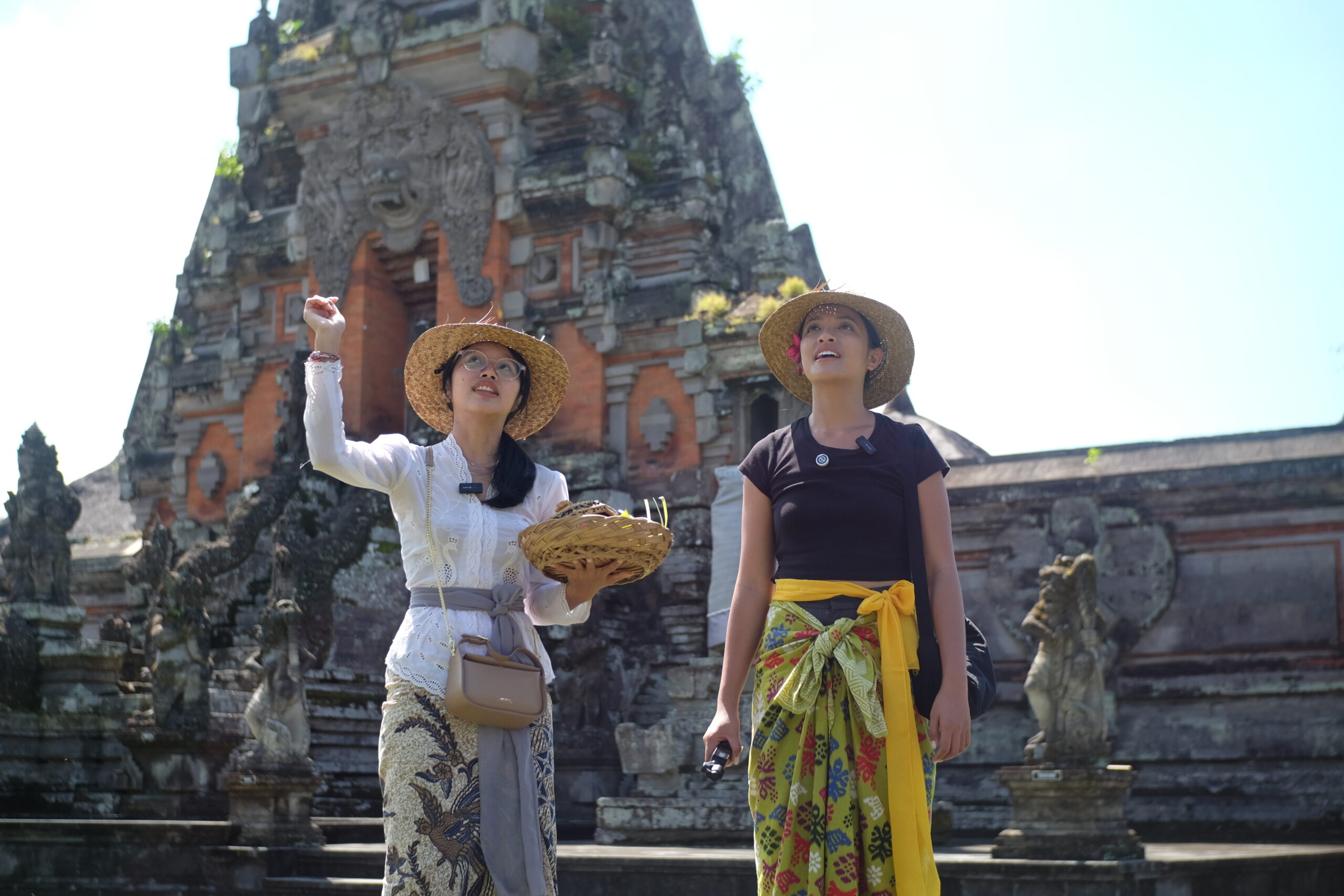

A traditional Balinese house (Rumah Adat Bali) is not a single building, but a compound of several small pavilions (bale) surrounded by walls and laid out according to sacred spatial principles. Each element reflects the Balinese Hindu philosophy of Tri Hita Karana — the balance between god, humans, and nature. This means that even a family’s home in Bali is designed as a spiritual microcosm of the universe, where harmony governs everything — from the placement of buildings to the direction of the gates.
A traditional Balinese house is designed as a compound, not a single building. It consists of several small pavilions and shrines arranged around a central open courtyard, all enclosed by a stone or brick wall. The main entrance gate, called angkul-angkul, leads into the courtyard, and just behind it stands a small screen wall called aling-aling, which protects the home from negative energies entering directly. The family shrine (sanggah or merajan) is located in the northeast corner, the most sacred direction, and is dedicated to the family’s ancestors and guardian deities. On the north side stands the bale daja or bale meten, a sleeping pavilion for the head of the family. To the east lies the bale dangin, used for ceremonies and religious rituals. On the west side, the bale dauh serves as a living or guest pavilion, where family members relax or receive visitors. The kitchen, called paon, is usually found in the south part of the compound, symbolizing the element of fire, while the bathroom area (pekiisan) is placed in a more secluded corner. A rice barn, known as jineng or lumbung, is often raised on stilts near the entrance or courtyard for storing rice — the symbol of life and prosperity. At the center of the house is the open courtyard (natah), which serves as the heart of daily life. This is where family members gather, children play, and offerings are made each day to maintain harmony between people, nature, and the divine. The layout of every traditional Balinese house follows the sacred spatial philosophy of Asta Kosala Kosali and the balance principle of Tri Hita Karana, ensuring that every structure is placed in harmony with the natural and spiritual order. Because of the compound layout, multiple generations can live together, maintaining strong kinship bonds and the communal spirit that defines Balinese society.
Feedback
- It was truly interesting learning about the communal Balinese way of life through the aspect of architecture. The relation between direction and architectural layout was truly fascinating.
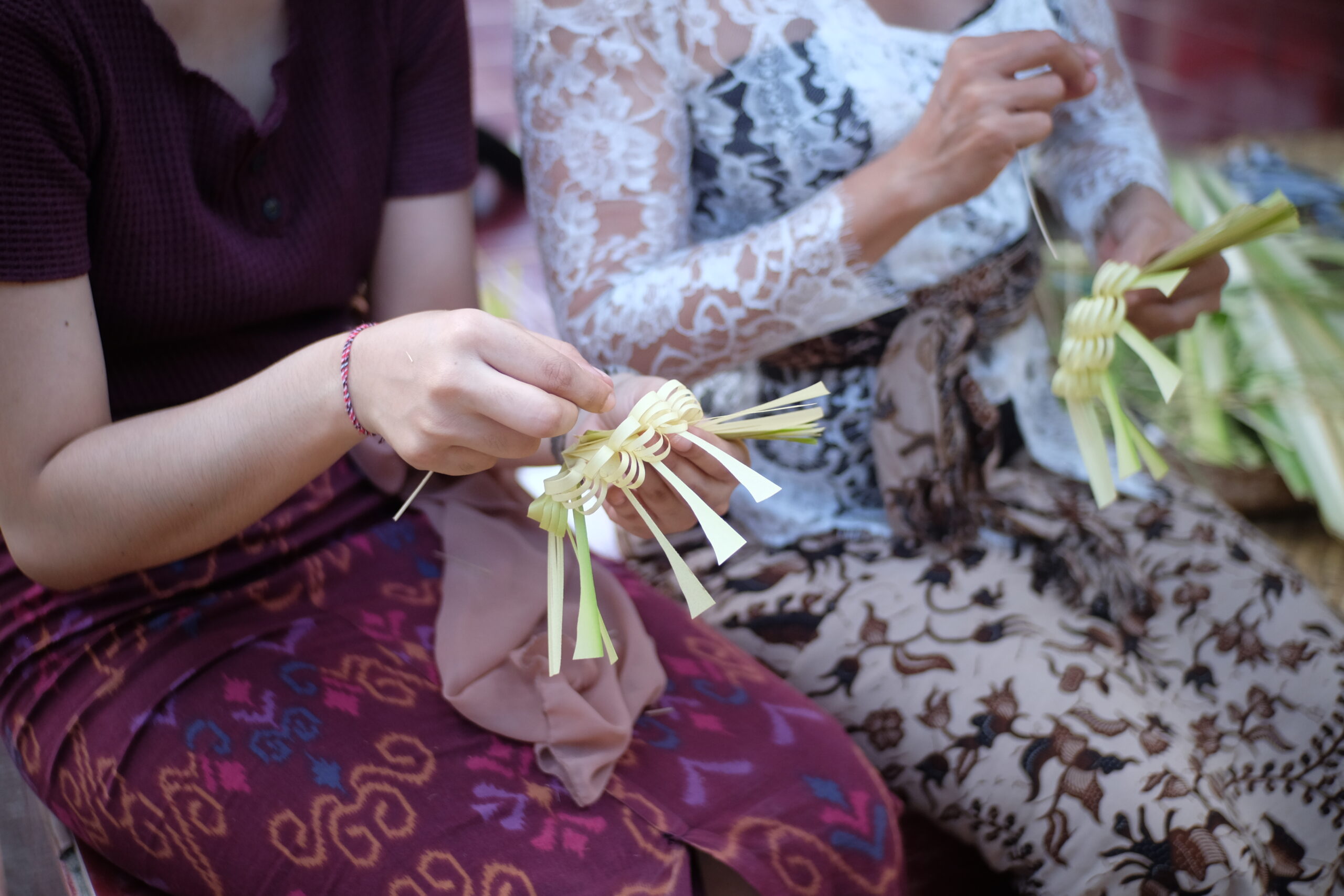
- I couldn’t have completed the Canang Sari workshop without a stapler. I gained true respect for the people making several of them daily.
- It was a meaningful experience to learn about how Balinese women are starting to work outside of their house, and the Canang Sari is being sold in the market to support these women.