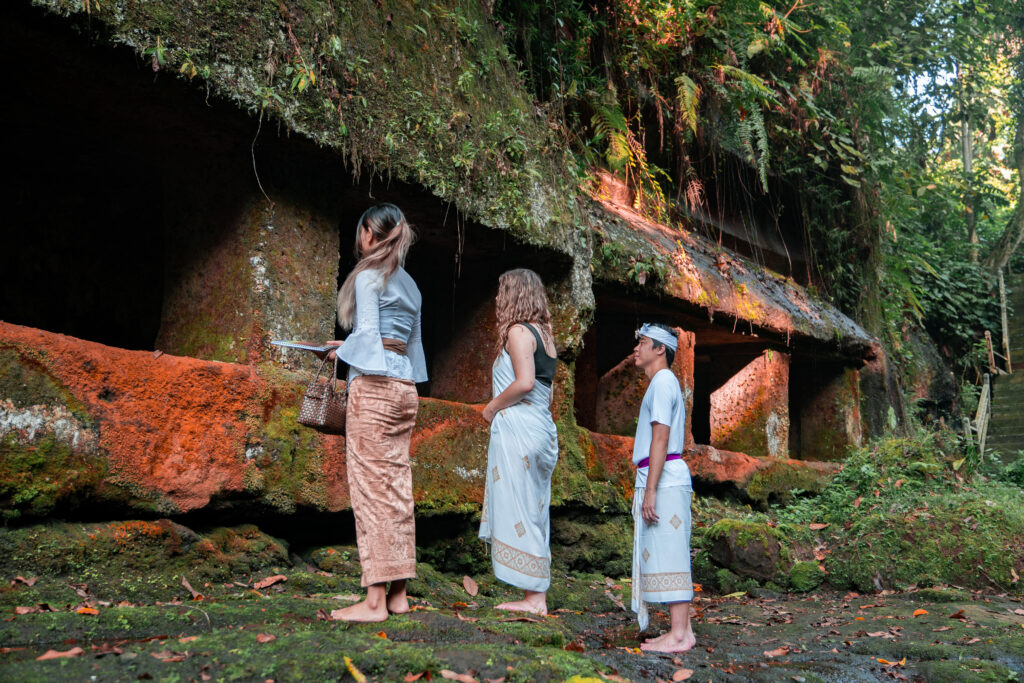

Before Indonesia’s independence, Bali was divided into several small kingdoms, each governed by a raja or anak agung. These kingdoms were not defined by political borders alone, but by a spiritual and cultural order deeply rooted in Hindu-Balinese philosophy. Each kingdom was structured around a Puri (royal palace) — the heart of governance, religion, and art. The royal family acted not only as political leaders but also as cultural patrons and protectors of dharma. Power was expressed through harmony, ritual, and patronage rather than domination. Each puri maintained close relationships with temples, local communities (banjar), and artists, ensuring that culture and spirituality thrived together.
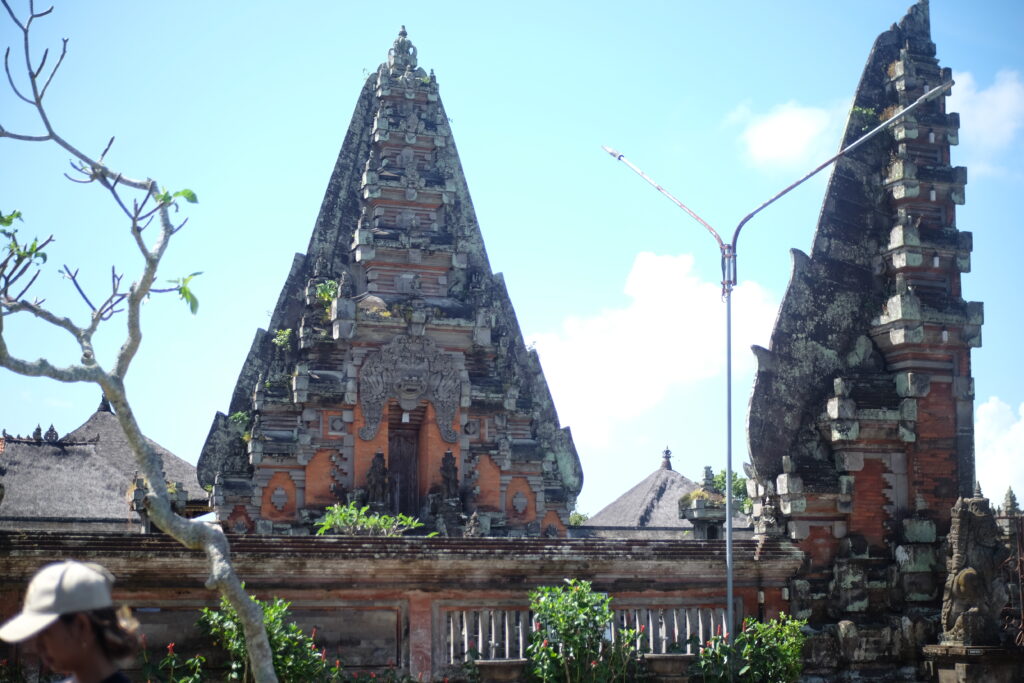
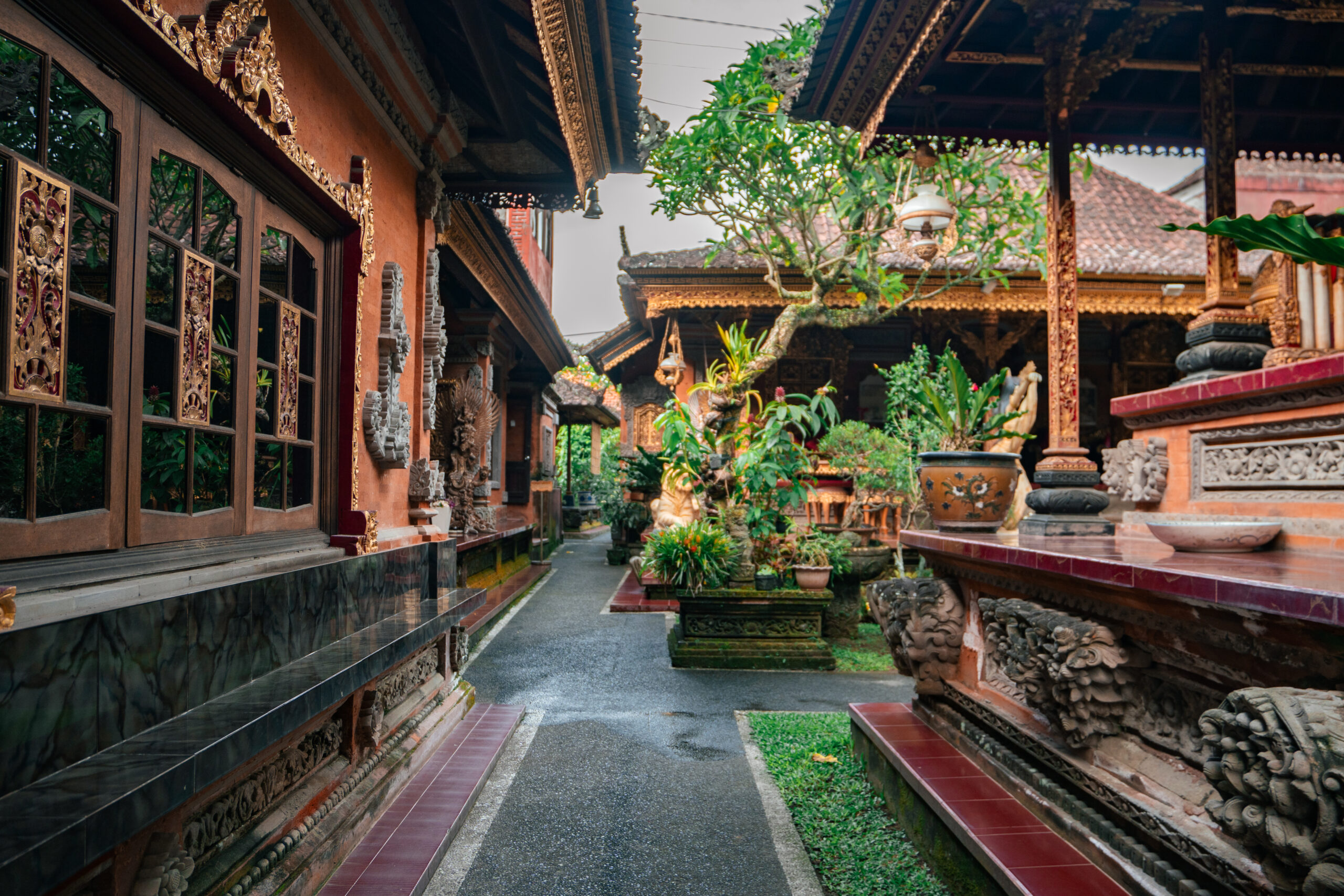
A Puri is more than a palace — it is a symbol of cosmic order (mandala). Its design follows the same sacred spatial principles as traditional Balinese houses, but on a grander scale. The palace is organized into courtyards, each serving a distinct function: outer courtyard (jaba sisi), middle courtyard (jaba tengah), and inner courtyard (jeroan). The palace is not closed off from society. Instead, it acts as a cultural center, hosting dance, gamelan, and religious ceremonies — embodying the Balinese principle of Tri Hita Karana.
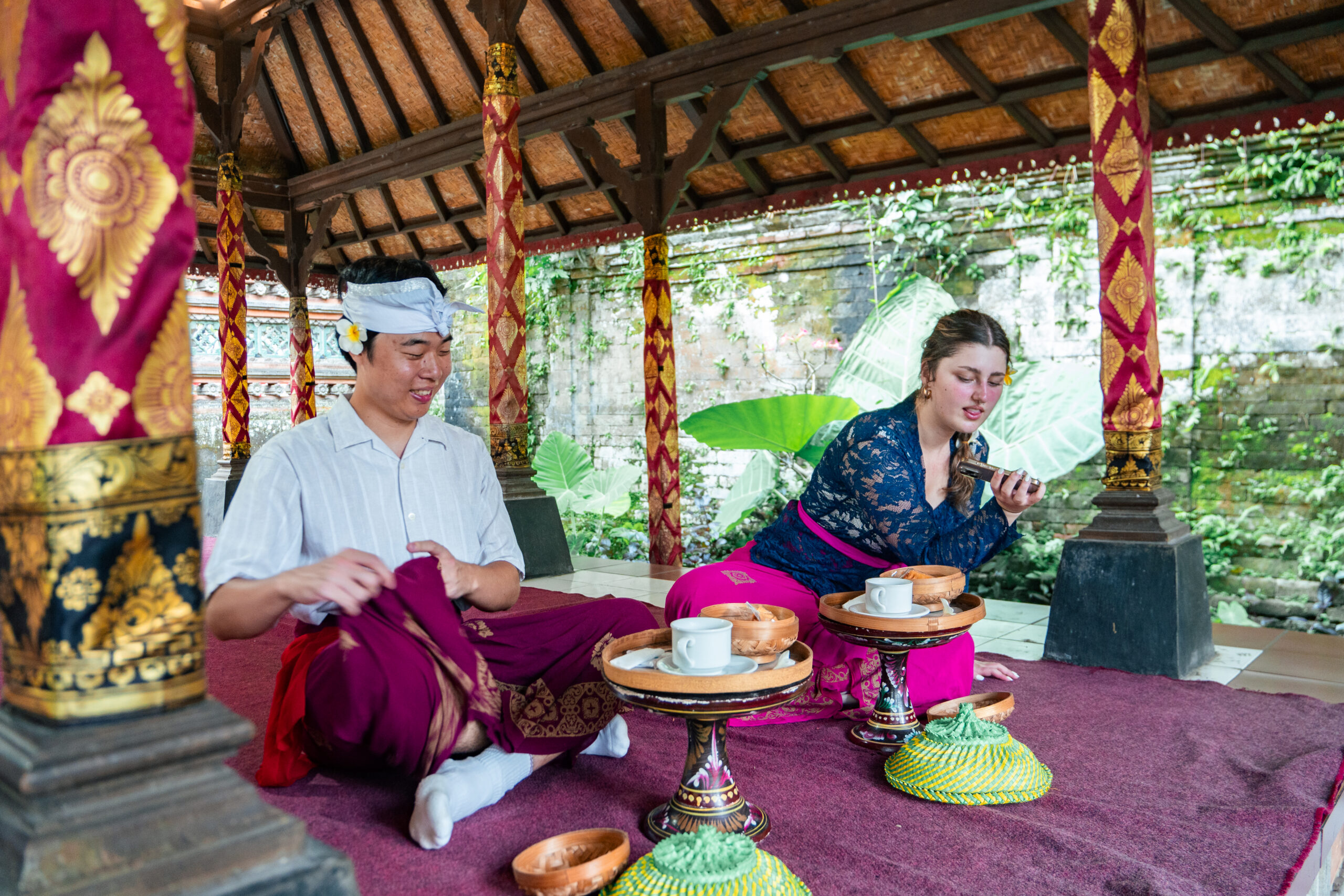
Located in the village of Peliatan, near Ubud, Puri Agung Peliatan is one of the most famous royal houses in Bali. Puri Peliatan traces its origins to the 17th century and played a major role in the cultural alliance of Ubud’s royal families. Visitors can still admire the ornate pavilions, carved gates, and ceremonial courtyards. The palace remains a living home of the royal descendants (Anak Agung family). Although the kingdoms no longer hold political power, Bali’s royal families continue to play important cultural and spiritual roles. They preside over major ceremonies, manage temple festivals, and act as guardians of traditional arts and customs.
Feedback
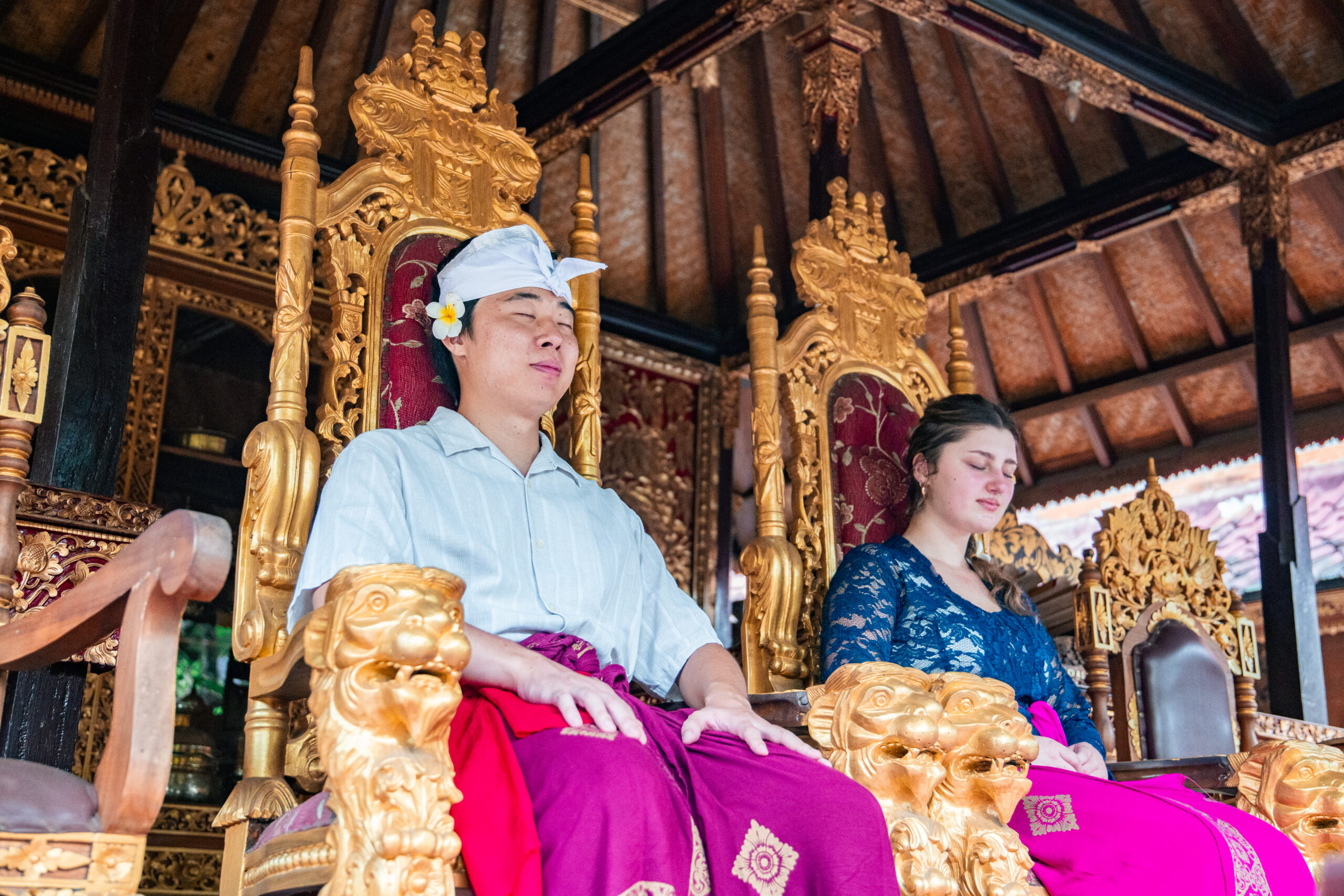
- Having the experience sitting and meditating on the throne was so precious. It was truly a sense activating experience: listening to the water flowing and birds chirping.
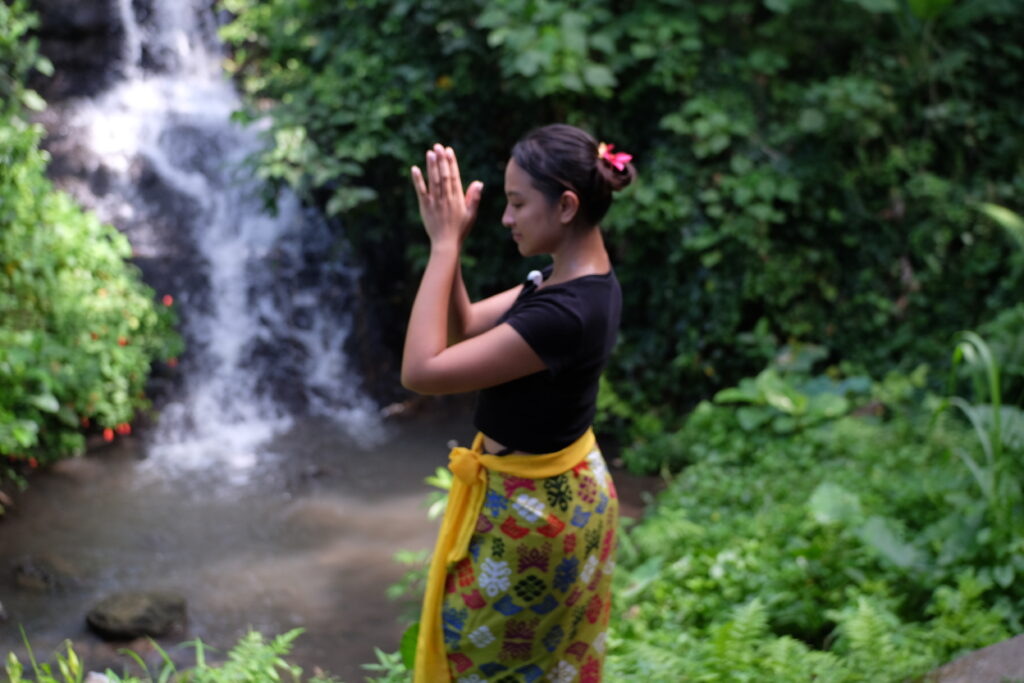
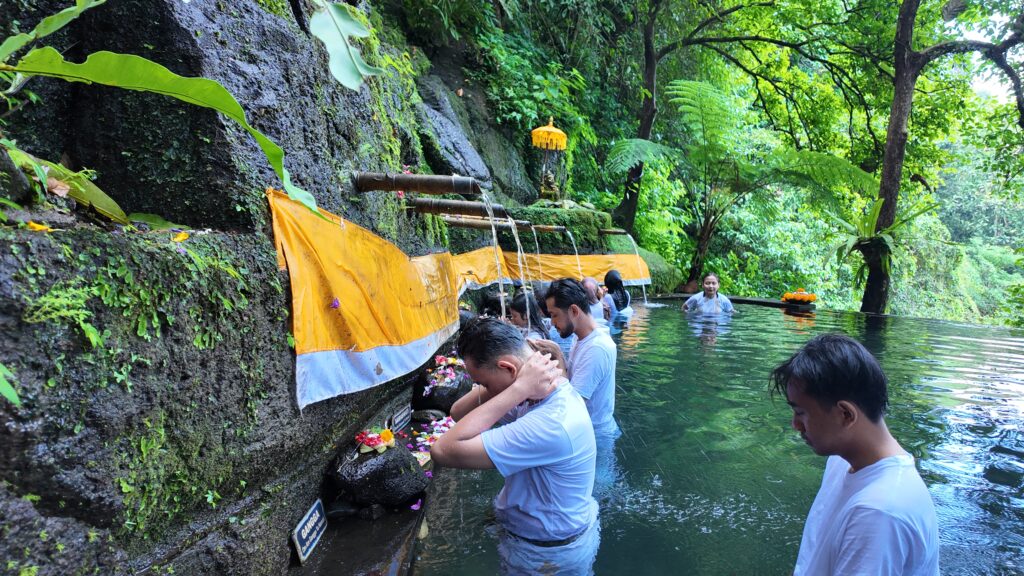
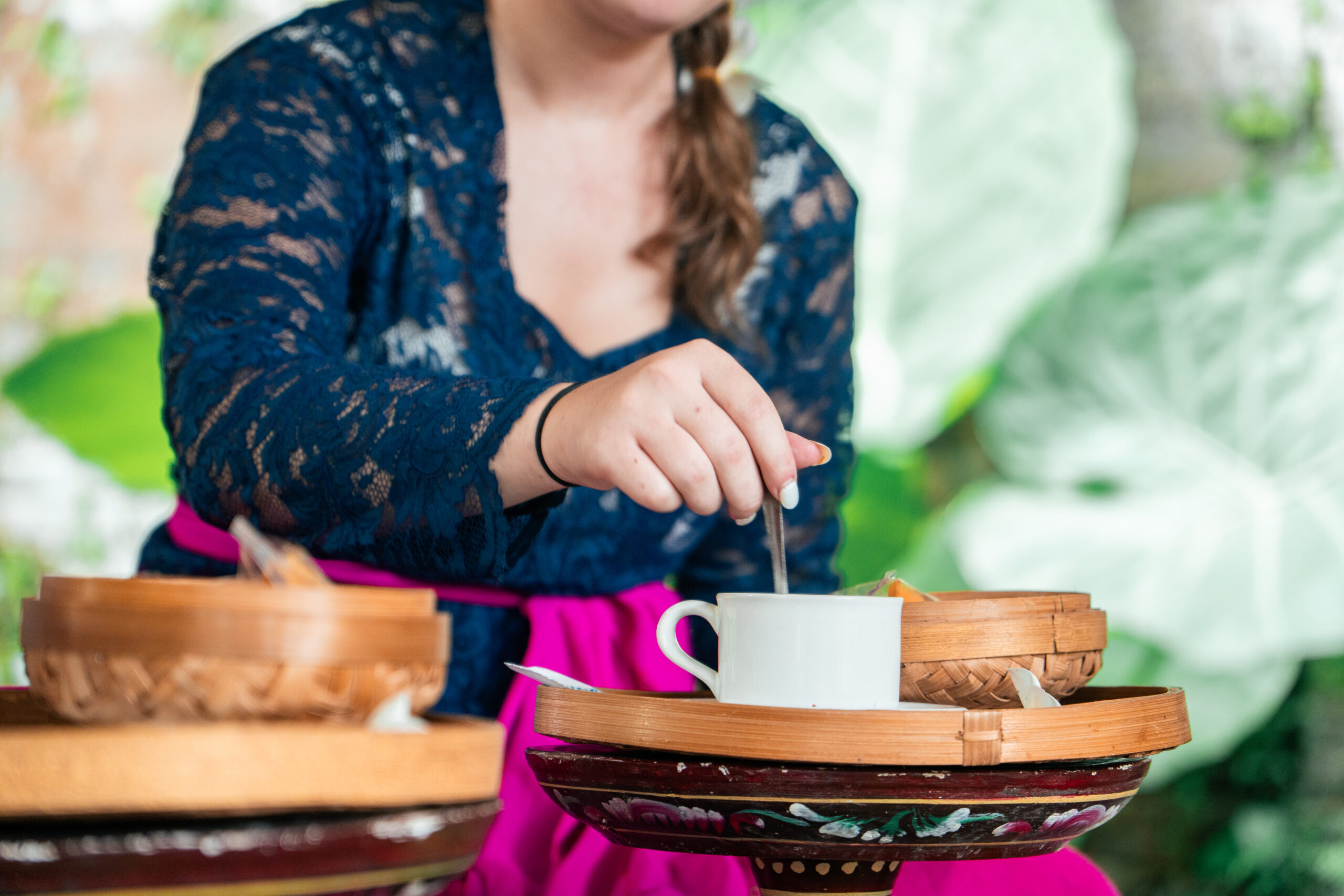
- The traditional attire seemed different from the ones used in Melukat. The reason may be explained to the participants.