
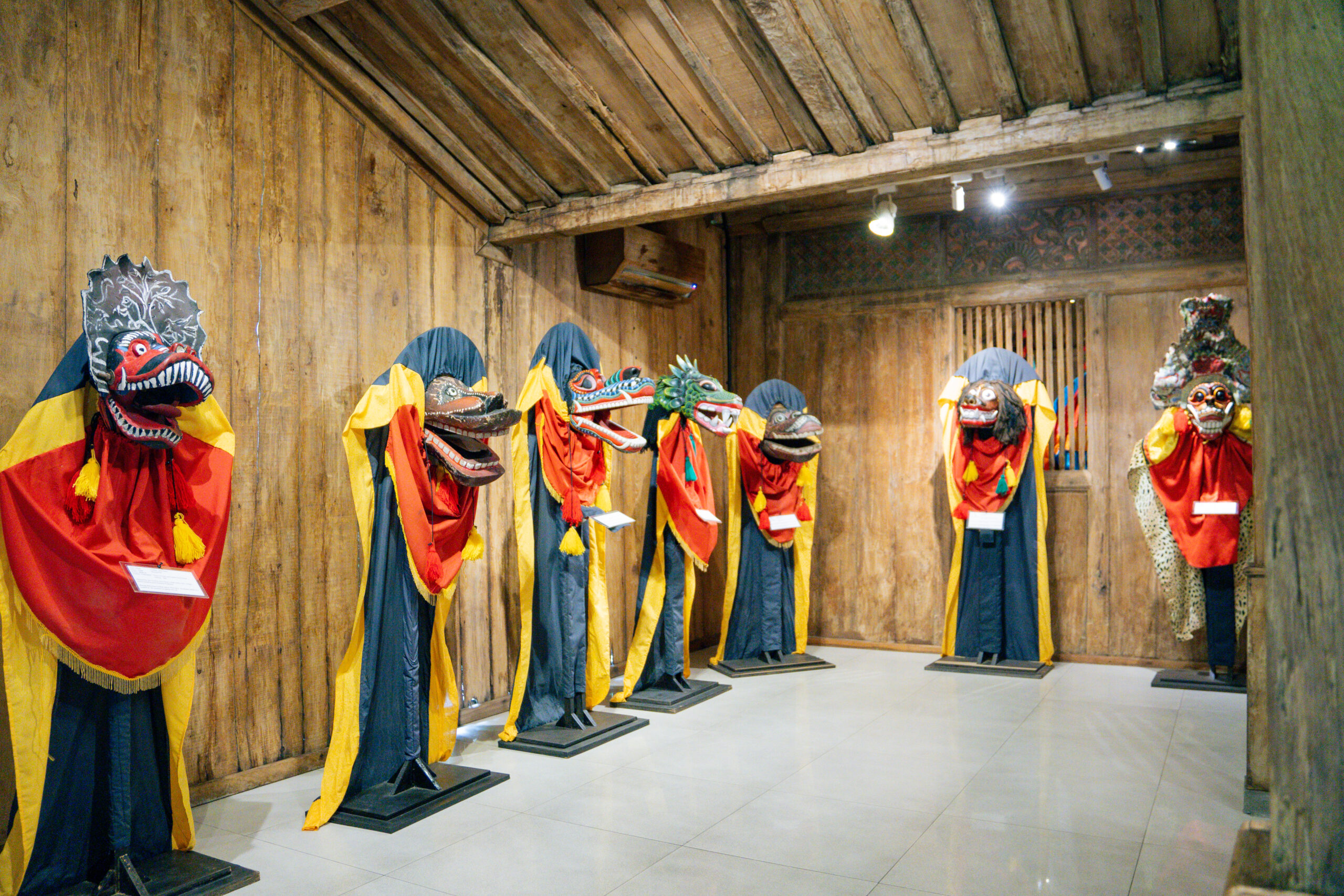
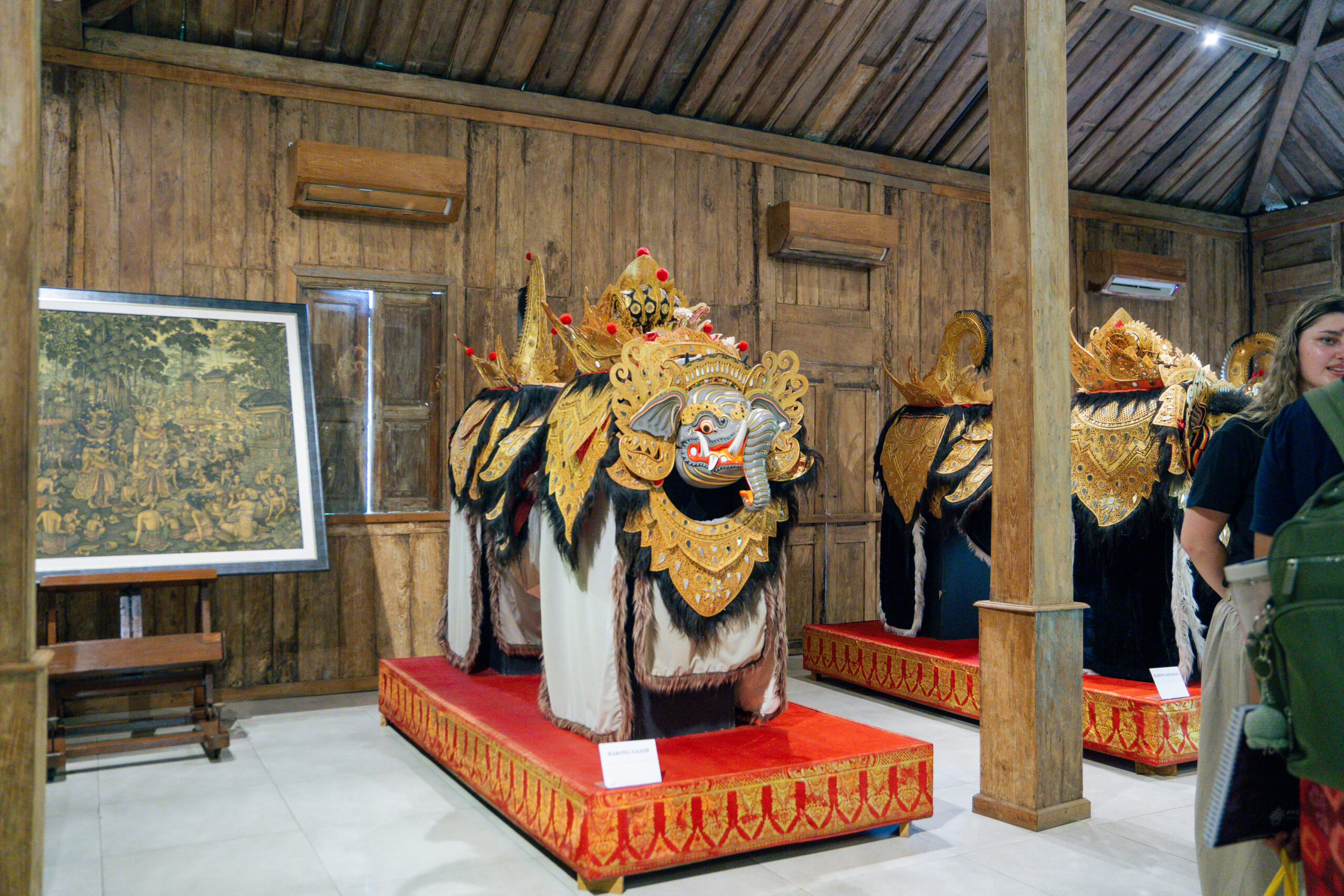
Masks (topeng) and puppets (wayang) are not simply forms of entertainment — they are vessels of storytelling, ancestral worship, and divine expressions, deeply woven into Balinese religion and daily life.
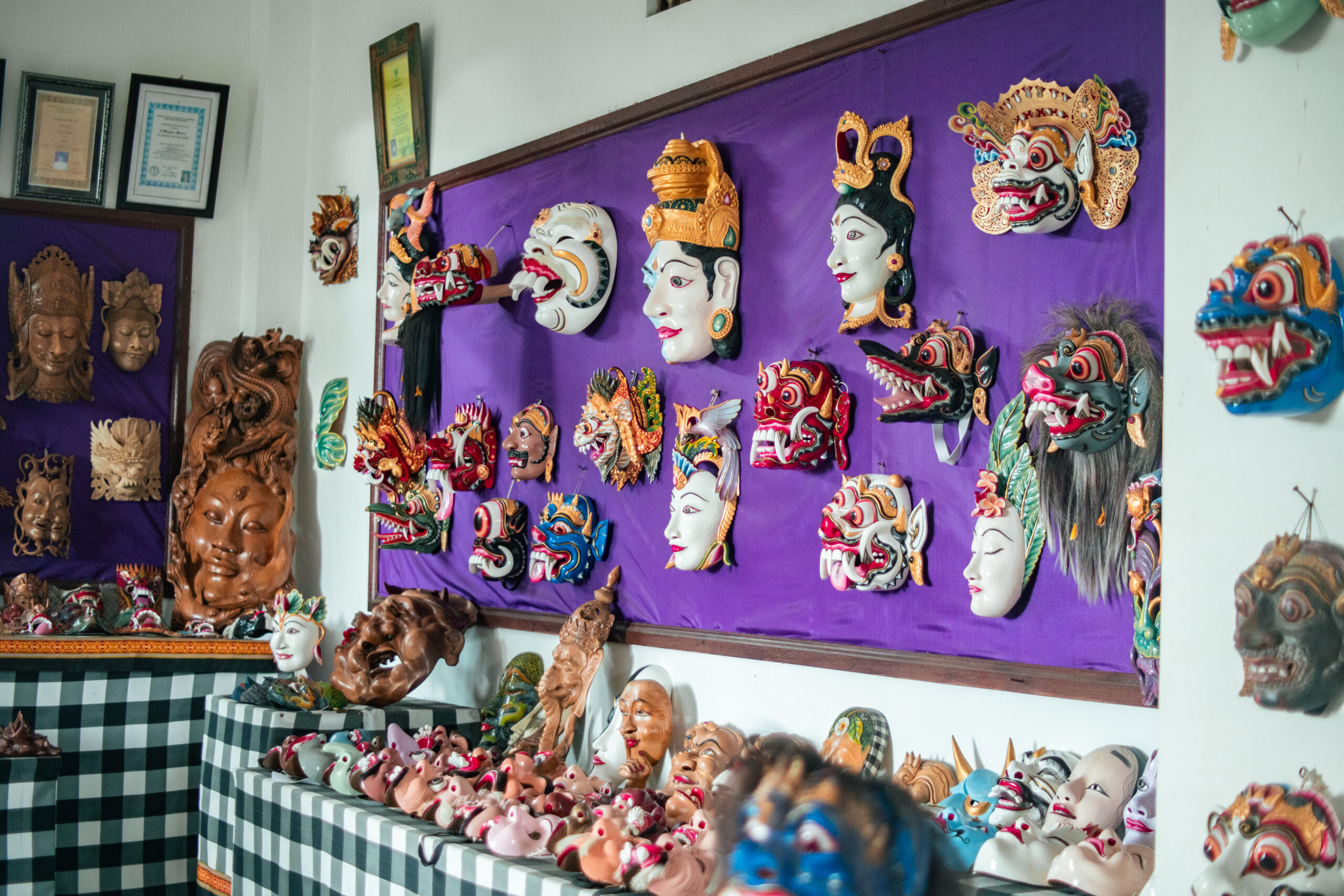
In Balinese culture, masks are sacred objects used in dance, ritual, and theater. Each mask carries not just a character but a spiritual essence (taksu), believed to come alive when worn by a trained dancer during a ceremony.
Puppetry in Bali, known as Wayang Kulit, is one of the island’s most revered performing arts. It combines music, storytelling, philosophy, and spirituality. The puppets are made from carved and painted buffalo hide, mounted on bamboo sticks. The puppeteer, called the Dalang, is not just an entertainer but a priest, storyteller, and philosopher. They voice dozens of characters, controls movement behind the white screen, and directs the orchestra (gamelan gender wayang). The stories usually come from the Hindu epics Ramayana and Mahabharata, but adapted with local humor and moral lessons relevant to Balinese life.
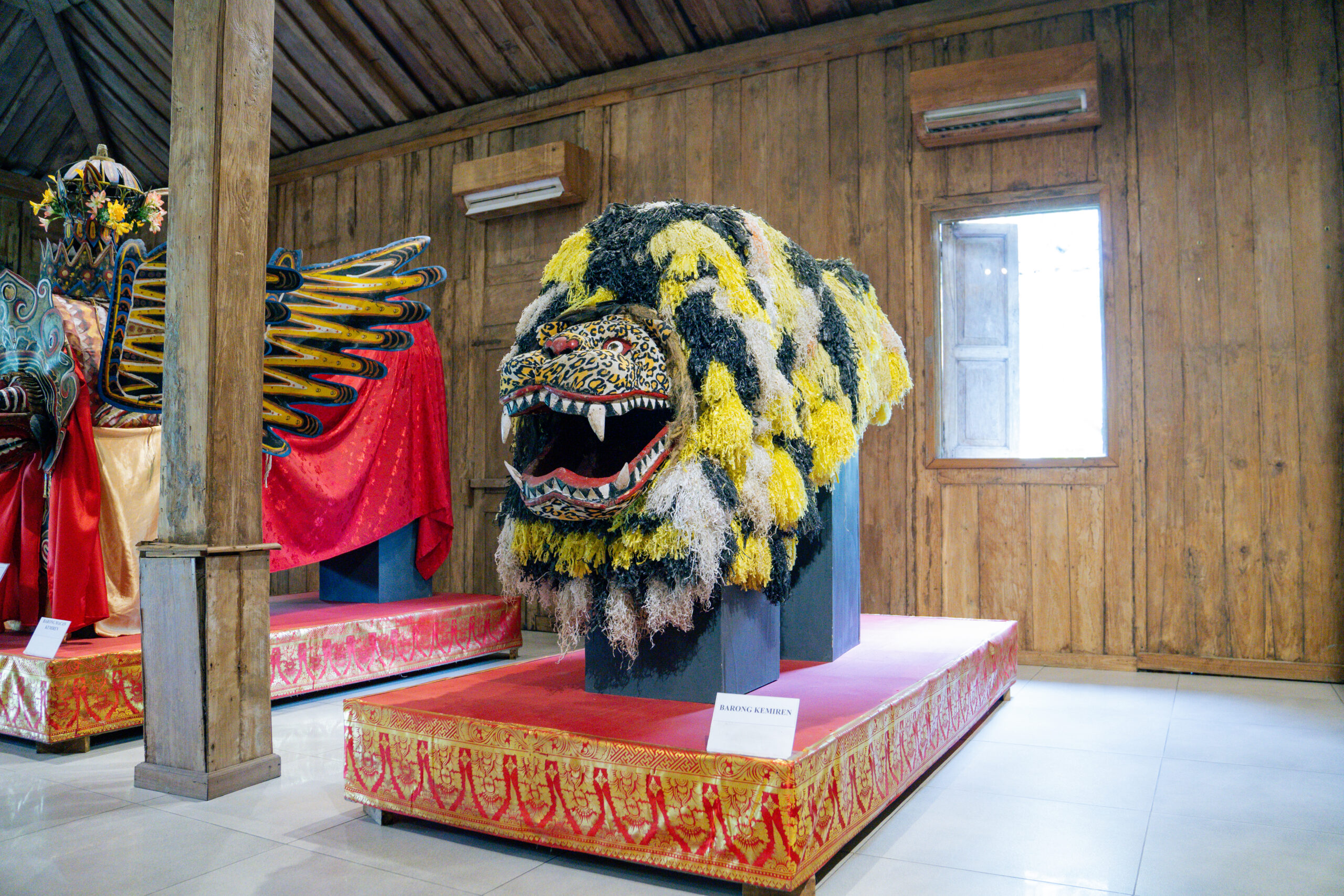
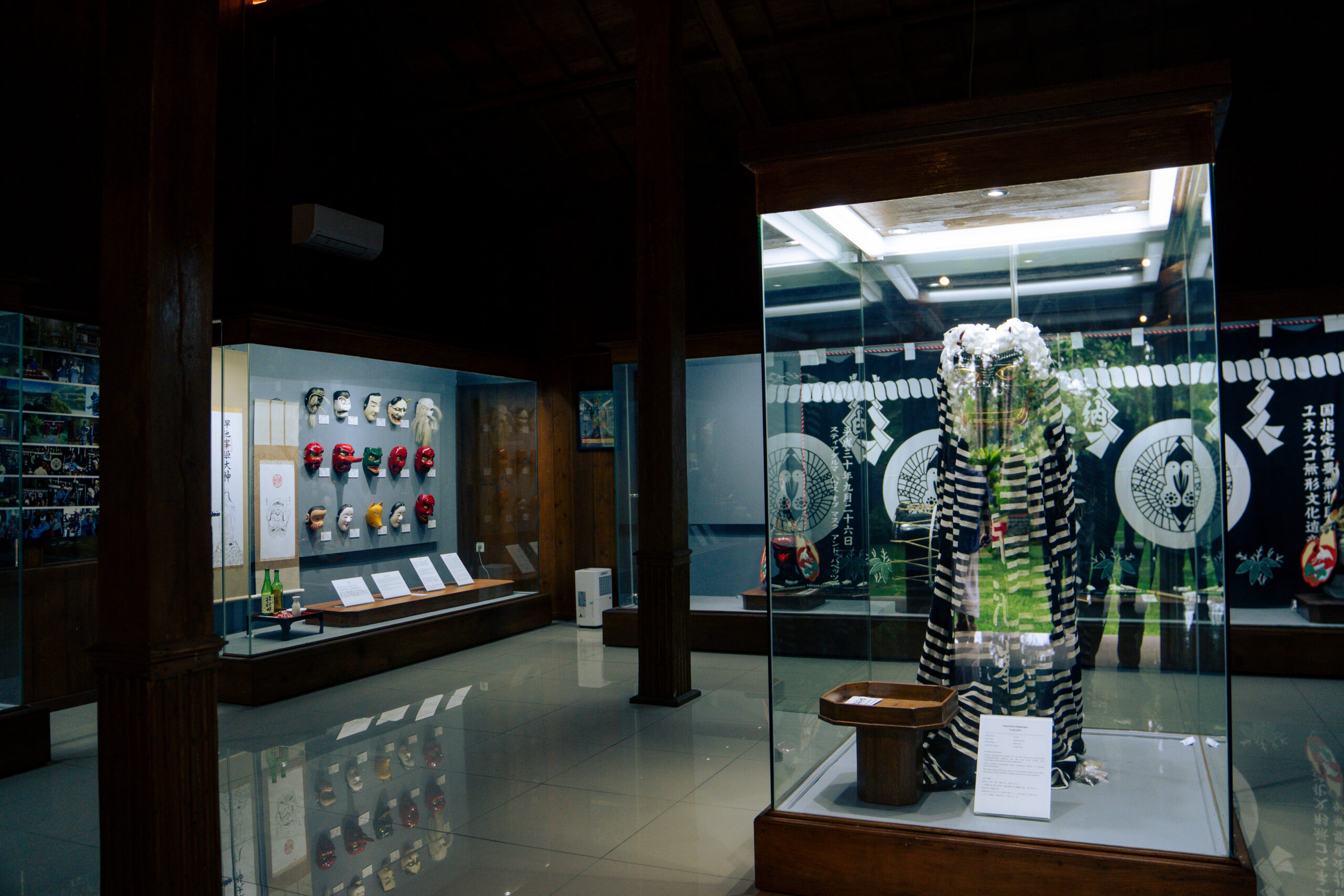
Located in Mas Village, near Ubud, the Setia Dharma House of Masks and Puppets is both a museum and cultural preservation center. Founded by collector Ida Bagus Anom Suryawan, it houses more than 1,200 masks and 4,000 puppets from across Indonesia and around the world. The museum’s goal is to celebrate the diversity of storytelling traditions — showing how masks and puppets bridge art, ritual, and identity. Visitors can explore pavilions filled with intricately crafted faces, shadow puppets, and traditional performance spaces, set amidst tranquil Balinese gardens.
Feedback
- A brief watch of the craftsmen working would be better. For example, participants can learn how the mask is made and what tools they use.
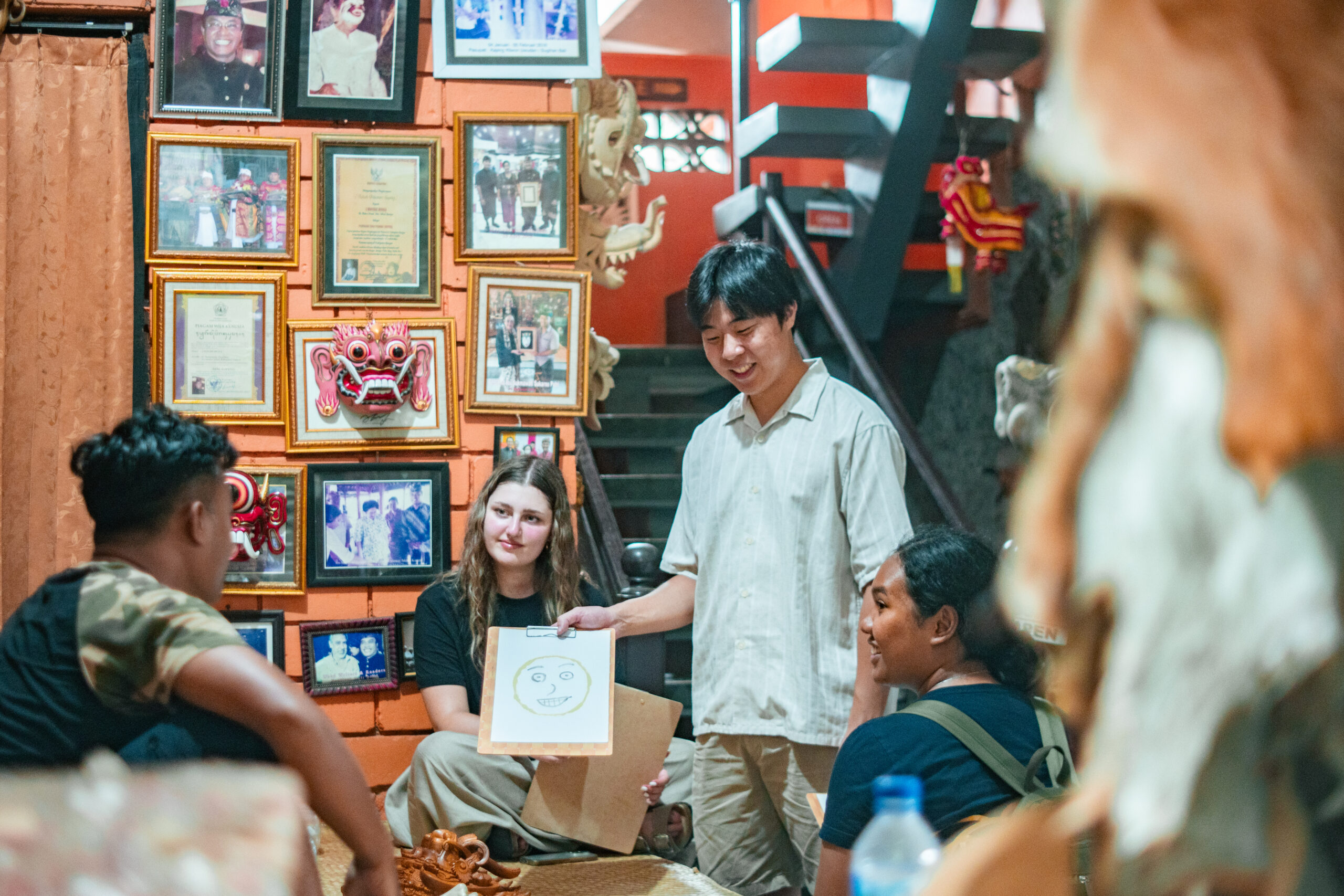
- The active workshop for drawing expressions in the garden was very refreshing. An output after an input is key to learning.
- If possible, watching a mask ceremony or an experience trying the mask ceremony inside the tour would be more engaging and interesting.