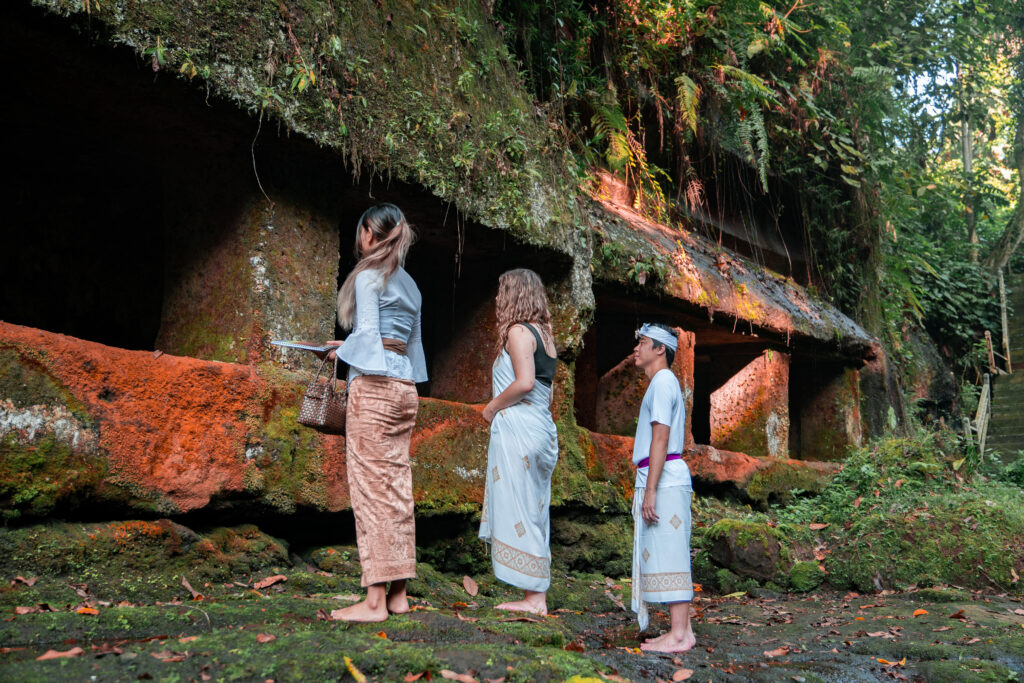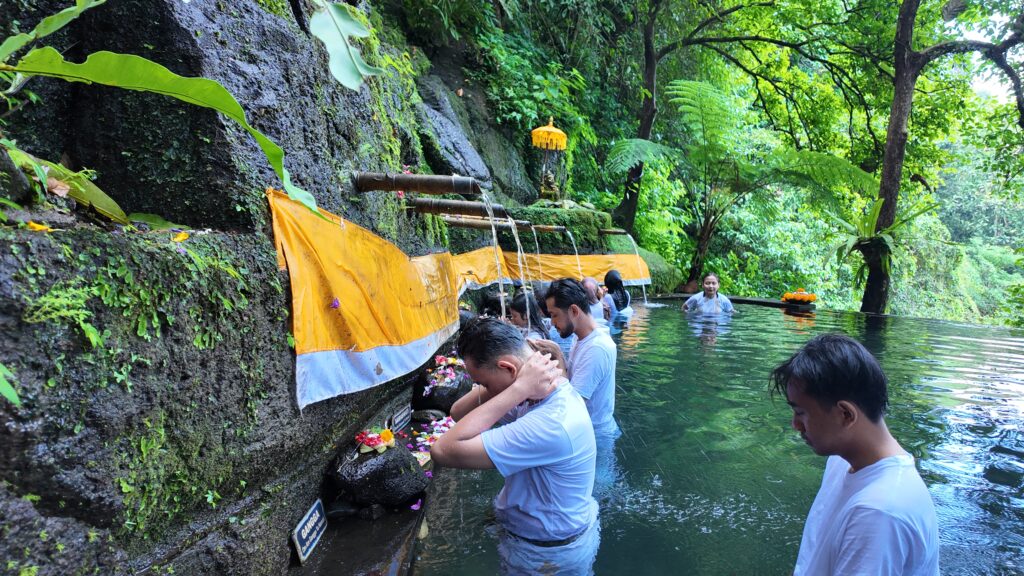

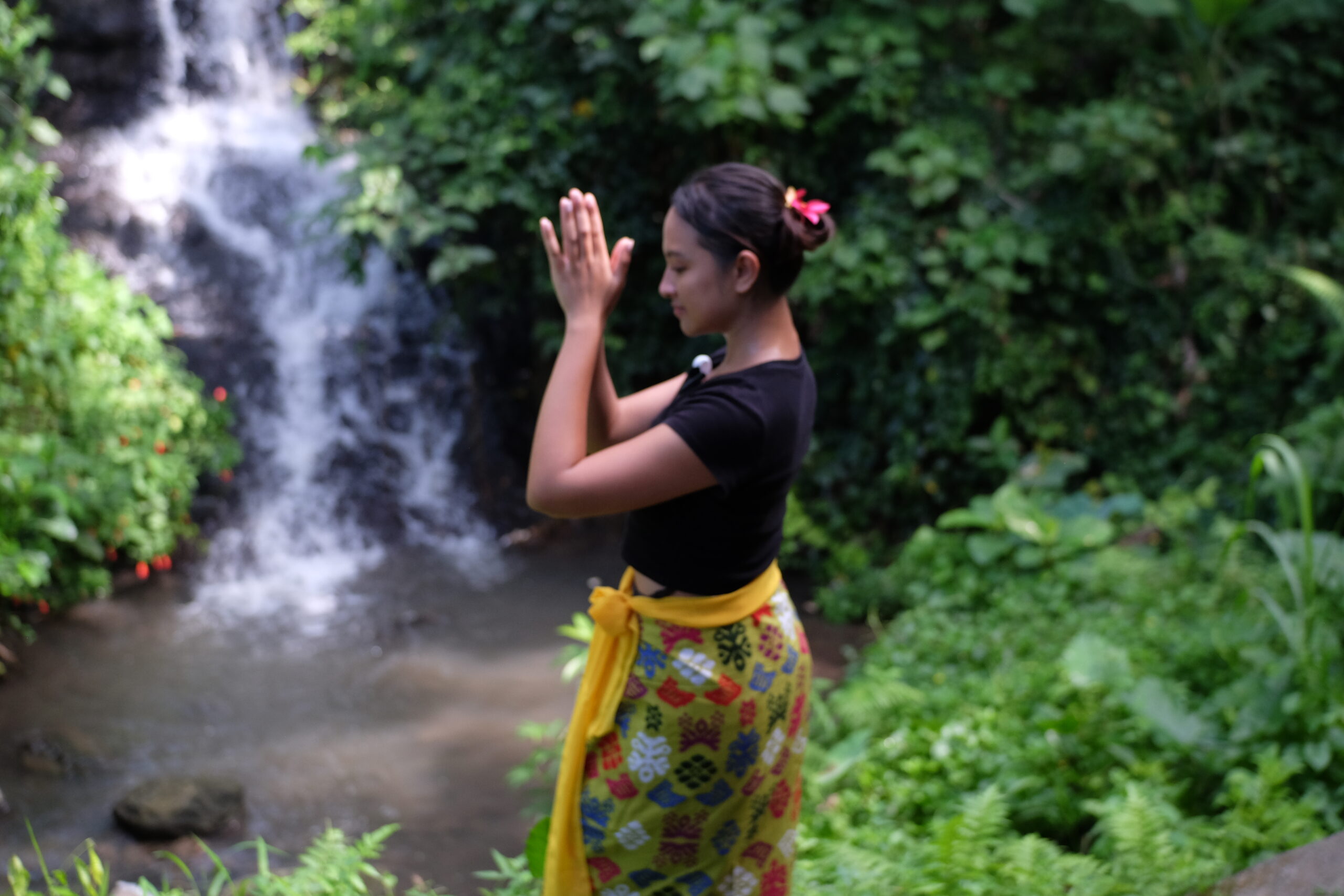
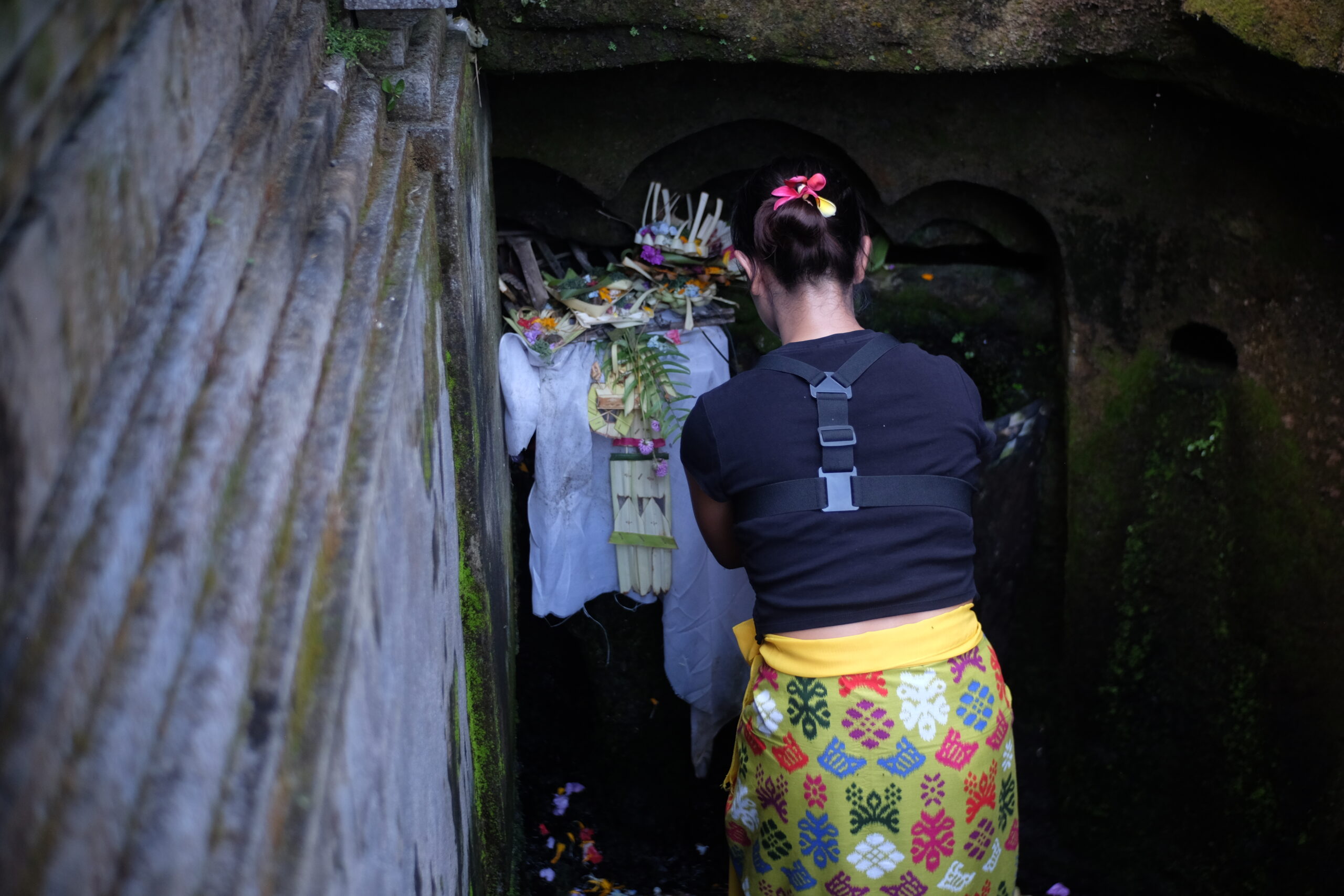
Yeh Pulu is located in Bedulu village, near Ubud. The site is tucked away among rice-fields, with a short scenic walk through the paddies to reach the carved stone relief wall.
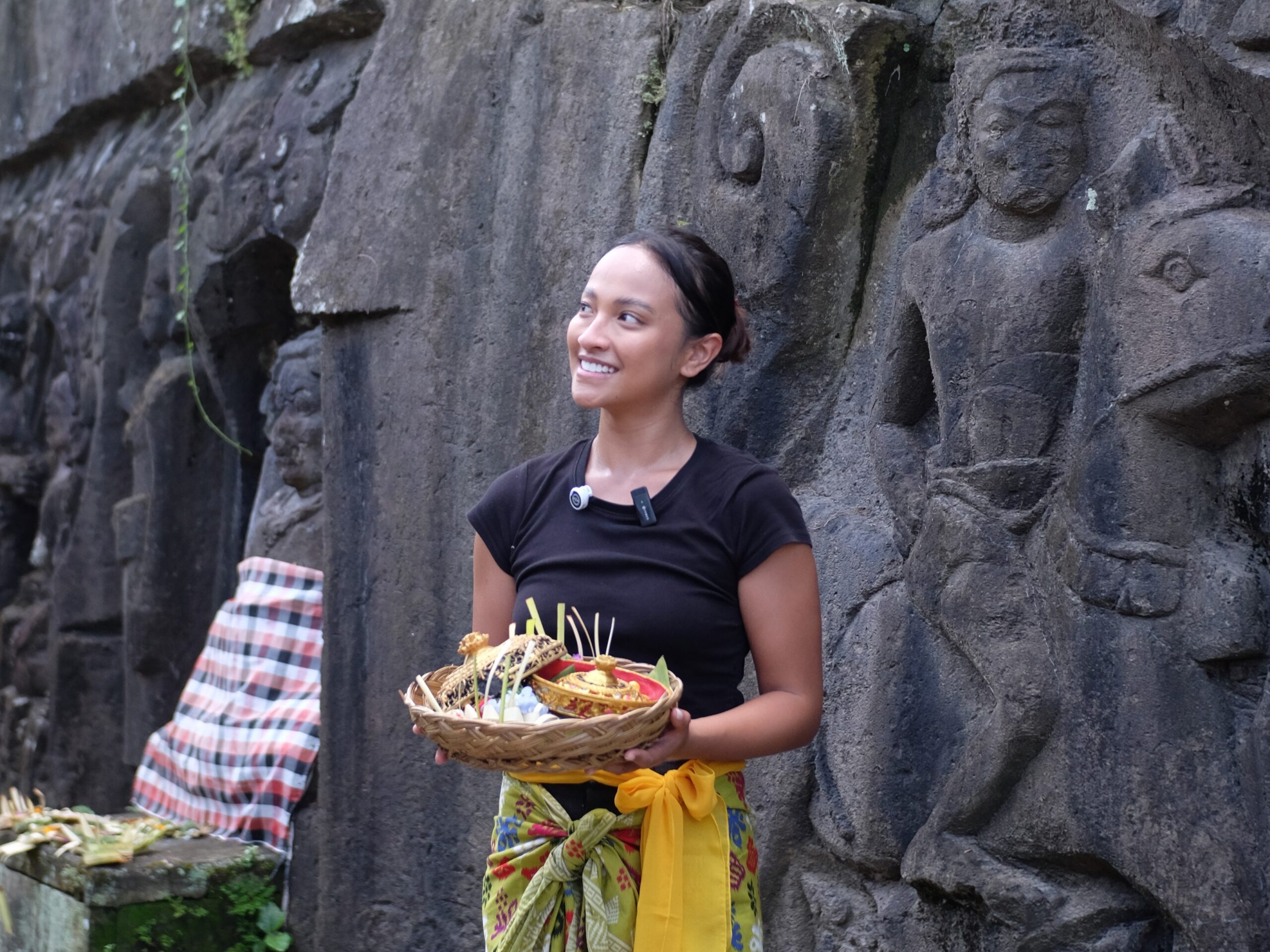
Yeh Pulu, though commonly referred to as a “temple” (Pura Yeh Pulu), is more accurately an archaeological relief wall and water-source site, carved into sandstone in the 14th century. The name comes from Balinese words: yeh = “water”, pulu = “container” or “jar”, referring to a spring and vessel-shaped water container found nearby. One of its most interesting features is the long wall (approx. 25 m) of carved reliefs depicting everyday life, hunting, rice farming, and mythic scenes.
Since Yeh Pulu lies within the rice-field landscape near Bedulu, it offers a real-life view of the traditional Balinese irrigation system: the Subak. Subak is a cooperative water-management system for rice-paddies on Bali, dating back at least to the 9th century. The system doesn’t just provide irrigation: it’s a cultural, religious, social and ecological system that binds farmers, water temples and land. In the rice-fields around Bedulu village, the subak system is visible: channels, terraces, water-source springs, and community coordination. A subak community consists of farmers grouped around a common water source (spring, river, channel) and the paddy fields it feeds. The community elects its own administrators (prajuru) — for example a pekaseh (chairman) for small subak, and for larger grouping (subak gede) a pekaseh gede, with vice-chair, secretary, treasurer, etc. This means the system is bottom-up, community-based, and somewhat egalitarian: water is shared, timed and regulated according to consensus and ritual as well as practical necessity. In other words: the subak system in Bali is not purely a top-down state-run irrigation system — it is a traditional, cooperative, democratically organized institution among local farmers.
The subak system as a whole is recognized by UNESCO under the designation “Cultural Landscape of Bali Province: the Subak System as a Manifestation of the Tri Hita Karana Philosophy” (inscribed 2012). The recognition emphasizes that rice, water and the cooperative subak system have together shaped the landscape of Bali for centuries. The UNESCO decision explicitly highlights the democratic and egalitarian nature of the water-temple and subak networks. Yeh Pulu sits inside a region recognized by UNESCO for its unique integration of agricultural, ecological and spiritual culture.
Feedback
- The relief wall was tremendous, and a good opportunity to learn about the everyday life, hunting, rice farming, mythic scenes, and why the location is called “Yeh Pulu”.
- It would have been great to learn more about why this place was recognized as a UNESCO heritage site. (What was evaluated and why it qualifies to become a UNESCO heritage site)