
"Behind the famous beaches and terraced rice fields lies a complex, deeply spiritual society. Understanding authentic Balinese culture is the key to unlocking a truly profound travel experience on the Island of the Gods."
Tri Hita Karana: The Philosophy that Guides Balinese Life
At the core of every Balinese action—from designing a home to planting rice—is the philosophy of Tri Hita Karana. This ancient concept translates to the "Three Causes of Well-being" and dictates that harmony must be maintained in three fundamental relationships. Understanding this philosophy is essential for meaningful cultural immersion and responsible travel in Bali:
- Parahyangan: Harmony between humans and God.
- Pawongan: Harmony between humans and other human beings.
- Palemahan: Harmony between humans and the natural environment.
To truly understand this, we invite you to experience it firsthand rather than just reading about it.
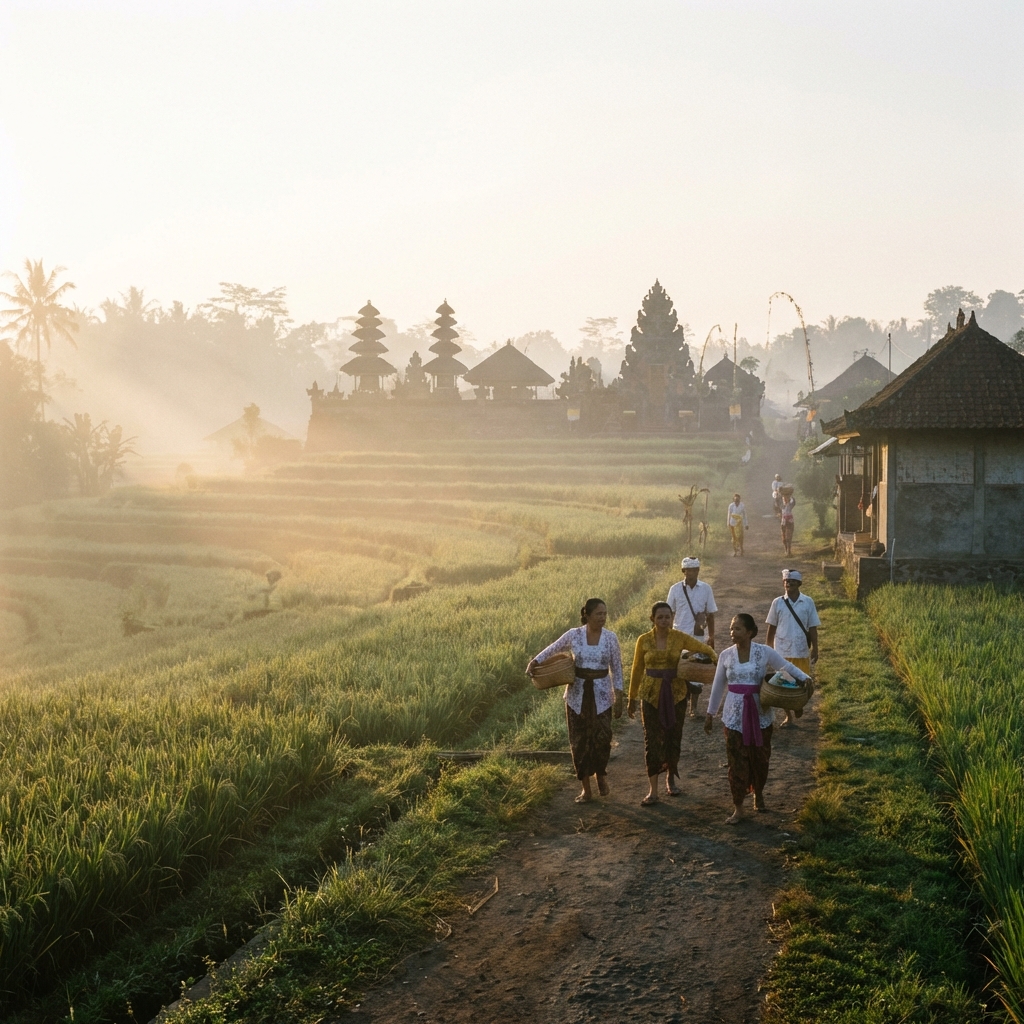
Discovering Bali's Tri Hita Karana
Actively participate in the daily application of Bali's core philosophy within an authentic village setting.
Explore ExperienceThe Banjar: Community and Village Structure
The social fabric of Bali is woven tightly together by the Banjar. A Banjar is a local community council responsible for organizing ceremonies, managing village affairs, and ensuring the welfare of its members. Life in Bali is inherently communal; individualism takes a back seat to the needs and harmony of the group. Five Pillar Experiences works directly with Banjar communities to ensure tourism benefits reach those who preserve these traditions.
Religion and Daily Rituals: The Meaning Behind the Offerings
Balinese Hinduism (Agama Hindu Dharma) is unique, blending Hindu theology with local animist traditions and ancestor worship. The island is often called the "Island of a Thousand Temples" because every home, rice field, and major geographical landmark has a shrine.
Canang Sari: The Daily Devotion
Every morning, Balinese women weave intricate palm-leaf baskets filled with flowers, rice, and incense. These are Canang Sari, daily offerings made to express gratitude to Sang Hyang Widhi Wasa (the Supreme God) and appease the lower spirits. Creating these is a meditative act of devotion, largely sustained by the unsung women of Bali.
Temple Ceremonies and Purification (Melukat)
Water holds profound sacred significance in Bali. Melukat is a traditional water purification ceremony led by a Pemangku (priest) designed to cleanse the body, mind, and soul of negative energies. These sacred practices are also integrated into our wellness experiences, combining spiritual renewal with cultural understanding.
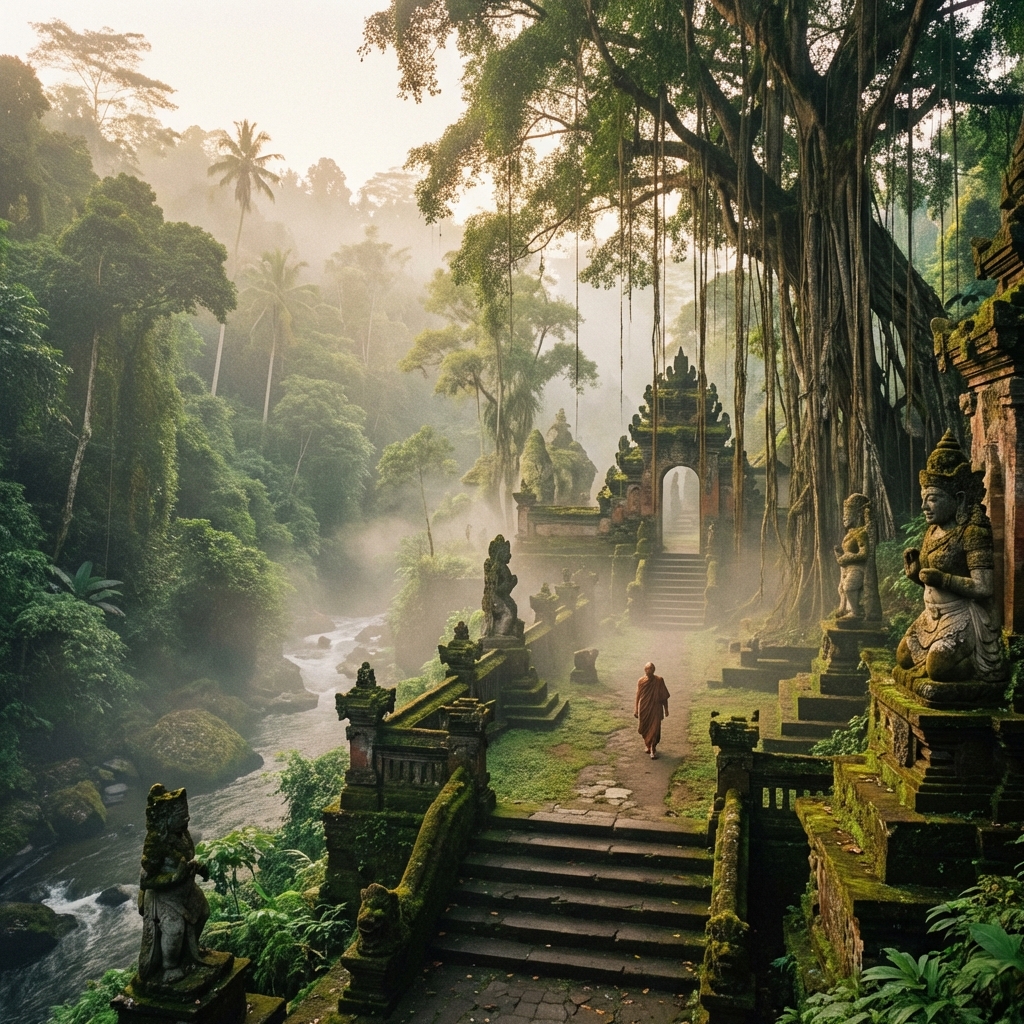
Water Blessing at Ancestral Ruins
Travelers seeking spiritual renewal can participate in a respectful, intimate Water Blessing away from the crowded temples, guided by a local spiritual elder.
Immerse in MelukatTraditional Balinese Arts and Craftsmanship
In Bali, art is not created merely for aesthetics; it is an offering to the divine. Traditional crafts—whether woodcarving, painting, or textile weaving—are skills passed down through generations.
Woodcarving, Painting, and Textiles
True Balinese art is imbued with cosmological meaning. Sitting with master carvers and painters is the only way to understand the spiritual dedication required before a chisel ever touches wood.
Step Into the Heart of Bali
Let local heroes guide you through the traditions, philosophy, and everyday magic of Balinese life.
Discover Cultural Journeys