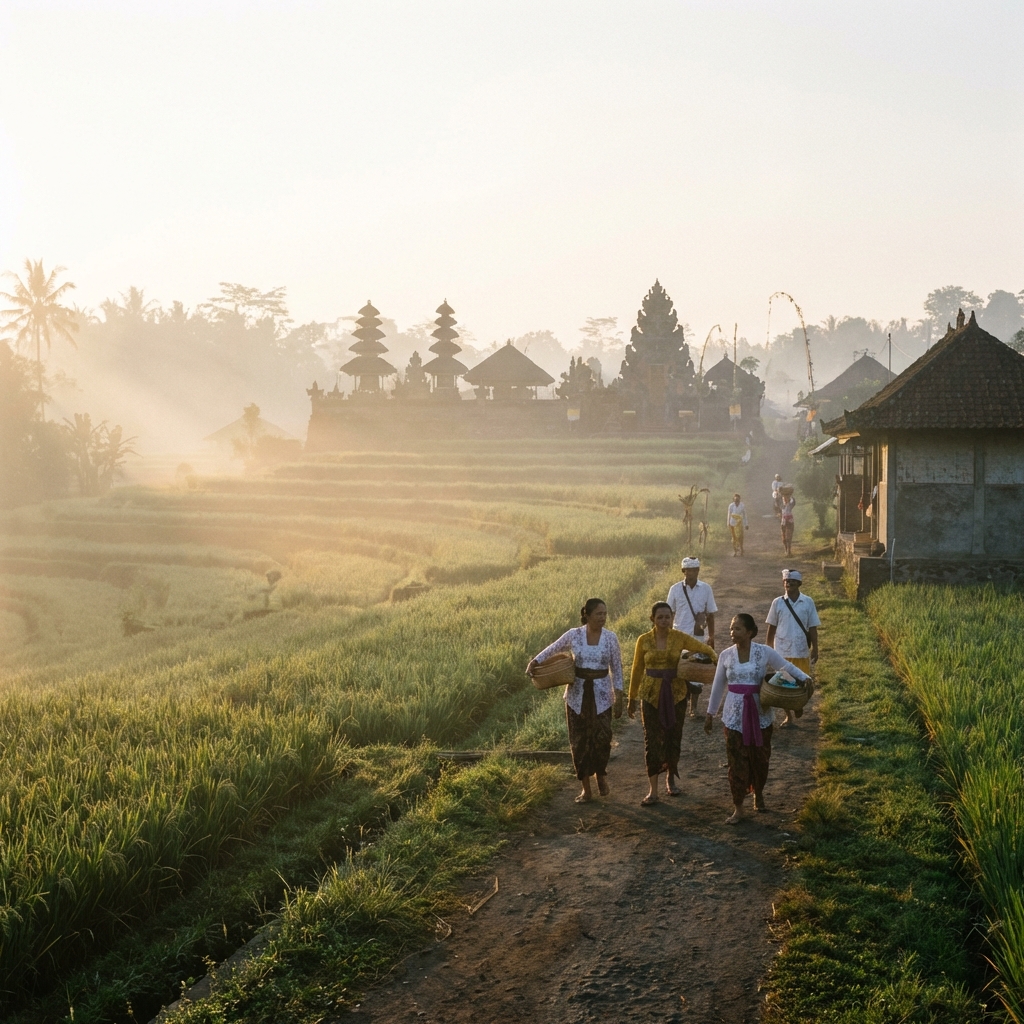

"Sightseeing scratches the surface; cultural immersion dives deep. It is the distinction between looking at a painting and learning how to hold the brush. In Bali, true connection happens when you step away from the tourist trail and into the daily rhythms of village life."
What is True Cultural Immersion?
Cultural immersion travel requires a shift in mindset. It means abandoning the role of a fleeting consumer and adopting the role of a respectful guest and eager student. It involves sharing meals in family compounds, learning ancient crafts directly from artisans, and understanding the philosophies that govern daily life. This approach is central to ethical tourism, ensuring your visit benefits local communities while deepening your understanding of Balinese culture and traditions.
The Difference Between a Tourist and a Traveler
A tourist travels to escape life; a traveler travels to experience life.
- Tourists seek familiar comforts in exotic locations; Travelers seek the beautiful discomfort of the unknown.
- Tourists take photos of locals; Travelers trade stories with them.
- Tourists buy mass-produced souvenirs; Travelers learn the skill from a Local Hero and support their livelihood directly.
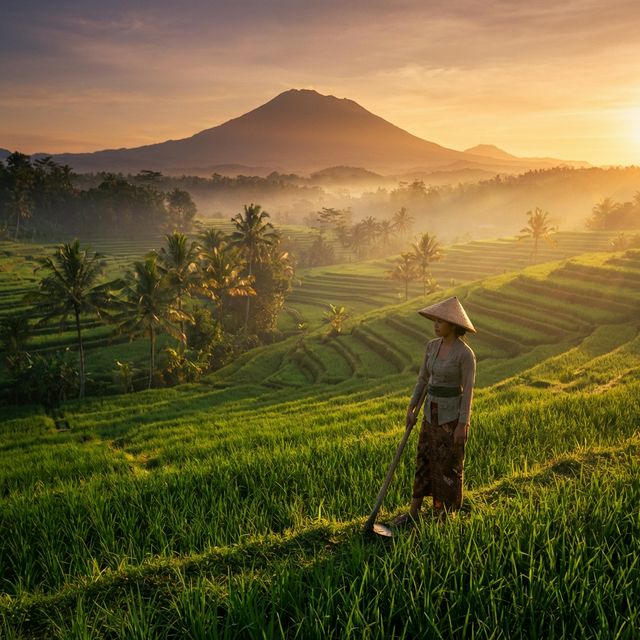
Meet the People Shielding the Culture
Go beyond the path by directly visiting and supporting the unsung Local Heroes of Bali's villages.
Explore Local HeroesThe Benefits of Slow, Meaningful Travel
When you slow down, the subtleties of Balinese culture reveal themselves. You notice the precise angle at which a canang sari offering is placed. You begin to understand the complex, rhythmic cycles of the traditional calendar. Slow travel reduces environmental impact, prevents cultural burnout, and fosters deep, psychological rejuvenation.
Connecting with Local Communities Respectfully
Immersion must always be grounded in respect. Before arriving, understand that Bali is a deeply religious, conservative society. At Five Pillar Experiences, we ensure every interaction honors local customs and supports community well-being.
Etiquette and Basa Bali Basics
Simple gestures go a long way. Always dress appropriately—covering shoulders and knees—when entering village spaces. Never point the soles of your feet at another person or religious object. And while almost everyone speaks Indonesian (Bahasa Indonesia) and many speak English, learning a few words of Basa Bali shows immense respect for the indigenous culture.
Experiential Learning and Skill-Sharing
We believe the most profound way to understand a culture is to participate in it.
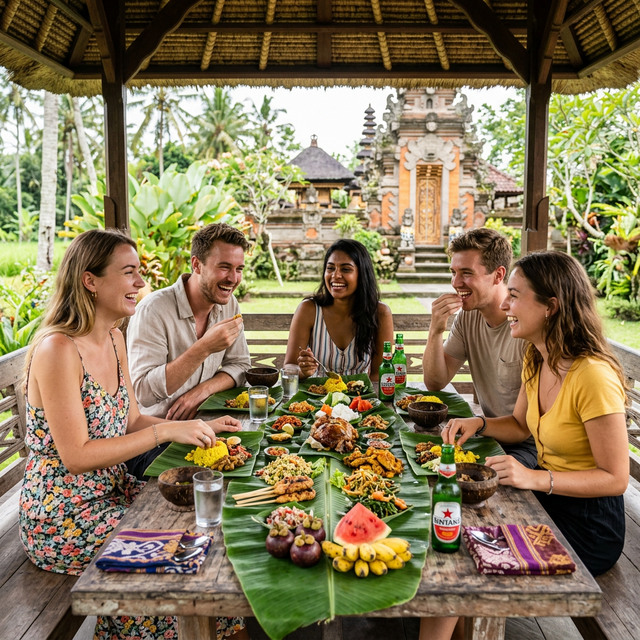
Gastronomic Journey: Village Cuisine
Much more than a cooking class: an exploration of how communal kitchens operate during major ceremonies and rituals.
Join the FeastFor broader impact, we partner with universities globally on immersive field studies in sustainable agriculture, such as From Subak Wisdom to Ancient Relief, focusing on the intricate Subak irrigation systems.
Ready for a Transformative Journey?
Let us guide you beyond the beaten path. Connect with true local heroes and experience the real Bali.
Begin Your Immersion