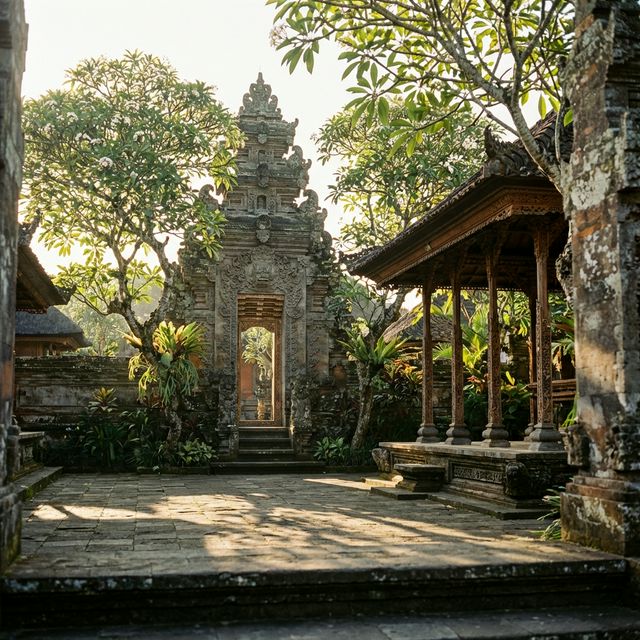
Royal Palace Heritage Walk
Royal Palace Heritage Walk
Explore Bali's majestic royal palaces and uncover centuries of aristocratic heritage.
View Detail
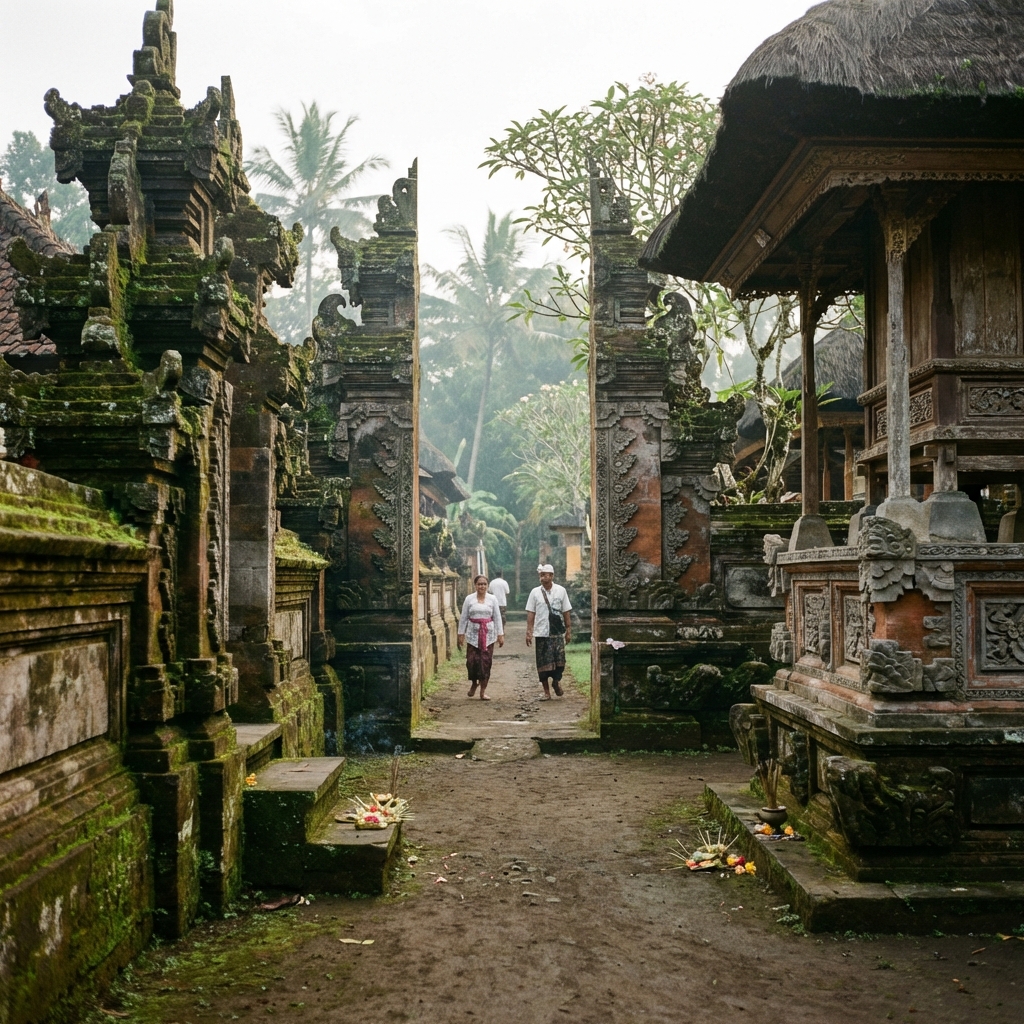
Walking Through Built Philosophy
A slow walk through temples, palaces, and homes—where every stone is placed with intention, and every structure tells a story of balance.

Balinese architecture is not merely about shelter or grandeur. It is a physical manifestation of philosophy. Every gate, every pavilion, and every courtyard is aligned with the mountains, the sea, and the cosmos.
On this walk, we move beyond the aesthetic beauty of carved stone and thatched roofs. We step into a dialogue between the human world, the natural environment, and the divine. You will explore sacred temples, dignified royal palaces, and humble family compounds—seeing how the same principles of balance weave through them all.
This is an invitation to slow down and look closer. To understand why a door is placed exactly where it is. To feel the hierarchy of space beneath your feet. To experience architecture as a mirror of the Balinese soul.
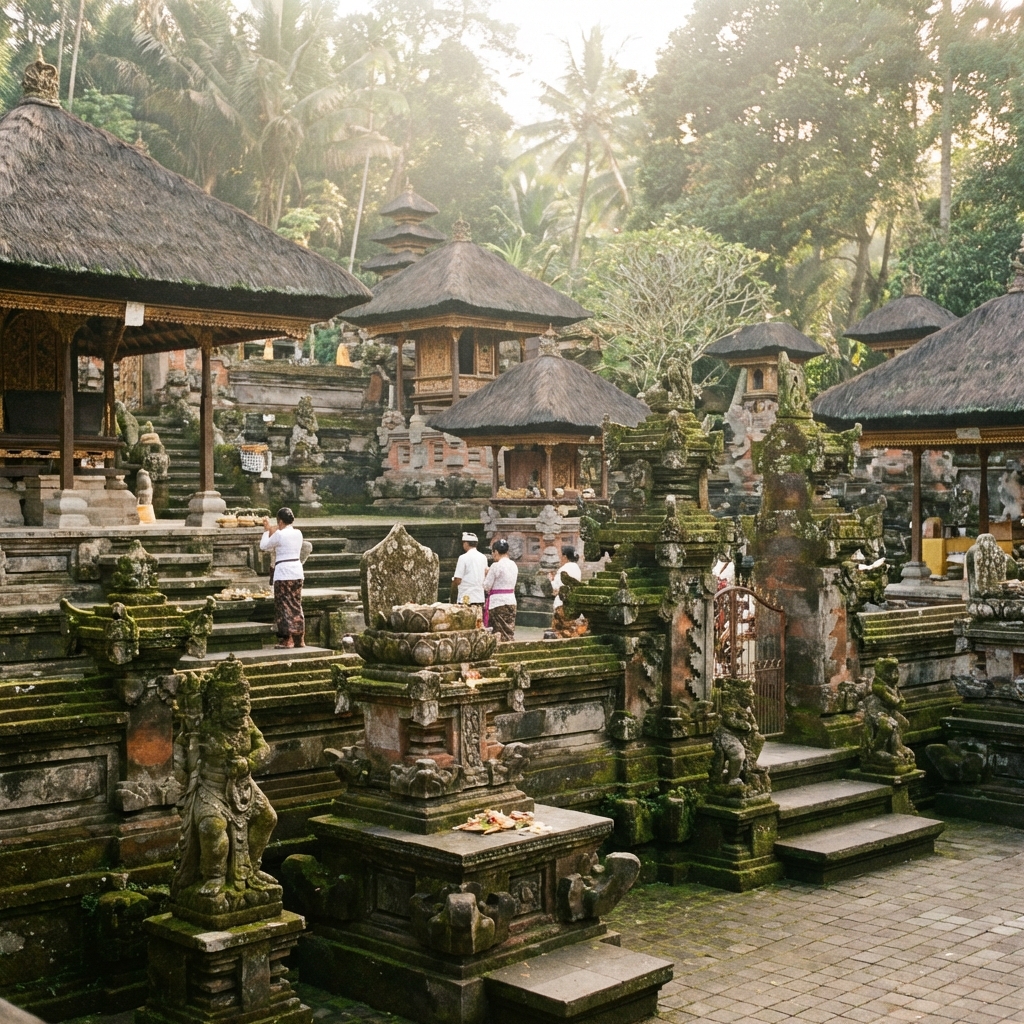
A Balinese temple is not a single building, but a series of open-air courtyards that guide the visitor from the mundane to the holy.
The outer realm. A space for gathering, preparation, and leaving the noise of the world behind.
The middle courtyard. Where the human and divine meet. The energy here is active, filled with rituals and offerings.
The innermost sanctum. The highest and most sacred zone, reserved for silent prayer and the gods themselves.
As we walk through these zones, you will feel the shift in atmosphere. The architecture itself compels reverence, using height, walls, and gateways to orchestrate a spiritual journey.
In the architecture of a Puri (royal palace), we see how leadership was understood—not as dominance, but as the responsibility to maintain order.
The scale is larger than a home, the carvings more intricate, but the layout follows the same cosmic logic. Pavilions for audience, for sleeping, and for ceremony are arranged to reflect social hierarchy and family lineage.
Walking through these courtyards, you notice the spaciousness. It is architecture designed for gathering, for the arts, and for the public life of the kingdom. It communicates dignity and stability, acting as a cultural anchor for the community.
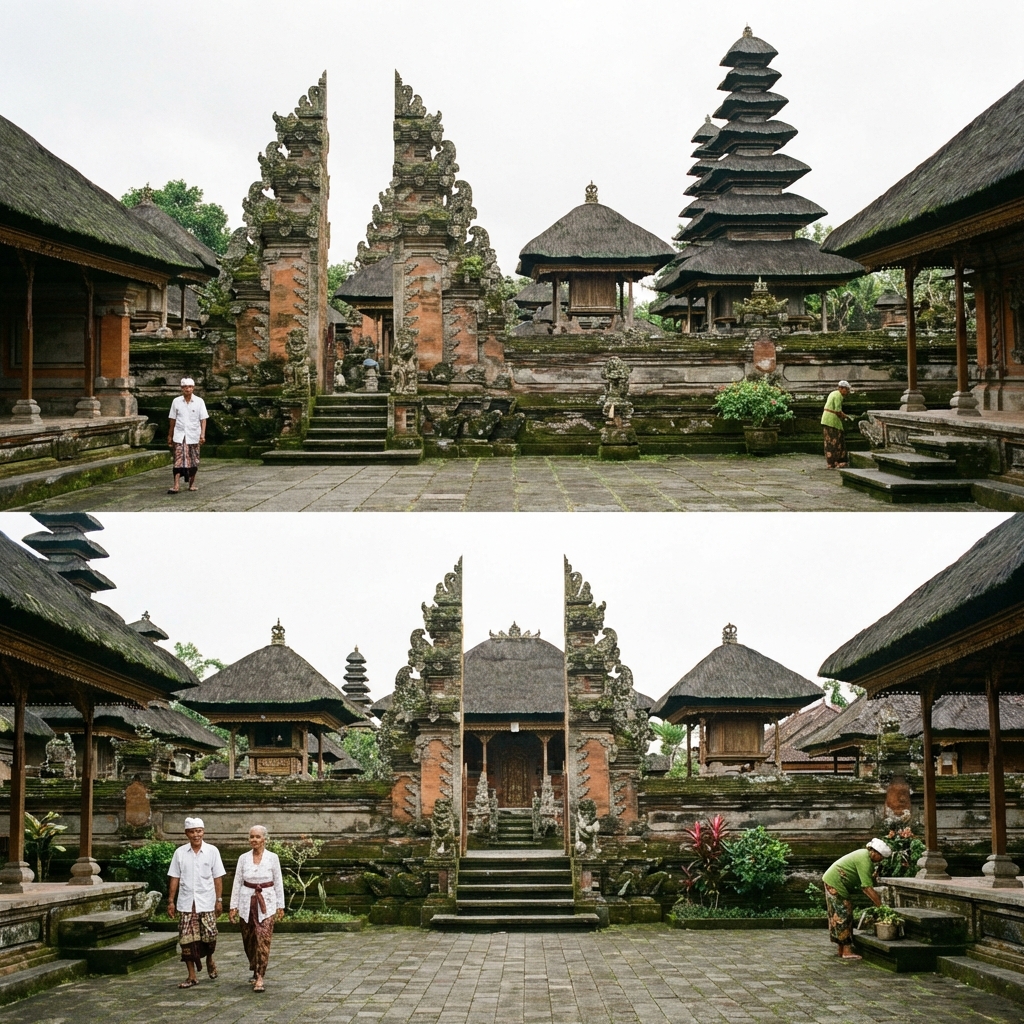
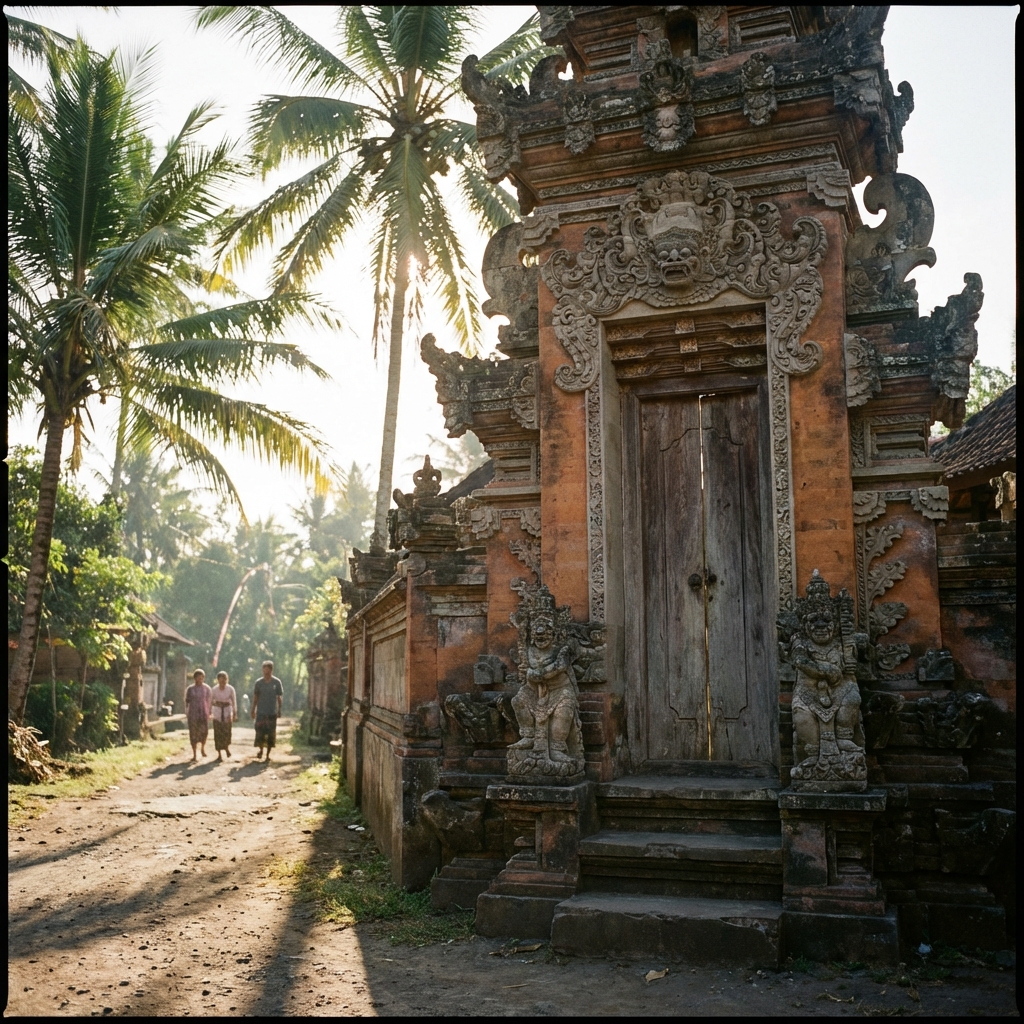
The Angkul-Angkul is more than a front door. It is a portal between the public street and the private sanctuary of the home.
Often flanked by guardian statues or carved with protective motifs, these gates ensure that negative energies are left outside. The narrow opening and typically raised threshold require you to slow down and step carefully—a physical bowing of the body that signifies respect.
Through these gateways, we see the importance of boundaries in Balinese life—defining what is sacred, what is family, and what belongs to the world.
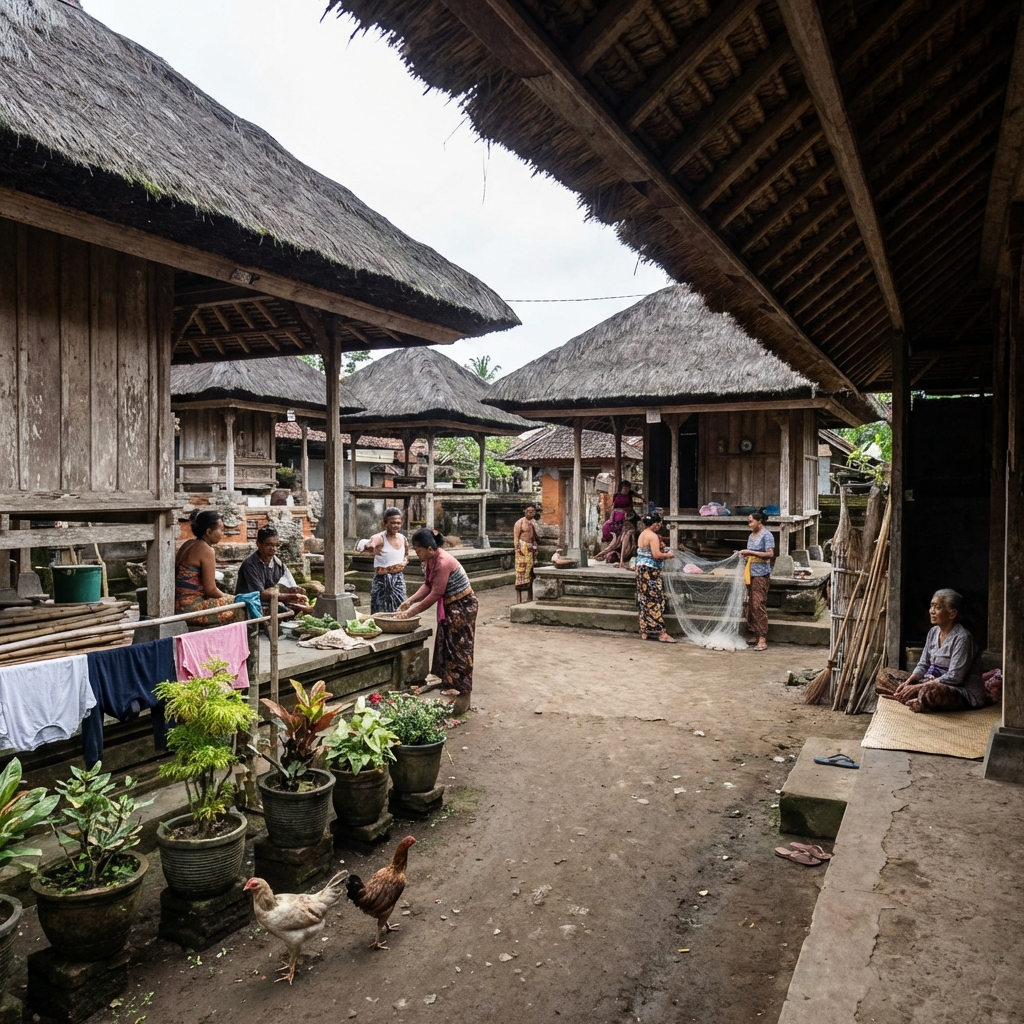
A traditional Balinese home is not a single structure under one roof, but a cluster of separate pavilions within a walled compound. This layout is guided by Asta Kosala Kosali—the ancient Balinese architectural code, similar to Feng Shui.
Every placement matters. The family temple faces the mountain (Kaja), the source of holiness. The kitchen and granary are situated towards the sea (Kelod). The sleeping quarters for the head of the family occupy the most honored human zone.
This is architecture for communal living. The open courtyards encourage interaction, while the orientation keeps the family constantly aligned with the cardinal directions—and thus, with the universe itself.
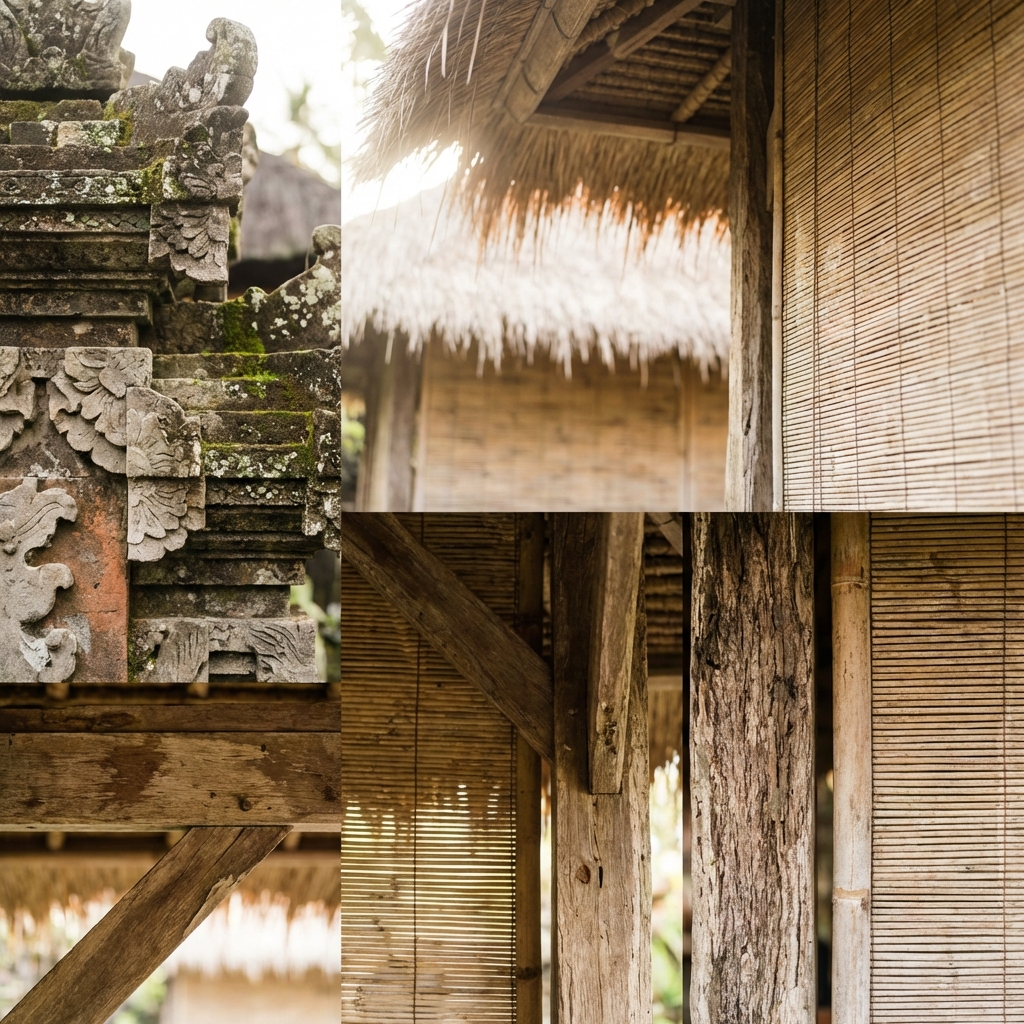
Stone. Bamboo. Wood. Earth.
True Balinese architecture is born from the island itself. Volcanic stone (paras) is carved into intricate reliefs that moss over time, returning to nature. Bamboo bends to form soaring roofs that breathe. Teak wood frames endure for generations.
There is no fight against the climate here. Open pavilions catch the breeze. Steep thatched roofs shed the monsoon rain. It is a humble collaboration with nature, creating structures that age gracefully and eventually dissolve back into the earth they came from.
Essential details for your architectural journey.
Architecture tells the truth of a culture. In Bali, the stones speak of a desire for balance. The gates speak of protection. The temples speak of gratitude.
To walk through these spaces is to read a book written in timber and rock over a thousand years. It is to understand that for the Balinese, a building is never just a building. It is a prayer.
Available for private groups and individuals.
Tell us about your trip and we'll craft a personalized experience just for you.
Bali Architecture Walk
Curated Experience
Explore Bali's majestic royal palaces and uncover centuries of aristocratic heritage.
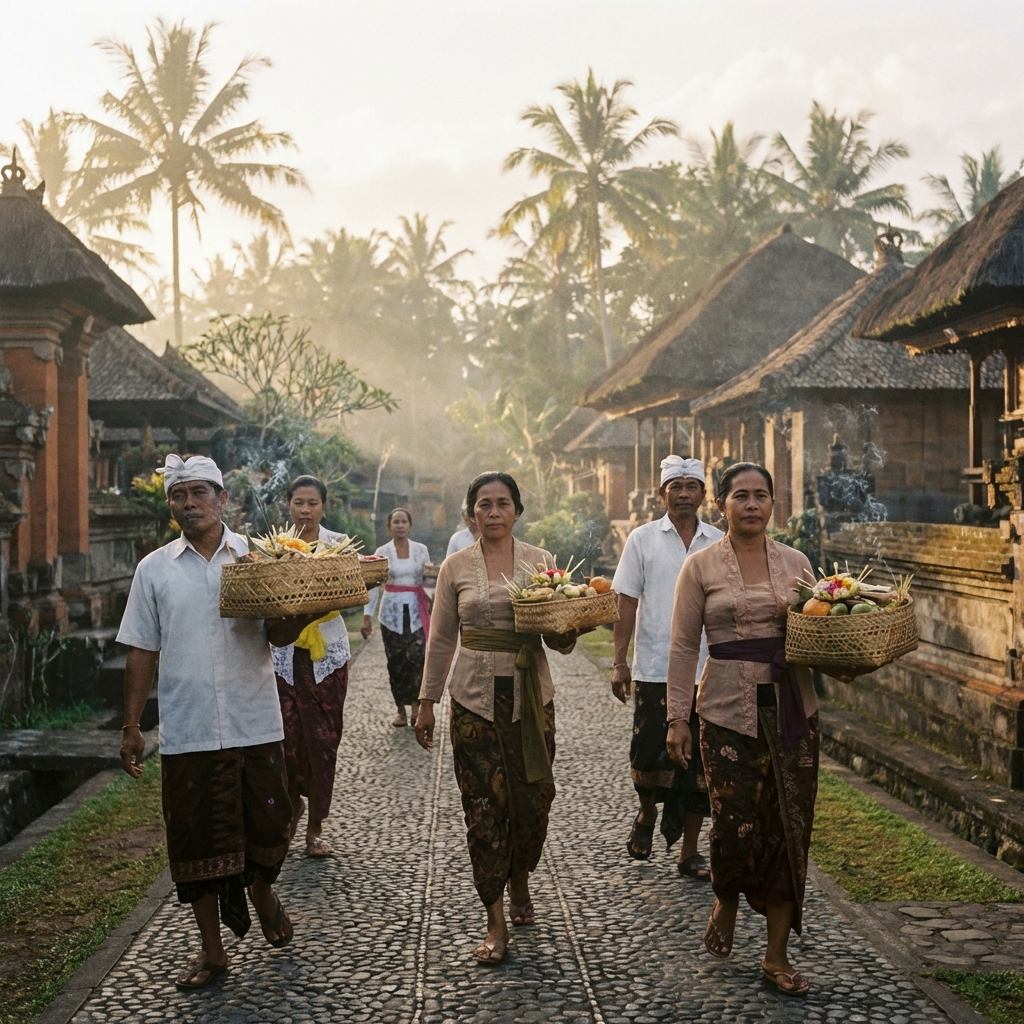
Immerse yourself in authentic Balinese traditions with local families.

Journey through UNESCO rice terraces and discover Bali's ancient subak irrigation wisdom.