Beyond the Tourist Trail: Real Balinese Culture
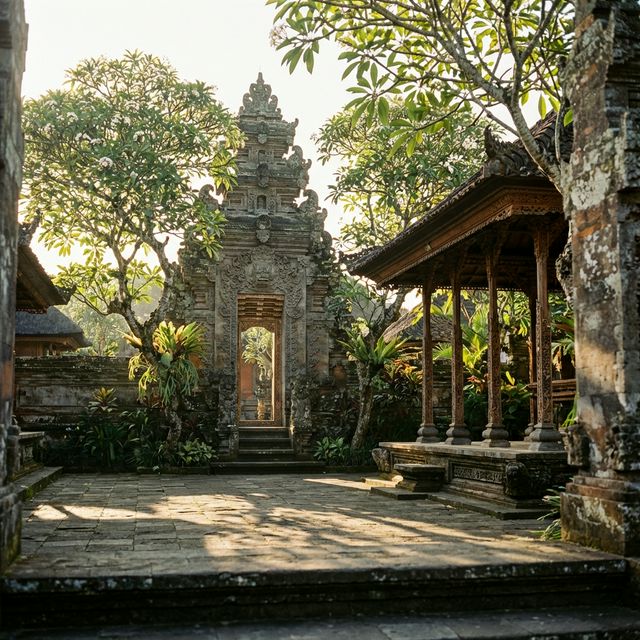
When most people think of Bali, they picture rice terraces in Ubud, sunset bars in Seminyak, and temple selfies at Tanah Lot. But the real heart of Balinese culture beats in the island’s thousands of villages, where daily life revolves around ancient traditions, communal rituals, and a deep connection to the land.
Cultural immersion is not about ticking boxes at famous tourist sites — it’s about stepping into the rhythm of local life, learning from the people who carry forward centuries of knowledge, and gaining a perspective that no guidebook can provide.
The Pillars of Balinese Culture You Should Know
Tri Hita Karana: The Philosophy of Balance
At the foundation of Balinese culture is Tri Hita Karana — a Hindu-Balinese philosophy that teaches harmony between three essential relationships: humans and God (Parahyangan), humans and other humans (Pawongan), and humans and nature (Palemahan).
This philosophy isn’t just an abstract concept. It’s woven into every aspect of daily life — from the layout of a traditional compound to the timing of agricultural cycles. Understanding Tri Hita Karana is the key to understanding why Bali feels different from anywhere else.
The Subak System: UNESCO-Recognized Wisdom
The Subak system is Bali’s traditional cooperative irrigation system, recognized by UNESCO as a Cultural Landscape of Bali. Dating back to the 9th century, it demonstrates how Balinese communities manage water resources through democratic cooperation and spiritual practice.
Each Subak is governed by its members, with decisions made collectively. Temple ceremonies mark the agricultural calendar, and water rights are distributed according to principles of fairness and reciprocity. It’s a living example of sustainable resource management that modern societies could learn from.
Offerings and Ceremonies
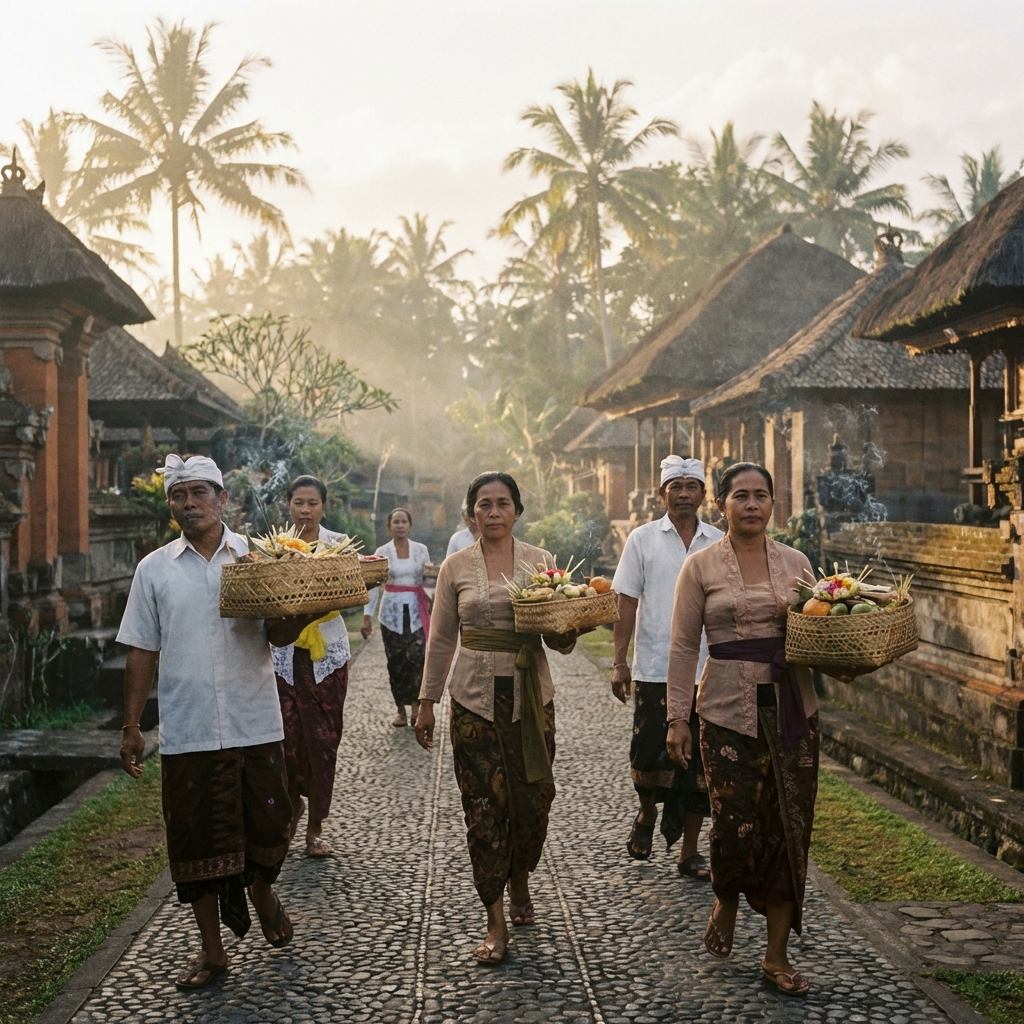
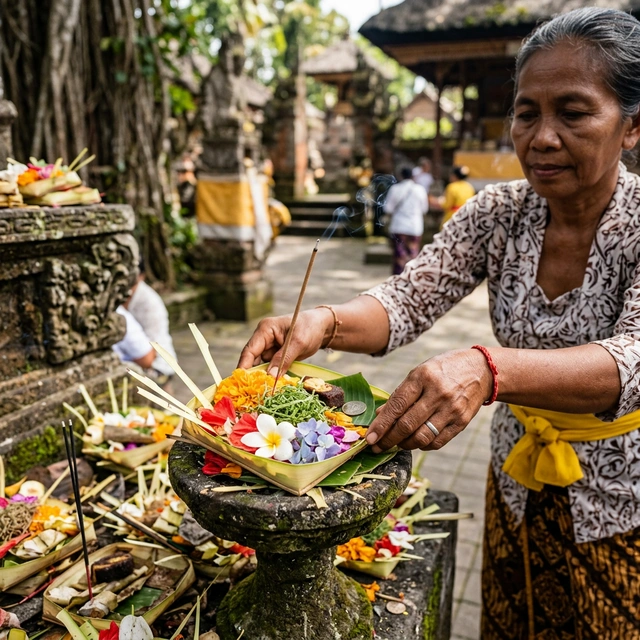
Walk through any Balinese village and you’ll see canang sari — small palm-leaf offerings filled with flowers, rice, and incense — placed at doorways, shrines, and even car dashboards multiple times a day. These offerings aren’t just rituals; they’re expressions of gratitude and balance that connect the spiritual and physical worlds.
Bali’s ceremonial calendar is incredibly rich, with major celebrations like Galungan, Kuningan, and Nyepi (the Day of Silence) alongside countless village-level ceremonies throughout the year. Each ceremony tells a story about the community’s values, history, and aspirations.
How to Experience Authentic Balinese Culture
Visit a Local Hero
Our Local Hero experiences connect you with extraordinary ordinary people — artisans preserving traditional crafts, farmers maintaining organic methods, healers practicing ancient wisdom, and community leaders driving positive change. These aren’t staged performances; they’re genuine encounters with people who are passionate about sharing their way of life.
Learn a Traditional Craft
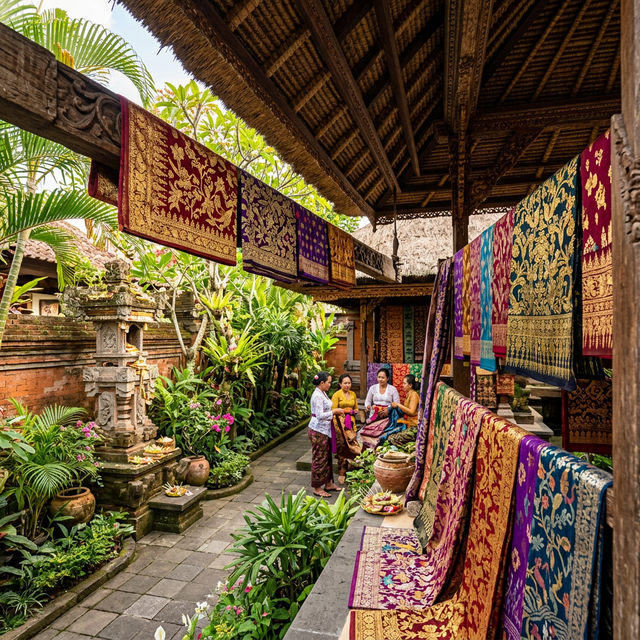
Bali is home to an incredible diversity of traditional arts and crafts. From the intricate Keliki miniature painting tradition in Gianyar to the ancient Geringsing double-ikat weaving in Tenganan, each art form carries deep cultural significance.
Learning a craft from a master artisan isn’t just about the end product — it’s about understanding the patience, discipline, and spiritual connection that goes into every piece. When you sit with a painter or weaver for hours, you begin to appreciate the cultural values embedded in each stroke and thread.
Join a Community Meal
Food in Bali is deeply communal. Traditional cooking methods, locally sourced ingredients, and shared meals are all central to Balinese hospitality. When you eat with a local family, you experience the warmth and generosity that defines Balinese culture.
From learning to prepare traditional bumbu (spice paste) to tasting dishes made from ingredients grown in the family’s own garden, these culinary experiences offer a window into the rhythms and relationships of village life.
Common Mistakes to Avoid
- Rushing through cultural sites: Spending 15 minutes at a temple for photos misses the entire point. Take time to observe, listen, and absorb the atmosphere.
- Treating ceremonies as entertainment: Balinese ceremonies are sacred religious events, not shows. If you’re invited to observe, be respectful, quiet, and follow local dress codes.
- Bargaining aggressively: While negotiation is part of market culture, aggressive haggling with artisans who’ve spent days creating a piece is disrespectful. Fair prices support livelihoods.
- Ignoring local customs: Simple gestures like removing shoes before entering a home, not pointing with your feet, and using your right hand when giving or receiving show cultural awareness.
The Transformation That Comes with Immersion
True cultural immersion changes you. It challenges assumptions, expands empathy, and creates connections that transcend language and background. When you spend time with Balinese communities, you don’t just learn about their culture — you learn about yourself.
“The most powerful moment in Bali wasn’t at a famous temple. It was sitting on the floor of a grandmother’s kitchen, learning to weave offering baskets while she told me stories about her village. That’s when I understood what Bali really means.”
Plan Your Cultural Immersion Journey
At Five Pillar Experiences, every journey is designed around meaningful cultural encounters. Whether you’re interested in traditional arts, sustainable farming, spiritual practices, or community development, we’ll connect you with the right people in the right places.
Ready to go beyond the tourist trail? Contact us to start planning your authentic Bali experience.