On your first morning in Bali you’ll probably nearly step on one. A palm-leaf tray about the size of your palm, with a few flower petals, a pinch of something edible and a stick of incense still smoking, sitting on the pavement outside your guesthouse. By lunchtime the scooters have flattened it. Tomorrow morning there will be a fresh one in the same spot.
That tray is a canang sari, the most common offering on the island. Once you know what’s in it and why, you start reading them everywhere: on shrines, at shop doorways, on the dashboards of taxis and the seats of parked motorbikes.
What goes into a canang sari
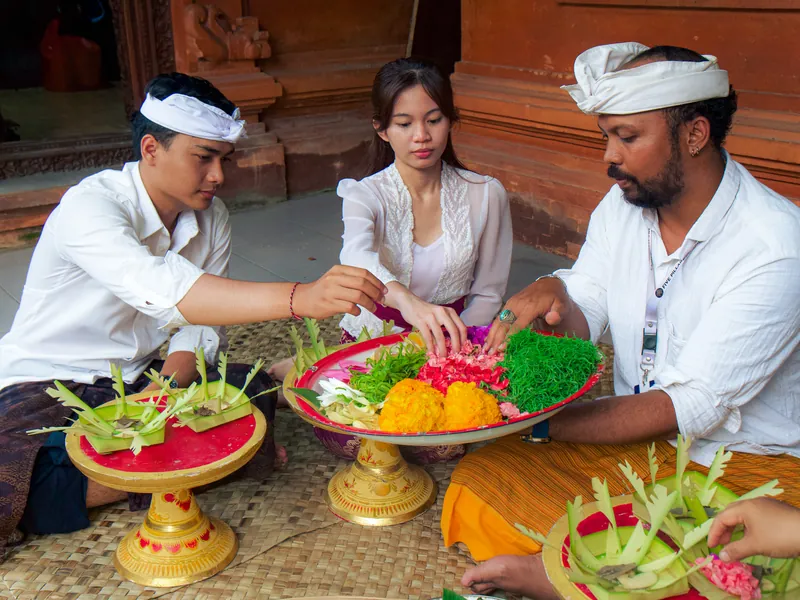
The base is a small tray called a ceper, folded from young coconut leaf and pinned with slivers of bamboo. On top of that, a typical canang sari holds:
- Porosan: a folded betel leaf with a little lime paste and a piece of areca nut, often said to represent the three main Hindu gods. It’s the heart of the offering.
- Flowers, arranged in sections by color (more on that below).
- Shredded pandan leaves, called kembang rampai, scattered over the top for scent.
- A small portion of food: often a bit of rice, a biscuit or a sweet.
- Incense, lit as the offering is placed.
- Sometimes a coin or a small banknote.
Sari means essence. As it’s usually explained, the gods and spirits receive the essence of the offering, and what remains afterwards is just material. That’s why nobody minds when yesterday’s canang gets swept into the gutter.
Why the flowers go in a set order
Look closely at a carefully made canang and the colors aren’t random. In the most common arrangement, each color faces a direction and honors the god associated with it:
- White to the east, for Iswara
- Red to the south, for Brahma
- Yellow to the west, for Mahadewa
- Blue or green to the north, for Wisnu (standing in for black, which is hard to find in a flower)
The center, where the mixed petals and pandan sit, belongs to Siwa. Villages and families vary, and plenty of busy households use whatever flowers the market had that morning. The principle holds, though: each canang is a small map of the universe, with the gods placed where they belong.
Who makes them, and when
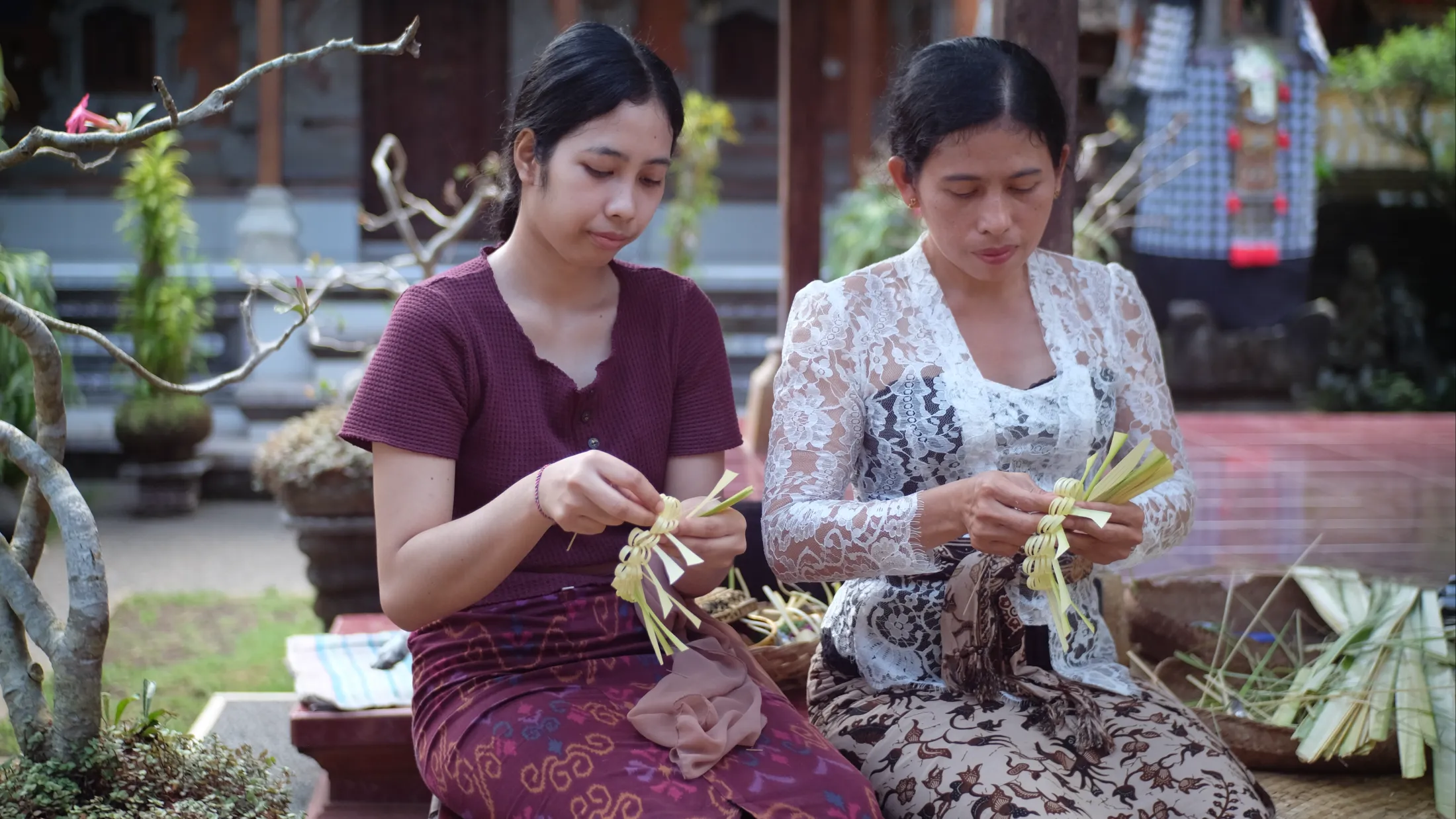
Mostly women, and mostly every day. In a traditional household, making and placing offerings is part of the morning routine, often done alongside the cooking. Girls learn by sitting next to their mothers and grandmothers, folding leaves while everyone talks.
Modern life has changed the logistics more than the habit. Many working families now buy ready-made canang from a neighbor who makes them in bulk, and every traditional market has stalls selling them by the stack. The offering still gets placed and the prayer still gets said.
Canang sari is the everyday end of a much bigger system. For temple festivals, weddings and holy days like Galungan, families build far larger offerings, including the tall towers of fruit and cakes called gebogan that women carry to the temple on their heads.

Other offerings you’ll notice
Canang sari is the one everyone photographs, but it has plenty of company. A few others you’ll start to recognize:
- Segehan: small offerings placed on the ground at gates and crossroads for the lower spirits, often with a little rice in several colors. Sometimes a splash of arak or water goes down beside them.
- Saiban: tiny portions of the day’s rice and side dishes, set out on squares of banana leaf around the compound after cooking and before the family eats.
- Canang in shops and vehicles: the one on a taxi dashboard or next to a shop’s cash box is usually a request for safe travels or a good day’s trade.
Once you can tell these apart, a walk down any village lane becomes much easier to read.
Offering etiquette for visitors
You don’t need to do anything special around offerings, but a few habits help:
- Watch where you walk, especially in the morning, when fresh offerings sit on the ground outside doorways and shops.
- If you step on one by accident, don’t panic. Offerings on the ground are meant for the lower spirits, and scooters and dogs run over them all day. A quiet apology to no one in particular is plenty.
- Don’t pick offerings up, move them or take them as souvenirs.
- If someone is placing an offering, give them space, and ask before taking a close-up photo.
- Don’t sit on shrines or on ledges where offerings have been placed.
For the wider picture of being a good guest, see our guide to ethical tourism in Bali.
How to make one yourself
The best way to learn is to sit with someone who makes them every day. The basic sequence goes like this:
- Cut a strip of young coconut leaf, fold it into a small square or round tray, and pin the corners with thin bamboo slivers.
- Fold and cut the decorative leaf pieces that frame the flowers. This is the fiddly part, and the part that takes practice.
- Place the porosan and the small portion of food in the tray.
- Arrange the flowers by color, starting in the east, then fill the center with mixed petals and shredded pandan.
- Set it down, light the incense and say a short prayer, or simply stand quietly for a moment if you’re not Hindu.
Your first one will look lopsided. Everyone’s does. It gets better around the fifth.
Making offerings with a family in Bedulu
Offerings of Bali: Create, Pray, Share is a two-to-three-hour session in Bedulu village, about 15 minutes from Ubud, built around that learning-by-doing approach. It goes in three steps:
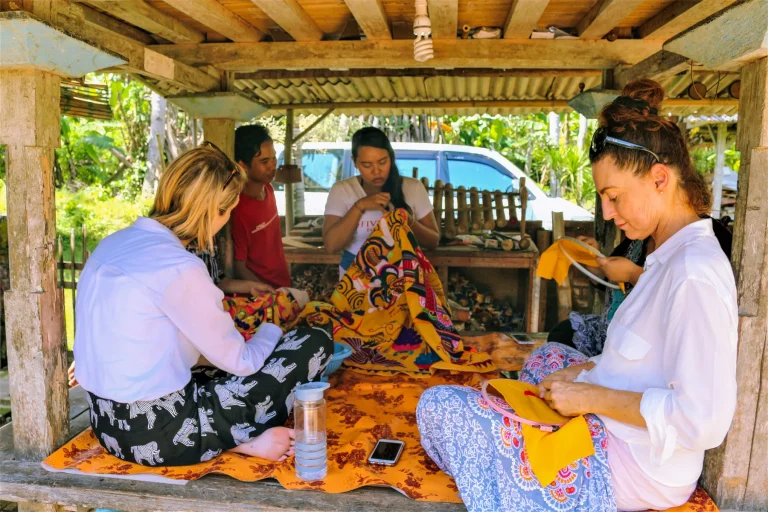
- Create: make canang sari and gebogan, and learn what each element means.
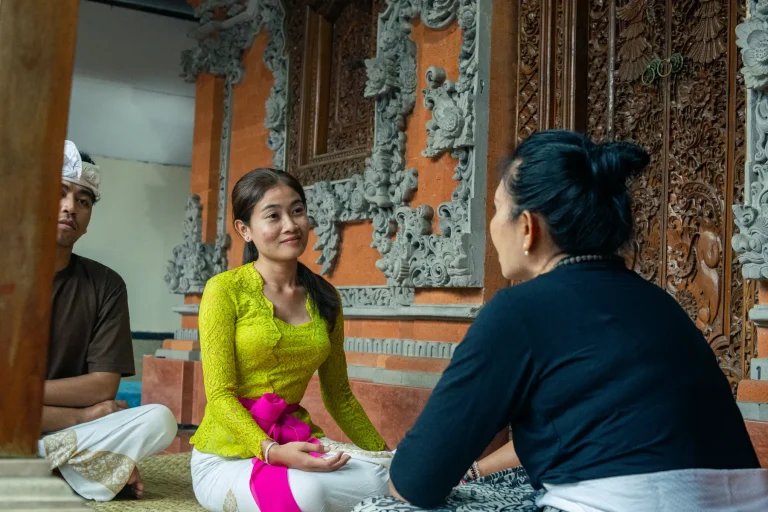
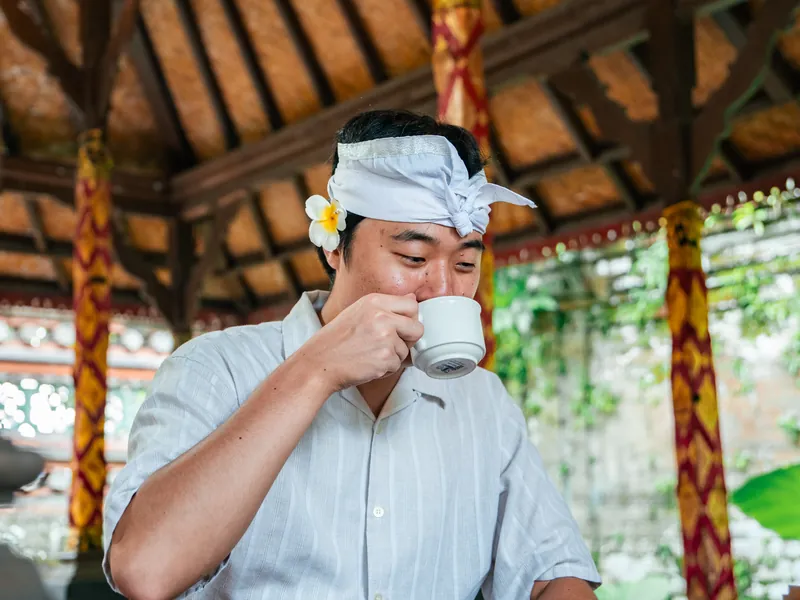
- Pray: dress in Balinese ceremonial clothes and take part in a family temple blessing, with holy water and bija, the grains of rice pressed to the forehead after prayer.
- Share: eat together with a Balinese family in ngelungsur, the custom of sharing food once it has been offered.
Along the way you see how a traditional Balinese home is laid out, which explains a lot about where offerings go and why. It runs by arrangement for groups of five to 30, and the price is on request.
If you’d rather understand the village around the offerings, the Living Heritage Village Walking Tour, also in Bedulu, walks through temples and family compounds, explains the banjar adat that makes village decisions, shows traditional craftsmanship like stone carving, and ends at Puri Agung Bedulu.
Next time you pass a canang on the pavement, look at the colors before you step around it. Somebody got up early to point them the right way.