In most Balinese families, land and the house compound pass down the male line. A daughter who marries usually moves into her husband’s family compound and prays at his family temple from then on. Customary law, called adat, has traditionally favored sons in inheritance, and although that has been debated, and in places softened, in recent years, practice still varies from village to village.
At the same time, a large share of the island’s ceremonial work falls to women: the daily offerings, the cooking for temple festivals, the weeks of preparation behind a big ceremony, often on top of paid work and running a household. Visitors see the beautiful results. They rarely see the hours behind them, or what happens when a woman in that position runs into trouble at home. In many villages the banjar, the neighborhood council, has also long been a place where men speak for the household at meetings, so a woman’s voice in formal decisions can depend a great deal on the village and the family.
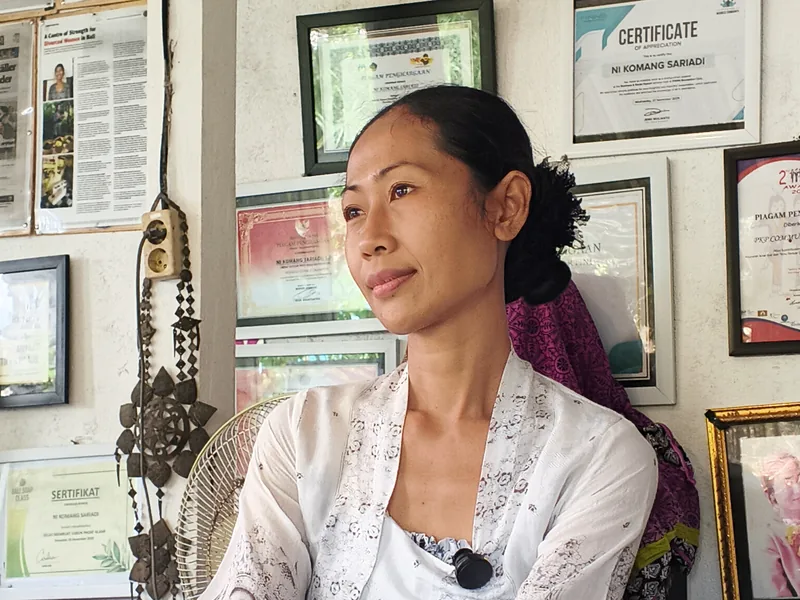
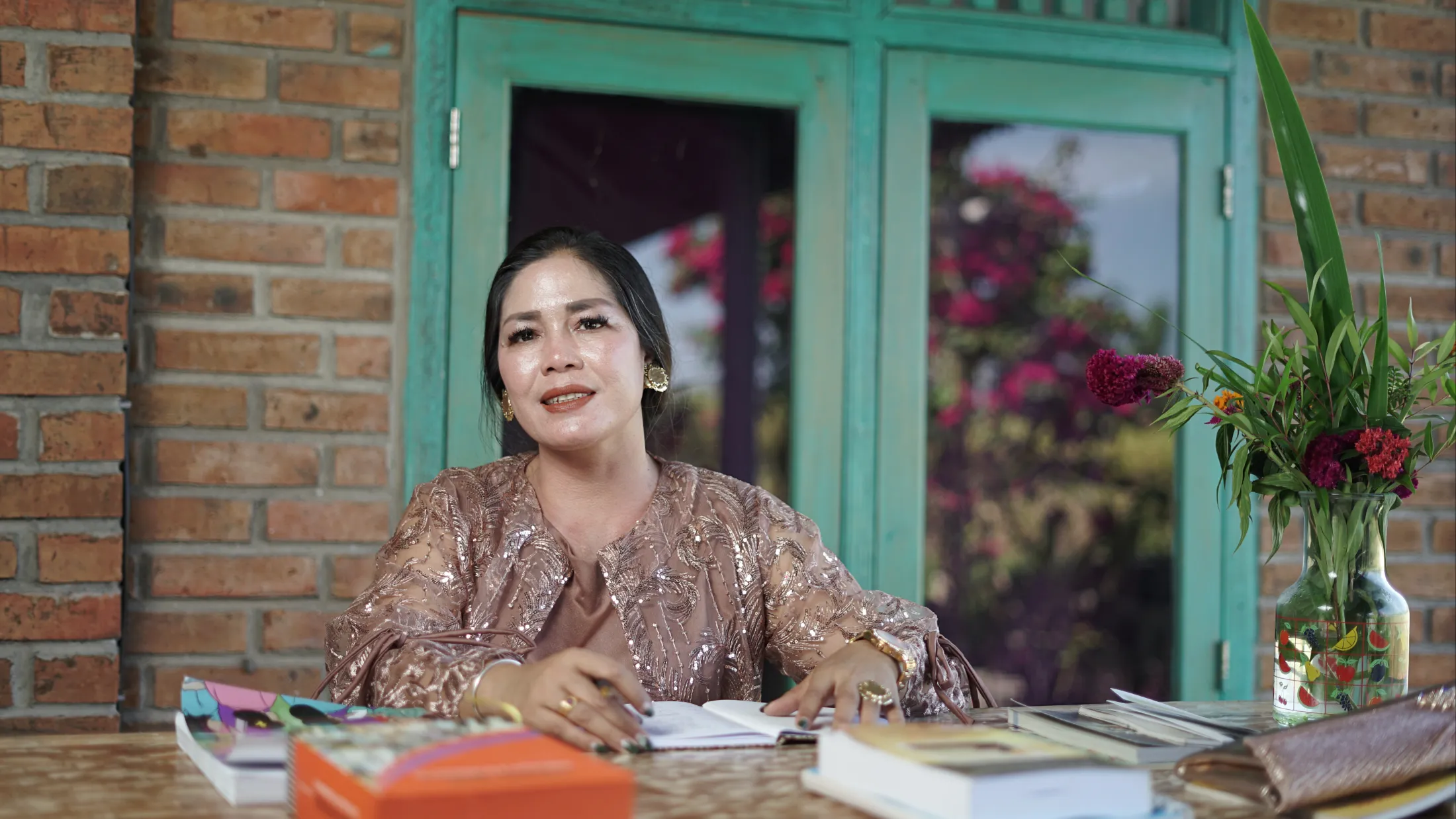
Two hosts in our Heroes Journey program work on exactly that. Ibu Buda in Sibang Kaja and Ibu Sari Pollen in Puhu run community programs for women, and both welcome small groups for a half-day visit. Here is what each visit involves, and how to be the kind of guest these projects want.
Ibu Buda in Sibang Kaja: knowing your rights
Ibu Buda’s work is about something most visitors never think to ask: whether women know their legal and family rights, and whether they have people to turn to. Her approach is community-based education on legal awareness, family rights and social support, run together with local women. She creates safe spaces where participants can learn, share their experiences and build solidarity. The aim is practical: more awareness of women’s rights, more confidence, and better access to the kind of knowledge that helps with problems in daily life and within the family.
A visit with Ibu Buda takes place in Sibang Kaja village in Badung, about 35 minutes from Ubud, and lasts three to four hours. It includes:
- A welcome and stories from Ibu Buda and local women leaders.
- An artisan tea session built around a conversation on women’s rights and empowerment.
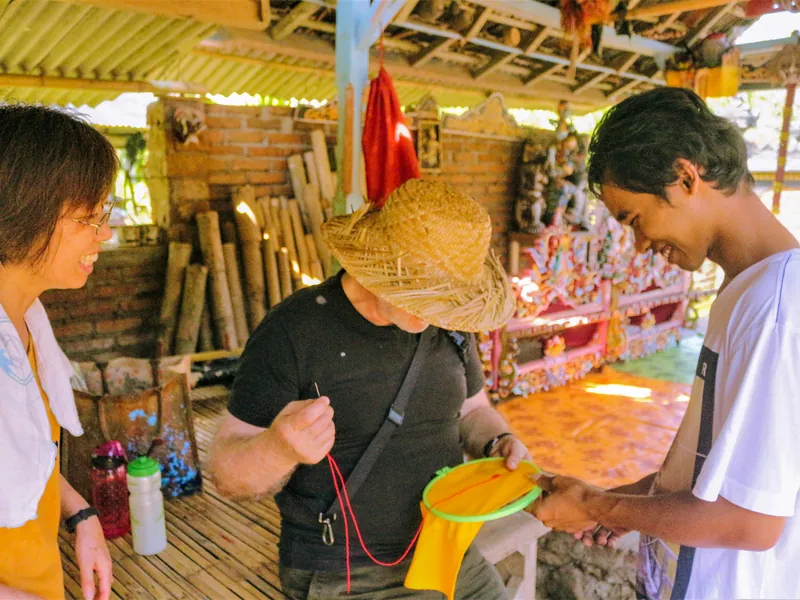
- Hands-on community activities and traditional daily tasks.
- Making traditional Balinese snacks from local ingredients.
- A local lunch and time to talk with the community.
The setting is semi-outdoor, and groups can be as small as two or as large as 35. It’s a good fit for travelers who want to understand how social change happens at village level, and for study groups with a focus on gender or law.
Ibu Sari Pollen in Puhu: healing, herbs and new skills
Ibu Sari Pollen, Bu Sari for short, leads a community initiative in Puhu village, Gianyar, for women and families in vulnerable situations. The program offers emotional support, skills training and education, and it builds safe spaces for healing, learning and self-development. Its focus is women’s confidence and economic independence, with the wider goals of gender equality, family wellbeing and a community that looks after its own.
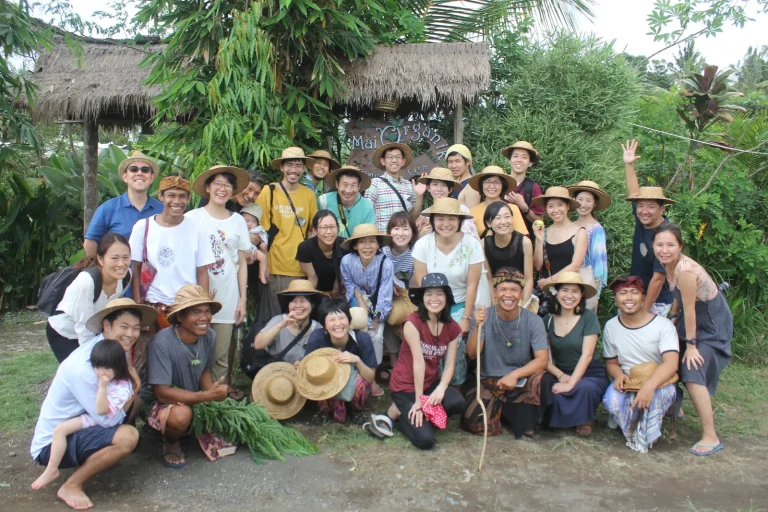
The Women of Bali Leading Change visit starts at the community center with an introduction to its women’s empowerment programs, followed by a storytelling session from Bu Sari. Then you head into the garden to learn about traditional medicinal plants and make traditional herbal tea by hand, and you finish with a community lunch and conversation with local women. Herbal drinks made from leaves and roots are an old household tradition in Bali, and the garden session is a friendly way into it before the more serious conversation over lunch. It takes three to four hours, is about 50 minutes from Ubud, and suits groups of 2 to 25.

How the two visits compare
- Focus: Ibu Buda’s work centers on legal awareness and family rights; Ibu Sari’s on emotional support, skills and economic independence.
- What you make: traditional snacks with Ibu Buda; herbal tea from the garden with Ibu Sari.
- Where: Sibang Kaja in Badung, about 35 minutes from Ubud; Puhu in Gianyar, about 50 minutes from Ubud.
- Group size: 2 to 35 with Ibu Buda; 2 to 25 with Ibu Sari.
- Setting: semi-outdoor with Ibu Buda; semi-indoor with Ibu Sari.
- In common: three to four hours, a shared lunch, and availability by arrangement.
How to visit well
These are community programs first and visits second. A few habits make the difference:
- Listen more than you ask. Let hosts decide how much of their own story to share. Personal questions about marriage, money or family conflict aren’t yours to open.
- Ask before every photo. Some participants may be dealing with difficult situations and may not want to be identifiable. Photograph the tea, the garden and the snacks freely; people only with a clear yes.
- Don’t post names or faces without permission, and that includes social media stories and group chats.
- Dress modestly. Covered shoulders and knees are a safe default in any village setting.
- Let the conversation go both ways. Be ready to talk about how things work where you live, too. An exchange is more useful to everyone than an interview.
- Ask before giving. Handing cash or gifts to individuals can make things awkward; if you want to help further, ask the host what would actually be useful.
Our guide to ethical tourism in Bali goes into the wider question of when visits like these help, and how to tell.
Planning a half day
Both visits run by arrangement, and prices are on request: use “check availability” on either page with your dates and group size. Because each lasts three to four hours, you can pair one with a slow afternoon in Ubud. Sibang Kaja lies in Badung, north of Denpasar, so Ibu Buda’s visit is also within reach if you’re staying on the south coast. Lunch is part of both programs, so mention any dietary needs when you ask, along with anything your group particularly wants to learn about. If you’d like some background first, our guide to Balinese culture and traditions explains the family compound, the temple calendar and the banjar, all of which come up in conversation.
If you’re weighing a half-day visit against an overnight trip, our comparison of Curated Tours, Heroes Journeys and 2 Days 1 Night lays out the differences. Either way, you’ll come away knowing more about the women whose work keeps Balinese life running.