Start with the most important point: a balian, a Balinese traditional healer, is not a replacement for your doctor. If you take medication, keep taking it. If you have a condition that needs treatment, get it treated. Balinese families who visit a balian usually see a doctor as well, and there is no reason for you to do anything different.
With that settled, a visit to a healer can be one of the most interesting cultural encounters in Bali. It opens a window onto how Balinese people think about the body, the spirit and the household, and it has little in common with a spa treatment that borrows a Balinese name. Here is what balian and usada are, what a visit is usually like, and how to go about it well.
Who a balian is
Balian treat physical illness, and also the problems Balinese people see as connected to it: persistent bad luck, family conflict, trouble blamed on unseen forces, or a sense that something in life is out of balance. Many serve their own neighborhoods for years, and the role often runs in families or begins with a calling.
People go to a balian alongside modern medicine, not instead of it. A family might take a child to the clinic for a fever, and to the balian to ask why the child keeps falling ill. The two answer different questions.
Since a bestselling memoir sent readers to Ubud in search of a medicine man, healing has also become a tourist product. Some sessions are sincere; some are closer to theater. Going through someone with real ties to the community makes a large difference, which is one of the ideas behind ethical tourism in Bali more generally.
Usada: healing knowledge on palm leaves
Usada is the body of healing knowledge behind much of this work. It is written in lontar, palm-leaf manuscripts in Balinese script, and covers diagnosis, herbal remedies, the uses of plants, and the prayers and offerings that go with a cure. One well-known text, Usada Taru Pramana, is devoted to the medicinal properties of plants.
The remedies often use familiar ingredients with care: loloh, herbal drinks made from leaves and roots; boreh, a spiced paste rubbed on the skin; and medicated oils. If the manuscripts themselves interest you, our piece on lontar explains how they are made and kept.
Not every balian works the same way
Balinese people describe several kinds of healer, and the lines between them blur:
- Balian usada learn from texts. They study lontar, often for years, and work from that written knowledge.
- Balian taksu work as spirit mediums, communicating with ancestors or deities, sometimes in trance.
- Balian kapican draw their ability from a sacred object they received, such as a stone, a ring or a kris.
- Massage and bone-setting healers treat sprains, aches and injuries with their hands.
Many healers combine more than one of these, and what they offer depends on the person rather than the label.
What a visit is usually like
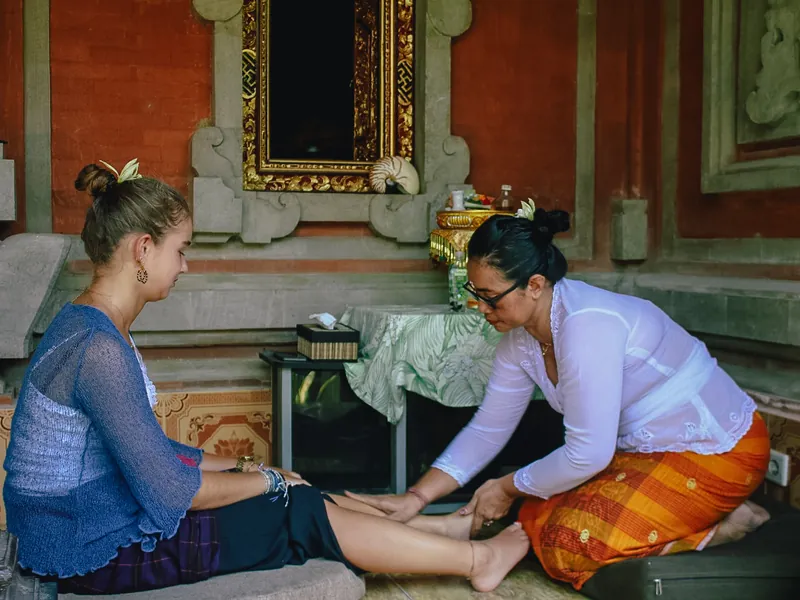
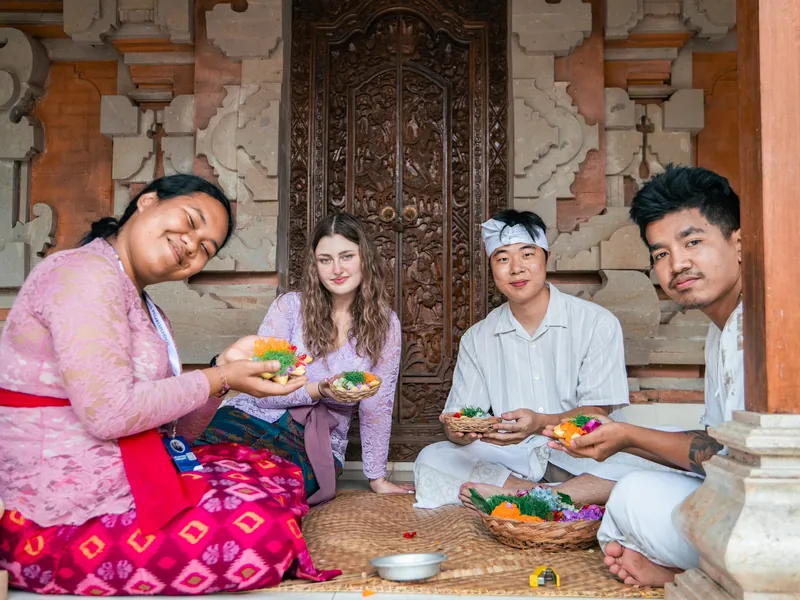
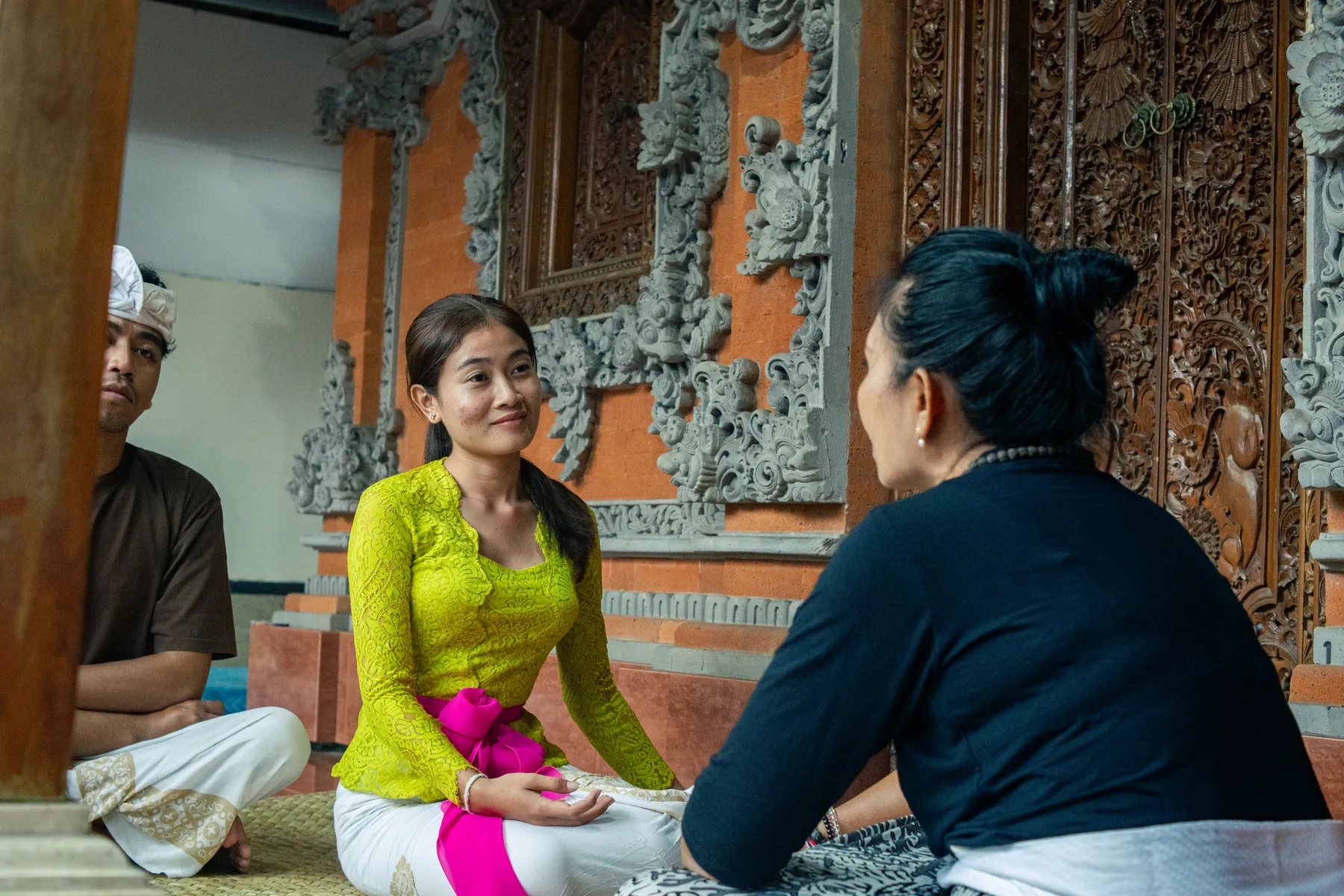
Most visits happen at the healer’s family compound rather than in a clinic. You may wait on a pavilion with other people, and there is rarely an appointment time in the Western sense. Visitors usually bring a small offering, with a donation placed in or beside it.
The healer may begin with prayer, then ask questions, look, listen, or press firmly on points of the body to find where the problem sits. That pressure can be surprisingly painful. Treatment might be herbs, a ritual, holy water, or instructions for offerings at home. Much of the conversation happens in Balinese or Indonesian, so a good interpreter matters, and it is normal to leave with as many questions as answers.
If you want to visit a healer on your own, ask a Balinese friend, your homestay family or a guide from that area for a recommendation rather than following a roadside sign, and bring someone who can translate. Allow a whole morning, and do not plan anything tight afterward.
Healing the Balinese Way, with Pak Agung
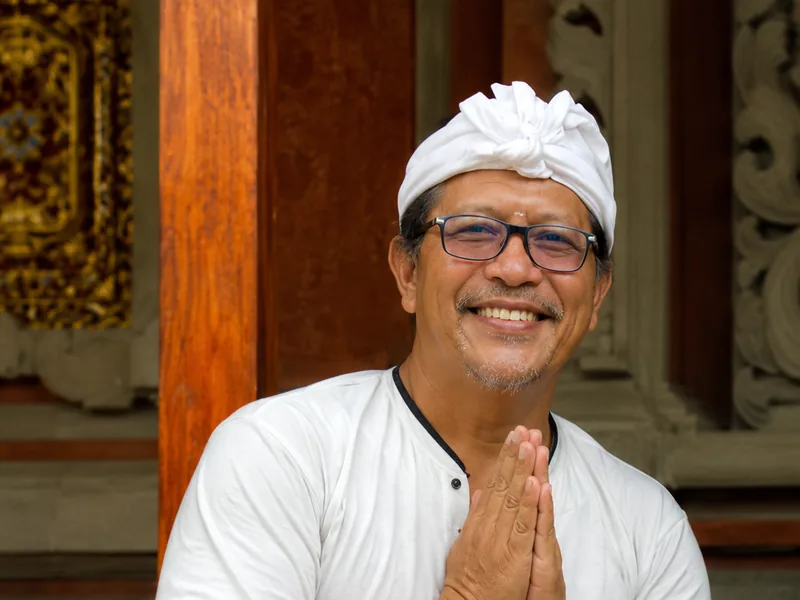
Healing the Balinese Way is a Heroes Journey in Pejeng, about 30 minutes from Ubud, with Pak Agung, whose practice draws on purification rituals, energy readings and personalized treatments. The program begins with herbal drinks at a healer’s family compound and an introduction to Balinese spiritual culture and the philosophy of the sacred house. From there you trek through the countryside to a holy water temple, join a purification ritual and experience traditional healing practices, and finish with an energy reading, a healing session and a traditional Balinese lunch.
It lasts four to five hours and takes two to five people, which keeps it personal. It runs by arrangement, so ask early if your dates are fixed.

Before you go
- Tell the host in advance about health conditions, injuries or pregnancy.
- Keep taking prescribed medication, and bring it with you.
- Wear modest clothes you do not mind getting wet, and pack a change for after the purification.
- Say so if any touch or pressure is uncomfortable. Declining is always fine.
- Ask before taking photos, and put the camera away during rituals unless invited.
- Come curious rather than looking for a cure.
The purification follows the same logic as other water blessings on the island; our melukat guide covers what to wear and how the ritual usually runs.
A slower version: two days in Pejeng
The Pejeng journey places a healing session inside a two-day stay. Day one begins with a farm-to-table lunch made with produce from the surrounding area, followed by a healing experience guided by a local healer, then free time at your accommodation. Day two moves to Bedulu for a traditional community hall and a sacred temple, a walk through the subak, and a megibung, the shared Balinese meal, at a family home. It suits solo travelers and anyone who wants wellness with some context around it.
Questions travelers ask
Is a healing session safe?
For most people, yes, as long as you treat it as a cultural experience. Pressure on the body can be firm, so mention injuries and conditions first. It is not a medical treatment and should never replace one.
Do I need to believe in it?
No. Respect is enough. Coming for the conversation and the insight into Balinese life is a perfectly good reason to go.
Should I bring an offering or a tip?
In a village setting, people usually bring an offering and a donation. On an arranged program, ask the host what is appropriate, since the program may already cover it. Gratuities for guides and hosts are a personal choice.