Pack a second set of clothes. It’s the single most useful piece of advice before a melukat, and the one first-timers forget most often. You will get properly wet, usually in spring water that’s cooler than you expect, and afterwards you’ll want to sit in a car without dripping on it.
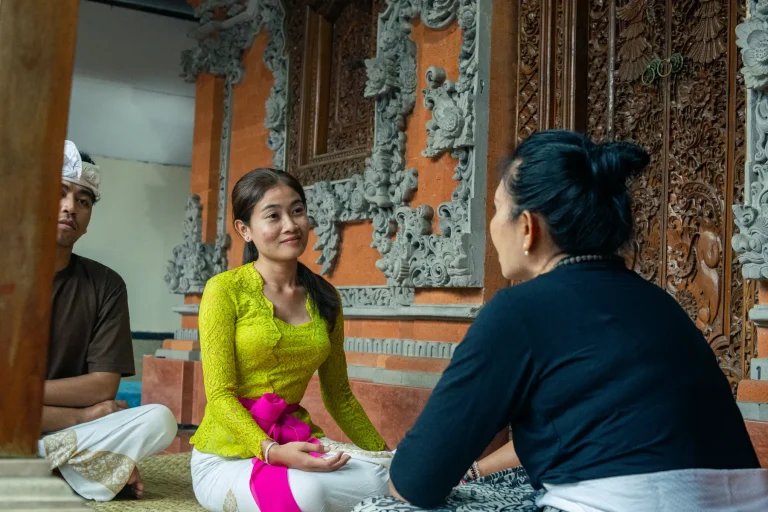
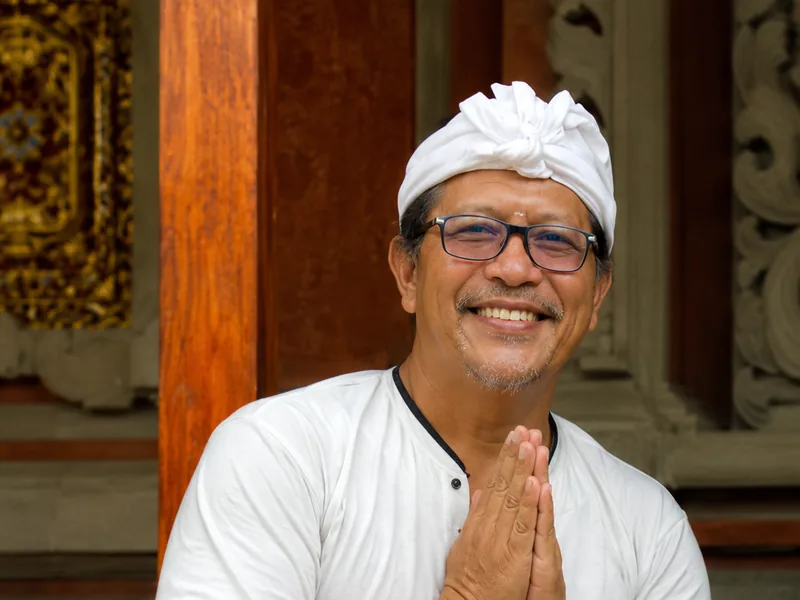
Melukat is a Balinese Hindu purification with water, led by a temple priest, the pemangku. Balinese people do it before important life events, after illness or a run of bad luck, on particular days in the ritual calendar, or simply when they feel they need a reset. Visitors are generally welcome to take part, as long as they come with the right attitude and the right clothes.
What happens during a melukat
Every temple and priest does things a little differently, but the sequence usually goes like this:
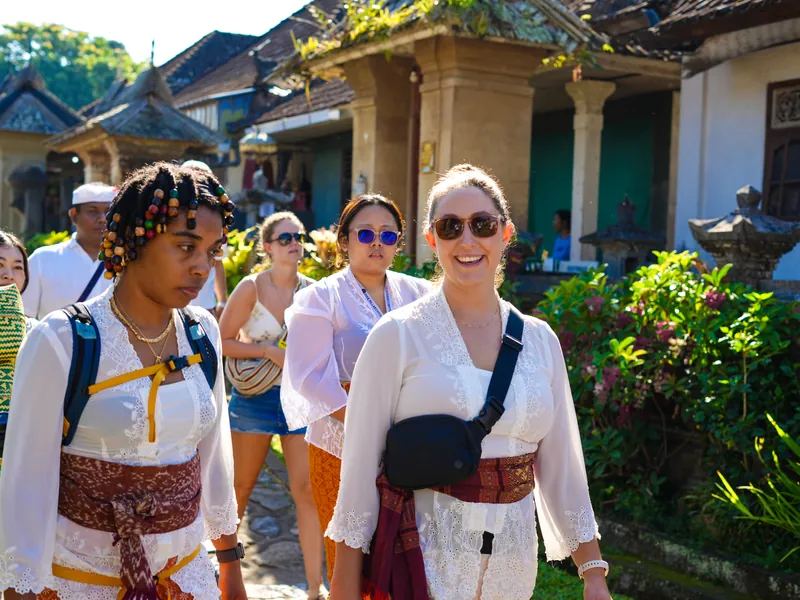
- Dressing: you put on a sarong and sash over your clothes.
- The offering: an offering, often a canang sari or a larger arrangement, is placed at the shrine for you or with you.
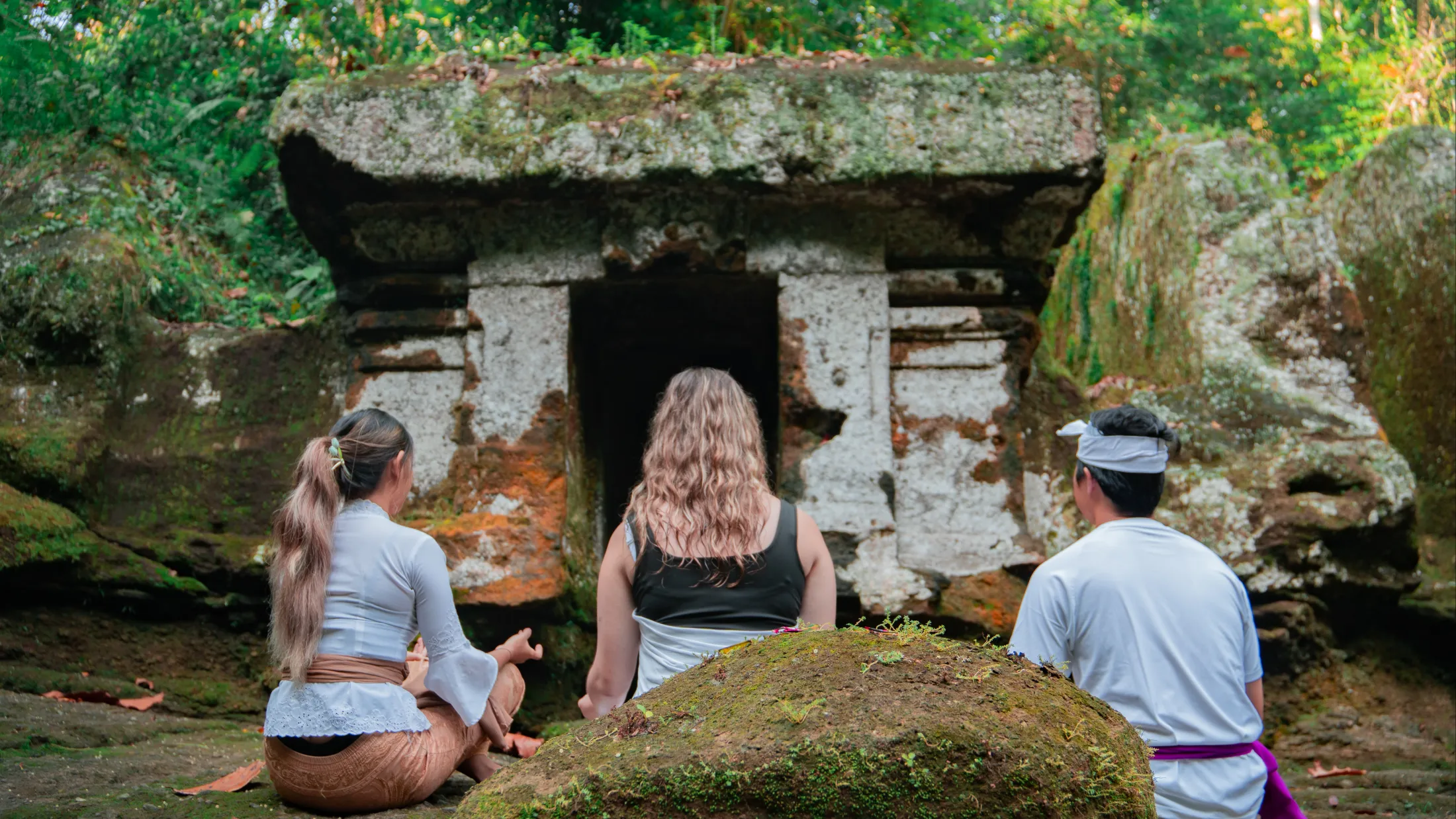
- Prayer: you sit with the priest while he chants, sometimes ringing a small bell. You hold incense or a flower between your fingertips and raise your hands when the priest indicates.
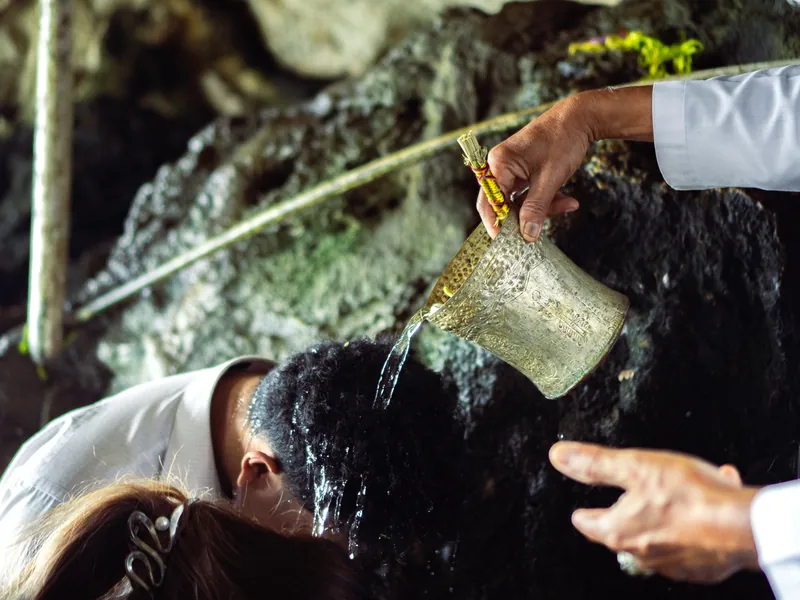
- The water: you step into the pool or under the spring. Where there’s a row of spouts, you move from one to the next in order, bowing your head under each and washing your face. Some people sip a little.
- Closing: the priest sprinkles holy water over you, you sip it from your cupped hand and touch it to your head, usually three times each, and grains of rice (bija) are pressed to your forehead.
At some temples, one or two spouts are reserved for other rites, such as purification after a death, and visitors skip them. Your guide will tell you which. From start to finish it rarely feels long, but it isn’t rushed either. Nobody will test you on the words. Follow the priest, move calmly, and you’ll be fine.
What to wear and bring
- A sarong and sash. They’re required at every temple; many places lend or rent them, so check in advance.
- Clothes you don’t mind soaking, worn under the sarong. A T-shirt with shorts or leggings works. Swimwear on its own isn’t appropriate.
- A full change of clothes, underwear included, and a towel.
- A plastic bag for the wet things.
- Sandals you can slip off, since you’ll be barefoot in the water.
- Small cash for the donation box.
Leave jewelry at your hotel, and hand your phone to someone who is staying dry.
Temple rules to know before you go
Balinese temples have rules about who may enter, and they apply to visitors as well as locals. The one that surprises people most: women who are menstruating traditionally don’t enter temples, and that includes a melukat inside a temple. The same custom traditionally applies to anyone with a bleeding wound and to families in a period of mourning after a death.
It isn’t meant as a judgment on anyone. It comes from a concept of ritual impurity, sebel, that applies to Balinese people in exactly the same way. If your period coincides with your booking, tell your guide or host; the respectful choice is to reschedule or sit this part out, and you won’t be asked for details.
The other rules are simpler. Don’t climb on shrines or stand higher than the priest, keep your voice low, sit cross-legged or with your legs folded to one side, and ask before photographing anyone, especially people at prayer.
Why a quieter spring and a local guide make the difference
The best-known purification temple, Tirta Empul near Tampaksiring, is beautiful and very busy. On most days you queue for the spouts in a long line of visitors, many of them there for photos. It can be done respectfully, but it’s hard to feel much while waiting your turn.
A smaller spring with a pemangku who has time for you changes the experience. You understand what’s being said and why, nobody hurries you, and your donation supports a temple that depends on its own community. A good local guide also handles the things visitors get wrong: the order of the spouts, when to raise your hands, what to do with the offering.
It helps to be clear about why you’re there. You don’t have to be Hindu, and you don’t have to believe anything in particular. But melukat is a religious act, closer to a blessing than a spa treatment, and it’s no place for a photoshoot. Go in quietly, follow the priest, and you’ll be made welcome.

Where to do it with Five Pillar
Water Blessing at Ancestral Ruins is a two-to-three-hour program in Bedulu, about 30 minutes from Ubud. You walk through ruins from Bali’s first kingdom, climb 200 steps with breathwork and a walking meditation, prepare offerings, and then take part in a melukat in sacred waters led by a Balinese priest. It runs by arrangement for groups of five to 20.
Several of the 2 Days 1 Night journeys also include a melukat, which lets you fit one into a wider trip:
- Denpasar: a morning melukat at Pura Kereban Langit on day two, after a day of heritage streets, Puri Pemecutan and Museum Bali.
- Bangli: a melukat at Pancoran Alas Tapa, guided by the local pemangku, after a rice-field walk to Tangkup Waterfall.
- Uluwatu: a morning purification at a sacred cave, the day after Uluwatu Temple and the Kecak dance at sunset.
- Jatiluwih: a melukat at Pura Taman Sudamala on day one, before a night beside the rice terraces.
Questions travelers ask about melukat
Do I have to be Hindu to take part?
No. Visitors take part regularly, with the priest’s agreement. What matters is that you follow the ritual respectfully and dress correctly.
Can I take photos?
Ask first, and expect the answer to depend on the place and the priest. A photo before or after is usually easier than one during prayer. Have someone on the bank take it, and keep your own phone well away from the water.
What if I don’t want to go under the water?
Tell your guide beforehand. At some places it’s possible to receive the holy water by sprinkling instead of going under the spouts, but it depends on the temple and the priest, so ask rather than assume.