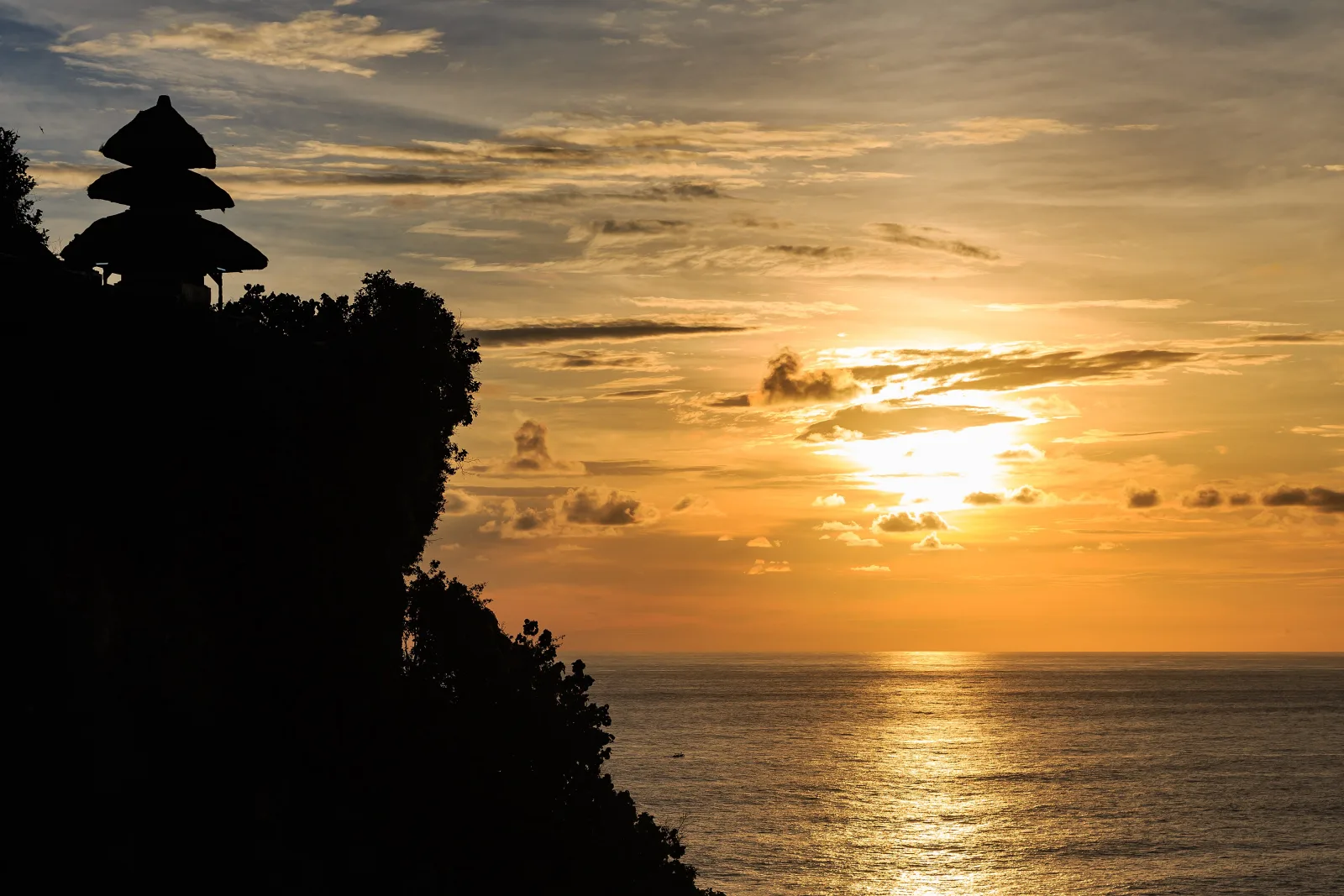
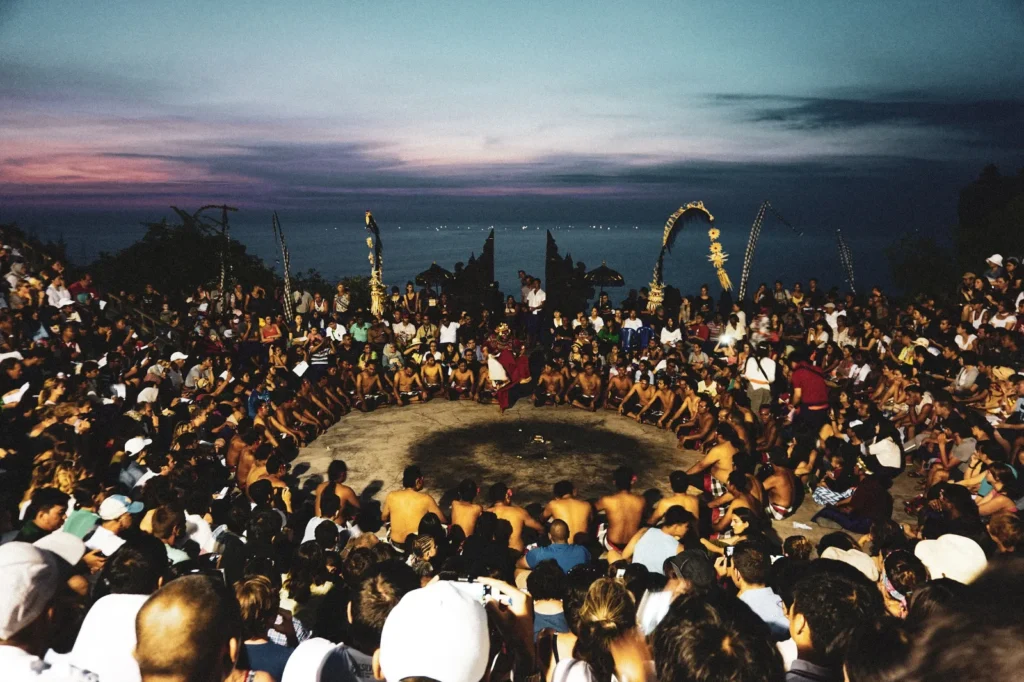
Dozens of men sit in tight circles on a stone stage at the edge of a cliff. There are no instruments. As the sun drops toward the Indian Ocean, they start to chant “cak, cak, cak” in shifting, interlocking rhythms, and the sound becomes the orchestra for a story Balinese have told for centuries. That is the Kecak at Uluwatu, and for many visitors it is the single most memorable evening of their trip to Bali.
It is also one of the busiest. Here’s what the Uluwatu Kecak dance actually is, the story you’ll be watching, how to visit the temple respectfully and how to avoid spending the hour after the show stuck in traffic.
What the Kecak is, and where it came from
Kecak grew out of sanghyang, a Balinese trance ritual in which a male chorus chants to support dancers believed to be possessed by protective spirits. In the 1930s, dancers in the Gianyar villages around Bedulu adapted that chorus into a performance of the Ramayana, the Hindu epic, so it could be staged for an audience. The form has stayed close to that version ever since.
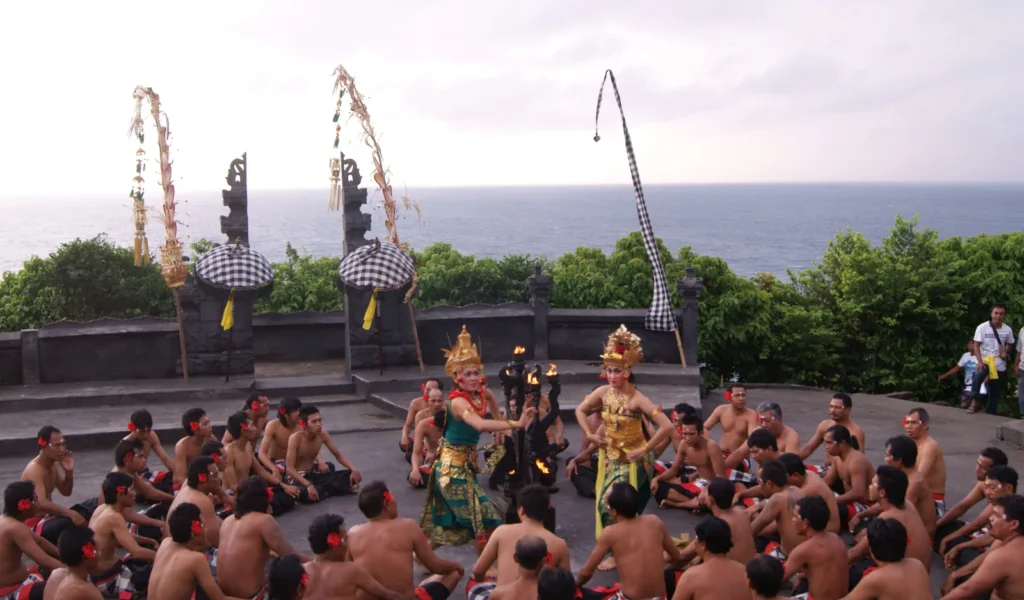
The chorus is the heart of it. The men, bare-chested with black-and-white checked cloth around their waists, become everything the story needs: an army of monkeys, the wind, the sound of a forest, the tension before a battle. Above them, dancers in full costume play the main characters, with the slow, precise hand and eye movements of classical Balinese dance.
The story you will watch
The Uluwatu performance tells one episode of the Ramayana. Knowing the outline makes it far easier to follow, because there are no subtitles and most of the narration is in Kawi, the old literary language.
- The exile. Prince Rama, his wife Sita and his brother Lakshmana live in the forest.
- The trick. The demon king Rawana sends a golden deer to lure Rama away, then kidnaps Sita.
- The messenger. Hanuman, the white monkey general, finds Sita and gives her Rama’s ring as a sign that help is coming.
- The fire. Hanuman is captured and set alight, but escapes and burns Rawana’s palace. At Uluwatu this is the finale, with Hanuman dancing through burning coconut husks on the stage.
- The rescue. Rama’s army defeats Rawana and Sita is freed.
Hanuman is the crowd favorite and often plays with the audience, so don’t be surprised if a performer steps into the front rows.
Visiting Uluwatu temple first
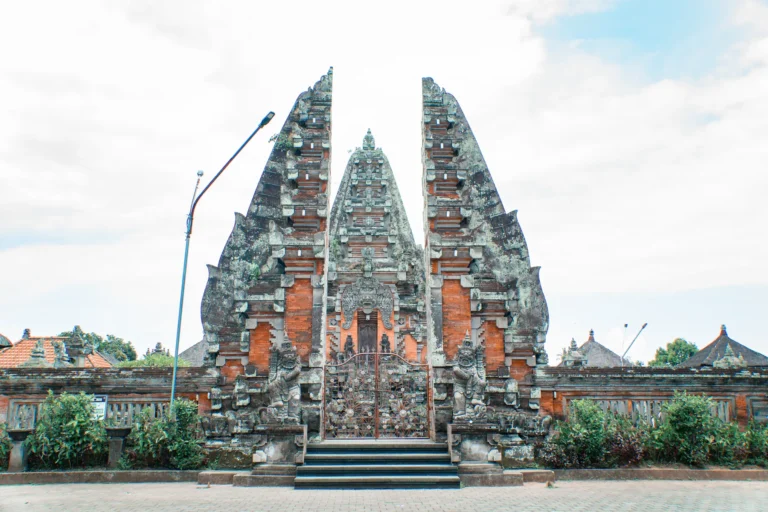
The performance takes place in an open-air amphitheater beside Pura Luhur Uluwatu, one of Bali’s directional temples, which protect the island from the cardinal points. The temple stands on a limestone cliff about seventy meters above the sea, at the south-west tip of the Bukit peninsula. Arrive an hour or so before the show and walk the cliff path first: the views along the coast are the best you will get all day.
Dress code and respect
Everyone entering the temple grounds wears a sarong and a sash, which are usually lent at the entrance. Shoulders should be covered. The inner sanctum is open only to people coming to pray, so you’ll see it from outside. If you’d like to understand why the temple matters, our article on Tri Hita Karana explains the balance Balinese temples are built around.
The monkeys
Long-tailed macaques live in the forest around the temple, and they are experts at taking sunglasses, hats, phones and anything dangling from a bag. Put loose items away before you walk the cliff path, don’t carry food, and don’t feed or provoke them. If something is taken, ask a temple staff member for help rather than chasing the monkey.
Where to sit and when to arrive
The show starts around sunset, so the exact time shifts a little through the year. Tickets are sold at the temple on the day, and in the dry season the amphitheater fills early. Some practical tips:
- Come early. Being in your seat 30 to 45 minutes before the start gives you a choice of places.
- Sit high with the sea behind the stage. The upper rows facing the ocean give you both the dancers and the sunset in one view.
- Avoid the very front row if you don’t want to be part of Hanuman’s fire scene.
- Bring water and a hat. The stone seats hold the afternoon heat until the sun goes down.
The traffic problem, and how to avoid it
The show ends after dark, and hundreds of cars and scooters leave the Bukit peninsula at the same time on narrow roads. Getting back to Seminyak, Canggu or Ubud can take a lot longer than the drive out. This is the part of a Kecak evening that most visitors remember less fondly.
The simplest fix is not to leave. On the Uluwatu 2 Days 1 Night journey, you stay near the temple after the Kecak (the hotel is an optional add-on when you book), have dinner on your own nearby, and start the next day already in the south. The first day opens with a Balinese Life Ritual Experience with a host family and a local lunch, before the temple and the Kecak at sunset.
A morning melukat to close the trip
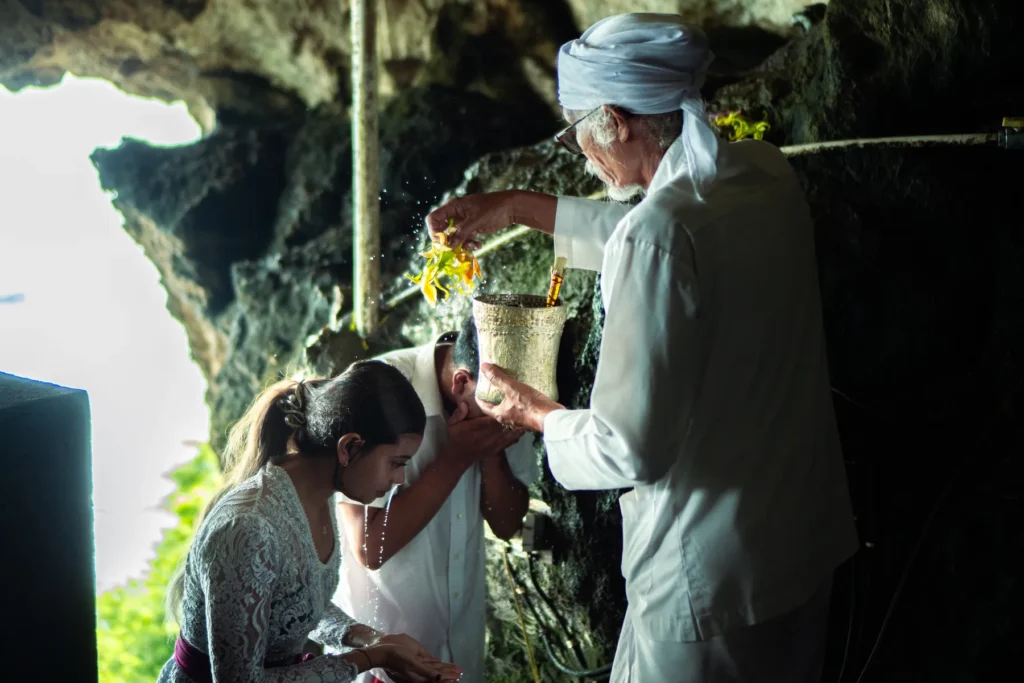
Day two on the same journey starts with melukat, the Balinese water purification ritual, in a sacred cave temple. A local priest explains the meaning, then guides you under the holy water. After an evening of fire and chanting, it is a quiet, reflective way to finish. Read what happens at a melukat before you go; the same ritual is also offered on its own as the Sacred Cave Purification Journey.
Questions people ask
How long is the Uluwatu Kecak dance?
About an hour. Plan for around two and a half hours in total if you want to see the temple and find a good seat.
Is the Kecak a religious ceremony?
It is a performance, not a temple ceremony, but it comes from a sacred tradition and is staged beside a working temple. Treat it with the same respect you would give any place of worship.
Is Uluwatu Kecak suitable for children?
Yes. Children usually love Hanuman and the fire scene. The only things to watch are the heat before sunset and the monkeys on the way in.
Can I see Kecak somewhere quieter?
Kecak is also performed in Ubud and in some villages around Gianyar, where the setting is smaller and calmer, though without the ocean view. If Ubud is your base, the Ubud journey includes an evening dance performance.
Cover photo: CEphoto, Uwe Aranas / Wikimedia Commons, CC BY-SA 3.0