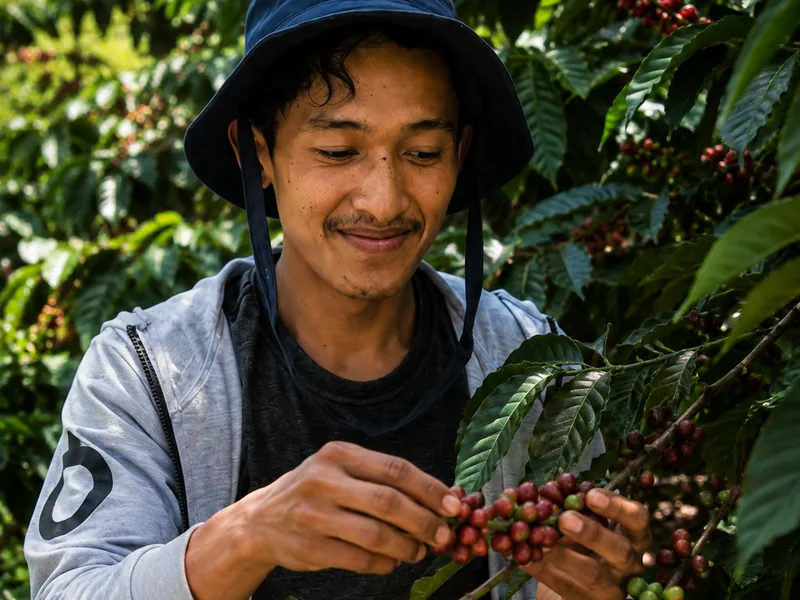
Bite into a ripe coffee cherry (ask the farmer first) and you’ll find it’s a fruit: thin red skin, a little sweet, sticky flesh, and two pale seeds pressed flat against each other in the middle. Those seeds are the coffee. Everything that happens between the tree and your cup is about getting them out, drying them and roasting them without ruining what the farmer grew.
Bali’s highlands make it easy to see that whole process in a morning. Here’s how it works, where the different coffees grow, when to go, and the one tasting worth thinking twice about.
Arabica up high, robusta lower down
Coffee in Bali splits roughly by altitude. Arabica, the species most specialty coffee comes from, likes it cool and grows on the high slopes, most famously around Kintamani and the Batur caldera. Robusta is hardier, more bitter and higher in caffeine, and it grows on lower, warmer hills, including much of the hill country of Tabanan.
Kintamani arabica carries a Geographical Indication, which ties the name to the region and to how the coffee is grown and processed; in 2008 it became the first product in Indonesia to receive one. Farmers there often grow coffee alongside citrus trees, and many tasters find a bright, fruity acidity in the cup. The farmers are organized in subak abian, the dry-land cousin of the rice-field subak, which coordinates growing and processing across many small farms.
Munduk, in the hills above the north coast, grows coffee among clove trees. In season you’ll smell the cloves before you see them, drying on tarps along the roadside.
When the harvest happens
Harvest runs roughly mid-year, around May to August, though it varies by altitude and from year to year. Outside those months you’ll still see trees, equipment and roasting, but the drying beds covered in beans and the pickers with baskets are a harvest-season sight.
From cherry to cup, step by step
- Picking: careful farms pick by hand, taking only the ripe red cherries and coming back for the rest later. Stripping a whole branch at once is faster, but it mixes in unripe fruit.
- Sorting: the cherries go into water. Dense, ripe ones sink; the floaters are skimmed off.
- Pulping: for washed coffee, a machine strips off the skin and flesh, leaving beans in a sticky coat that is fermented off and then washed away. For natural coffee this step is skipped, and the whole cherry is dried.
- Drying: beans dry on patios, tarps or raised beds for days to weeks, raked often so they dry evenly.
- Hulling: the dry, papery parchment is removed, leaving green coffee that keeps for months.
- Roasting: heat turns the green beans brown and builds the flavors. Small producers often roast in batches for local sale, while much of the crop is sold green to roasters elsewhere.
Once you’ve seen it, the price of good coffee makes more sense. Every bag has been picked, sorted and turned by hand, often more than once.

What a cupping is, and how to enjoy one
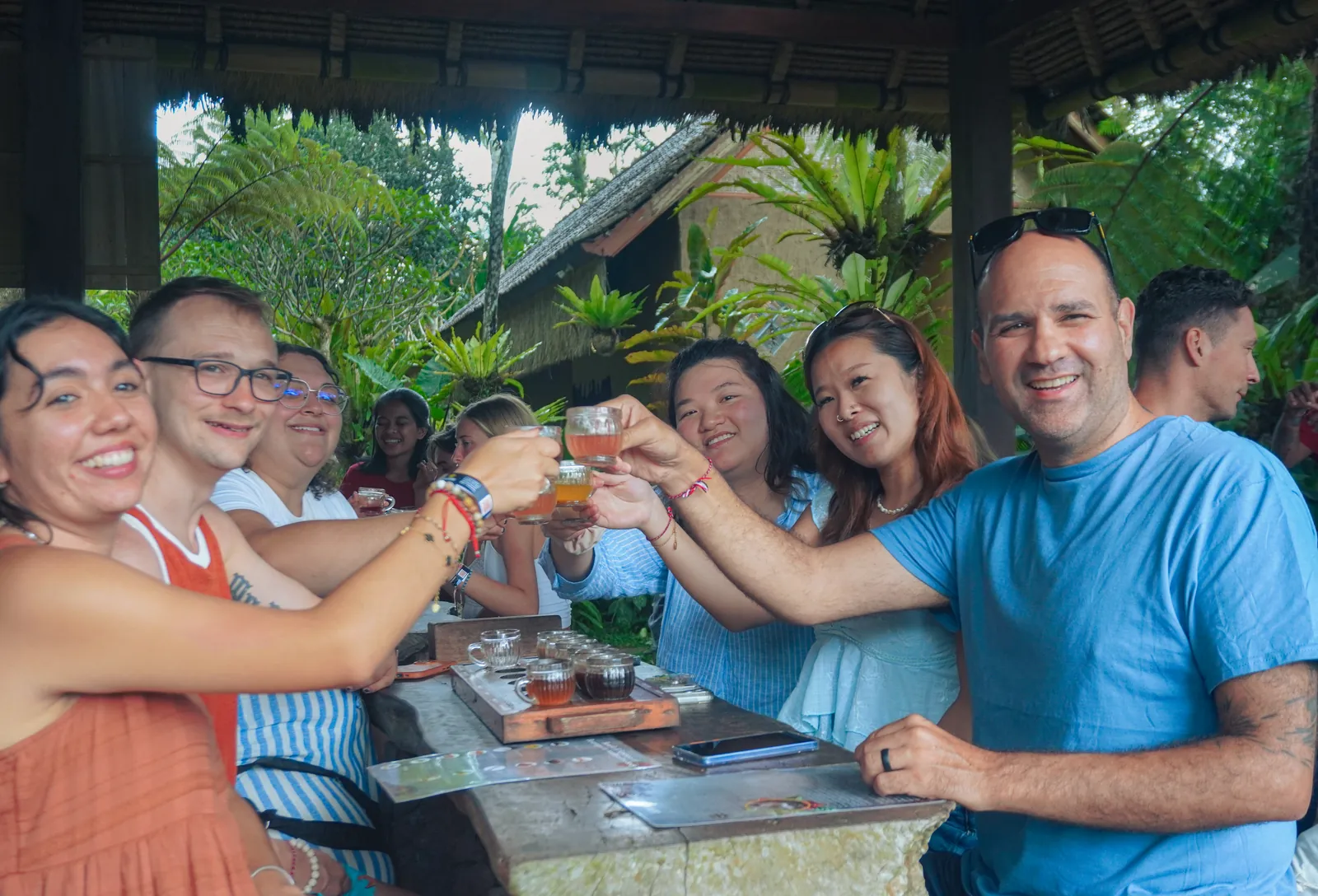
Cupping is how coffee professionals taste. Coarsely ground coffee sits in small bowls, hot water goes on top, and after a few minutes you break the crust that forms with a spoon and smell what rises. Then you slurp the coffee off the spoon, loudly, to spray it across your palate. It feels silly for about ten seconds.
You don’t need any vocabulary. Taste two coffees side by side and notice which is brighter, heavier, sweeter or more bitter. That’s most of what a cupping is.
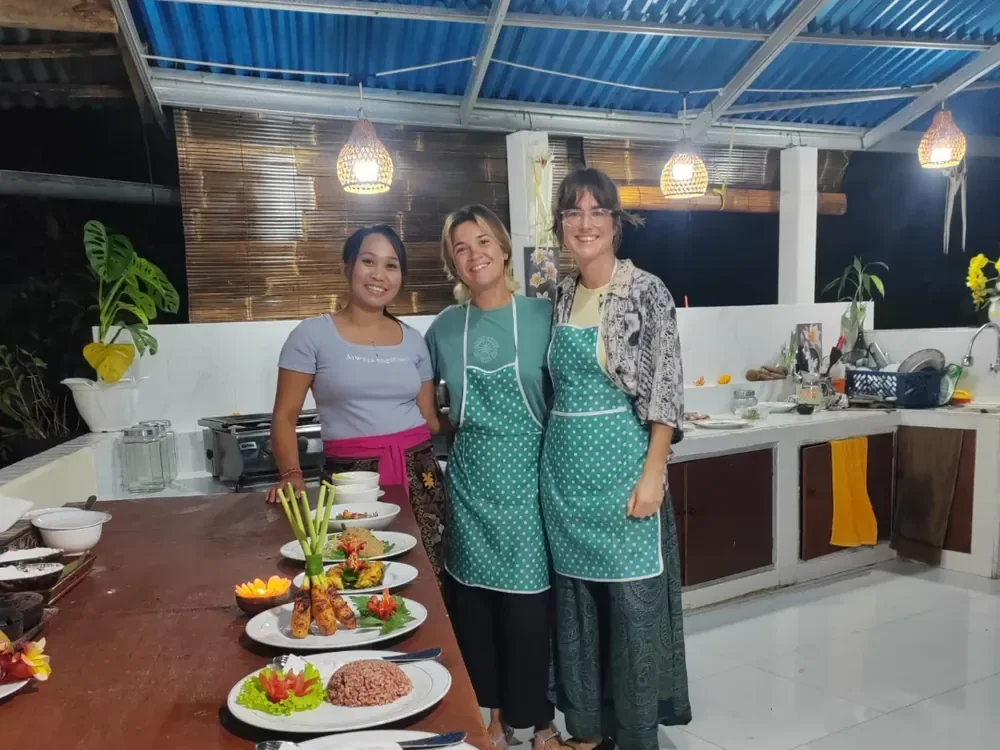
On the Munduk journey, day one includes a walk through the coffee fields of a local plantation in the cool of the afternoon, learning about organic highland farming, followed by a specialty cupping. The same day starts with a hands-on Balinese cooking class, and day two is a guided trek through clove and coffee plantations to Munduk’s waterfalls.
Kopi luwak: what to know before you taste it
Most plantation stops in Bali will offer you kopi luwak, coffee made from beans that have passed through an Asian palm civet. Wild civets pick the ripest cherries, and beans collected from their droppings in the forest were once a rare curiosity.
The trouble started when it became a tourist product. Much of the kopi luwak sold today comes from civets kept in cages and fed coffee cherries, and animal-welfare groups have documented poor conditions. A wild-sourced claim is also very hard for a visitor to check, and many coffee professionals say the flavor doesn’t justify the price anyway.
If you want to try it, ask where the beans come from and look at how any animals on site are kept. If the answer involves a cage, skip it. The Kintamani journey ends with a garden tour and a luwak coffee tasting at a local coffee plantation; ask those questions there too, and feel free to pass on that cup if the answers don’t satisfy you. Our guide to ethical tourism in Bali covers animal encounters more broadly.
Coffee with the farmers of Pajahan
The coffee visits that teach you most are built around farmers rather than animals. Brewing Resilience in Farming Communities is a Heroes Journey with Mika Adi Putra, who works with coffee farmers in Pajahan village, Tabanan, on sustainable agroforestry: growing coffee as part of a wider mix of crops and trees, protecting biodiversity, creating fair economic opportunities and keeping robusta traditions going from one generation to the next.
Over three to four hours you walk the plantation, learn about coffee and the crops grown with it, follow production from harvest through post-harvest processing, hear from farmers whose families have grown coffee for generations, and finish with a coffee tasting and a traditional lunch among the trees. Pajahan is about 45 minutes from central Tabanan, and the journey runs by arrangement for groups of two to 25.
Questions travelers ask
Can I buy beans to take home?
Usually, yes. Plantations and small roasters sell roasted beans. Ask when they were roasted, and buy whole beans rather than ground if you have a grinder at home.
Is Balinese coffee strong?
Traditional kopi Bali, the kind served in warungs, is usually robusta, ground very fine and brewed straight in the glass with sugar, so the grounds settle at the bottom. It’s strong and sweet. Stop before the last sip.
Do I need to visit during the harvest?
No. Farms explain the whole process year-round. Visiting around May to August simply means you’re more likely to see picking and drying in action.