Most people meet Mount Batur in the dark. The usual plan is a pickup somewhere around two in the morning, a long drive up from the south, and a two-hour climb by headlamp to be on the summit for sunrise. It is a great morning if you like hiking. If you don’t, or you’re traveling with children, older parents or a knee that complains on the way down, there is another way to see the same light: a Kintamani jeep sunrise.
Here’s how the 4×4 sunrise works, how it compares with the trek, what to wear and what else is worth your time in the Batur caldera once the sun is up.
What Kintamani and Mount Batur actually are
Kintamani is the highland district on the rim of an enormous volcanic caldera in Bangli regency, about an hour north of Ubud. Inside that caldera sits Mount Batur, an active volcano of 1,717 meters, and beside it Lake Batur, the largest crater lake in Bali. The whole landscape is part of the Batur UNESCO Global Geopark, and you can still see the black lava fields of past eruptions on the volcano’s flanks.
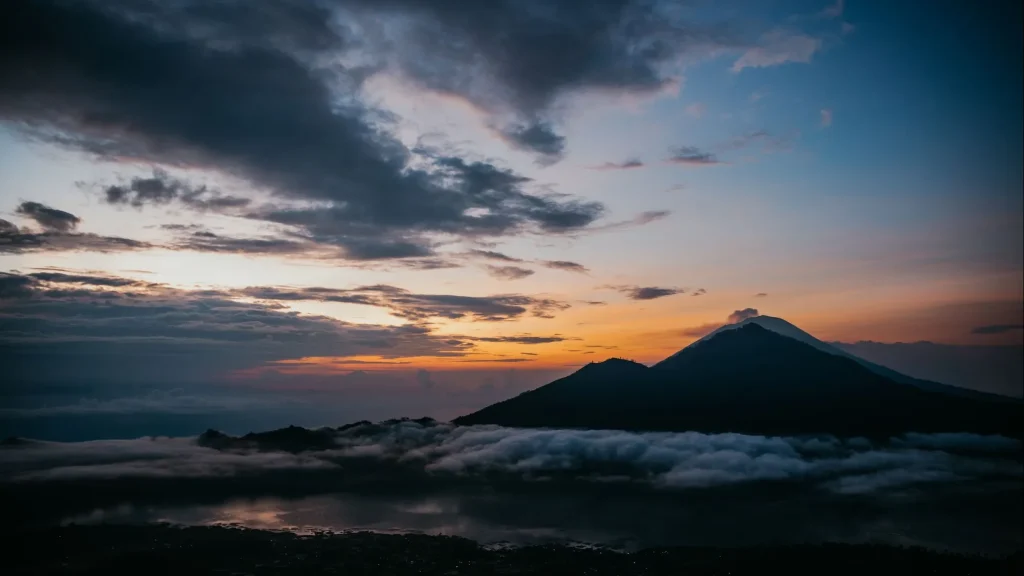
Because you are well above the coast, the air is cool, the mornings are often clear and the clouds tend to sit below you in the valley. That is what makes sunrise here special: on a good morning the sun comes up behind Mount Abang and Mount Agung while the caldera fills with soft light and mist.
How a Kintamani jeep sunrise works
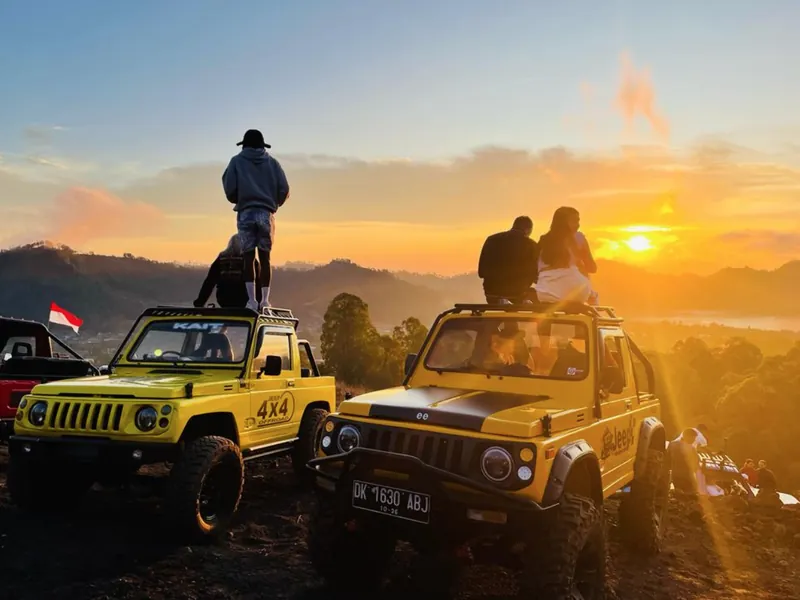
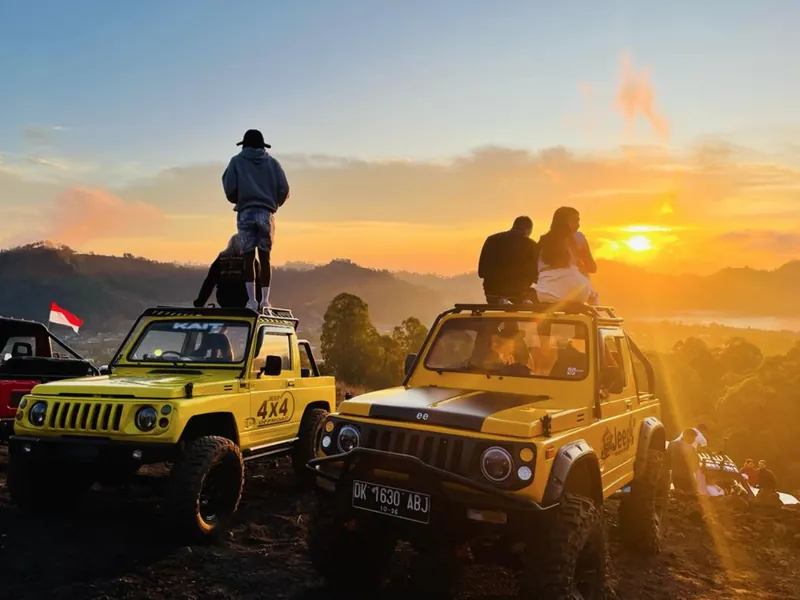
A jeep sunrise trades the climb for a drive. Local drivers take open 4x4s up the volcano’s tracks, across the old lava fields, to a viewpoint on Batur’s slopes. You get out, find a spot on the rocks or on the jeep’s roof, and wait for the sky to change. A simple breakfast is usually part of it: on our Kintamani journey it is boiled eggs and hot coffee or tea, served while the light comes up.
The ride itself is short and bumpy rather than wild. The tracks are rough volcanic sand and stone, so expect to hold on, but you don’t need any fitness or experience. Once the sun is up, the jeeps take a slower route back so you can see the lava fields in daylight.
Jeep or trek: which one is for you?
- Choose the jeep if you want the view without the effort, if you’re traveling with kids or older relatives, or if you would rather save your legs for the rest of the day.
- Choose the trek if the climb itself is the point. You stand higher, on the crater rim, and you earn the breakfast. It is a steep, loose path in the dark, so it suits people who are used to hiking.
- Either way, it is the same sunrise over the same caldera, and the weather decides more than your choice does.
Why staying the night makes all the difference
The hardest part of a Batur sunrise is not the volcano; it is the drive. From Seminyak, Canggu or Nusa Dua, a sunrise trip means leaving your hotel in the middle of the night and spending the morning half asleep in a car.
Sleeping by the lake removes that. On the Kintamani 2 Days 1 Night journey, you spend the first day in the caldera, then go to bed early at a lakeside glamping stay (an optional room you add when you book). Next morning the jeep leaves from the lake shore, which is minutes rather than hours from the viewpoint. You still get up early, but you wake up already in the mountains.
What to do in Kintamani after sunrise
A sunrise is over by seven. The rest of the caldera is worth more than a quick photo stop, and a slower pace lets you see how people actually live with the volcano.
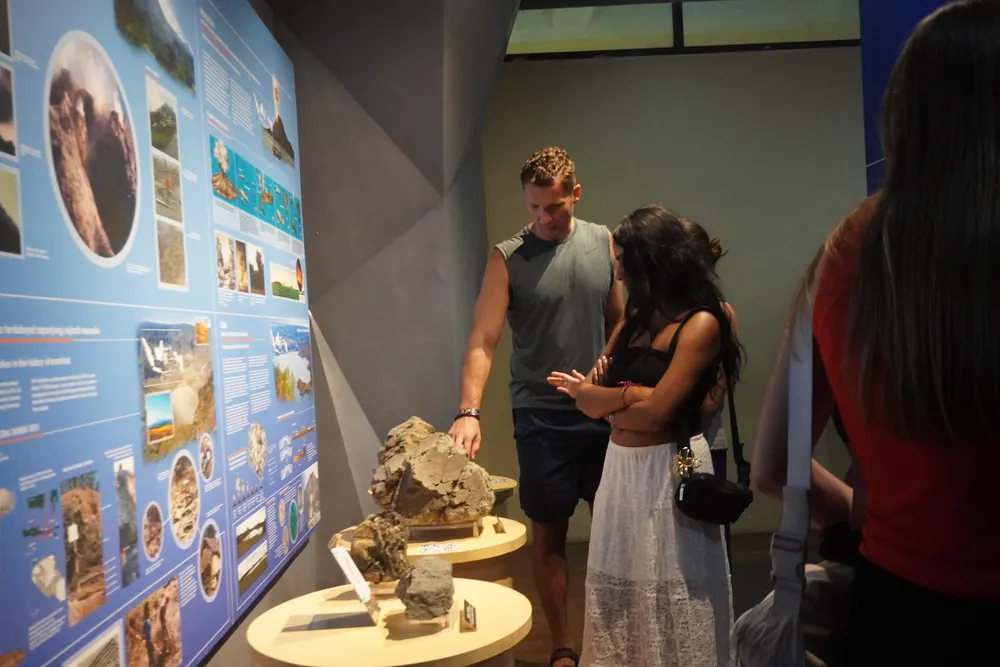
Batur Geopark Museum
A good first stop, especially before the jeep. The museum explains how the caldera formed, why Batur is still active and how the eruptions shaped the villages around the lake. It turns the landscape you’ll see at dawn from “pretty view” into something you can read.
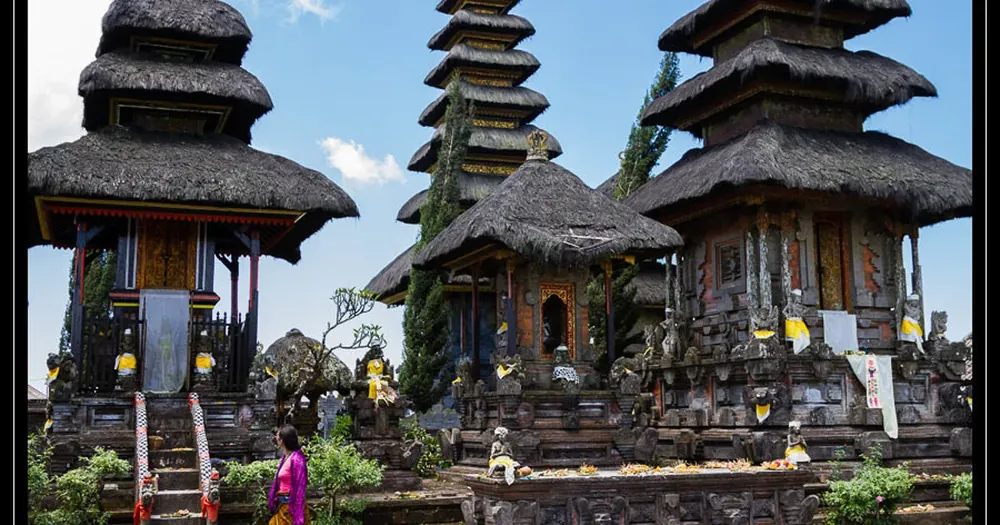
Pura Ulun Danu Batur
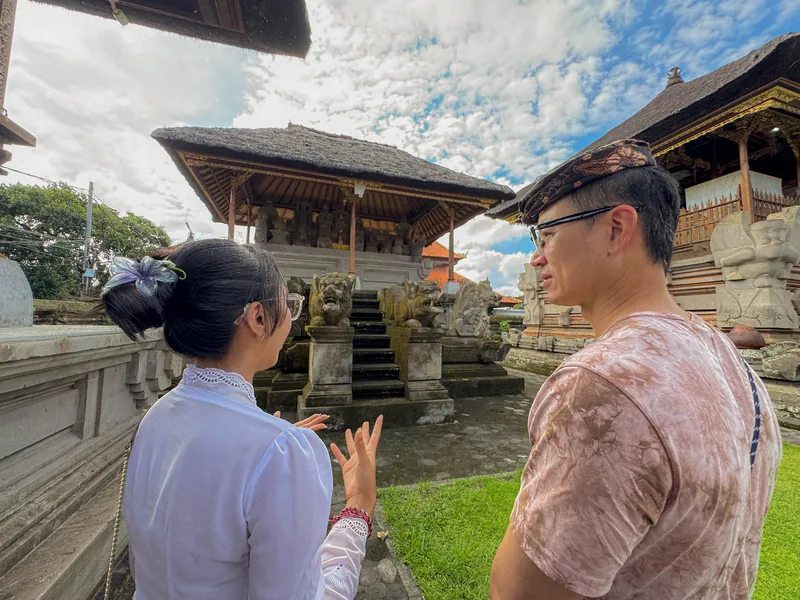
Pura Ulun Danu Batur is one of Bali’s most important temples, dedicated to the goddess of the lake. Its water is tied to the irrigation of rice fields far below, through the subak system that shares water between farmers. The temple once stood down by the lake and was rebuilt on the caldera rim after an eruption in the 1920s. On the Kintamani journey you walk through it with a guide and join a short prayer (sembahyang), dressed in a sarong and sash.
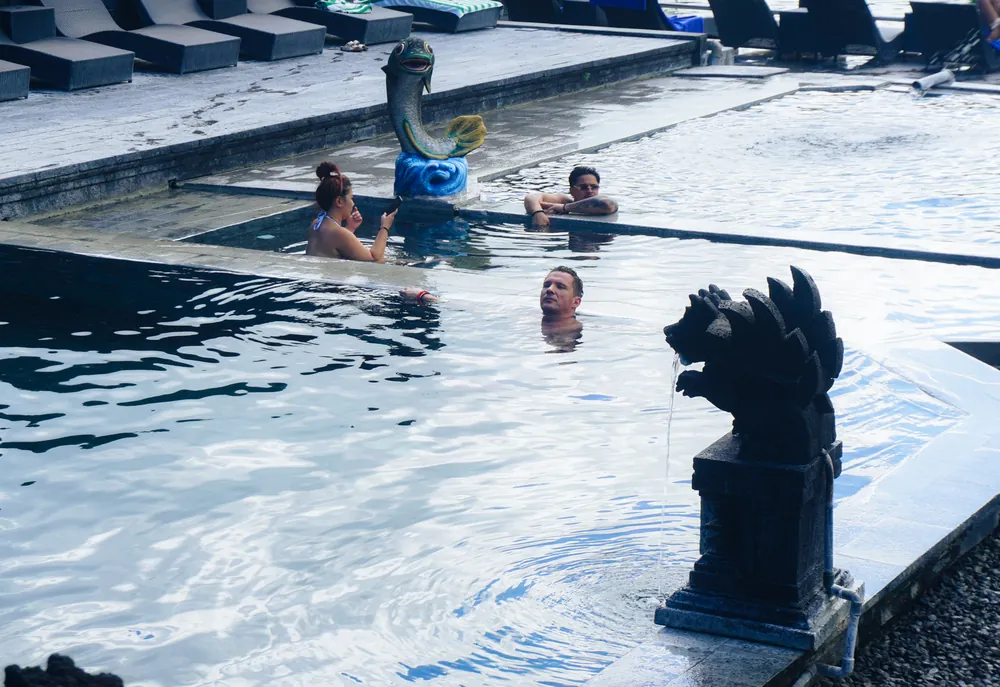
Hot springs by the lake
After a cold dawn, the natural hot springs at the lake shore are exactly what your body wants. The water is volcanic and warm, the view is of the lake and the mountain you just watched the sun rise behind, and it makes the early start feel completely worth it.
What to wear and bring
- A warm layer. Kintamani at dawn is cold by Bali standards, often in the low teens Celsius. A fleece or light jacket is enough.
- Closed shoes for the volcanic sand and rocks at the viewpoint.
- Swimwear and a towel for the hot springs.
- A sarong for the temple, though one is usually provided.
- Cash for small purchases and a coffee on the way.
When to go
The dry season, roughly April to October, gives the best odds of a clear sunrise. That said, mornings in the wet season can surprise you, and cloud below the viewpoint can be more beautiful than a perfectly clear sky. Our month-by-month guide to the dry season goes into more detail. Whatever the month, nobody can promise the weather, so it helps to think of the sunrise as one part of a highland trip rather than the only reason to go.
Questions people ask
Is the Kintamani jeep sunrise safe?
Yes, with a licensed local driver. The tracks are rough and bumpy, so it is not ideal if you are pregnant or have back problems, but there is no climbing and you stay close to the jeep the whole time.
How early do you leave?
If you sleep in Kintamani, departure is usually around four in the morning. From the south coast, you would be leaving at least two hours earlier, which is why we build the sunrise into an overnight trip.
Can children do it?
Yes. The jeep is one of the easiest ways for families to see a volcano sunrise. Our guide to two-day trips with kids has more ideas for curious children.
Is Kintamani worth it if the morning is cloudy?
Usually, yes. The museum, the lake temple and the hot springs don’t depend on the weather, and the highland air is a welcome change from the coast. If you want to compare it with other mountain areas, look at the Munduk journey for waterfalls and coffee, or the Bangli journey for Penglipuran village and a melukat further down the same road.