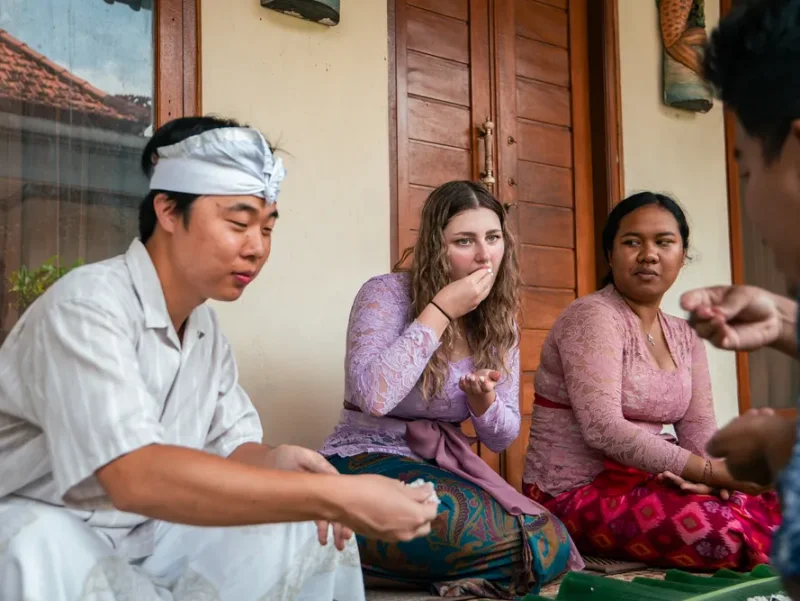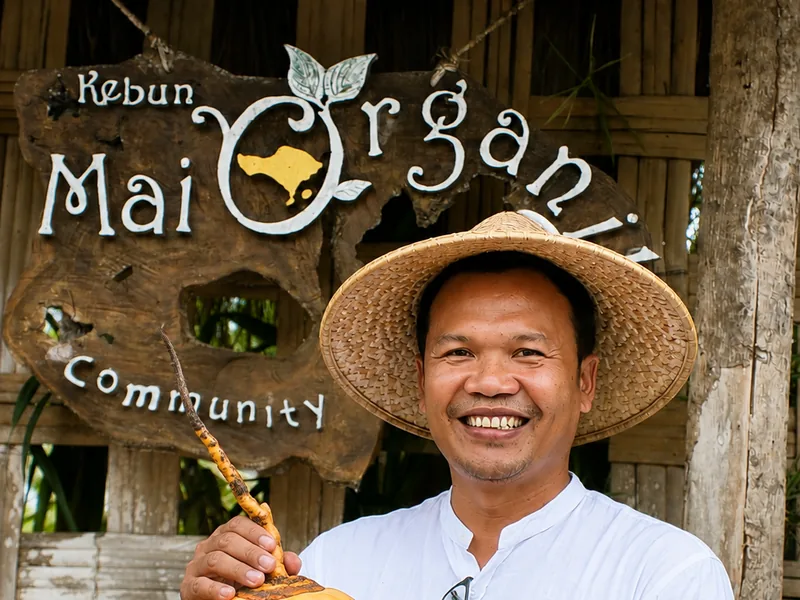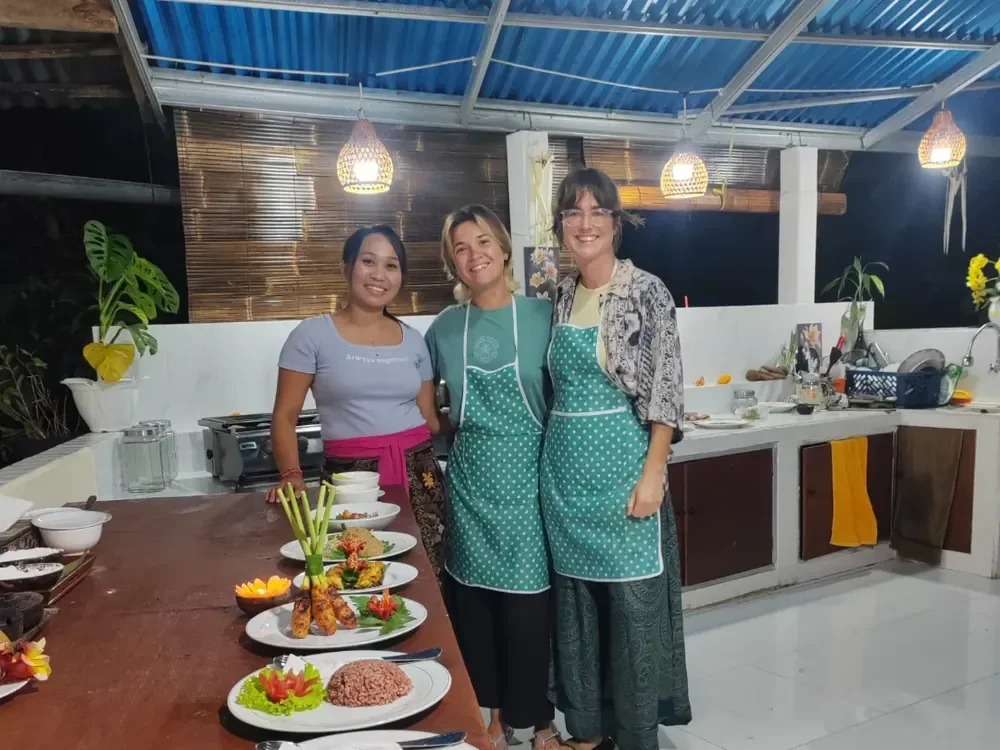
A Balinese cooking class can be one of the best mornings of a trip, or a slightly flat hour of chopping in a hotel kitchen. The difference is rarely the recipes. It is who teaches you, where, and whether the class lets you see how food fits into Balinese life: the market, the offerings, the family compound and the long, sociable work of grinding spices together.
Here’s what you actually cook in a Balinese cooking class, what makes a good one, and where we run classes around the island.
The one thing every class should teach: the spice paste
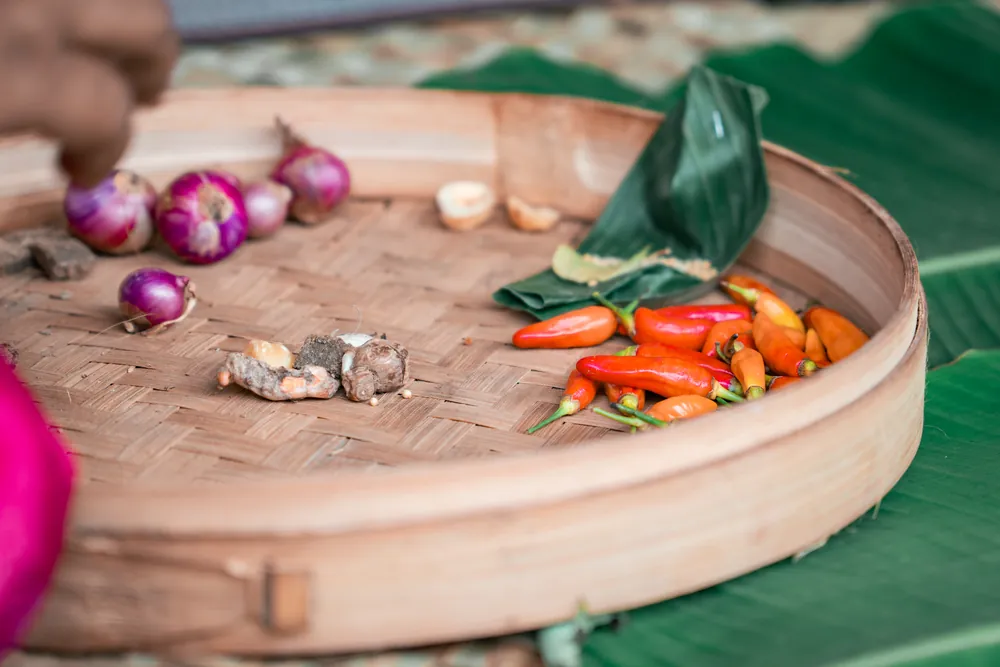
Almost every Balinese dish starts with a base, a paste of fresh roots, spices and aromatics ground together on a stone mortar. The best-known is base genep, the “complete” paste, which some families call base gede, the “big” one. Recipes vary from village to village and kitchen to kitchen, but the core is usually shallots, garlic, chili, galangal, turmeric, kencur (aromatic ginger), ginger, candlenut, coriander seed, pepper, shrimp paste and palm sugar.
If a class skips the paste and hands you pre-made sauce, you are missing the heart of the cuisine. Our article on base genep has a full recipe and explains why each ingredient is there.
Dishes you are likely to make
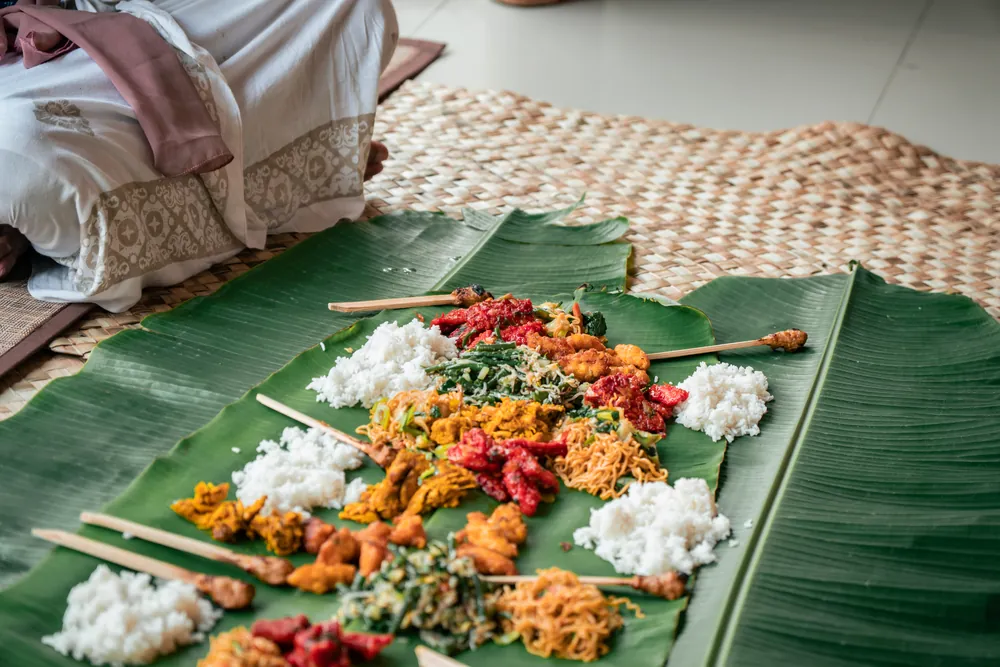
- Sate lilit: minced fish or chicken mixed with spice paste and grated coconut, wrapped around lemongrass or bamboo sticks and grilled.
- Lawar: a mix of finely chopped vegetables, grated coconut and spices, often served at ceremonies.
- Sambal matah: a raw sambal of shallots, chili, lemongrass and lime leaf dressed with coconut oil, made fresh in minutes.
- Jukut urab: blanched greens tossed with spiced coconut.
- Pepes or tum: fish, chicken or tofu with spice paste, wrapped in banana leaf and steamed or grilled.
- Jaje: Balinese cakes made from rice flour, coconut and palm sugar.
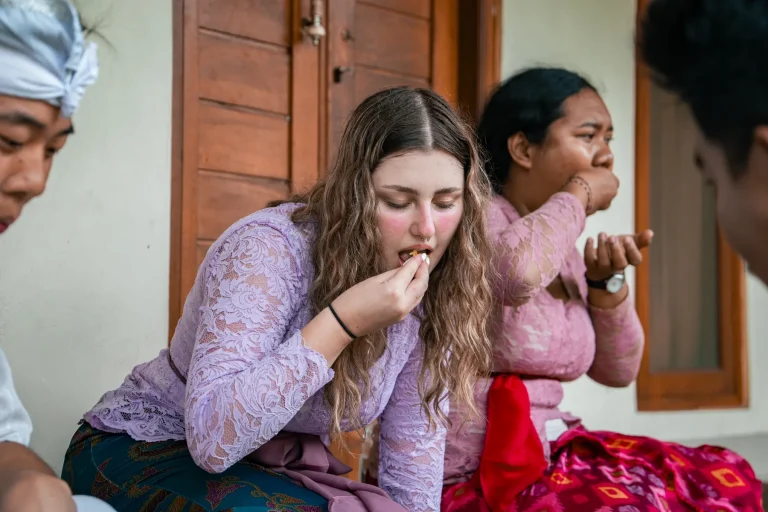
Whatever you cook, you usually finish by eating it together, often on banana leaves, and that shared meal is part of the lesson.
How to choose a good Balinese cooking class
- A home, not a hotel. Classes in a family kitchen show you how food is really made, including the offerings that are cooked alongside every meal.
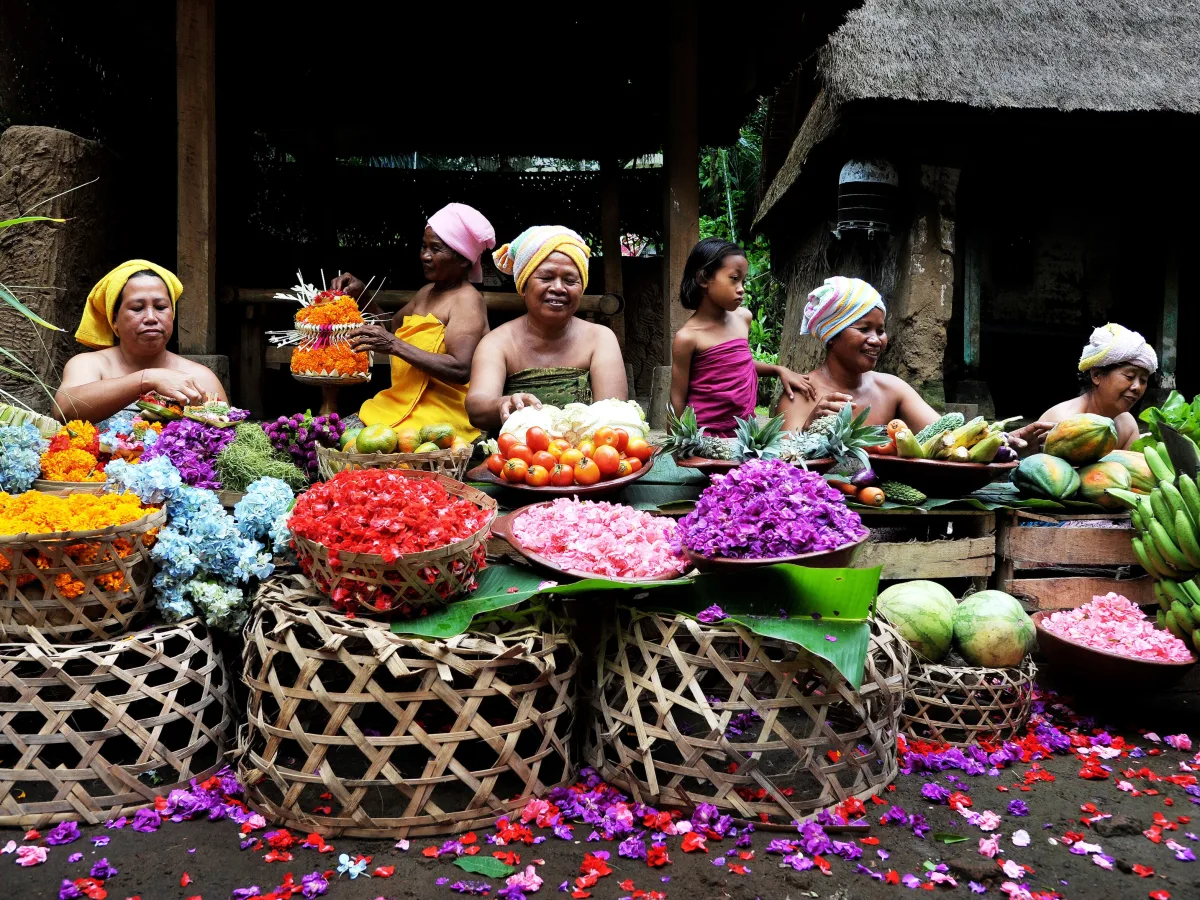
- A market visit. Seeing the ingredients fresh in a morning market, and how people buy them, gives the recipes context.
- Small groups. Two to a dozen people is ideal. With thirty, you mostly watch.
- Hands-on grinding. If you never touch the stone mortar, it is a demonstration, not a class.
- A clear answer on dietary needs. Most dishes adapt well to vegetarian cooking, but ask before you book.
Where to take a Balinese cooking class with us
Near Ubud: a village food morning in Bedulu
The Village Gastronomic Journey in Bedulu, about 15 minutes from Ubud, is less a recipe class and more an introduction to how a Balinese village eats. You smell and taste 15 to 20 traditional spices, grind base gede by hand, taste dishes cooked by local mothers with their own spice pastes, then walk the village sampling snacks and visit homes for cakes, tropical fruit and traditional drinks.
If you would rather start at the stalls, the Traditional Market Adventure in Sayan takes you through an early-morning market, where you practice a few words of Balinese bargaining and taste jamu, fruit and cakes.
Sidemen: market, cooking class and a temple blessing
On the Sidemen 2 Days 1 Night journey, the first morning is built around food. You walk through a village market with a local host, then cook traditional dishes in a hands-on class and eat them for lunch. In the afternoon the same host shows you how to make canang sari before a temple blessing. Our Sidemen guide covers the rest of the valley.

Munduk: a highland cooking class and coffee
The Munduk journey opens with a hands-on cooking class with a local host in the cool hills of the north, where you learn family recipes and eat the feast you have made for lunch. The afternoon moves to the coffee fields for a cupping session, and the next day is a waterfall trek through the clove groves.
South Bali: family dishes in Jimbaran and a garden-to-table day
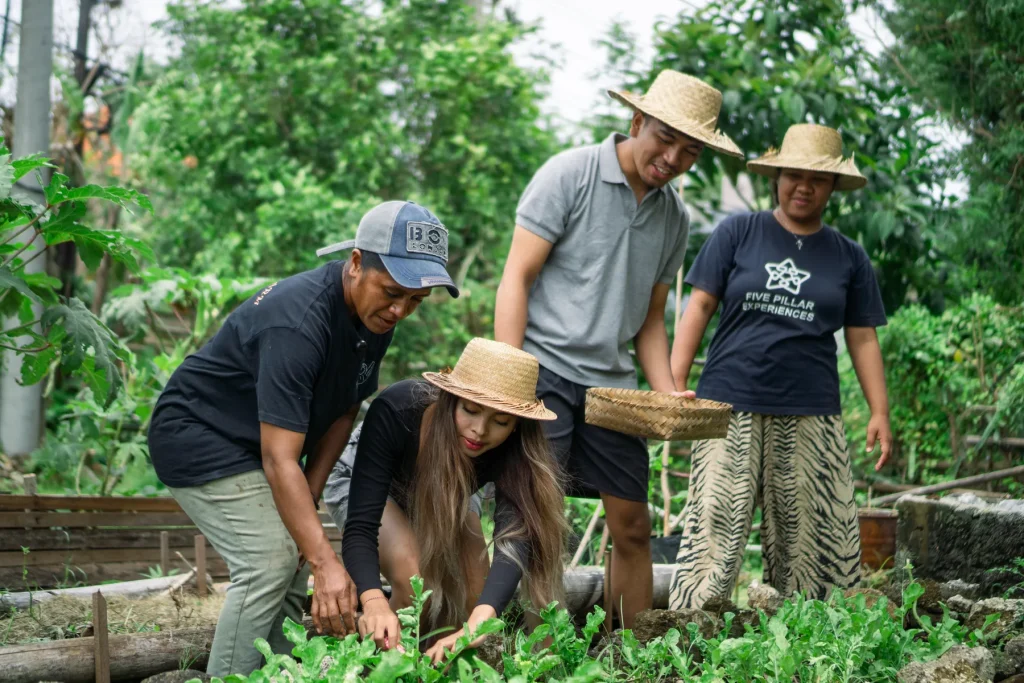
Staying in the south? The Balinese Family Tea Time and Gastronomic Experience welcomes you into a family home in Jimbaran to prepare moreng, a local dish with its own story. For families with children, From Garden to Table combines organic planting, cooking sambal matah together and a relaxed barbecue lunch.
Questions people ask
Is a Balinese cooking class the same as an Indonesian cooking class?
Not quite. Balinese cooking shares ingredients with the rest of Indonesia, but its spice pastes, ceremonial dishes and the role of food in offerings are particular to Bali. Many Indonesian classes on the island teach nasi goreng and gado-gado; a Balinese class should teach dishes like lawar and sate lilit.
Can vegetarians join?
Usually, yes. Tofu, tempeh, vegetables and coconut carry most of the flavor, and the spice paste works with all of them. Mention it when you ask, so the host can plan.
Are cooking classes good for kids?
Yes, especially classes that include a garden or a market. Children enjoy wrapping sate and tasting cakes more than standing over a stove. See our two-day trips with kids for more family ideas.
What should I wear?
Light clothes you don’t mind getting turmeric on. Turmeric stains, and you will touch a lot of it.