Walk a west-facing beach in Bali during the rainy season and you may find a line of plastic at the high-tide mark before breakfast. Beach crews often clear it early, so plenty of visitors never see it. People who live here see it every year.
This is not a scare piece. Bali has a real waste problem, real people making progress on it, and a short list of things travelers can do that genuinely help. Here is the picture as plainly as we can put it, without headline statistics.
Why the plastic ends up on the beach
Waste infrastructure has not kept pace with the island. Collection works reasonably well in parts of the tourist south and is patchy in many rural areas, landfill space is under pressure, and in many places rubbish has long been burned in yards or dumped near rivers because there was nowhere else for it to go.
Rivers do the rest. In the wet season, roughly November to March, heavy rain washes plastic from land into rivers and out to sea, and currents carry it back onto beaches, especially on the west and south coasts. Some of it likely drifts in from beyond Bali. Tourism adds volume on top: more bottles, more takeaway packaging, more of everything.
What the rules say, and what actually happens
Bali’s Governor Regulation 97 of 2018 limits single-use plastic, covering plastic bags, polystyrene foam and plastic straws, and it has applied since 2019. You notice it in supermarkets and chain minimarts, where plastic bags are generally not handed out, and in cafes that serve paper or bamboo straws.
Enforcement varies. A small warung may still wrap your lunch in plastic, and traditional markets still run on thin bags. That has more to do with cost and habit than defiance, and it is why the approaches that work best tend to start in households and villages rather than in regulations.
What is working
Sorting at source
Much of what a Balinese household throws away is organic: kitchen scraps, garden leaves and the remains of daily offerings. Kept separate, that material becomes compost. Mixed with plastic, it becomes a problem nobody can process. Sorting at home, into organic and inorganic at minimum, is the step everything else depends on.
Composting where the waste is made
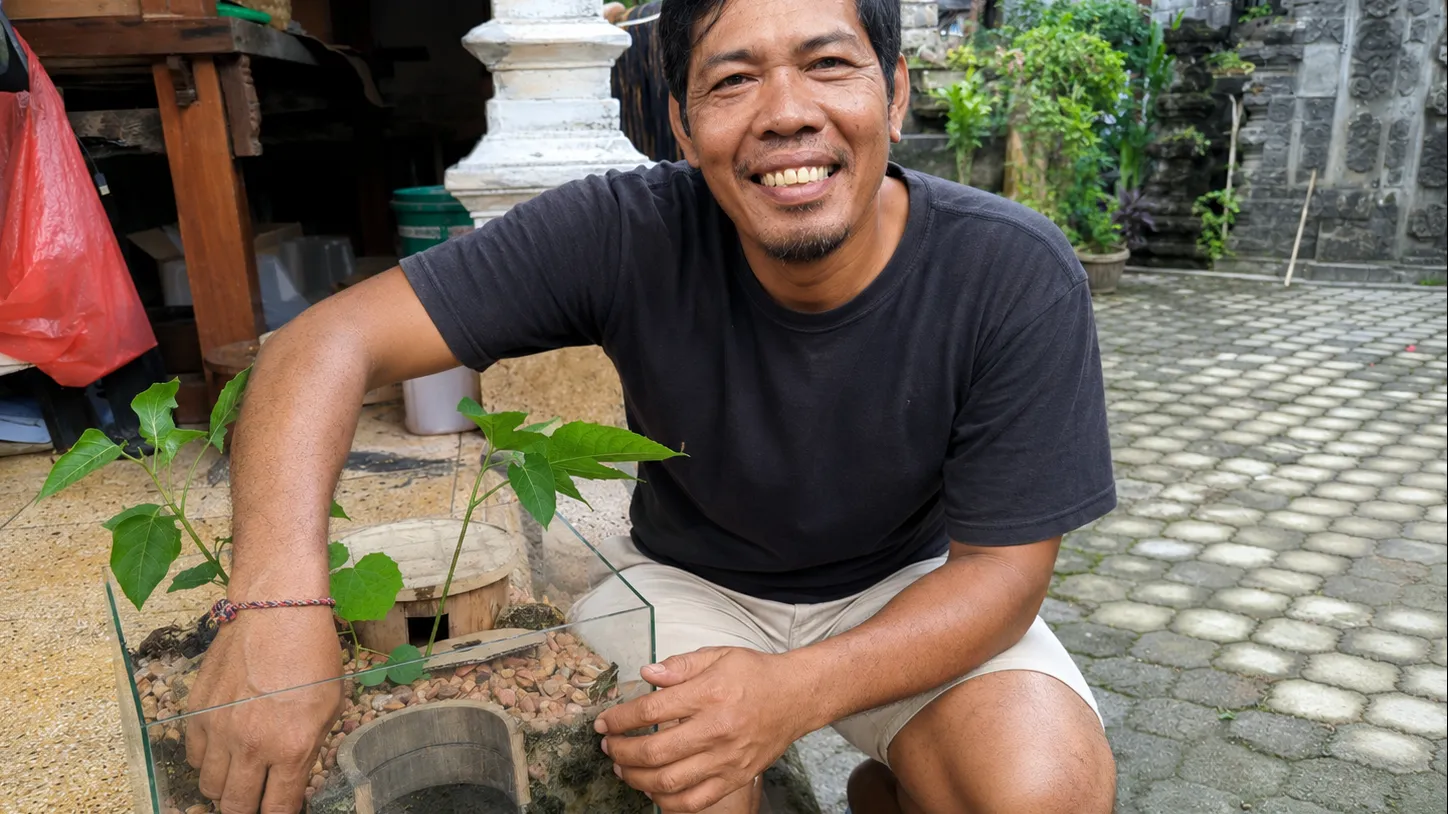
Traditional compounds have a teba, a back garden where leaves and scraps went back into the soil. The Teba Modern system updates that idea for today’s villages, turning household organic waste into compost at the source instead of sending it anywhere. You can see it working in real homes in Cemenggaon and Celuk, near Ubud.
Waste banks
A bank sampah, or waste bank, lets residents bring in sorted recyclables, have them weighed, and receive credit or cash in return. It turns sorting into something with a small reward, and it gives plastic a route to recyclers instead of the river. Many Indonesian villages run one, including Cemenggaon.
People who keep at it
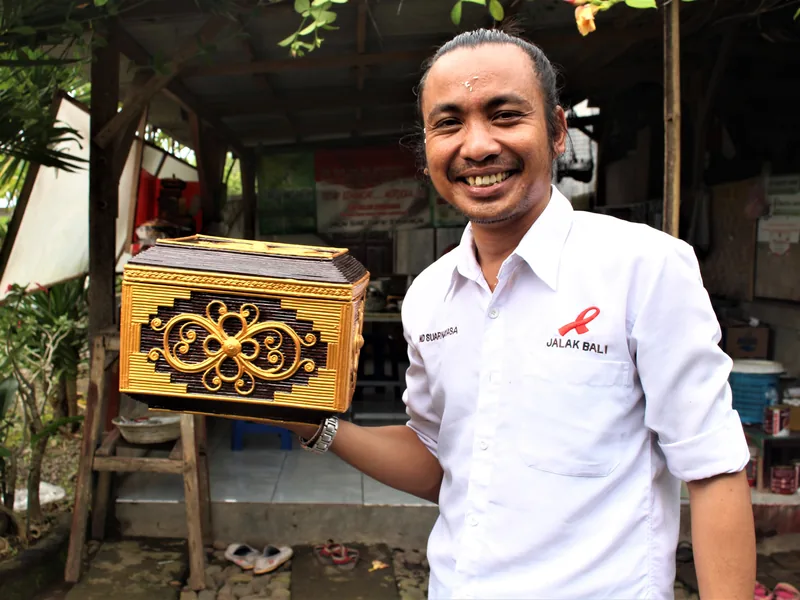
Most of the progress has a face. In Kaliakah, in West Bali, Pak Kadek Ananta combines waste management education with support programs for people living with HIV, and turns old newspapers into recycled art. In Gianyar, Pak Wayan Balik’s community composting movement teaches households to handle their own organic waste. Neither story is finished, which is part of what makes them worth hearing.

What travelers can actually do
- Carry a refillable bottle. Many hotels, cafes and dive shops will refill it. Ask; it is a normal request here.
- Refuse the small stuff. Bags, straws, plastic cutlery and the little sealed cups of water handed out at events. A cloth bag and a spoon in your daypack cover most of it.
- Ask where your waste goes. Choose hotels, villas and operators that separate waste and can tell you what happens to it next.
- Take batteries and small electronics home. Safe disposal options on the island are limited.
- Pack out what you bring from beaches, viewpoints and boat trips, especially in remote spots where collection is thin.
- Join a cleanup if one is on. Local groups organize beach cleanups, particularly in the rainy season. An hour helps, and you learn a lot from the people running them.
Questions to ask your hotel or tour operator
- Do you separate organic and inorganic waste?
- Where does your organic waste go?
- Can I refill my water bottle here?
- Do your tours carry refillable water, or buy bottles along the way?
A good operator will have answers ready. For a broader set of principles, see our guide to ethical tourism in Bali.
See it working: three short programs
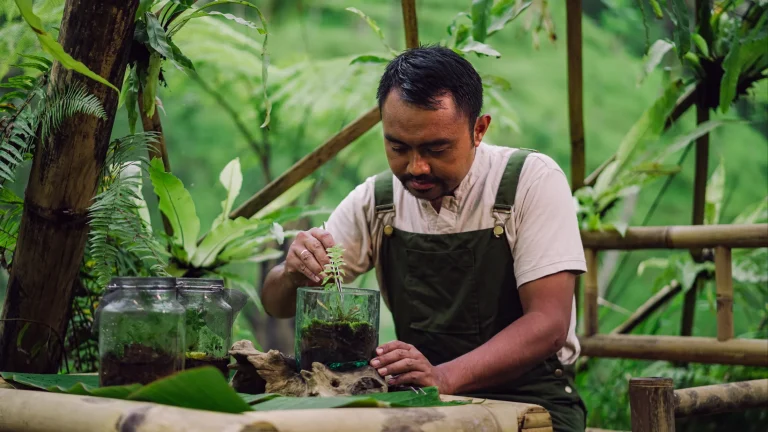
Waste to Wisdom is a two- to three-hour Curated Tour in Cemenggaon, about 40 minutes from Ubud. You meet Pak Balik, the mind behind Teba Moderen, see composting, waste separation and the village trash bank in action, handle the compost that feeds community gardens, and visit temples and homes using these systems. You also make eco enzyme, a natural cleaner made by fermenting fruit peels with sugar and water, usually for around three months, and take a batch home. It runs for one to 20 people, so solo travelers can book it too.
Empowering Communities through Waste Awareness is a Heroes Journey with Pak Wayan Balik in Celuk. It opens with an overview of Bali’s waste challenges, explains the Teba Modern circular system and the community initiatives around it, shows real-life applications, including compost use and village micro-enterprises, visits local households, and ends with making eco enzyme from fruit scraps. It takes two to three hours, for two to 25 people.
Meet the Prince of Trash is the West Bali option: two to three hours with Pak Kadek Ananta in Kaliakah, about 15 minutes from central Negara. Alongside his waste and HIV advocacy work and the recycled newspaper art, you learn the traditional process of making virgin coconut oil and share local snacks with community members. It pairs naturally with a weekend in Jembrana, and our makepung guide has ideas for that.
A small, useful half day
None of these programs will fix Bali’s waste on its own, and nobody involved pretends otherwise. What they give you is a clear look at what works at household and village level, a few habits worth taking home, and a way to put your spending behind the people doing the work.
If you are staying around Ubud, Waste to Wisdom or the Celuk program fits into a morning. Pick one, then send your date and group size through Check availability on the program page.