In Jembrana, the regency that fills Bali’s far west, farmers race water buffalo. A pair of them, yoked to a small wooden cart, charges down a dirt track with a jockey perched behind, flags snapping and mud flying, while the crowd along the edge cheers for whichever side of the river its village sits on.
The races are called makepung, and very few visitors ever see one. That has less to do with secrecy than with distance: Jembrana is about three hours from the south of the island, and most itineraries never get that far. If you are willing to make the drive, here is what happens at a race, when to look for one, how to watch it well, and how to turn it into a slow weekend in West Bali.
What happens at a makepung race
Makepung grew out of farm work. The usual explanation is that buffalo carts once hauled the rice harvest, and racing them became the farmers’ entertainment once the work was done. Today it is an organized competition with clubs, prizes and a great deal of local pride, but it is still a farmers’ sport at heart.
Each team is a pair of buffalo pulling a cikar, a small two-wheeled cart, with a jockey on board. The animals are dressed for the day in painted yokes and ornate headpieces, and the carts carry tall flags. Teams come from either the west or the east of the Ijo Gading river, which runs through Negara, and each side usually races under its own color: green for the west, red for the east. Supporters take the rivalry seriously, in the cheerful way a village football derby is serious.
Judging is not simply first past the post. Pairs race on a narrow track where overtaking is hard, and the result depends on speed and on the distance between the pairs at the finish. The finer points of the scoring vary between events, so ask someone near you to explain them. It makes every heat far more interesting to watch.
Makepung lampit: the muddy version
There is a second form, makepung lampit, raced through flooded, muddy rice fields instead of along a dirt track. It is tied more closely to the farming calendar, so it tends to happen when fields are being prepared for planting. It is slower, wetter and spectacular to photograph, with sheets of mud thrown up behind every pair. If you hear about a race, check which kind it is and dress accordingly.
When to look for a race
Makepung is a dry-season sport. Races generally take place somewhere between around July and November, often on Sunday mornings, with bigger championship events in some months. There is no fixed calendar that holds from year to year: dates are set by local organizers and can move for ceremonies, weather or official events.
The practical approach is to ask close to your dates. A hotel in Negara or Medewi, or a local guide, is your best source, since race news tends to travel by word of mouth a week or two ahead. If you are booking a trip to the west anyway and a race would make your weekend, mention it when you send your request so the timing can be discussed. Nobody can promise a race will fall on your dates, so treat it as a bonus rather than the whole reason for the trip.
How to watch it well
- Arrive early. Heats tend to run in the morning while it is cooler, and the best spots along the track go first.
- Stand well back. Carts can slide wide at speed. Stay behind any rope or marked edge, and keep children close.
- Bring shade and water. There is little cover beside most tracks. A hat, sunscreen and a refillable bottle matter more than any camera gear.
- Carry small cash. Snack stalls and parking attendants deal in small notes.
- Ask before close-up portraits. Jockeys and owners are often happy to pose with their animals between heats, but ask first, and never step onto the track for a shot.
- Know what you will see. Jockeys drive the buffalo hard, and some visitors find the handling of the animals uncomfortable to watch. If that would spoil your day, better to know it now.
- Dress simply. It is a village event, not a temple. Light clothes are fine, and shoes you can hose off help at a lampit race.
Whether to watch animal events at all is a personal call. If you want a broader way to think it through, the guide to ethical tourism in Bali sets out some useful questions.
Building a weekend in West Bali
Jembrana is the least visited regency in Bali, and it feels like it. The roads are quieter, the coast is long and calm, and people have time to talk. Even without a race, it is a good place for two slow days.
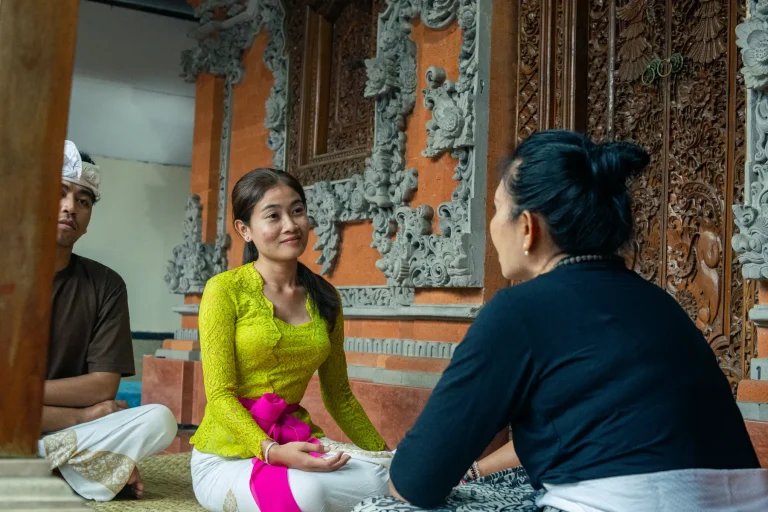
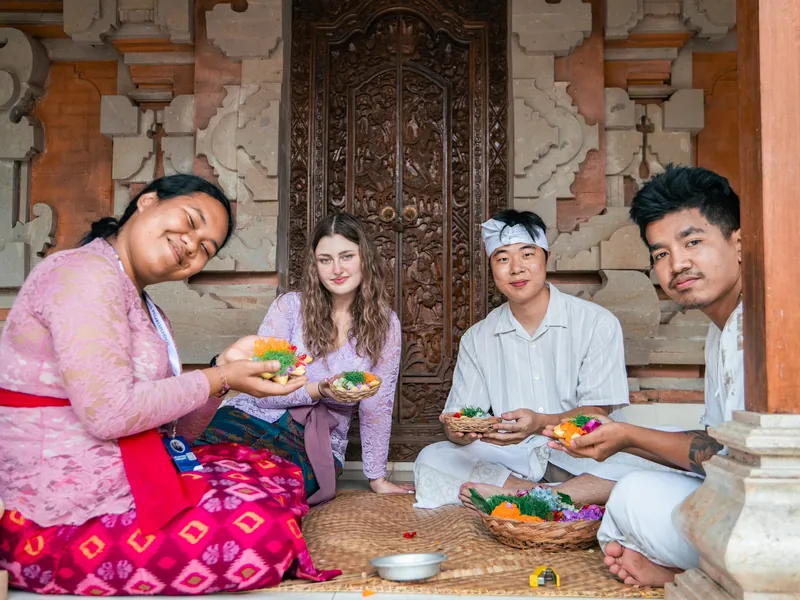
The Negara journey is built around people more than sights. Day one starts at a community turtle conservation project, where you take part in a turtle release, then moves to Negara Bahagia market to taste local snacks and buy canang sari for the temple. You join a traditional prayer at Jagatnatha temple, visit Puri Agung Negara, the royal palace, to hear the history of Jembrana, and finish with tea and conversation with members of the royal family.

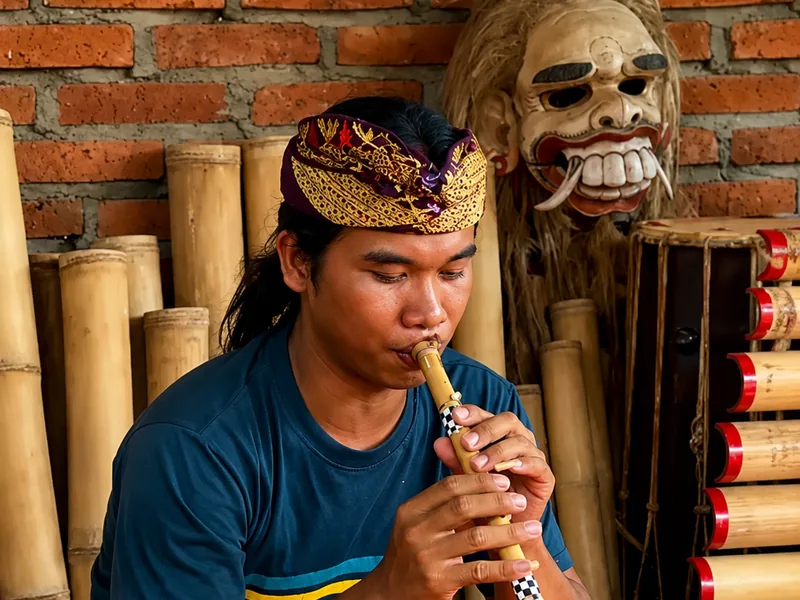
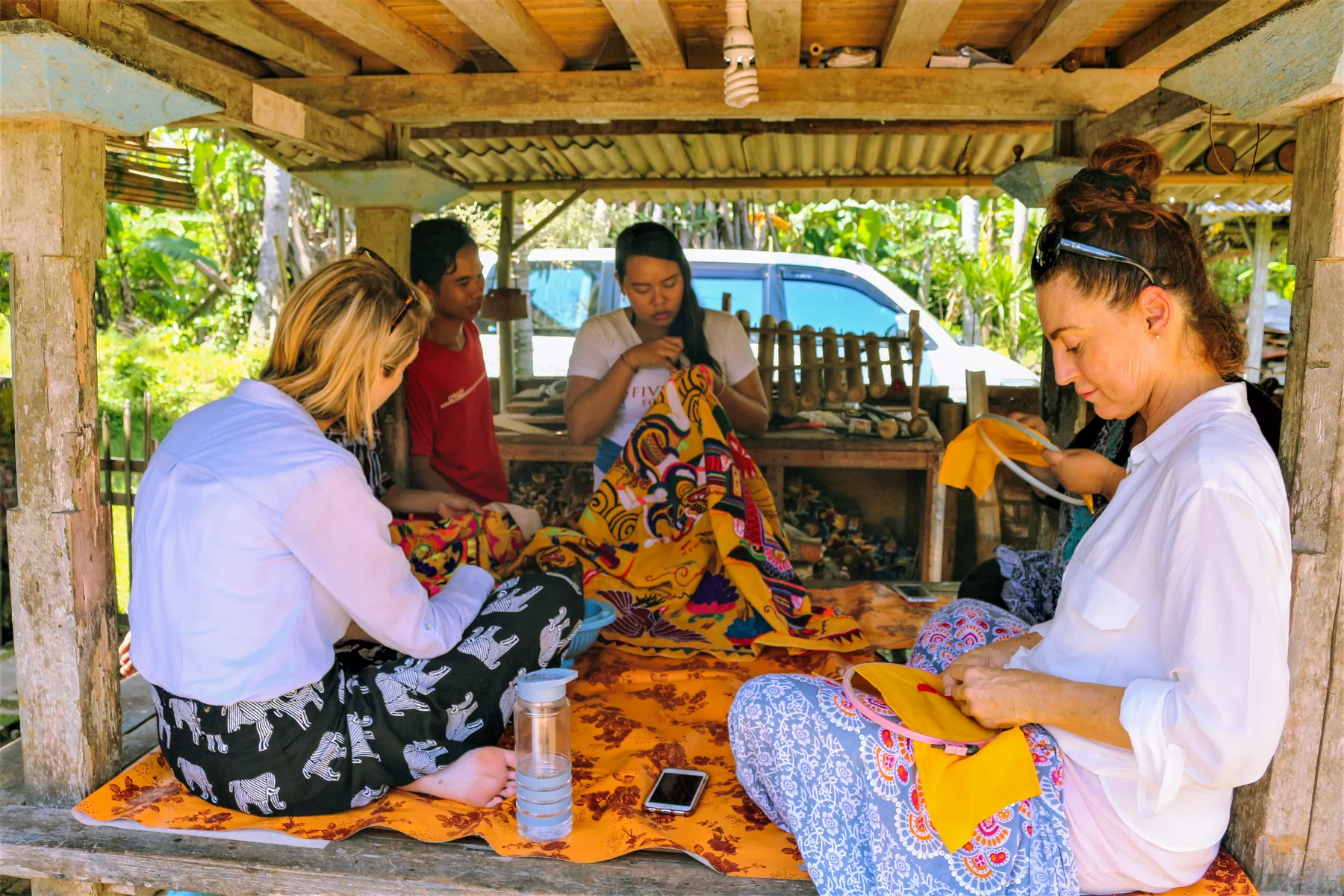
Day two is spent at Mangde’s family artisan house. You walk the garden, rice fields and bamboo grove, shape a red brick by hand and learn how it is fired, try ulon weaving, and play bamboo instruments such as the flute and rindik with the family. Jembrana is known for jegog, a gamelan built from very large bamboo tubes, and the journey gives you hands-on time with that music too. Lunch is cooked with the family and eaten together.
The Negara journey covers both lunches, transport for the two days and a facilitator who speaks English and Indonesian; dinner is on your own. A hotel room with breakfast can be added when you book. One detail matters for planning: this journey starts in Negara itself. Pick-up and drop-off from the south can be arranged on request for an extra transfer fee, or you can make your own way west and treat the drive as part of the trip.
If you would rather have the sea than the palace, Medewi covers the same corner of the island at a gentler pace. The drive west stops at a local chocolate factory in Gumbrih and a virgin coconut oil workshop, then a seafood lunch by the sea before a night in Medewi and sunset on Medewi Beach. The next morning is spent with a local family in a Jembrana village, ending with a traditional lunch. Pickup is from hotels in Ubud and the south, which makes it the easier of the two to reach.
Families will also find Negara in our guide to two-day trips with kids, which covers what to expect with younger travelers.
Questions travelers ask
Is makepung part of the Negara journey?
No. Races are organized locally and are not in the itinerary. If one falls on your dates, ask when you book whether your schedule can make room to watch it.
Can I see a race on a day trip from Ubud or Seminyak?
You can, but it means a very early start and roughly three hours or more each way, depending on where you begin. Staying a night in the west is far more pleasant, and it gives you a second day that is not spent in a car.
Is it suitable for children?
Yes, with sensible distance from the track. Carts are fast and can slide, so pick a spot behind a barrier, bring shade and snacks, and plan to leave before the midday heat.