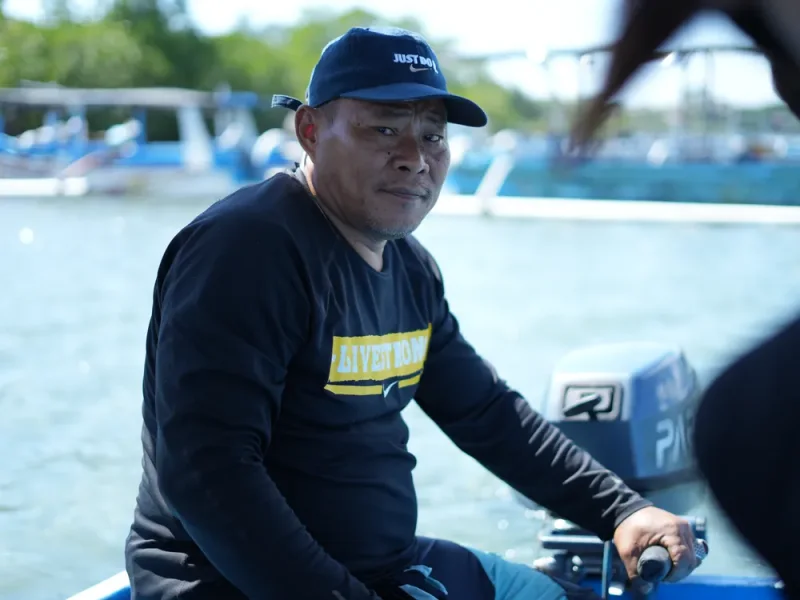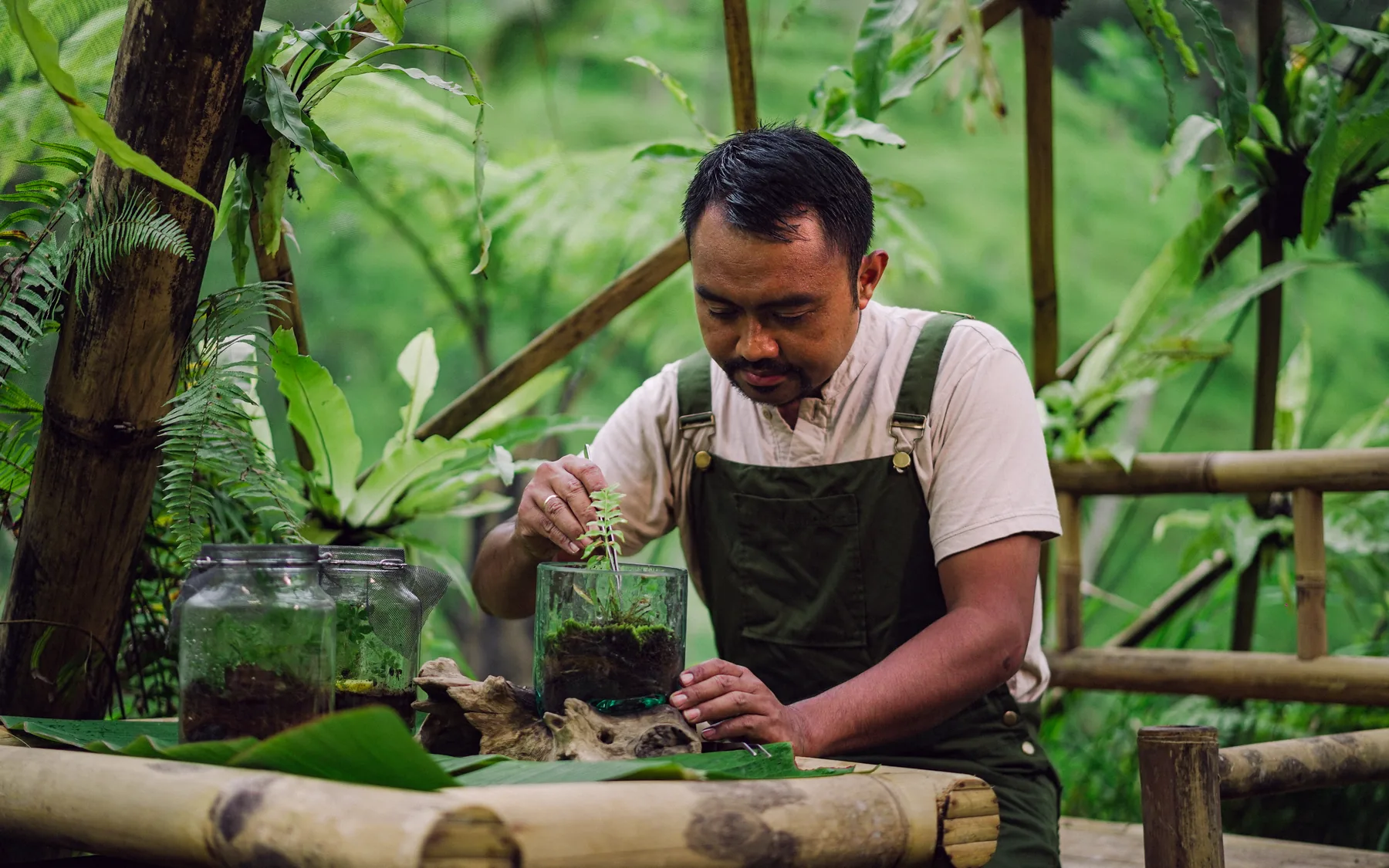
Yes, there is regenerative tourism in Bali, though it rarely uses the word. It means travel that leaves a place healthier than before, and here it looks like coral being restored off Pejarakan, native trees planted in Besan and firefly habitat protected in Taro.
Five Pillar Experiences is a social enterprise and ethical tour operator in Bali, and these are local projects we take guests to. Below: a plain definition, five examples with their hosts, and what a visit can and cannot change.
What is regenerative tourism?
Regenerative tourism is travel designed to leave a place, its ecosystems and the people who live there in better health than before, rather than only limiting the damage. It measures success by what grows back: reefs, forests, soil, local skills and income, and the community’s say over its own future.
Tourism researchers Bellato, Frantzeskaki and Nygaard, writing in the journal Tourism Geographies in 2022, describe it as an approach that “aims to fulfil the potential of tourism places to flourish” and to “create net positive effects through increasing the regenerative capacity of human societies and ecosystems.”
Regenerative vs sustainable tourism
UN Tourism, the United Nations tourism agency, defines sustainable tourism as tourism that “takes full account of its current and future economic, social and environmental impacts”, addressing the needs of visitors, the industry, the environment and host communities. That is a standard of balance: keep the impacts in check so a place can carry on.
Regenerative tourism asks for more: that a visit adds something back. A 2022 paper in the Journal of Tourism Futures sums up the difference this way: sustainable tourism is industry-focused and looks for efficiencies, while regenerative tourism is holistic and sees tourism as one part of a larger system, with collaboration with nature at the centre.
The two overlap in practice, and “regenerative” is used loosely in marketing. Bali also has its own, older version of the idea in Tri Hita Karana, the balance between people, nature and the divine that shapes village life. The useful test is simple: what is actually growing back, and who decides?
Five places to see it in Bali
Coral: Ketut Danu, Pejarakan
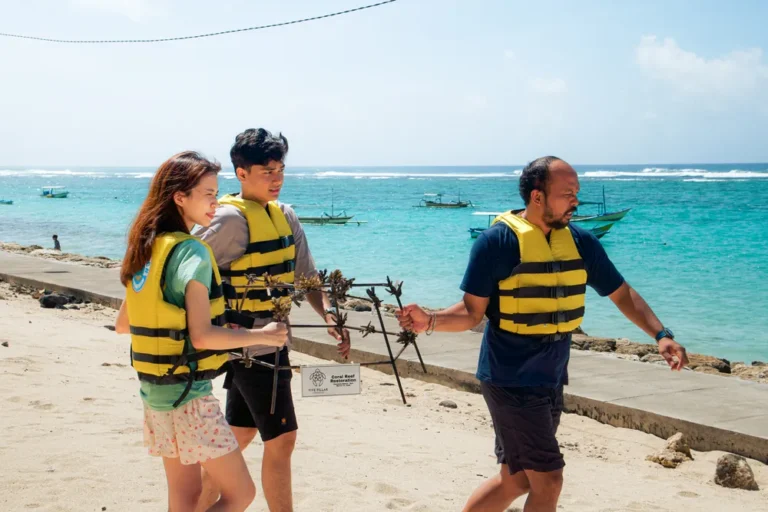
In Pejarakan village in Buleleng, about 15 minutes from Pemuteran, Ketut Danu leads a coral reef restoration initiative that uses mineral accretion technology to speed up coral growth and rehabilitate damaged marine ecosystems. The work is community-based and educational, raising awareness of marine biodiversity and coastal management and strengthening local participation in conservation.
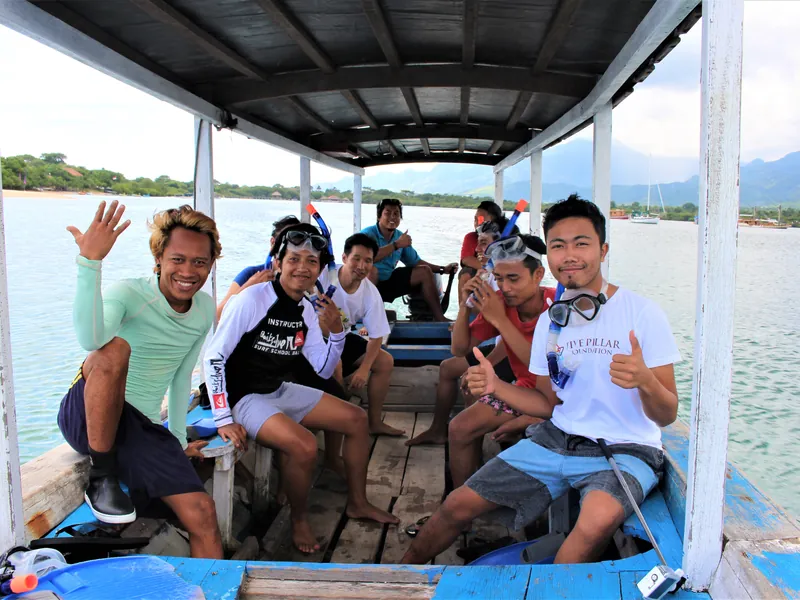
On the Coral Restoration Project with Ketut Danu, you learn coral conservation and coral planting techniques from local experts, take a short ride in a traditional boat to the restoration area and snorkel there. You also explore the mangroves and their role in marine conservation, and finish with refreshments and a reflection session with the conservation team. It takes three to four hours, for 2 to 20 people. Our article on Ketut Danu’s reef restoration goes deeper.
Forest: Osila, Besan village
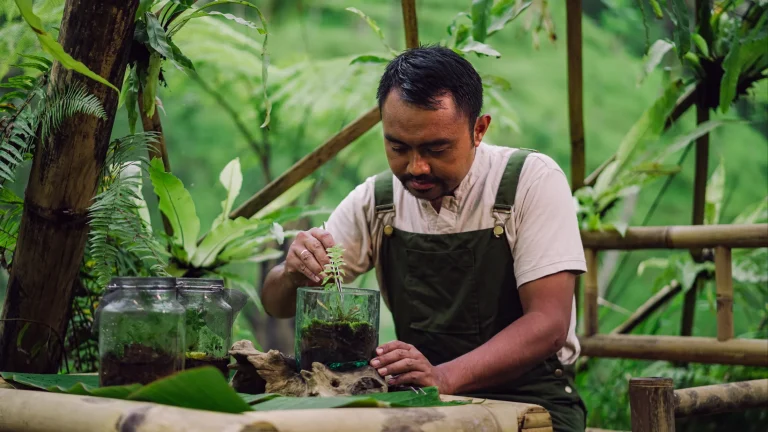
In Besan village in Klungkung, Osila works on forest restoration and community-based sustainability, planting native trees such as candlenut and kluwek to support biodiversity and building environmental awareness among younger generations.
Forest Restoration with Osila begins with a countryside trek, partly uphill, with views over the village. Then comes the tree planting, time with local residents and a look at traditional palm sugar making. It takes three to four hours, for 2 to 20 people, about 15 minutes from Klungkung, and lunch is included.
Fireflies: Wayan Wardika, Taro
In Taro, about 30 minutes from central Ubud, Wayan Wardika’s initiative protects firefly habitat and promotes sustainable farming. It combines conservation and environmental education with stories about the ecological and spiritual place of fireflies in Balinese culture.
Preserving the Magic of Fireflies starts at Pak Wayan’s family compound, with an introduction to local conservation and the philosophy behind a Balinese family compound. A guided forest walk and a visit to the firefly conservation house and laboratory follow, and the evening ends with a local dinner and conversation with the community. It takes three to four hours, for 2 to 25 people. Our article on Bali’s fireflies explains what they need.
Soil: Putu Yoga, Kedisan
In Kedisan, Gianyar, Putu Yoga works with local farmers on organic methods aimed at restoring soil health and strengthening farm ecosystems. The goal is more productive land, better food security and farming rooted in local knowledge and collaboration.
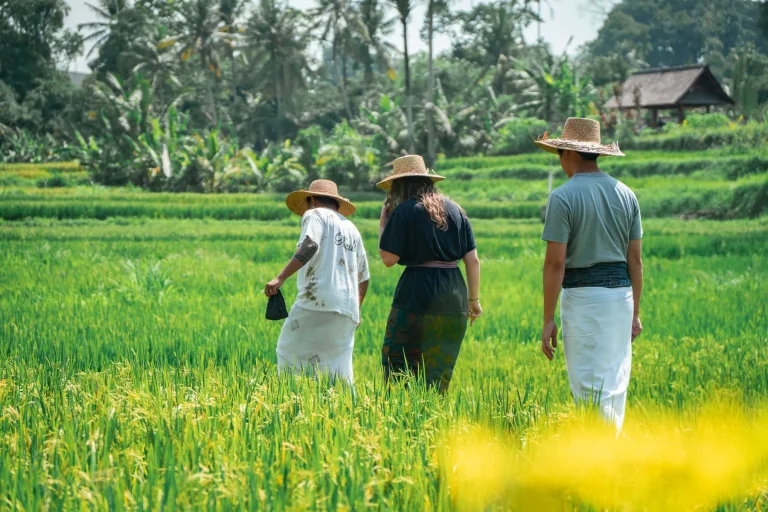
Organic Farming for Resilient Communities opens with a traditional snack and drink at a family compound and a look at how a Balinese house is laid out. In the organic garden you learn basic gardening techniques and try composting, livestock care and rice-field work, then share a home-cooked lunch with the host family. It takes three to four hours, for 2 to 25 people.
Waste: Pak Balik, Cemenggaon
The fifth example is a whole village. Waste to Wisdom, a Curated Tour in Cemenggaon, about 40 minutes from Ubud, shows how a Balinese village turned its waste crisis into a model of circular innovation through community-led solutions, traditional wisdom and eco-technologies.
You hear Pak Balik’s story and his mission to reduce community waste, and see composting, waste separation and the village waste bank. You watch organic waste become compost, look at eco-friendly practices in homes and temples, and make an eco enzyme cleaner to take home. It takes two to three hours, for 1 to 20 people, so solo travelers can join.
What Five Pillar does, and what it doesn’t
None of these projects belongs to Five Pillar Experiences. The reef work, the trees, the firefly house, the farm and the waste bank are run by their hosts and communities. What we do is arrange a private visit for your group and date, with a local storyteller who speaks English and Indonesian and an Ethical Bali orientation. All five include a community support contribution, and part of every Heroes Journey booking supports the host’s work.
Five Pillar was founded in 2019 as a social enterprise using tourism as a force for regeneration. Treat that as an aim we work toward, and judge us by the people and projects above.
Honest limits: what a visit can and cannot change
A morning of coral planting does not restore a reef, and one tree does not make a forest. Recovery takes years and depends on the people who stay.
- What a visit can do: pay the people doing the work, show younger people in the village that the work is valued, and send you home with knowledge and habits you keep.
- What it cannot do: cancel out the footprint of your flight, or fix island-wide problems such as coastal development or waste collection by itself.
- What depends on you: how you behave on the day. Don’t touch coral, keep flash and bright lights away from fireflies, stay on paths and bring a refillable bottle.
Be wary of anything sold as “regenerative” with no named person, no project you can see and no answer to where the money goes.
How to choose a regenerative experience in Bali
- A named local host. You should know who runs the project, and meet them.
- Work that exists without you. A real reef, forest, farm or waste system, not a set built for visitors.
- A clear money trail. Ask what part of your payment reaches the host or the community.
- Small, private groups. Each journey above lists the group size its host can take.
- Something you learn to do. Composting, planting, reading a reef: skills and ideas you can use after the trip.
Every journey we run with local hosts is on our page of ethical tours in Bali, and the Heroes Journeys page lets you filter by pillar, environment included.
Questions travelers ask
Is there regenerative tourism in Bali?
Yes. Local projects restore coral off Pejarakan, plant native trees in Besan, protect firefly habitat in Taro, rebuild soil on an organic farm in Kedisan and run a village waste system in Cemenggaon. Five Pillar Experiences arranges visits to all five with their hosts.
What is the difference between regenerative and sustainable tourism?
Sustainable tourism aims to keep impacts in balance so a place can carry on. Regenerative tourism aims to leave it better than before: more coral, more trees, healthier soil and a stronger community.
How do I book one of these visits?
Each runs by arrangement. Open the journey, send your date and group size through Check availability, and we reply by email within 24 hours with availability and the details.