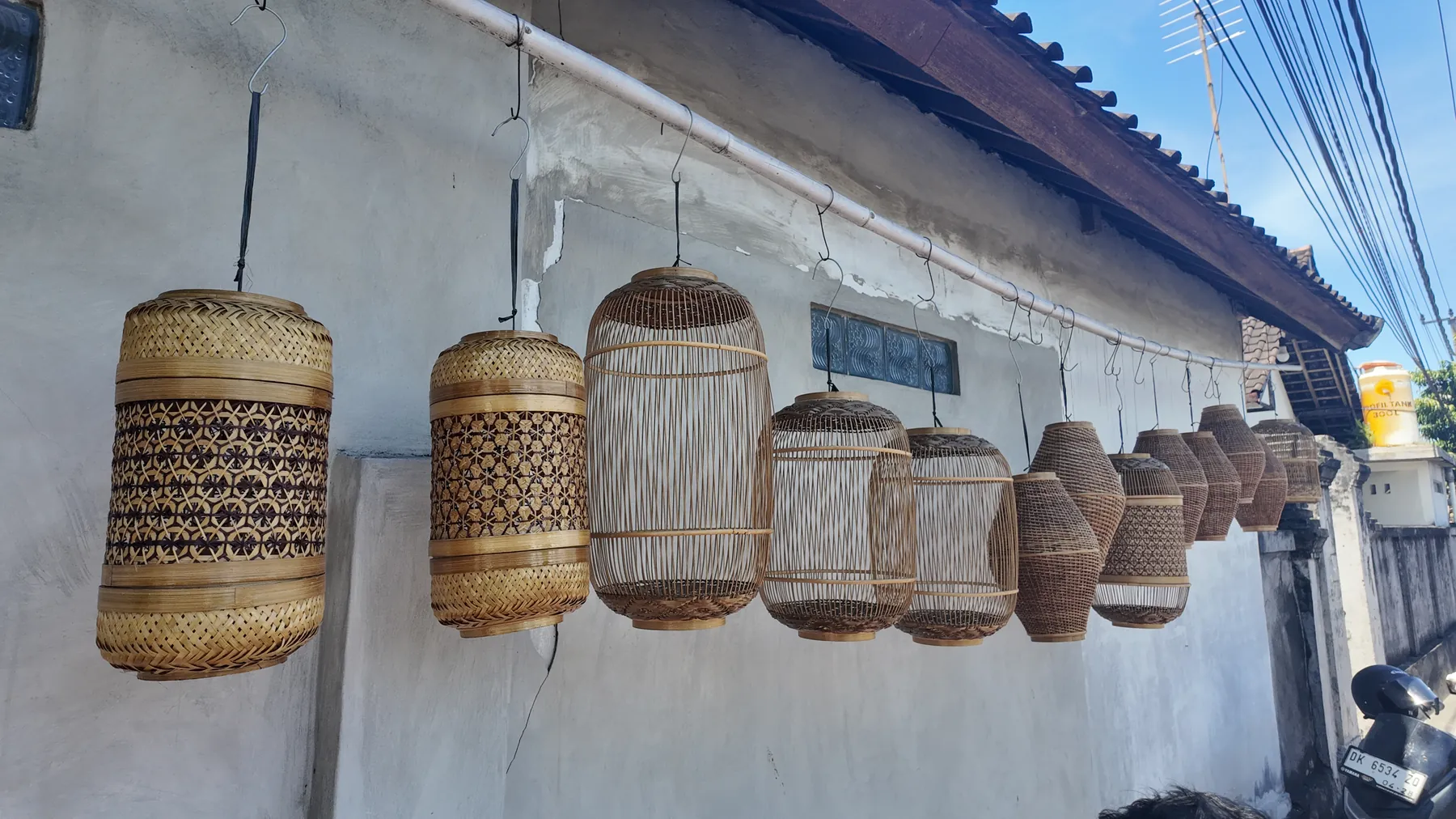
Walk the length of Jalan Monkey Forest in Ubud and you’ll see the same carved frangipani, the same batik sarong and the same woven bag in shop after shop, sometimes at wildly different prices. Some of it was made in a workshop down the road. Some of it came off a production line somewhere else entirely. The sign on the door often says handmade either way.
Buying well in Ubud isn’t about spending more. It’s about knowing what you’re looking at, asking a couple of questions, and putting your money where it reaches the person who did the work. Here’s how to do that without turning a shopping afternoon into homework.
How to tell handmade from mass-produced
No single test is foolproof, but a few habits get you most of the way:
- Look for small differences. Handmade pieces vary. If a shelf holds twenty carvings with identical faces, they probably weren’t carved one by one.
- Turn batik over. Hand-drawn and hand-stamped batik is dyed through, so the pattern is nearly as strong on the back. Printed fabric is often pale or blank on the reverse.
- Check the places nobody looks. Inside seams, the underside of a carving, the back of a clasp. Care in hidden spots is a good sign.
- Look for the stamp on silver. Sterling silver is usually marked 925. No mark and a very low price should make you suspicious.
- Sense-check the price. A hand-woven songket for the price of a T-shirt wasn’t woven by hand.
- Ask where it was made, and by whom. A maker, or a shop that works directly with makers, will usually answer happily and specifically. Vague answers tell you something too.
Three questions worth asking
You don’t need to interrogate anyone. Asked with real curiosity, these open most conversations:
- Who made this, and where?
- How long does one take to make?
- What is it made from?
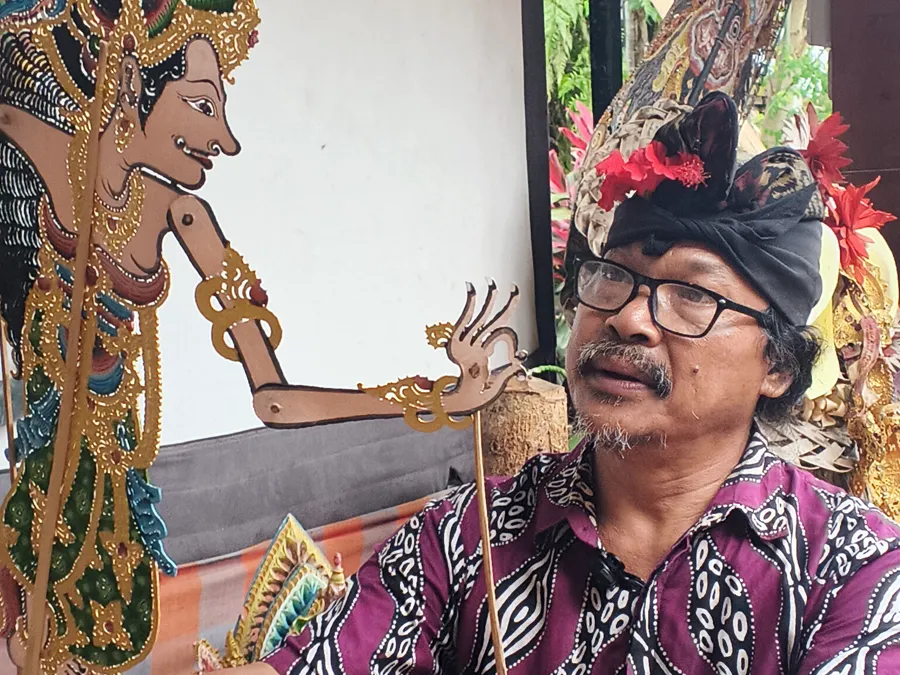
The answers help you judge the price, and most makers enjoy talking about their work. If you’re buying something expensive, like silver, a large carving or a woven textile, asking to see the workshop is a reasonable request in Bali, and a good seller will often be glad to show you.
Bargaining: when it’s normal and when to stop
In markets, bargaining is expected. First prices at the big tourist markets are set with haggling in mind, and bargaining politely, with a smile, is part of the exchange. Decide roughly what you’d pay before you start, and walk away pleasantly if you can’t agree.
At a maker’s own workshop or a fixed-price shop, it’s different. The price usually reflects materials and days of work, and pushing it to the bone takes money straight out of the maker’s pocket. Asking for a small discount on a larger purchase is fine. Grinding someone down over the price of a lunch isn’t.
A simple rule: bargain hardest where the seller didn’t make the thing, and least where they did.
Markets aren’t the enemy, either. Go early, before the souvenir stalls fill up, and the Ubud market is still a working local market, selling produce, flowers, offerings and cloth to people who live here. Buying your snacks, spices or a sarong from those stalls puts money in local hands with no middleman at all.
What to leave on the shelf
- Anything made from turtle shell, coral or wild animal parts. These trades harm wildlife, and many such items are illegal to export or to bring into your home country.
- Seashells sold by the bagful, which are often collected in ways that strip beaches and reefs.
- Old masks, statues or textiles with no clear history. Some antiques on the market are sacred objects that left a temple or family under murky circumstances. If a seller can’t explain where a piece came from, don’t buy it.
- Things sold as eco just because they’re bamboo or coconut. Natural materials are a good start, not proof. Ask who made it and how, the same as anything else.
Our guide to ethical tourism in Bali covers the wider picture, from animal attractions to temple etiquette.
Buy from the people who make it
The surest way to make your money reach the maker is to buy from them, ideally after watching the work. Around Ubud, craft villages each have their specialties, and several run sessions where you make something yourself. That changes how you shop: once you’ve spent an hour producing one clumsy piece of your own, a well-made one stops looking expensive. For woven cloth, the weaving households of Sidemen in East Bali are worth the drive.
Ethical brands in central Ubud
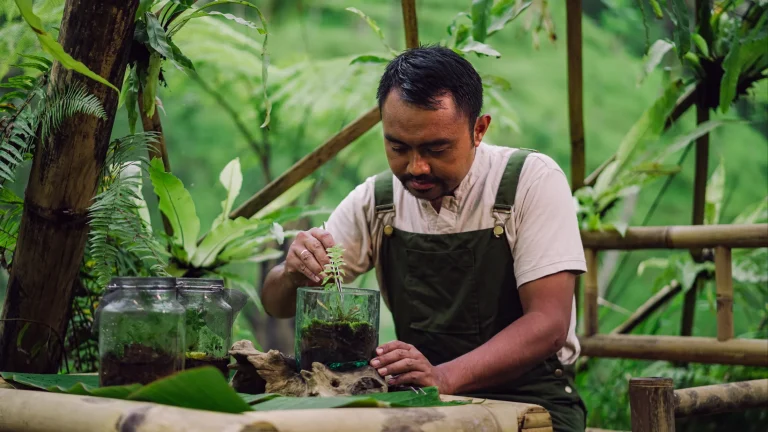
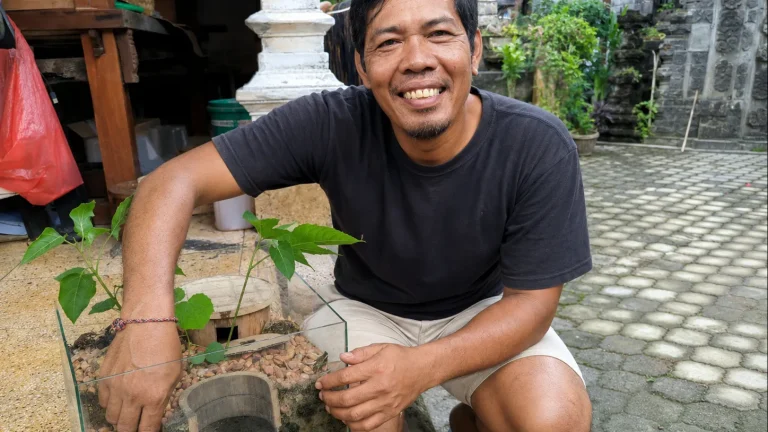
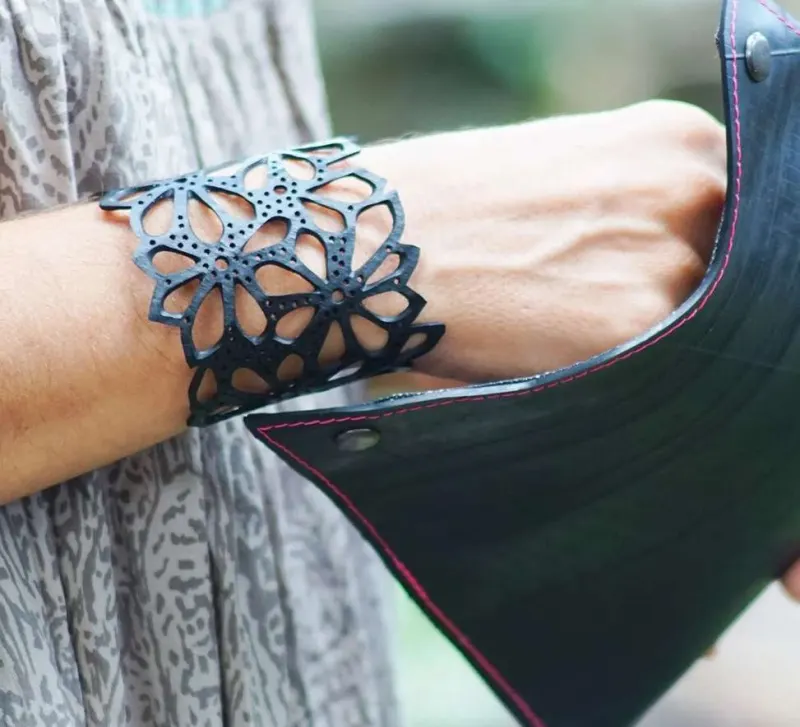
The Ubud Ethical Product Adventure is a two-to-three-hour walk around 10 ethical, eco-minded brands in central Ubud, selling things like handmade skincare, upcycled art and natural fashion. You meet the makers, hear how and why they started, and learn how sustainability shapes what they design. It runs by arrangement for groups of five to 20.
Bamboo weaving in Bona
Bamboo Weaving with Artisans takes you to Pak Nyoman’s family home in Bona village, about 25 minutes from Ubud. You handle different types of bamboo, such as petung and tali, and learn what each is used for, watch a master weaver at work, then try basic weaving yourself. The three hours end with tea and a handmade bamboo gift to take home. It runs by arrangement for groups of five to 20.

Silver in Sukawati
The Sukawati area, which includes the village of Celuk, has long been known for silverwork. Crafting Tradition in Silver is a Heroes Journey with Komang Puriana, whose workshops teach visitors shaping, soldering and engraving alongside local silversmiths, and help keep the craft going with younger generations. You look at the tools and materials, sketch and shape your own piece of jewelry, and take it home at the end. It takes three to four hours, about 40 minutes from central Ubud, and runs by arrangement for two to 25 people.
A short checklist for your last shopping afternoon
- Buy fewer, better things, and ask who made them.
- Bargain in markets, not in workshops.
- Pay in rupiah cash at small workshops, where card fees eat into thin margins.
- Keep receipts for silver and anything valuable, in case customs asks.
- Skip anything made from wildlife, however pretty.
The best souvenir from Ubud is one you can tell a story about: who made it, where, and how long it took. Ask the questions, pay a fair price, and when you can, buy it straight from the hands that made it.