In Sidemen, the view you came for usually shows up early. On a clear morning Mount Agung stands over the valley with the rice terraces stepping down beneath it, and by late morning cloud often slides in and takes the summit away. The valley rewards people who are already there at breakfast, which is the best argument for staying the night.
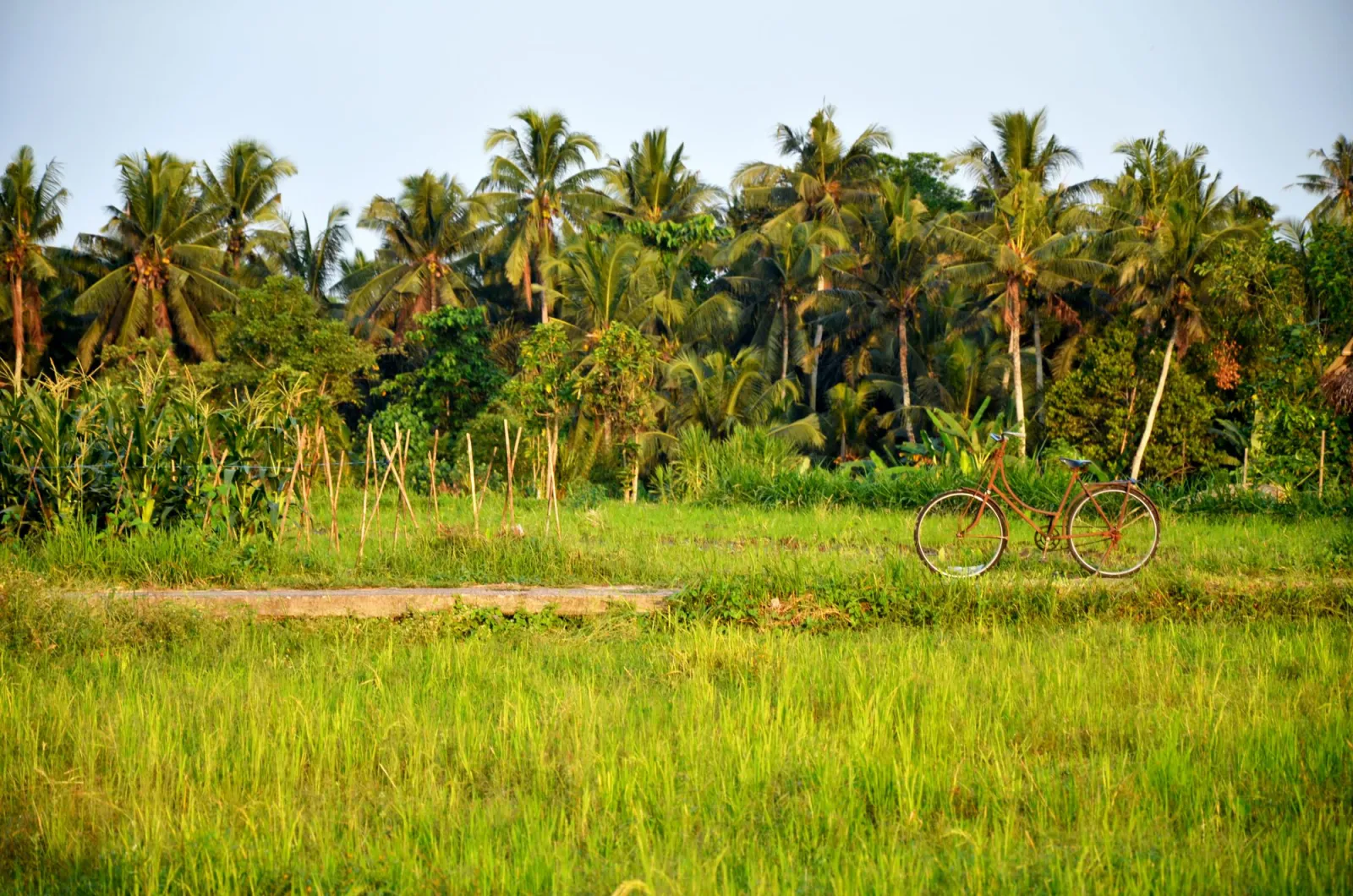
Sidemen sits in Karangasem, in East Bali, a little over an hour east of Ubud. It’s farming country, with rice on the terraces and coconut palms and vegetable plots around them, and it’s weaving country: in many households someone still works a loom, making endek or songket cloth. There are no big sights here. That’s the appeal.
Sidemen or Ubud: what’s different
If you liked Ubud’s rice fields and wished there were more of them with fewer cafés in between, Sidemen is the next valley to try. The landscape is the same kind (terraces, palms, river gorges) but bigger and emptier, and Agung is right in front of you instead of somewhere on the horizon.
What you give up is choice. Sidemen has a scattering of warungs and guesthouse restaurants rather than a street of them, evenings are quiet, and there’s little to do after dark except eat, read and listen to the frogs. For most people who come here, that’s the point.
Ubud also has more to explain: palaces, museums, dance. Sidemen has less to see and more to do. The days are organized around markets, kitchens, fields and looms.

Two days, the way the journey runs them
Sidemen: The Countryside Experience is built around that rhythm, with a local host on day one and a bicycle on day two.
Day 1: market, kitchen, blessing
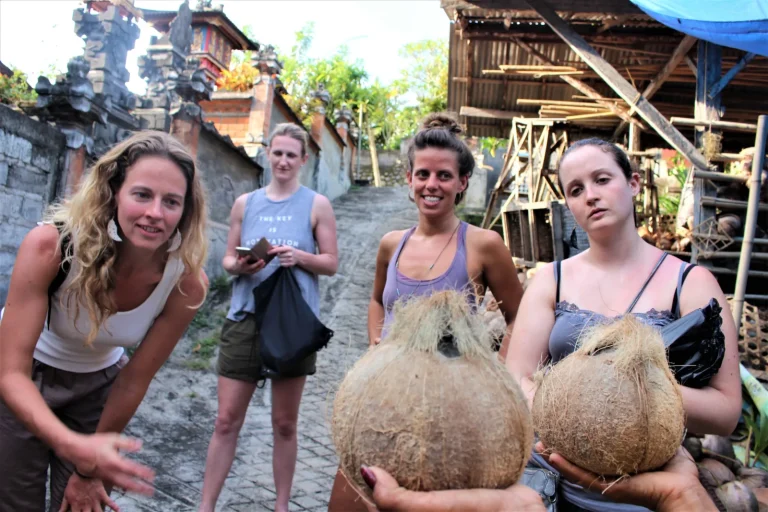
The day starts at a traditional market, which is the quickest introduction to what people here actually eat: shallots, chilies, galangal and turmeric by the heap, fresh and dried fish, bundles of greens, and ready-made offerings for busy households. Then comes a hands-on Balinese cooking class, and lunch is what you made.
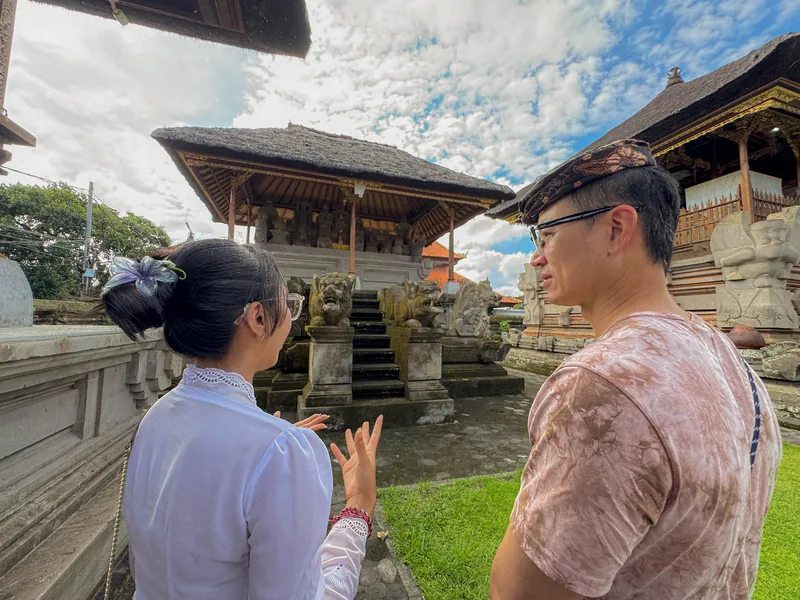
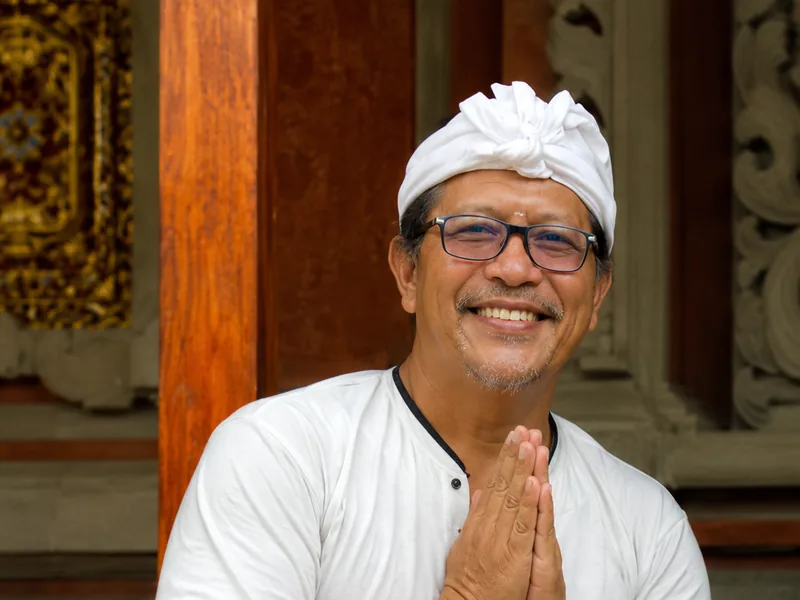
In the afternoon, a local host shows you how to make canang sari, the small palm-leaf offering placed at shrines and doorways every day, and then leads a traditional temple blessing. There’s a walk through the rice terraces after that, and the rest of the afternoon is yours at the hotel.
Day 2: the valley by bicycle
After breakfast you cycle through the countryside to Gembleng Waterfall, stop for a coffee or a young coconut, and visit an arak plantation to see how the local palm spirit is made. Lunch is in Sidemen before you check out. The last stop is a traditional weaving house, where artisans work on the textiles the valley is known for.
What you’ll eat
Food in Sidemen is village cooking rather than restaurant cooking. Rice sits at the center of every meal with a few dishes around it: a vegetable or two, something with chicken or fish, a sambal, and often something steamed or grilled in banana leaf. Much of it starts with base genep, the Balinese spice paste of shallot, garlic, chili, galangal, turmeric, ginger, kencur and more, pounded together by hand.
Dinner isn’t included on the journey, and in a valley this quiet most people eat at their hotel or a warung nearby; the team is happy to recommend somewhere. You’ll probably be offered arak along the way. Try it in small amounts, and only from a source your guide trusts.
Endek and songket: the cloth of the valley
Two kinds of cloth come up again and again in Sidemen. Endek is a weft ikat: bundles of thread are tied and dyed in sections before weaving, so the pattern appears as the cloth grows on the loom, with the slightly soft edges ikat is known for. Songket is slower and richer, with extra threads, often gold or silver, floated across the surface to make raised motifs.
Songket is kept for ceremonies and weddings. Endek is worn far more widely, including as office wear. Watch a loom for half an hour and you’ll understand why a good piece costs what it does. If you buy, buy from the workshop.
Practical notes before you go
- Roads: the lanes into and around the valley are narrow and winding, with steep sections. It’s easy with a local driver and much less fun on a rented scooter if you’re new to Bali’s roads.
- Timing: mornings are the clearest. If you want photos of Agung, be out early.
- Layers: the valley sits higher than the coast and evenings can feel cool. Bring a light layer.
- Temple dress: for the blessing you’ll need a sarong and sash; bring your own, or ask us to arrange one when you book. Bring a top that covers your shoulders.
- Cycling: the route follows village roads. If you haven’t ridden in a while, tell your guide at the start.
- Cash: carry small notes for the market and for anything you buy from the weavers.
A shorter taste, or a similar trip
If a night away isn’t possible, the Traditional Market Adventure in Sayan, about 20 minutes from Ubud, gives you a two-to-three-hour morning at a local market, with language cards, a little cash to practice buying and bargaining, traditional snacks and jamu to taste, and a shared reflection at the end. It runs for groups of five or more.
And if you like Sidemen’s mix of village life and ritual, the Bangli journey is its cousin in the central hills: Penglipuran village and its bamboo forest, a cooking class for base genep and sate lilit, and a melukat at Pancoran Alas Tapa guided by the local priest.
Questions travelers ask about Sidemen
How far is Sidemen from the south?
From Ubud it’s roughly an hour or a little more by car. From Seminyak, Canggu or Nusa Dua, allow around two hours, sometimes more, depending on traffic. The journey includes pickup from hotels in all of those areas.
Is one night enough?
For the journey’s program, yes: you see the market, the kitchen, the temple, the fields and the looms. If you just want to sit and look at Agung for a few more days, add nights of your own afterwards.
When is the best time to go?
The dry months, roughly April to October, give the most clear mornings. The rice is planted and harvested at different times across the valley, so there’s no single month when every terrace is green. Our month-by-month guide to the dry season has more detail.