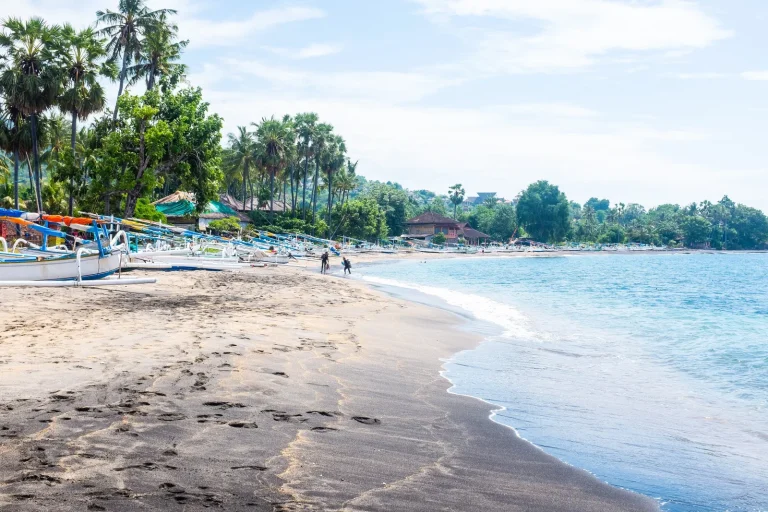
The standard Nusa Penida day trip goes something like this: an early fast boat from Sanur, a driver waiting at the harbor, and most of the day in a car bouncing between three or four famous viewpoints on the west coast, shoulder to shoulder with everyone else who took the same boat. You get the photo. You don’t get much of the island.
Penida is bigger than it looks from the water, and much of what makes it interesting sits away from the cliffs: a cave temple people cross the sea to pray in, a weaving village, a quiet southern coast. With a night on the island you can see those first and still stand above Kelingking the next day. Here’s how our two-day itinerary works, and what to know before you book any Penida trip.
Why one night changes the island
Roads on Penida are slow, so distances that look short on a map take a long time. A day trip forces a choice between the famous west and everything else; staying over removes it. You also get dinner on the island, included on day one of our journey, instead of racing back for the afternoon boat. If you’re new to the format, here’s what a 2 Days 1 Night trip actually looks like.
Day one: a cave temple, a loom and the quiet south
Goa Giri Putri
You arrive at Toyapakeh Harbour, meet your guide and drive to Goa Giri Putri, a temple inside a cave in Suana, on the island’s north-east. After a flight of steps, the entrance is a gap in the rock so low you have to crouch and squeeze through. Then the cave opens into a long, high chamber lined with shrines, where pilgrims pray and priests sprinkle holy water. A sarong and sash are required. If tight spaces bother you, tell your guide; the squeeze is short, but it is tight.
The weavers of Tanglad
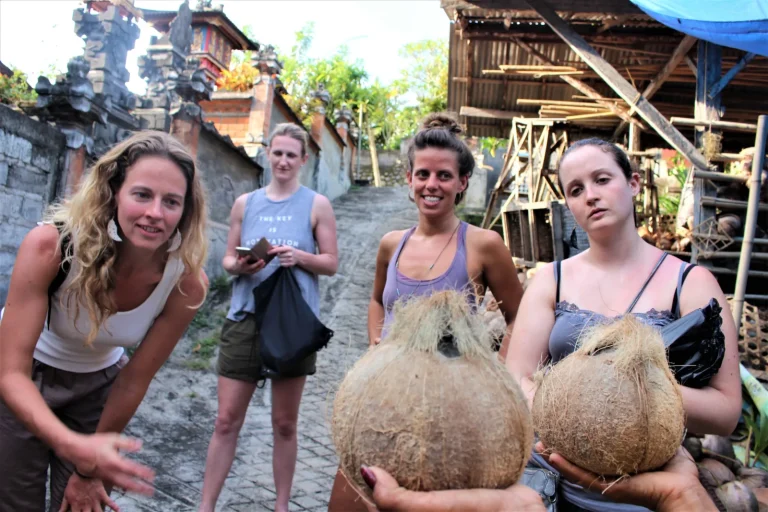
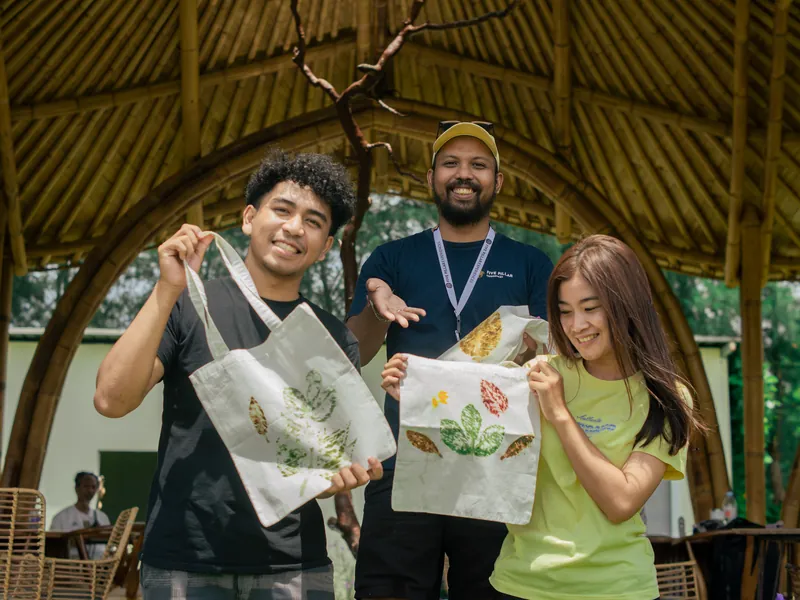
Tanglad is a quiet rural village known for its weaving, including cepuk, a traditional ikat cloth. A single cloth can take months, and cepuk is still worn and used in ceremonies, so the piece on the loom may well be headed for a temple. Here you meet local artisans and try the loom yourself, which is the quickest way to understand why a good cloth costs what it does. If you buy one, buy it from the weaver; our guide to ethical shopping explains why that matters. Lunch is in a Balinese house nearby.
Tembeling
In the afternoon you head south to Tembeling, where forest runs down to natural pools and the coastline. It’s a good place to slow down before dinner and a night at your accommodation.
Day two: the west coast, with realistic expectations
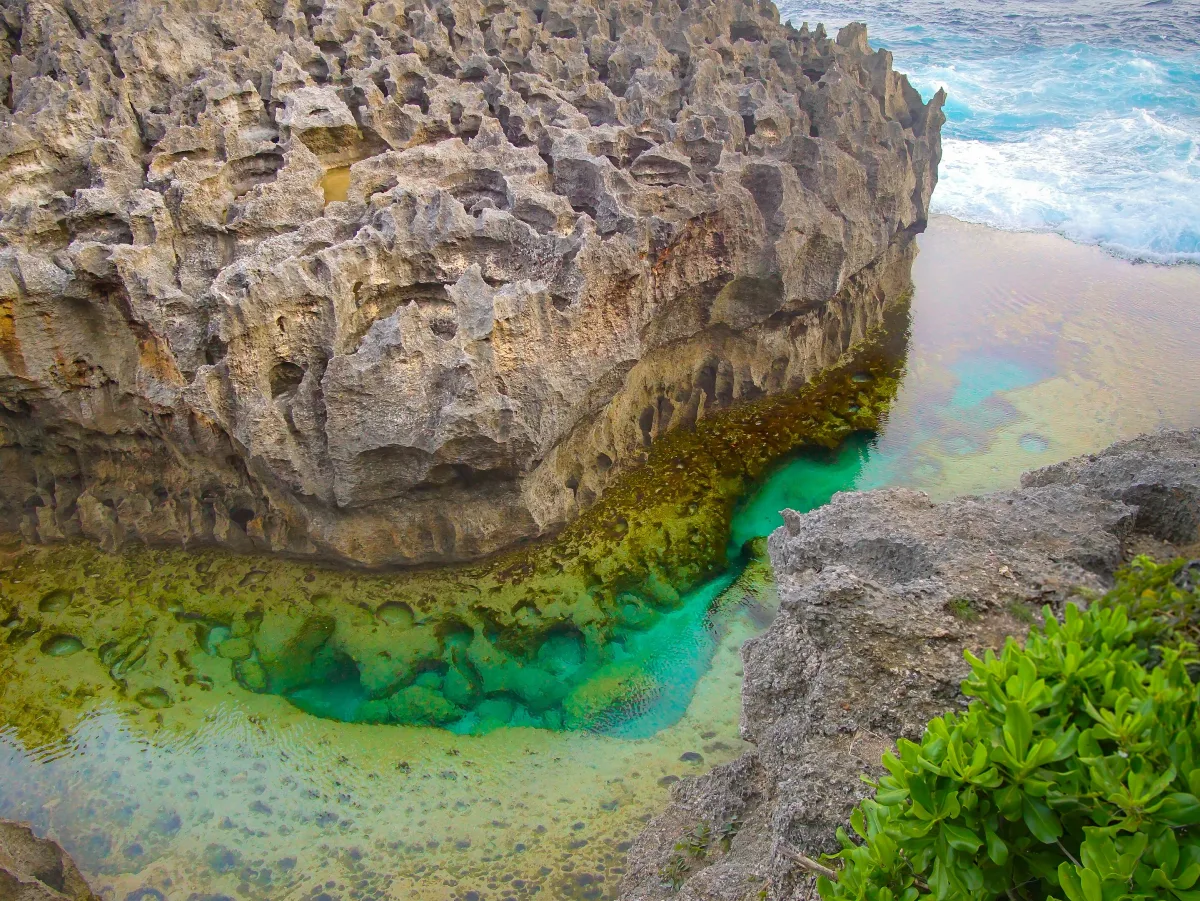
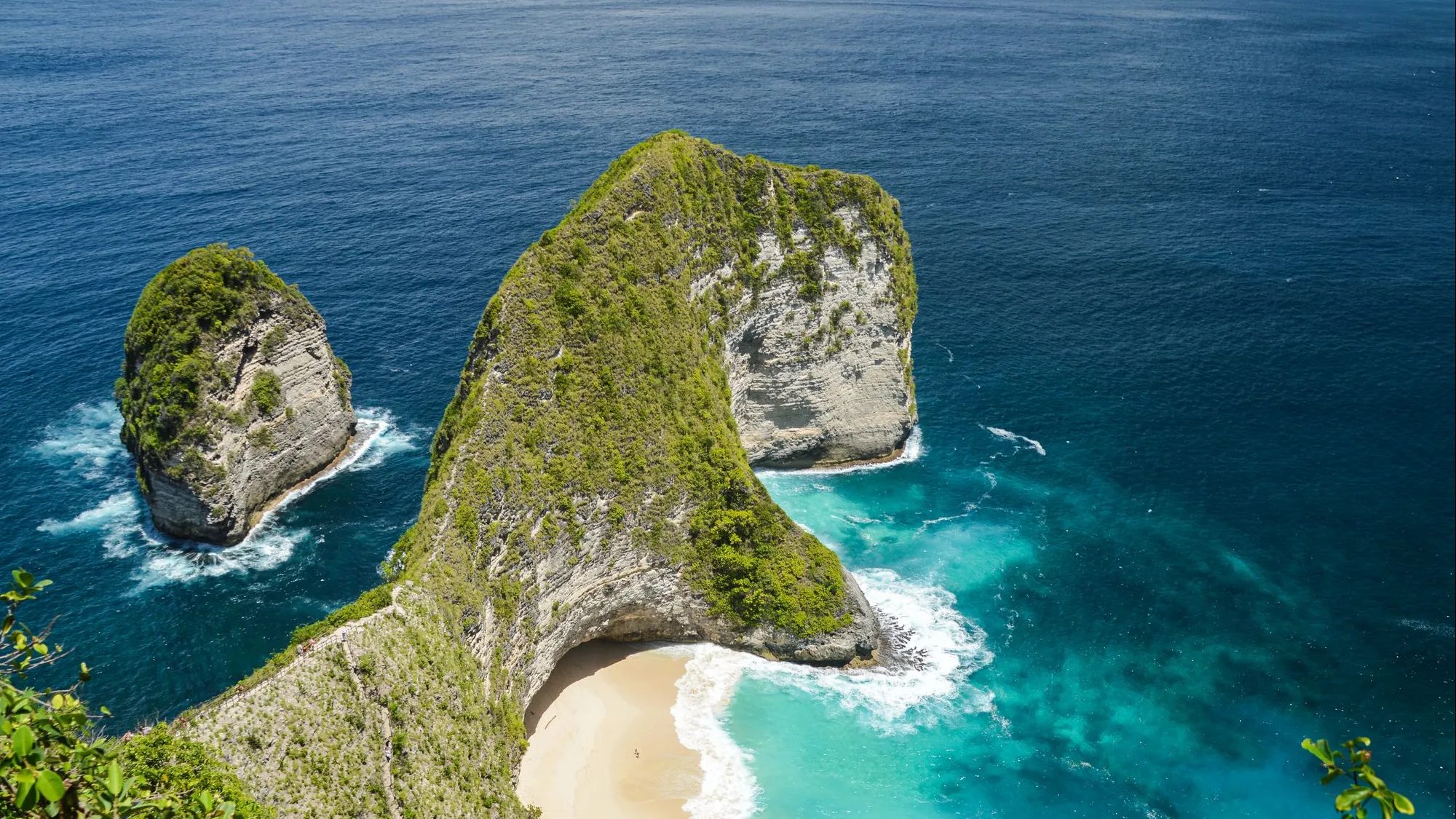
After breakfast you drive west for the cliffs. Kelingking is the headland shaped like a T-rex, and the viewpoint at the top is why most people come. The path down to the beach is steep and exposed, and you don’t need to go down to see the view. Next are Broken Beach, a sea arch with the ocean flowing through underneath, and Angel’s Billabong, a rock pool at the edge of the sea. Stay out of the Billabong when waves are breaking over its rim; people have been swept out.
After a local lunch you slow down at Crystal Bay, with a light snorkel if the sea and weather allow, then return to Toyapakeh for the boat back to Sanur.
Practical notes before you go
- Boats: fast boats run from Sanur and the crossing takes roughly 45 minutes. The sea can be rough, so take seasickness tablets if you’re prone. Boarding usually means wading in from the beach; wear shoes that can get wet and keep your bag light. On our journey you meet the guide at Toyapakeh, and fast-boat tickets from Sanur can be arranged on request.
- Roads: narrow, steep and potholed in places. This is not the island to learn to ride a scooter.
- Temple dress: bring a sarong and sash for Goa Giri Putri, or rent one at the entrance.
- Slack on the way home: crossings are sometimes delayed or cancelled when the sea is rough, so avoid booking a flight out of Bali on the evening of day two.
- Cash: ATMs are few and not always working, and small warungs, temple donations and weavers deal in cash. Bring enough.
- Shoes: something that grips. You’ll climb steps at the cave, walk on rock at the Billabong and on dusty paths at the viewpoints.
- Sun: the west coast has little shade. Bring a hat, sunscreen and a refillable bottle.
Diving: the mola mola season
From about July to October, divers come to Nusa Penida hoping to see the oceanic sunfish, or mola mola, which rises from deep water to be cleaned by reef fish at a few sites around the island. Sightings are never guaranteed. The same season brings cold upwellings, and the water can be far colder than you’d expect in the tropics, so dive shops often suggest a thicker wetsuit. Currents here are strong: dive with a licensed operator and a guide who knows the sites. Diving isn’t part of our itinerary, so arrange it separately if you want to add a day. Snorkelers rarely see molas, which tend to stay deeper.
Pairing Penida with Lembongan
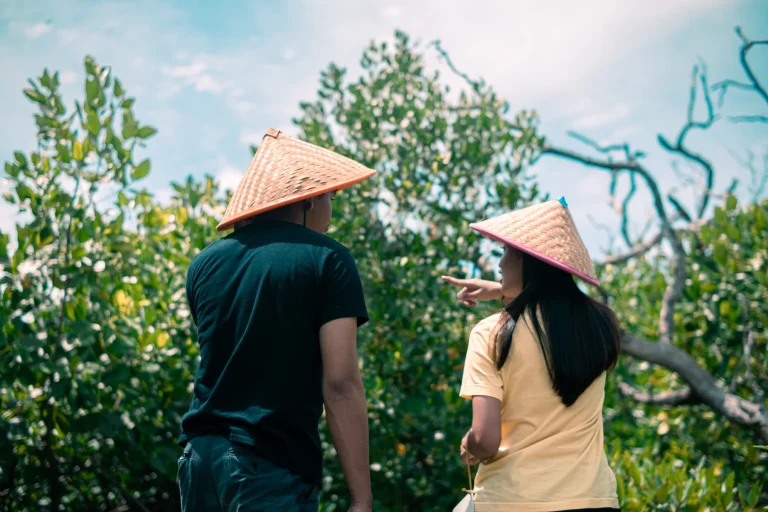
Nusa Lembongan, across a narrow channel, is the easy island: a short boat ride from Sanur, hardly any cars, and a seaweed-farming tradition that shaped its families. Our Lembongan journey starts with the fast boat from Sanur, then Devil’s Tear and Dream Beach, a visit to a seaweed farming area and sunset at Mushroom Bay, with dinner that evening. Day two is the Jungut Batu mangroves by traditional boat and a walk across the Yellow Bridge to Nusa Ceningan before the boat back.

Both journeys end back in Sanur, so you can run them one after the other with a night on the mainland in between, or ask us about linking them.
Worth the extra night
Nusa Penida rewards a slower pace. Two days, a local guide and a night on the island turn a checklist into a place, and the cliffs look better when you’ve already met the people who live behind them. The Nusa Penida journey includes a private car and guide on the island, all activity fees, lunch and dinner on day one, and lunch on day two. A hotel room with breakfast can be added when you book. Book at least three days ahead online, or send a request and pay later.