Many Bali day tours are planned for people in a hurry: a dawn pickup, four sights and a long drive home in traffic. If you’re looking at Bali tours for seniors, for yourself or for a parent in their seventies or eighties, the island works very well at a slower pace. What makes the difference is the base you choose, the hours you go out and the sites you pick, because some of Bali’s most famous temples involve a great many stairs.
Below is what we tell older travelers who ask us for advice, followed by the journeys and short workshops of ours that suit an easy day, with honest notes on the parts that take more effort.
Choosing a base: the flat coast or Ubud’s hills
Sanur, on the southeast coast, is the easiest base on the island for many older travelers. The town is flat and unhurried, and a paved beachfront path of roughly 5 km runs along the shore, shared by walkers and slow bicycles. Nusa Dua, further south, is a planned resort area with a long paved beachfront walkway, suited to a quiet, self-contained stay. Both are a short drive from the airport.
Ubud is the island’s cultural heart, with slightly cooler evenings, but it is built along ridges and river valleys. Many hotels sit on steep valley sides, with long flights of stairs between room, restaurant and pool, and not all have lifts. Footpaths in town can be narrow and patchy. If Ubud is on your list, ask the hotel how many steps lie between your room and breakfast, and look for one on level ground near the center. Or stay on the coast and come up to Ubud for a morning.
Heat, timing and rest
Daytime temperatures sit around 30°C for much of the year and the humidity is high, so the heat feels stronger than the number suggests. The dry months, roughly April to October, are the most comfortable; our month-by-month guide to the dry season has the detail.
A good Bali itinerary for seniors has one main outing a day, started early. Leave around eight, finish by lunch or soon after, and keep the afternoon for a rest, a swim or a book in the shade. Late afternoon, when the light softens, is the time for a short walk. Put a quiet day between two busier ones, and keep the first day after a long flight gentle.
Temples and steps: what the famous sites involve
Bali’s best-known temples sit on mountainsides and cliff tops, which is part of their power and also why they can be hard going:
- Lempuyang (East Bali): visitors park at an official terminal and ride a shuttle up the road. The famous gate is a short walk from there, but the full pilgrimage to the highest temple is around 1,700 steps and takes several hours.
- Besakih (on the slopes of Mount Agung): a shuttle carries visitors up the steep road from the ticket office, but the temple itself climbs the mountain in terraces, with many stairs.
- Tirta Empul (Tampaksiring): joining the purification means wading into pools at least waist-deep, and the stone paths are often wet and slippery. Watching from the edge is much easier.
- Uluwatu (on the Bukit peninsula’s cliffs): paved clifftop paths with steps and slopes, and long-tailed macaques known for snatching sunglasses, phones and other loose items.
- Gunung Kawi (Tampaksiring): the rock-cut shrines lie at the bottom of roughly 300 steps, and the same number back up.
- Taman Ayun (Mengwi): one of the gentler royal temples, set in a wide moat with mostly level paths. There are a few steps and little shade, so go early.
None of this means skipping temples, only choosing them knowingly; a mountain temple seen from its lower courtyard is still a fine visit. A village or family temple visited with a local host is often the most rewarding of all: ground level, a handful of people, and someone to explain what you’re looking at.

What to look for in Bali tours for seniors
Coach tours collect people from many hotels and keep to a timetable, which is hard on anyone who needs a toilet stop, a rest in the shade or an early finish. With a private car, driver and guide, you stop when you need to, the air conditioning stays on, and you’re dropped as close to each entrance as parking allows. All our journeys are private, and we never merge bookings.
Length matters too. A program of two to four hours fits into a morning. A two-day journey with one night away spares you a long return drive on the same day, and its rhythm is built around lunch, free time at the hotel and an early evening; see what a 2 Days 1 Night trip looks like and how our formats compare. Finally, check the pace label. On our journey pages, Relaxed means a gentle pace with short walks, suitable for all ages and most mobility levels.
Two-day journeys at a relaxed pace
Five of our journeys carry the Relaxed label. Here they are, with the more demanding moments flagged.
Sanur: the easiest start
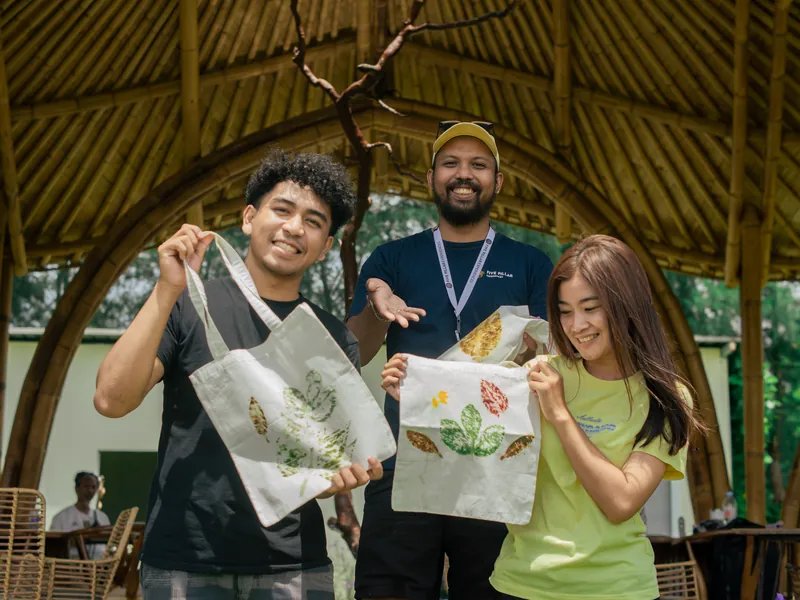
Sanur: Coastal Breeze Escape lists seniors among the travelers it suits, and none of its drives are long. Day one starts with a walk in a mangrove garden and an introduction to the mangrove ecosystem and its conservation; the ground can be soft and muddy, so ask what to wear on your feet. Next comes an ecoprint workshop with a local artisan, sitting at a table and tapping leaves into cotton with a small wooden mallet, then lunch at the garden. After checking in and resting, you learn how natural incense is made and how it connects to Balinese tradition.
Day two begins with morning yoga; tell the teacher about knees, hips or back first. A local host then leads a guided cycle along the coastline and nearby streets, followed by lunch and free time. The cycle is the one active part of the trip. The coast is flat, but if you no longer ride, say so when you book: a stop can be swapped and the price re-quoted.

Pejeng: ten minutes from Ubud
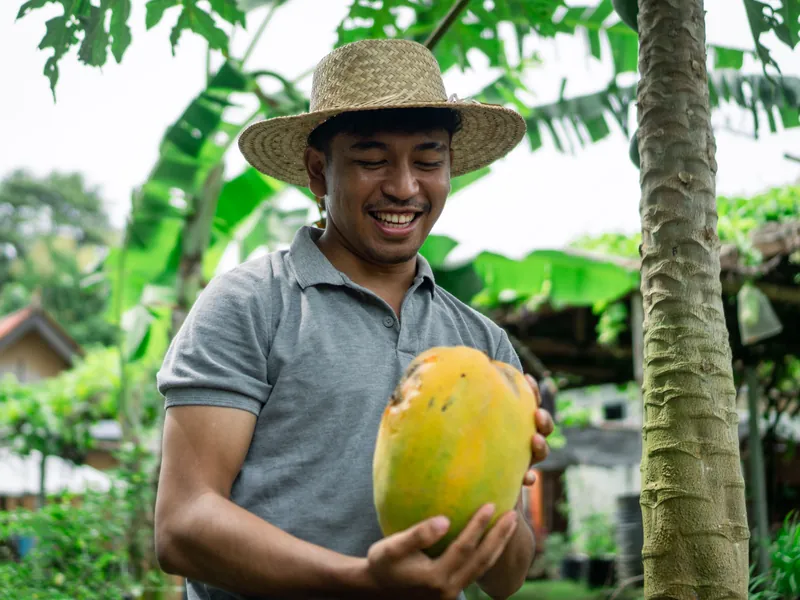
Pejeng: Nature, Culture & Wellness sits about ten minutes from Ubud. Day one starts with a farm-to-table experience, learning about local ingredients and farming before a lunch made with produce from the area, followed by a session with a local healer in a peaceful setting and a free afternoon. Our article on Balinese traditional healers explains the practice.
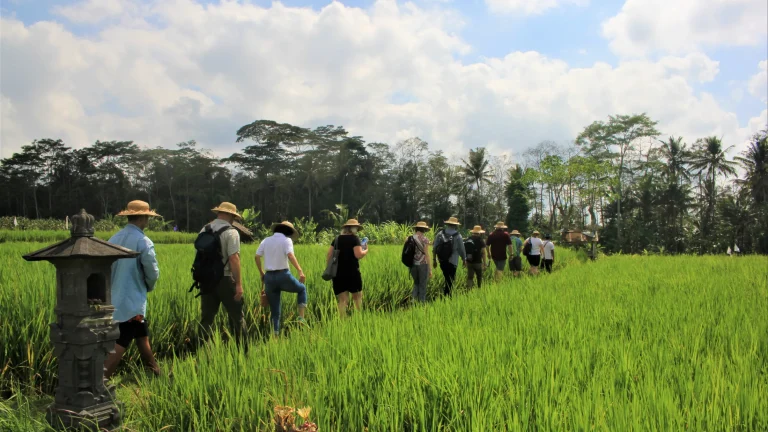
Day two moves to Bedulu: a community hall and a temple, then a walk through the subak, the rice-field irrigation system, where field paths can be narrow. It ends with a megibung lunch at a Balinese house. Megibung is a shared feast traditionally eaten sitting cross-legged on mats, so if the floor is difficult, ask for a chair when you book.

Nusa Dua: for resort guests
If you’re staying in Nusa Dua, Nusa Dua: The Balinese Connection keeps drives very short. Day one visits local sustainability projects, then explores the mangroves by boat and stops at a conservation area. Getting in and out of a small boat is the trickiest moment, so wear shoes with grip. Day two begins with melukat, a Balinese water purification, which often means standing under spouts of spring water on wet stone. You can take part or simply watch; our melukat guide explains what happens.
Medewi and Negara: gentle days, long drives
Medewi: Beyond the Path of Bali is gentle once you’re there: chocolate making in Gumbrih, a virgin coconut oil workshop, a seafood lunch by the sea, a free afternoon and sunset at Medewi Beach, then a morning with a village family in Jembrana. But the drive west takes roughly two and a half hours or more from the south. The Negara journey starts in Negara itself, about three hours from the south, so it makes most sense if you’re already staying in West Bali.
Short workshops with little walking
On days when a whole outing is too much, our Curated Tours fill a morning or an afternoon. If you’re looking for Bali activities for seniors that need little walking, start here: they happen largely indoors or seated. Transport isn’t included in the standard price, but we can arrange a private pickup. If your group is smaller than the listed size, ask us before you rule it out.
Near Ubud
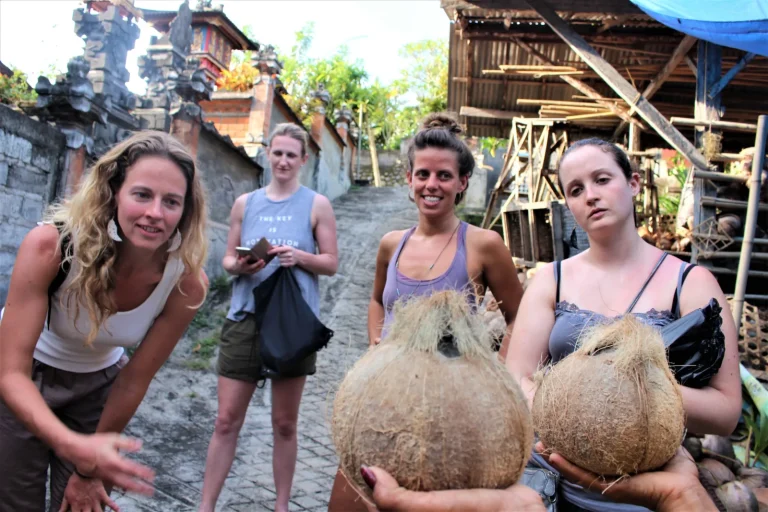
Offerings of Bali: Create, Pray, Share takes two to three hours in Bedulu, about 15 minutes from Ubud. You learn to make canang sari and the taller gebogan offerings, dress in Balinese attire (provided), and join a blessing in a family temple with holy water and bija, the rice grains pressed to the forehead, before sharing the offerings with the family. Our canang sari article explains what they mean.
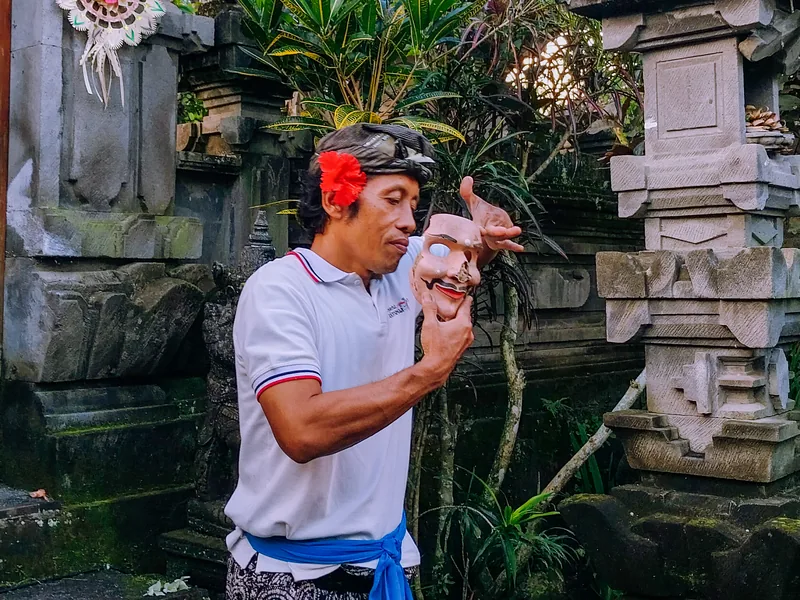
Mindful Art Therapy Experience in Mas, about 15 minutes from Ubud, pairs a guided walk past carvings and paintings with a painting session outdoors among tropical greenery, with snacks and drinks. Sacred Faces, Sacred Stories, also in Mas, introduces a collection of Balinese masks, invites you to sketch one, and introduces a master mask maker and Topeng dancer who shows how the masks come alive. Both run two to three hours.
In the south
Balinese Life Ritual Experience takes about two hours, some 25 minutes from Nusa Dua. A family welcomes you with refreshments and explains the offerings and sacred tools used in ceremonies, then a local priest leads a medapetan ceremony, with purification, mantras and a blessing bracelet. Attire is provided, and it runs for as few as two people.

Balinese Family Tea Time and Gastronomic Experience spends three to four hours in a family home in Jimbaran: herbal tea and stories passed down through generations, a look at how the compound is laid out, then helping to prepare moreng, a local dish, before lunch together.

Practical notes before you go
- Travel insurance: it isn’t included in our trips, so arrange your own. Policies for older travelers can come with age limits, higher excesses or a medical assessment, and you need to declare every pre-existing condition. Check it covers medical evacuation: visitors in Indonesia pay for all medical care, and hospitals may ask for a guarantee of payment.
- Personal medicine: bring enough for the whole trip plus spare days, in the original packaging with a letter from your doctor, split between your bags. Some medicines legal at home, including some strong painkillers and sleeping tablets, are illegal in Indonesia, so check with the Indonesian embassy before you travel. Our trips carry a first aid kit, not personal medicine.
- Your doctor: ask whether the flight, the heat and your planned outings suit you.
- Water: don’t drink tap water. Keep a bottle with you and drink through the day.
- Footwear: temple courtyards and steps are often stone, wet from rain or holy water. Flat shoes or sandals with a grippy sole beat smooth soles.
- Toilets: not every toilet is Western-style, and many are wet underfoot. Carry tissues and hand sanitizer, and tell your guide how often you’d like to stop.
- Temple dress: everyone wears a sarong and sash at a temple, with shoulders covered. Big temples lend them, but a light sarong of your own is always to hand.
- Mobility: use the notes in the booking form to mention stairs, walking distance, a walking stick, hearing, a need for chairs or a diet. Guides can only plan around what they know.
Questions travelers ask
Which part of Bali is best for older travelers?
For most, Sanur or Nusa Dua: flat, quiet and a short drive from the airport. Ubud is wonderful but hilly, so choose a hotel on level ground and ask about stairs before you book.
Is Bali suitable for travelers with limited mobility?
Parts of it are. The coast is flat, a private car makes getting around easy, and many cultural experiences happen in family compounds at ground level. Mountain temples, rice terraces and many Ubud hotels involve steps. Tell us what is easy for you and what isn’t, and we’ll say honestly whether a journey fits.
What do the relaxed two-day journeys include?
A guide, private transport for both days, the activities and two lunches. Dinner is on your own, and the hotel isn’t included: you can add a room with breakfast when you book, or stay wherever you like. Travel insurance isn’t included either.