Most first trips to Bali follow the same short line: the beach towns of the south, Ubud, and a few famous temples and terraces in between. Bali off the beaten path is mostly the rest of the island, and it isn’t hard to reach. Drive two or three hours west, north or east and the traffic thins, villas give way to cocoa trees, rice and salt pans, and the people you meet are farmers, fishermen and weavers rather than people who work in tourism.
This guide goes region by region through the quieter parts of Bali: what each place is like, what you actually do there and how long it takes to get there. After that come a few ways to string them into an itinerary, and some notes on visiting villages without treating them as a show.
What off the beaten path means in Bali
Bali is small but slow to cross. The south, Ubud and the classic day-trip stops get most of the visitors because they’re close to the airport and to each other. Places three hours away see far fewer, mostly because a day trip there means six hours in a car.
So quieter Bali isn’t empty wilderness. It’s ordinary village life in regencies like Jembrana, Buleleng and Karangasem, where ceremonies, markets and farm work carry on whether visitors turn up or not. The best non touristy things to do in Bali tend to be small and specific: making salt with a farmer, shaping a brick with an artisan family, eating lunch grown in the field beside you. A night away is usually what makes them possible.
West Bali: Medewi and Jembrana
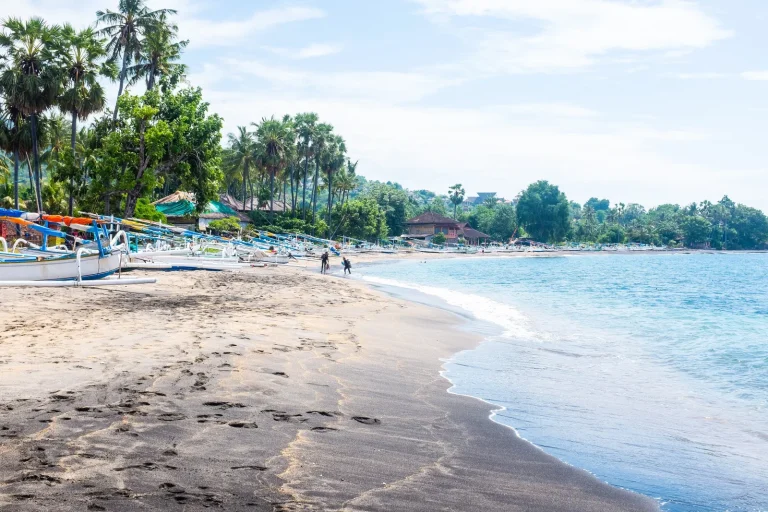
Medewi, on the coast of Jembrana regency, is a surf town that never became a resort town. Surfers come for its long left-hand point break. Everyone else gets a stony black-sand beach with palms and rice paddies behind it, and long sunsets. From Canggu it’s roughly two to three hours by road.
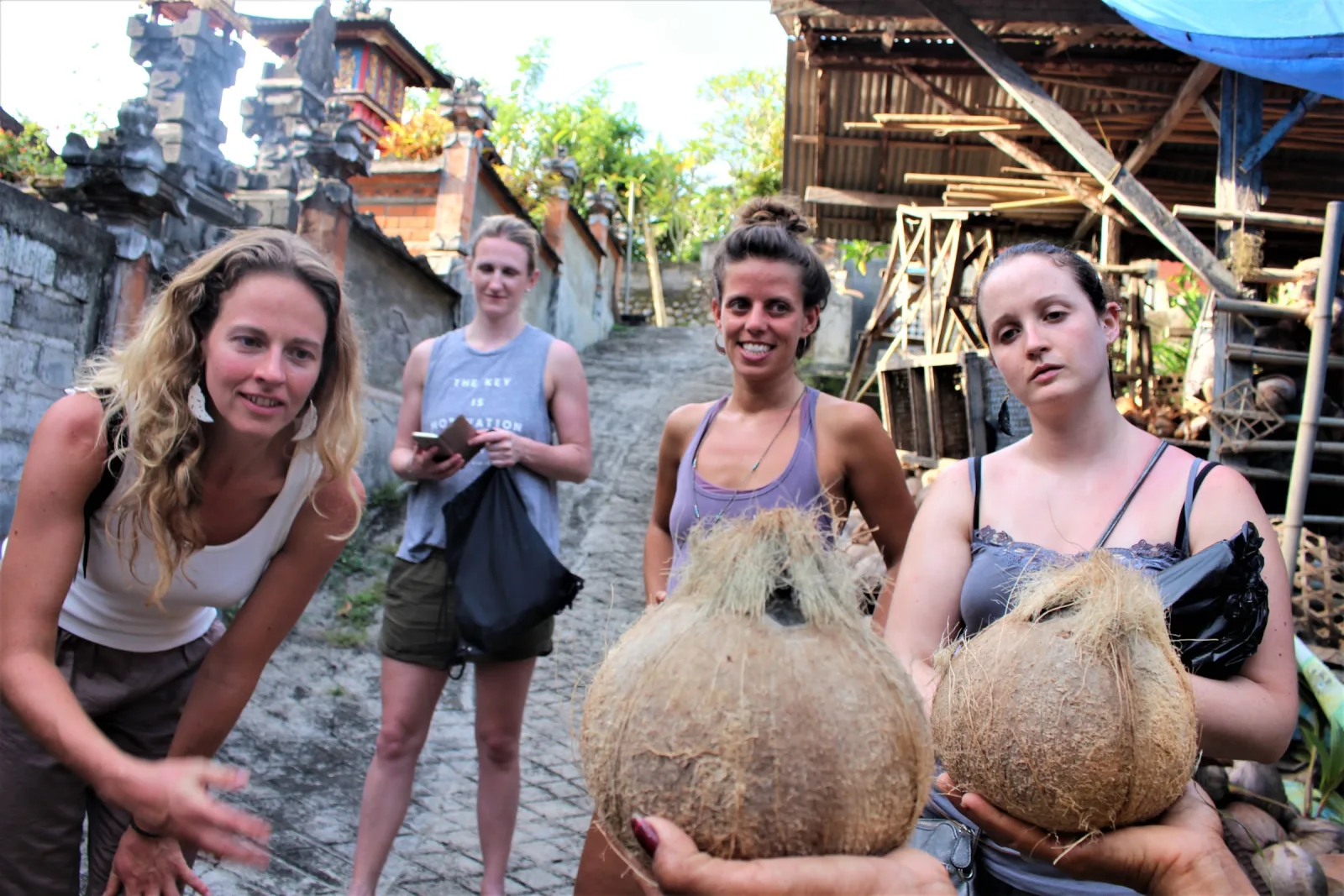
On the Medewi journey, the drive west is part of the day. You stop at a chocolate maker in Gumbrih, a cocoa-growing village, to see how local beans become chocolate, then learn how virgin coconut oil is made from local coconuts, and eat fresh seafood by the sea before checking in. The evening is for the sunset on Medewi Beach. Day two is a morning with a village family in Jembrana, who show you how they live with the land, and a traditional lunch together before the drive back.
Further west, Negara is the regency’s main town and the start of the Jembrana journey, about three hours from the south (transfers from the south can be arranged for an extra fee). It’s a trip built around people: a prayer at Jagatnatha temple, a visit to Puri Agung Negara with tea and conversation with members of the royal family, and a day at Mangde’s family artisan house, where you shape a red brick by hand, try ulon weaving and play bamboo instruments before cooking lunch together.

Jembrana also has traditions of its own: jegog, a gamelan built from giant bamboo, and makepung, the buffalo races described in our guide to a weekend in West Bali.
North Bali: Les, Pemuteran and the hills
The north coast is drier and calmer than the south, with dark-sand beaches and mountains close behind. Most visitors who make it this far stop at Lovina (our Lovina guide covers it). East and west of it are two villages that deserve a night of their own.
Les, in Tejakula
Les is a fishing village east of Singaraja, about an hour along the coast from Lovina, and some families here still make sea salt by hand on the beach. Our piece on Bali’s salt farmers explains the process, from wetting the sand to drying the brine in wooden troughs.

On the Tejakula journey your host is a salt farmer who still works the beach the way his grandparents did. Day one covers salt-making, the lontar palm and how its sap becomes arak, and village stories, followed by lunch at a scenic spot and a short walk to a waterfall. Day two starts with snorkeling off Les and ends with lunch in a traditional Balinese kitchen, with recipes passed down through generations.
Pemuteran
At the western end of the coast, three to four hours from the airport, Pemuteran is a quiet bay close to West Bali National Park. Since 2000 the village has been regrowing its reef on Biorock frames, steel structures carrying a small electric current that helps coral take hold. Our piece on reef restoration in north-west Bali explains how it works.
The Pemuteran journey spends day one on land: Pura Melanting, grape picking in a vineyard (grapes are grown in this dry corner of Buleleng), lunch and traditional salt-making. Day two is on the water: how the reef structures work, a snorkel over the coral, the mangroves of Teluk, and a beach lunch prepared by Pak Tut Danu.

Munduk, in the hills
If you cross the mountains instead of following the coast, Munduk sits in the hills on the way north. It was a hill station in Dutch colonial times and is still coffee and clove country. The Munduk journey pairs a cooking class with a coffee plantation walk and cupping, then a guided trek to waterfalls through the clove groves the next morning. There’s more on the coffee in our piece on Munduk and Kintamani.
East Bali: Sidemen, Amed and Tenganan

Sidemen is the easiest quiet valley to reach, about 90 minutes from Ubud and two hours or more from the south coast: rice terraces under Mount Agung, households still busy at the loom, and very little to do after dark. Our guide to two slow days in Sidemen covers it in detail. In short, the Sidemen journey is a market, a cooking class, canang sari and a temple blessing on day one, and a bicycle, a waterfall, an arak plantation and the weavers on day two.
On the far east coast, Amed is a string of fishing hamlets where salt farmers still work the beach. The Amed journey moves between that shoreline and the royal water garden of Tirta Gangga, with a sunset viewpoint, a sunrise boat ride and snorkel, and the Sibetan rice terraces to finish.
A few kilometers inland from Candidasa, Tenganan Pegringsingan is a Bali Aga village, one of the communities whose customs go back to before Javanese Majapahit influence reshaped Balinese culture. It’s one of very few places in the world where double ikat cloth, called geringsing here, is still woven. The Candidasa journey walks the village with a local guide, tours Puri Agung Karangasem, and spends day two snorkeling from a jukung and eating grilled fish at a fisherman’s home in Sengkidu. Our Tenganan guide goes deeper.
Close to Ubud but quieter: Pejeng and Bedulu
Not every quiet corner is far away. Pejeng and Bedulu, about ten minutes east of Ubud, were the seat of an old Balinese kingdom, and Pura Penataran Sasih in Pejeng still keeps the Moon of Pejeng, a huge bronze drum thought to be around 2,000 years old. Most traffic passes straight through.
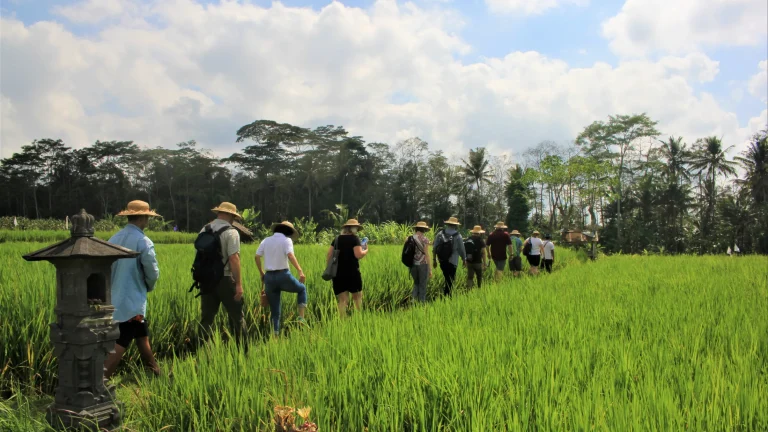
The Pejeng journey is the gentlest on this list: a farm-to-table lunch, a session with a local healer (our piece on Balinese healers explains what that’s like), then a morning in Bedulu with a community hall, a temple, a walk through the subak and a megibung, the shared Balinese feast, at a family home.
How to build a Bali off the beaten path itinerary
A few rules of thumb make the difference between a slow trip and a long car ride.
- Day trip or a night: Pejeng is an easy half day from Ubud, and Sidemen works as a long day trip. Medewi, Negara, Les, Pemuteran and Amed are roughly two to four hours from the south each way, so give each at least one night.
- One region at a time: don’t try to cover the west and the east in the same two days. Pick one, and let the second morning happen there.
- West to north: from Pekutatan, near Medewi, a mountain road climbs over to Seririt on the north coast, about 40 kilometers that take around an hour and a half. Pemuteran is under an hour west of Seririt and Lovina a short drive east, so Medewi followed by Pemuteran or Lovina makes four quiet days.
- Along the north coast: Pemuteran, Lovina and Les all sit on the same coast road, with Les about an hour east of Lovina.
- East Bali: Sidemen, Amed and Candidasa are all in Karangasem, so the drives between them are short by Bali standards.
- Linking journeys: each journey is priced and booked on its own page, and most include pickup from hotels in the south. If you’d like to join two into a longer trip, say so when you send your request.
A ten-day trip might look like this: three nights in Ubud with a half day in Pejeng, two days in Sidemen, a couple of beach days in the south, two days in Medewi, and a last night near the airport. Swap Medewi for Les or Pemuteran if snorkeling matters more to you than sunsets.
Doing it respectfully
Quiet villages stay pleasant partly because daily life there isn’t organized around visitors. A few habits help keep it that way.
- It isn’t a show: if you come across a ceremony, watch from the side, don’t walk in front of people praying, and give way to processions on the road. Ceremonies are worship and community work, not performances.
- Dress for temples: a sarong and sash, with shoulders covered. Bring your own, or ask your guide to arrange one.
- Ask before photos: especially of people praying, of children, and inside family compounds. No flash during prayers, and no drones over temples.
- Buy from the maker: salt from the salt farmer, cloth from the weaver. Bargain gently, if at all.
- Leave less behind: refill a water bottle rather than buying plastic, because waste is harder to deal with in rural areas. Our piece on waste in Bali has more.

Our guide to ethical tourism in Bali goes further.
Practical notes
- Roads: village and mountain roads are narrow and winding. A local driver makes them easy; a rented scooter on unfamiliar mountain roads doesn’t.
- When to go: the dry months, roughly April to October, suit both the coast and the hills, and salt-making runs mainly in the dry season. See our month-by-month guide.
- Cash: ATMs are fewer outside the towns. Carry small notes for markets, makers and temple donations.
- Meals and rooms: the 2 Days 1 Night journeys include lunch on both days. Dinner is on your own, and the hotel room is optional: add one when you book and breakfast comes with it.
- Layers: Munduk and Sidemen sit higher than the coast, and evenings can feel cool.
Questions travelers ask about quieter Bali
What are the most non touristy things to do in Bali?
The ones built around everyday work: making salt in Les or Amed, learning how virgin coconut oil is made near Medewi, shaping bricks and playing bamboo instruments with a family in Jembrana, snorkeling over a community-restored reef in Pemuteran, or sharing a megibung in Bedulu.
How many days do I need?
Two days and one night per region is enough to do more than pass through. With a week or more, you can add two regions to a stay in Ubud or the south without spending most of it in a car.
Can I go off the beaten path with kids?
Yes, with shorter drives in mind. The cycling day in Sidemen, the snorkeling at Pemuteran and the hands-on day with Mangde’s family in Jembrana suit curious children. Our guide to two-day trips with kids has more.