Off the coast of north-west Bali, some of the reef is growing on steel. Snorkelers float over welded metal frames crusted with coral, fish move in and out of them as if they were rock, and the only clue that something unusual is going on is a cable running back toward the shore. It carries a small electric current, and that current is the trick that makes the whole thing work.
In Pejarakan village, about 15 minutes from Pemuteran, Ketut Danu leads a reef restoration initiative that uses this technique, known as mineral accretion, to help damaged coral recover. Visitors can join the work for a morning. Here’s what the technique is, why the reefs needed it, and what you actually do on the day.
Why the reefs here needed help
Like much of Indonesia, Bali’s north-west coast lost a lot of coral in past decades. Fishing with explosives and poison broke and killed reefs, and spells of unusually warm water caused bleaching, when stressed corals expel the tiny algae that feed them and turn white. Coral can recover from a lot, but on a reef reduced to loose rubble, young corals have nothing stable to settle on, and recovery can stall for years.
Restoration tries to close that gap: give coral a solid base, help it grow, and buy the reef time to rebuild itself. Communities around Pemuteran have been doing this for a long time, and the area has become well known for it. In Pemuteran, some of the coral you can snorkel over today was rubble twenty years ago.
Mineral accretion, in plain words
Seawater is full of dissolved minerals. Run a low-voltage electric current through a steel frame underwater, and some of those minerals start to build up on the steel as a hard, pale, limestone-like coating, similar in makeup to the material coral skeletons are made from.
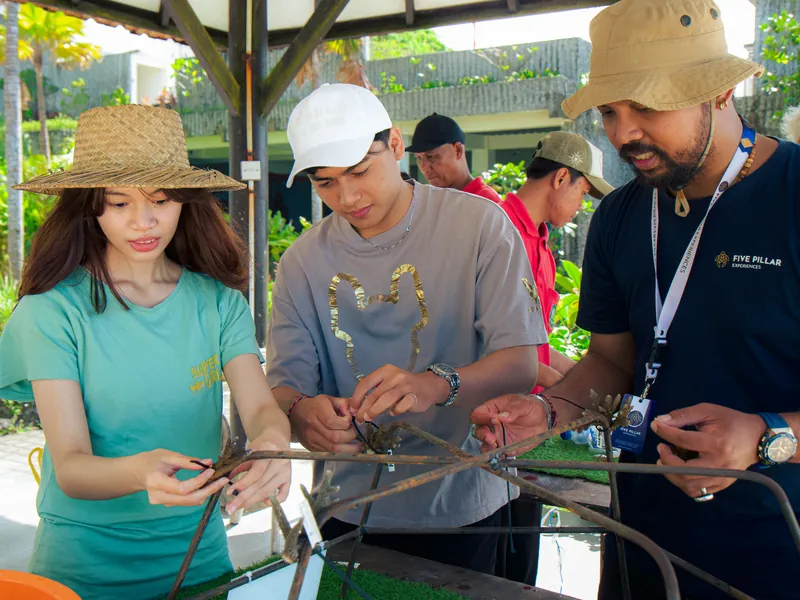
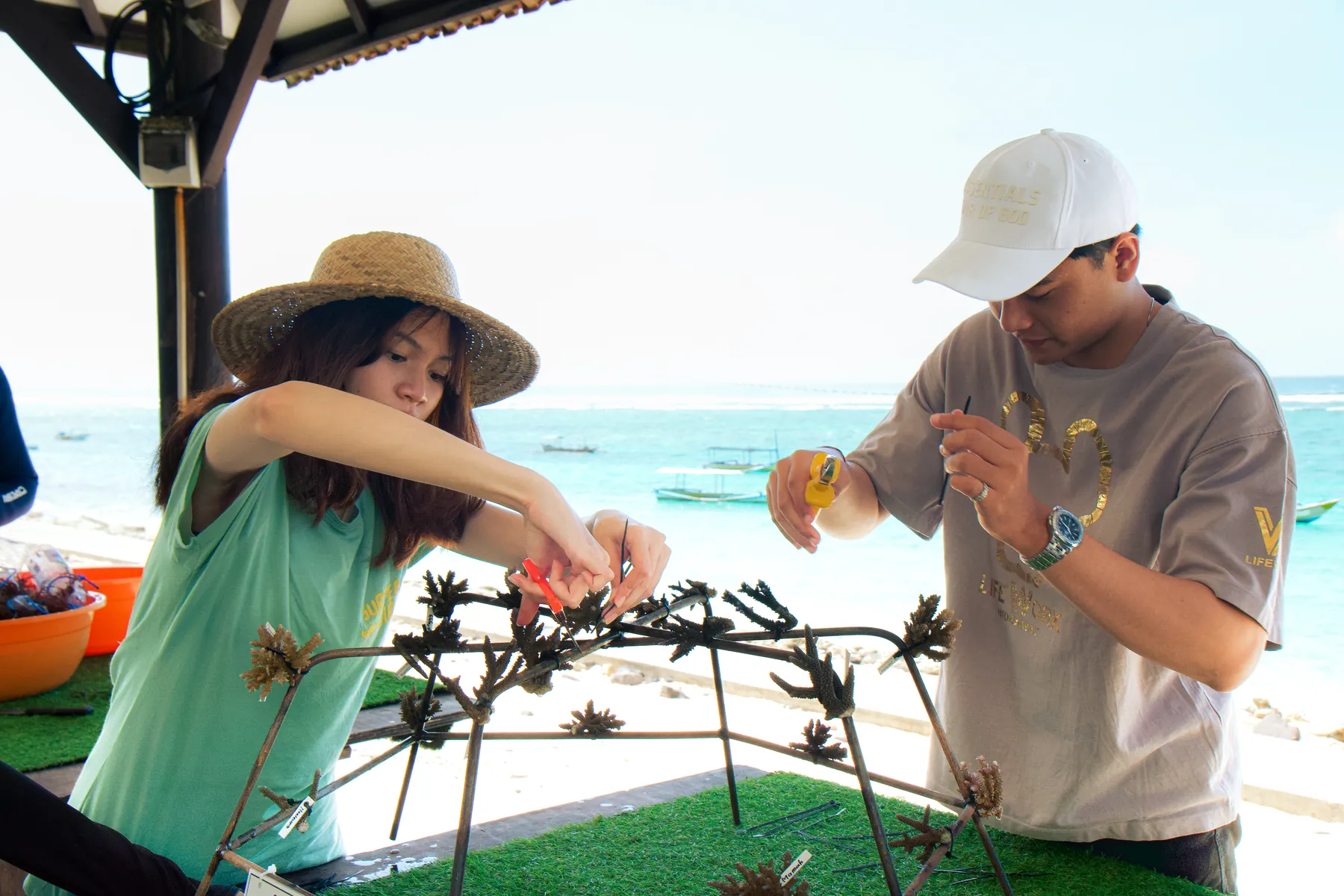
Restoration teams then attach fragments of living coral to the frame. The mineral coating gives them a firm base, and conditions around the charged steel appear to help many corals grow faster and cope better with stress. The current is low enough that people snorkel around these structures routinely. The idea goes back to the 1970s, when an architect, Wolf Hilbertz, experimented with growing building materials in the sea; marine scientists later turned it toward coral. Around Pemuteran you’ll often hear the technique called Biorock, after the long-running project there.
It helps to be clear about what restoration can and can’t do:
- It helps damaged reefs recover. It doesn’t replace the need to stop the damage in the first place.
- It depends on people: someone has to maintain the power supply, check the frames, and keep boats from anchoring on them.
- It’s slow. Even on a good frame, coral grows in centimeters, not meters, and a reef takes years to fill in.
What you do on the day
The Coral Restoration Project with Ketut Danu takes three to four hours and runs by arrangement for groups of two to 20. It goes roughly like this:
- An introduction to coral conservation and coral planting techniques from local experts.
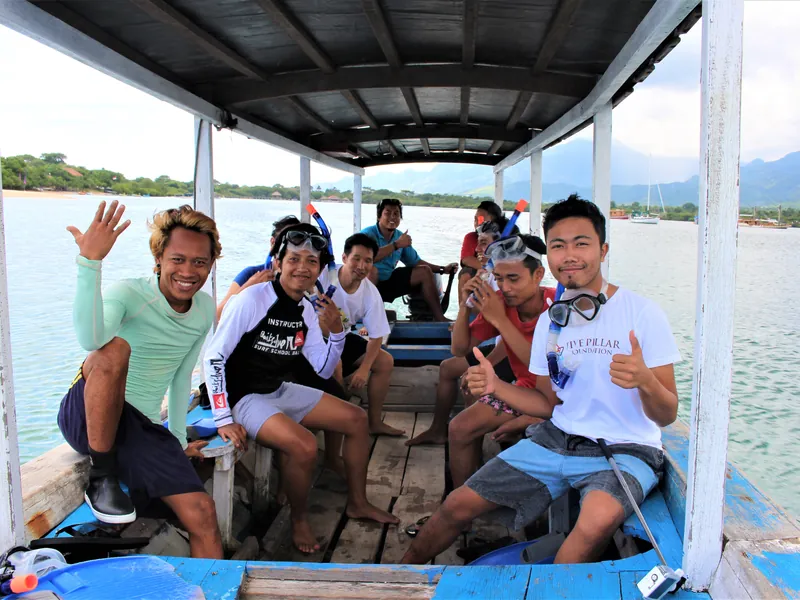
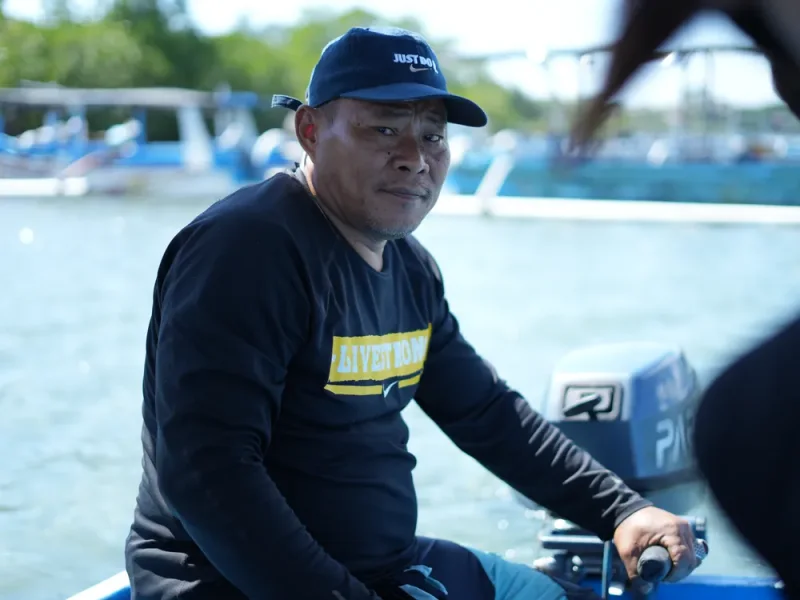
- A short ride in a traditional boat out to the restoration area.
- Snorkeling over the coral and the marine life it attracts.
- A look at the nearby mangroves and their role in protecting both the coast and the reef.
- Light refreshments and a reflection session with the conservation team to finish.
The mangroves are part of the same story. Their roots trap sediment that would otherwise wash out and smother coral, and they shelter young fish that later move out to the reef, so a healthy reef and a healthy mangrove tend to go together.
It’s outdoors the whole time, and a good part of it is in the water, so come ready to get wet. The reflection session at the end is worth staying for: it’s the moment to ask what the program needs most and what happens to the reef after you leave.
What to bring, and how to behave on the reef
- Reef-safe sunscreen, ideally a mineral one based on zinc oxide, applied well before you get in. Better still, cover up and use less.
- A rash guard or long-sleeved swim shirt, which protects you from the sun without anything washing off into the water.
- Swimwear, a towel and a change of clothes.
- A hat and sunglasses for the boat.
- Your own mask, if you have one that fits well.
On sunscreen, the two chemical filters most often linked to coral harm are oxybenzone and octinoxate, and some places, Hawaii among them, have banned sunscreens that contain them. Check the label before you pack.
In the water: don’t touch or stand on coral, including the coral on the frames; keep your fins up and away from the bottom; and don’t feed the fish. If you’re not a confident swimmer, say so when you book so the team can plan for it.
Who it suits
Anyone comfortable snorkeling will get a lot from it, including families with children who swim well. It’s especially good for people who have seen reefs elsewhere and want to understand what’s behind the damage and the recovery. If you’re after a pure dive trip to the best sites, this is something else: a morning of learning, with snorkeling as part of it.
Pemuteran for two days
If you want more than a morning, the Pemuteran journey covers both sides of this coast in two days. Day one is on land: Pura Melanting, grape picking in a coastal vineyard, and traditional salt-making, which we cover in more depth in our piece on Bali’s sea salt farmers. Day two goes to sea at the Biorock conservation area, where you learn how the restoration works, snorkel, and visit the mangroves of Teluk before a locally prepared beach lunch.

Questions travelers ask
Do I need to be a certified diver?
No. The program is built around snorkeling from a traditional boat, not diving.
When is the best time to go?
The sea on this coast is usually calmest and clearest in the dry season, roughly April to October, though conditions can be good at other times too. Our month-by-month guide to the dry season has more on timing.
Is the electric current dangerous?
No. The current used in mineral accretion is low voltage, and snorkelers and divers swim around these structures routinely. If you’re curious about how the frames are powered and looked after, the introduction at the start is the time to ask.