Nyepi 2027, Bali’s Day of Silence and the first day of the Saka year 1949, falls on Monday 8 March 2027. From 06:00 that morning until 06:00 on Tuesday 9 March the island stops: no traffic, no work, no bright lights after dark, and nobody out in the streets, visitors included.
The days around it are some of the liveliest of the year. Here Five Pillar Experiences explains what happens, what the rules mean for you, and how to plan around it.
Nyepi 2027 at a glance
- A few days before, Melasti: processions carry their temples’ sacred objects to the sea, a lake or a spring to be purified. Each village sets its own day.
- Sunday 7 March, Pengerupukan: Tilem Kesanga, the dark moon of the ninth Balinese month. Tawur Kesanga offerings to restore balance, then ogoh-ogoh parades after dark.
- Monday 8 March, Nyepi: 24 hours of silence, from 06:00 to 06:00. A national holiday.
- Tuesday 9 March, Ngembak Geni: the island wakes up. Families visit each other and ask each other’s forgiveness.
- Wednesday 10 and Thursday 11 March, Idul Fitri: the end of Ramadan, also a national holiday.
That last point matters for planning. With the collective leave days Indonesia has set around Idul Fitri, many Indonesians are off from Saturday 6 to Monday 15 March, so book flights, hotels and drivers for that week early.
Before the silence: Melasti and the ogoh-ogoh
Melasti
Three or four days before Nyepi, villages walk in procession to the water, carrying their temples’ sacred objects to be cleansed and purifying themselves at the same time. It’s a moving thing to see: long lines of people in white heading for the beach or a spring. Watch from the side, dressed as you would be for a temple, and don’t cut through the procession. Because each village picks its own day, there’s no single date to plan around; ask your hotel or driver what’s happening nearby.
Pengerupukan: the night of the ogoh-ogoh
On Sunday 7 March, the day before Nyepi, Tawur Kesanga offerings are made at every level, from the big provincial ceremony to each household, to calm the bhuta kala, the disruptive forces. Around dusk, families walk around their compounds with burning dried coconut leaves and make plenty of noise to chase those forces out.
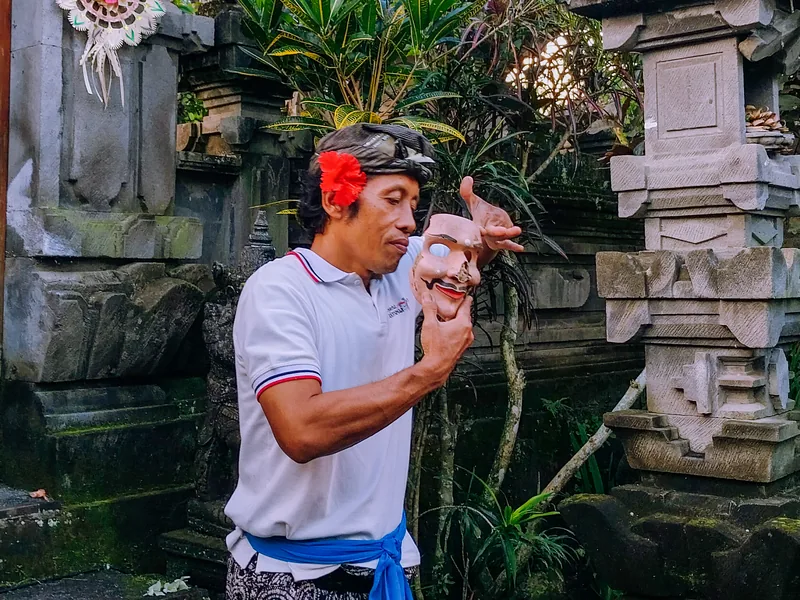
Then come the ogoh-ogoh: giant figures of demons and monsters that stand for the bhuta kala and for the worst in human nature. The young people of each banjar, the local neighborhood community, build them from bamboo and paper, though many now use foam. After dark they’re carried through the streets all across Bali at the same time, and many are burned at the cemetery afterwards, clearing the way for a fresh start.
Since every banjar makes its own, a parade will probably come close to where you’re staying. It’s loud, crowded and joyful. Keep children close, give the bearers room, and plan to be at your hotel for the night by early evening, because village roads fill with the parades.
The rules on Nyepi day
For Balinese Hindus, Nyepi means Catur Brata Penyepian, four restraints kept for 24 hours:
- Amati geni: no fire or light.
- Amati karya: no work.
- Amati lelungan: no travel.
- Amati lelanguan: no entertainment or pleasure-seeking.
Visitors aren’t asked to fast or meditate, but the public rules apply to everyone on the island. Each year they’re set out in a joint appeal from Bali’s interfaith forum and the regional religious affairs office, endorsed by the governor, the police and the military. For Nyepi 2026 it said that from 06:00 on Nyepi to 06:00 the next day:
- nobody, residents or tourists, travels or goes outside;
- no fireworks, loudspeakers, noise or excessive lighting;
- no land, sea or air transport operates;
- radio and TV stations don’t broadcast, and mobile data is switched off.
The appeal for 2027 will come out closer to the date; the 2026 one was signed in mid-February. The village wardens, the pecalang, patrol the empty streets and will send anyone they find back indoors. A genuine emergency is the only reason to go out, and then you follow their instructions. Because the rules cover mobile data, ask your hotel whether its wifi will stay on, and download maps, books and films the day before.
Is the airport closed on Nyepi?
Yes, plan on it. In 2026, I Gusti Ngurah Rai International Airport stopped all regular flights for 24 hours, from 06:00 on Nyepi to 06:00 the following morning, under a notice to airmen issued by AirNav Indonesia, with staff on standby only for emergency flights. The last scheduled flights left late on the eve or in the small hours before 06:00, and the first ones the next morning left from 07:00. The Java ferry at Gilimanuk stopped from the evening before, and the boats from Padangbai to Lombok were suspended too.
The airport announces the exact 2027 times closer to Nyepi. If the pattern holds, nothing flies in or out between 06:00 on Monday 8 March and 06:00 on Tuesday 9 March. Arrive by Sunday 7 March, ideally before the evening parades slow the roads, or from the Tuesday morning.
What hotels expect of guests
Hotels stay open, keep staff on site and keep looking after you, but you stay inside the grounds for the full 24 hours. Bali’s hotel association asks guests to accept very limited lighting and to keep the noise down, and the joint appeal asks hotels not to promote their business using Nyepi’s name. In practice:
- Check in by Sunday 7 March and plan to check out on Tuesday 9 March or later.
- Stay within the property. No beach walks, no drives, no popping out for supplies.
- Keep lights low after dark and voices and music down. Drawing the curtains helps.
- Ask when you book what will be open inside: restaurant hours, the pool and the spa are up to each hotel.
- In a villa or homestay without staff cooking for you, stock up the day before. Shops, warungs and deliveries stop too.
Plenty of visitors end up loving it: a day with nothing to do, birdsong instead of traffic, and on a clear night a sky full of stars.
Tours on Nyepi, and trips either side
Tours do not run on Nyepi day, ours included. Nothing moves on the roads, so there are no transfers or pickups either. On Sunday 7 March, plan any day out so you’re back well before the parades start.
The days either side are a good time for two days away from the south. To be back before Nyepi, travel on Friday 5 and Saturday 6 March; after it, the island reopens on Tuesday 9 March, and our journeys run again from that day, over Idul Fitri too. Two journeys that fit well:
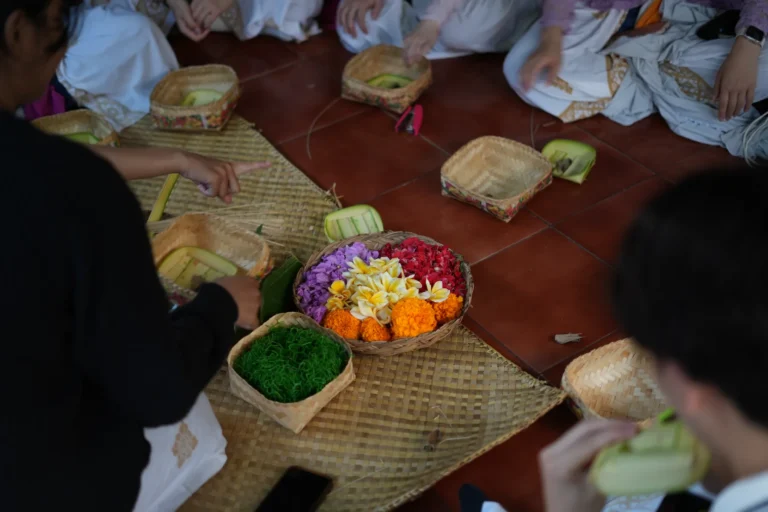
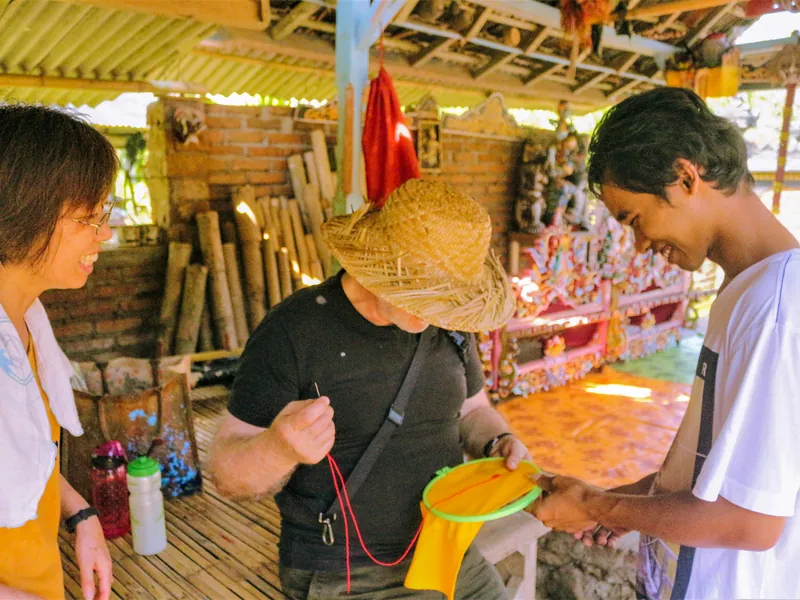
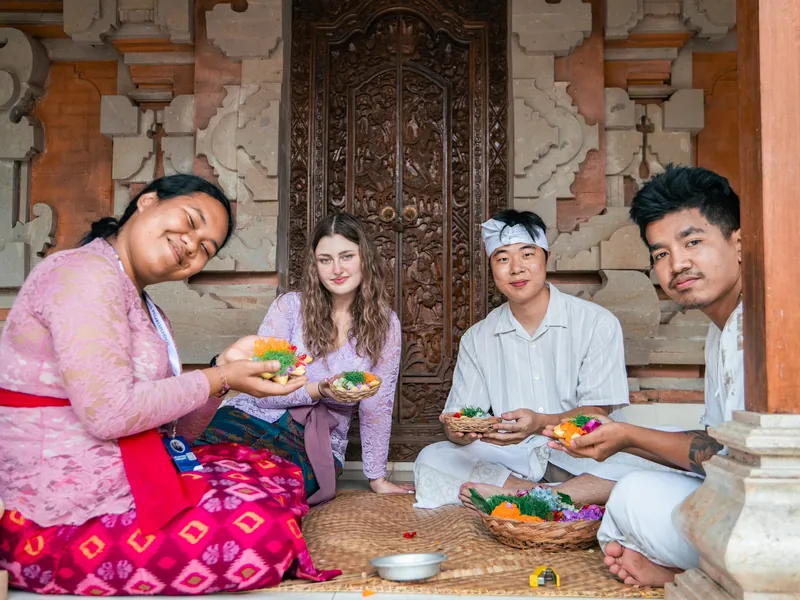
The Sidemen journey in East Bali starts at a village market and a hands-on Balinese cooking class for lunch, then you make canang sari and receive a temple blessing guided by a local host. Day two is a bike ride through the valley to Gembleng Waterfall and an arak plantation, lunch in Sidemen, and a visit to a traditional weaving house. Our Sidemen guide has more on the valley.
If you’d rather have cool air and walking, the Munduk journey in the northern highlands pairs a cooking class with an organic coffee plantation walk and a specialty cupping, then a guided trek through clove and coffee groves to the waterfalls the next morning. See our guide to things to do in Munduk.
Both include pickup from your hotel in Ubud, Sanur, Seminyak, Canggu, Nusa Dua or Denpasar. With Idul Fitri the same week, ask about dates early.
Questions travelers ask
Can I fly into Bali on Nyepi?
Plan not to. In 2026 the airport and the ports closed for the full 24 hours, and the 2027 times will be confirmed closer to the date. Land by Sunday 7 March or from Tuesday 9 March.
Can I leave my hotel on Nyepi?
Only in a real emergency. Everyone in Bali, tourists included, is asked to stay where they’re staying for the 24 hours, and the pecalang will turn you back if you go out.
Is Nyepi a good time to visit Bali?
If you like the idea of a day with nothing to do, yes. The eve of Nyepi is one of the biggest nights of the Balinese year, and the silence that follows is unlike any other day on the island. It’s a poor fit for a short trip with a packed plan, or for anyone who needs to travel on 8 March.