The Bali dos and don’ts that matter most fit in one breath: wear a sarong and sash at temples, step around the offerings on the ground, give and receive with your right hand, don’t touch anyone’s head, and ask before you photograph people at prayer.
At Five Pillar Experiences, our hosts explain these habits every day in village temples, family compounds and morning markets. Here is the reason behind each, what Bali’s government asks of foreign visitors in writing, and how the tourist levy works.
Temples: sarong, sash and the outer courtyard
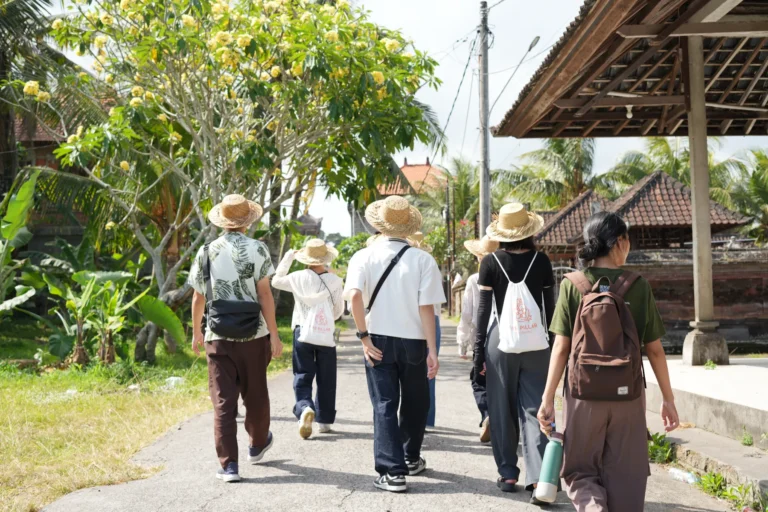
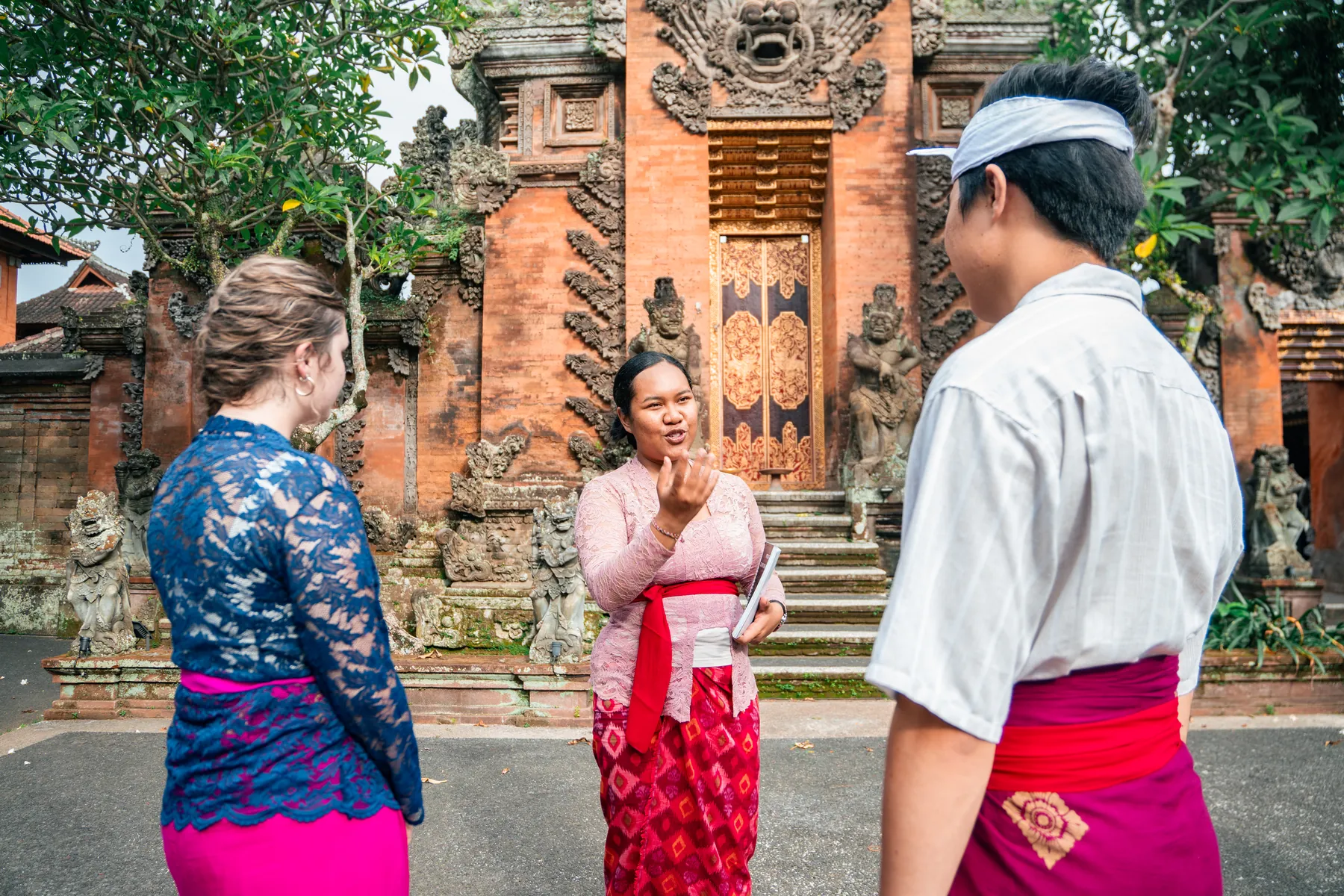
A sarong around your waist and a sash tied over it are expected at every temple, even if you only step inside the gate. Cover your shoulders too. Busy temples usually lend or rent sarongs at the entrance, but your own, bought at a market, is more comfortable.
The rule that surprises people: the Governor of Bali’s 2025 circular for foreign tourists says visitors may not enter the inner and middle courtyards of a temple (utamaning mandala and madyaning mandala) unless they are there to pray, in Balinese dress. In practice most visitors stay in the outer courtyard, and temples used to visitors show where you may walk. If a gate is closed or a sign says no entry, that is your answer.
- Don’t climb walls, shrines or the split gates for a better photo.
- Don’t stand higher than the priest or the people praying. Sit cross-legged, or with your legs folded to one side.
- Keep your voice low and your phone on silent.
- If there is a donation box, leave something small.
Periods and temple visits
The same circular says women who are menstruating may not enter these temple areas. It isn’t a rule made up for tourists. It comes from a Balinese idea of ritual impurity, sebel, that applies to Balinese women in exactly the same way, and traditionally also to anyone with a bleeding wound and to families in mourning.
Nobody will ask you or check. It works on trust, which is why it matters. If your period falls on a temple day, tell your guide quietly: you can wait outside the gate, skip that part, or move a water blessing to another day. Our guide to melukat explains how this works at a purification spring.
Offerings on the ground
Every morning, Balinese households set out small palm-leaf trays of flowers, rice and incense: on shrines, at gates, on shop steps, sometimes on a car’s dashboard. The ones placed on the ground are for the lower spirits, and they are meant to stay there.
- Walk around them, not over them. Look down as you step out of a shop or a gate.
- Don’t move or tidy them, even when one is in your way.
- If you step on one by accident, don’t panic. Say sorry if someone saw, and carry on more carefully.
Our piece on how canang sari are made explains what goes into them.
Ceremonies, processions and photos
Visitors are usually welcome to watch a ceremony. You are a guest at someone’s prayer, though, not an audience at a show.
- Give way to processions. If a road is closed for a ceremony, wait; it rarely takes long.
- Don’t walk in front of people who are praying, and don’t climb onto a wall or step to get a view.
- Ask before you photograph anyone, and especially anyone at prayer. No flash.
- Keep drones away from temples and ceremonies. If you want to fly near one, ask the temple’s caretaker first and accept a no.
The circular also bans climbing sacred buildings and taking photos at sacred places in revealing clothes or without clothes.
Head, feet and the left hand
Balinese think of the body in levels: the head is the highest and purest part, the feet the lowest.
- Don’t touch anyone’s head, including a child’s. Patting a small child on the head is the most common slip visitors make.
- Don’t point your feet at people or shrines, and keep them off tables and chairs.
- Use your right hand to give, receive, eat and pay. The left hand is for washing. Two hands together is extra polite.
- Point with your thumb or an open hand rather than one finger, and beckon with your palm facing down.
Bargaining, and a few words that help
Bargaining is normal at traditional markets and souvenir stalls. It isn’t normal at a warung with a menu, in a shop with price tags or at a maker’s own workshop.
- Smile, keep it friendly, and know roughly what you would pay before you start.
- If you can’t agree, say thank you and walk away pleasantly. Don’t haggle over something you don’t mean to buy.
- Many vendors treat the first sale of the morning as luck for the day, so early on a quick, fair deal is kinder than a long tug of war.
A few words go a long way: om swastiastu, the Balinese Hindu greeting; suksma, thank you in Balinese; and terima kasih, thank you in Indonesian. At a stall, berapa? means how much? Our guide to ethical shopping in Ubud covers when to bargain and when not to.
Sacred trees, water and plastic
A tree wrapped in black-and-white checked cloth, called poleng, or with a small shrine at its roots, is sacred. The big banyans at temples and crossroads often are. Don’t climb it, hang things from it or lean on its shrine for a photo; the circular names climbing sacred trees specifically.
Springs, lakes, rivers and the sea are sacred too, and the circular bans littering or polluting them. It also bans single-use plastic: plastic bags, polystyrene, plastic straws and drinks packaged in plastic. Carry a refillable bottle. Our piece on waste in Bali covers what else helps.
On the road
If you drive, the circular asks you to carry a valid international or national driving licence, wear a helmet on a motorbike, follow traffic rules, not overload the bike and never ride after alcohol or drugs. Rental cars should come from a registered rental company.
From a host’s side: if you have never ridden a scooter, Bali’s roads are not the place to learn. A local driver gets you there calm, and knows when a ceremony is about to close the road.
What the official rules say
Bali’s written list of dos and don’ts is Governor’s Circular No. 7 of 2025 on foreign tourists, announced on 24 March 2025. It replaced the 2023 circular (No. 4 of 2023). Besides the points above, it asks foreign visitors to:
- respect temples, sacred objects and religious symbols, and dress modestly at temples, tourist attractions and public places;
- be accompanied by a licensed tour guide when visiting tourist attractions;
- change money only at authorised money changers and pay in rupiah, for example with QRIS, Indonesia’s standard payment QR code;
- stay in licensed accommodation;
- avoid rude or aggressive behaviour, online included;
- not work without permits or trade in protected wildlife, sacred objects or drugs.
Bali’s civil service police monitor these rules and the police act on serious offences. Rules can change, so check close to your trip.
The tourist levy
Since 14 February 2024, foreign tourists in Bali pay a levy of IDR 150,000, set up to fund the protection of Balinese culture and the natural environment. An amended regulation took effect on 1 July 2025. Under it, the levy is due each time you enter Bali, whether you fly in from abroad or arrive from elsewhere in Indonesia, and you pay it cashless, before or during your stay.
- Pay on the official Love Bali website, lovebali.baliprov.go.id, or its app, by bank transfer, virtual account or QRIS. The voucher comes by email; keep it on your phone.
- Indonesian citizens don’t pay. Holders of KITAS or KITAP residence permits, diplomatic and service visas, family reunification, student and golden visas, and transport crews are exempt, among others. Exemptions are applied for on the same website.
- If you haven’t paid, you can be given a verbal or written warning and refused service at tourist attractions.
Learn it with a host
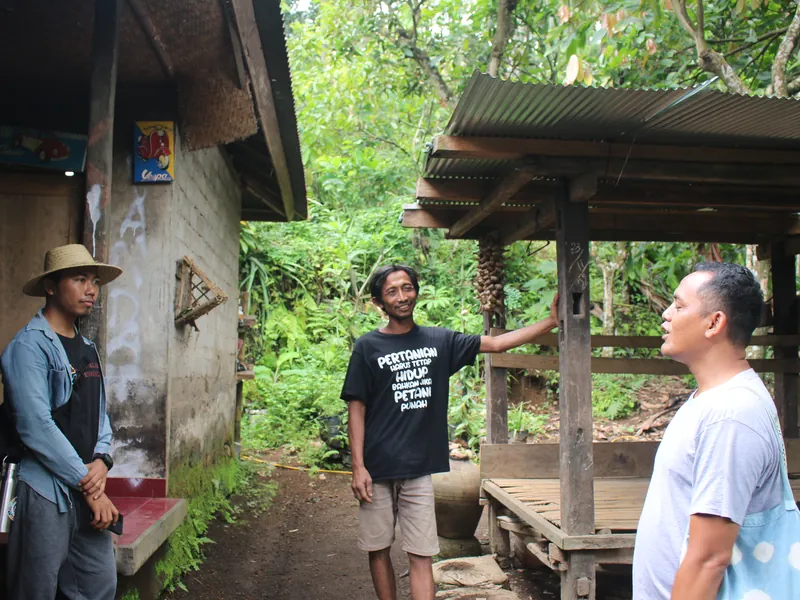
Etiquette sticks when someone shows you. The Traditional Market Adventure is a two- to three-hour morning at a local market in Sayan, about 20 minutes from Ubud. You learn local etiquette, practise simple phrases and bargaining with the vendors, look at ceremonial offerings, fabrics and household goods, and taste tropical fruit, Balinese cakes and jamu, then share what you found over a snack. It runs between 6 and 11 in the morning, for groups of 5 to 30.
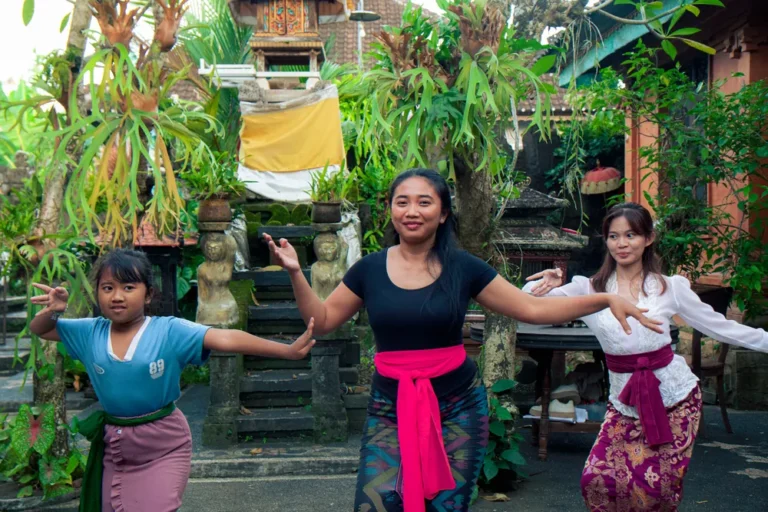
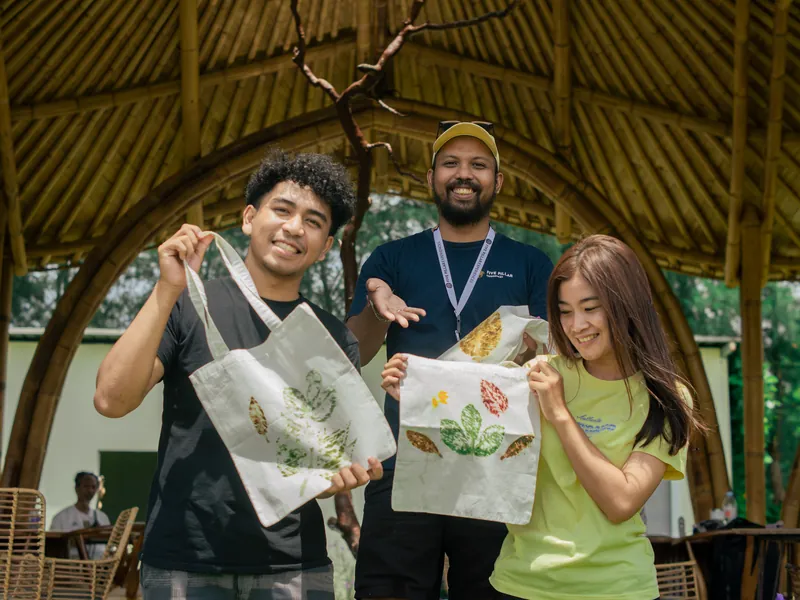
For temples and family life, Balinese Cultural Immersion in Bedulu, 15 minutes from Ubud, starts with how to greet, dress and behave respectfully, then has you make canang, take part in a prayer and blessing ritual and visit a local family. Both are on our page of ethical tours in Bali.
Questions travelers ask
Can non-Hindus visit temples in Bali?
Yes, in the outer courtyard, in a sarong and sash. Under the governor’s circular, the inner and middle courtyards are for prayer: visitors go in only to pray, in Balinese dress, and not while menstruating. Temples that open to visitors show where you may walk.
Is the tourist levy part of my visa?
No. The levy is charged by Bali’s provincial government and paid separately on the Love Bali website or app, before or during your stay. Your visa is a separate matter with Indonesian immigration.