By the second week of August, Bali changes color. Red-and-white flags go up on bamboo poles outside homes and shops, banners stretch across village roads, and gateways are dressed in red and white cloth. School groups rehearse in formation. Somewhere, a banjar is testing how slippery it can make a pole.
All of it leads up to 17 August, Indonesia’s Independence Day. For travelers it is one of the easiest ways to see village life at full volume, because the celebrations happen in public, in daylight, and visitors are usually welcome. Here is what the day marks, the games you are likely to see, and how to take part without getting in the way.
What the day marks
On 17 August 1945, Sukarno read the proclamation of Indonesian independence in Jakarta, with Mohammad Hatta at his side. Four more years of struggle followed before the Netherlands recognized Indonesian sovereignty at the end of 1949. The 2026 celebrations mark the 81st anniversary.
The 17th is a national holiday, and in 2026 it falls on a Monday. That makes a long weekend for many Indonesians, so expect more domestic travelers at popular spots, busier roads on the Friday evening and the Monday afternoon, and fuller hotels in places like Ubud. If you have an airport run that weekend, leave extra time.
The lomba: games you will probably see
The heart of the celebration is the lomba, a program of games and contests run by villages, banjar, schools and offices in the days around the 17th. Some start a week or more before; others fill the following weekend. The line-up varies, but these turn up almost everywhere:
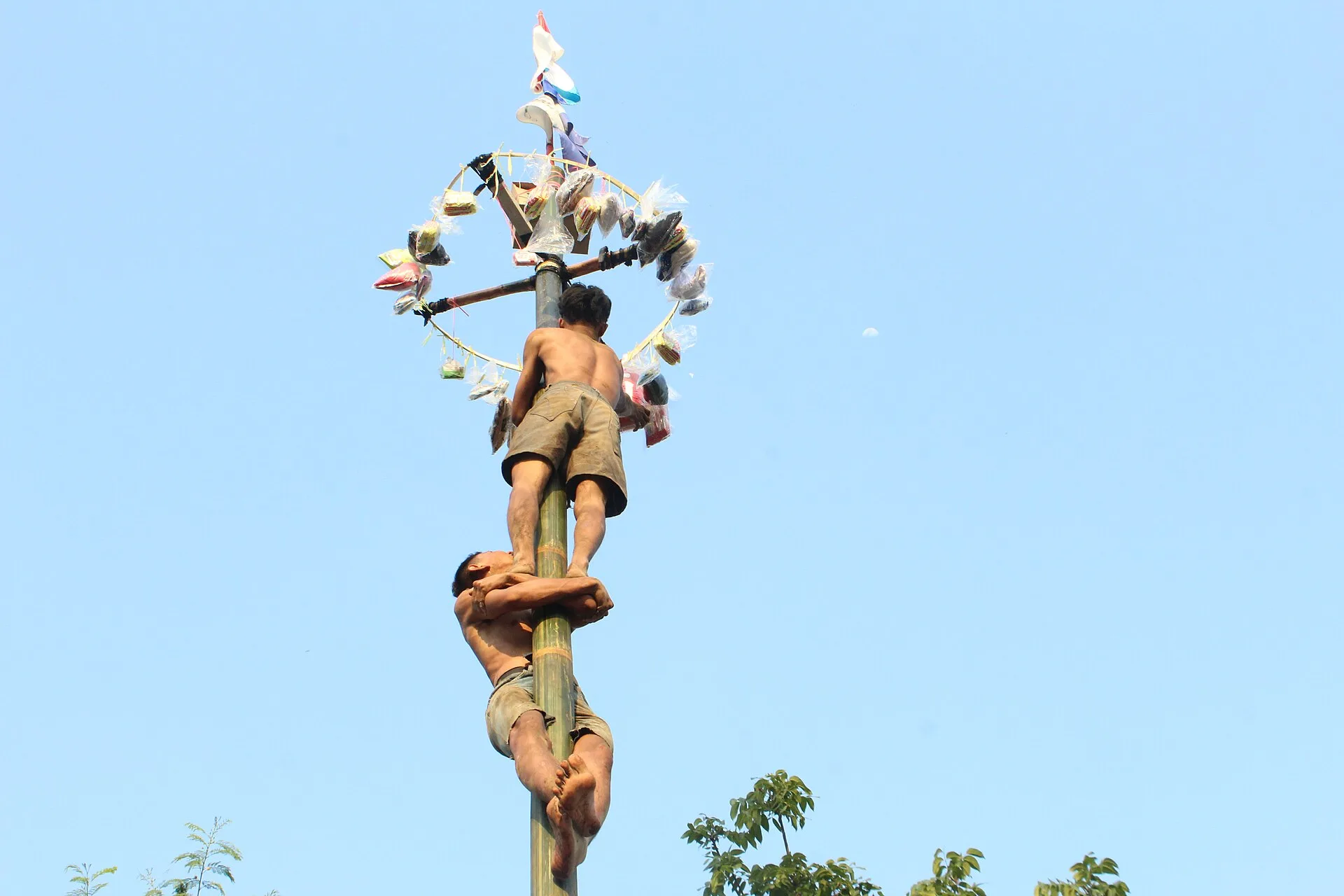
- Panjat pinang. Greased-pole climbing. A tall trunk is coated in grease, prizes hang from a ring at the top, and teams build wobbly human towers to reach them.
- Makan kerupuk. The cracker-eating race. Crackers dangle on strings, hands stay behind backs, and the first to finish wins.
- Balap karung. The sack race, usually louder and dustier than the one you remember from school.
- Kelereng. Walking with a marble on a spoon held in the mouth, a test of nerves for small children and competitive uncles alike.
- Tarik tambang. Tug of war, often between neighborhood teams with very vocal supporters.
Panjat pinang up close
Panjat pinang is the one to wait for. The pole is traditionally the trunk of an areca palm, the pinang of the name, stripped and greased, with a hoop of prizes at the top: household goods, snacks, clothes, sometimes something bigger. The first attempts usually fail. Teams slowly work out who should stand at the bottom, climbers slide back down coated in grease, the crowd shouts advice, and it can take a long time before anyone reaches the prizes. Stand back from the base. People fall off often.
The flag ceremony, and how to behave at it
On the morning of the 17th, schools, government offices and many villages hold an upacara bendera, a formal flag-raising ceremony. It is solemn, and it is the one part of the day where visitors should hold back and simply watch.
- Stand still and quiet while the flag goes up and during the national anthem, Indonesia Raya.
- Keep your phone down during the anthem. Photos before and after are fine; filming the moment from the middle of the crowd is not.
- Do not walk through the ceremony area or cut between rows to get a better angle.
- Treat the flag with care: do not wear it as a costume, sit on it or let it touch the ground.
- Leave the drone in its case near ceremonies and government buildings.
Joining the games as a visitor
Travelers are often welcome to watch, and sometimes invited to join, especially in the adult events. The organizers are usually the banjar or its youth group, and a quick question to whoever is holding the microphone is the polite way in. For the wider idea behind this kind of travel, see our guide to cultural immersion in Bali.
- Let local children go first in the kids’ games. If your own children are invited to join, say yes; that is half the fun.
- If you are asked into an adult game, accept. Tug of war and sack races need no shared language.
- Wear clothes you do not mind ruining. Grease and mud travel further than you think.
- Bring small cash for the snacks and drinks sold around the field.
- Ask before photographing children, and before posting pictures of them anywhere.
- Wearing red or white is a friendly nod to the day. Nobody expects it.
Families will find more ideas for keeping children engaged in our guide to two-day trips with kids.
Practical notes for the week
- Banks, government offices and schools close on the 17th. Most restaurants, shops and tourist businesses stay open.
- Towns may close roads for parades and carnivals in the days around the holiday, so build slack into transfers.
- The long weekend fills domestic flights and fast boats. Book early if you are moving around.
- Ask your hotel which banjar is holding games and when. Schedules are local and often only confirmed a few days ahead.
Where to spend the day
Any village will do, which is rather the point. The celebrations are neighborhood events, and the closer you stay to a real neighborhood, the more you see. Three options put you in one.
The Sidemen journey spends two days in the valley east of Ubud with a local host: a market visit and a hands-on cooking class, canang sari and a temple blessing, a walk through the rice terraces, then a morning cycle to Gembleng Waterfall, an arak plantation and a traditional weaving house. The games are not part of the program, but villages in the valley typically hold their own in the days around the 17th, and you will be passing through them.
Cycling through Culture is a Heroes Journey with Made Rata in Kaba-Kaba, Tabanan. It begins with Balinese snacks and an introduction to the route, then rides through rice fields while you learn about village farming, stops at a traditional blacksmith workshop and an ancestral graveyard site, and slows down for yoga and meditation in a village setting. It ends with a Balinese dessert cooking class and a traditional lunch. Plan on five to six hours; groups run from two to 25 people.

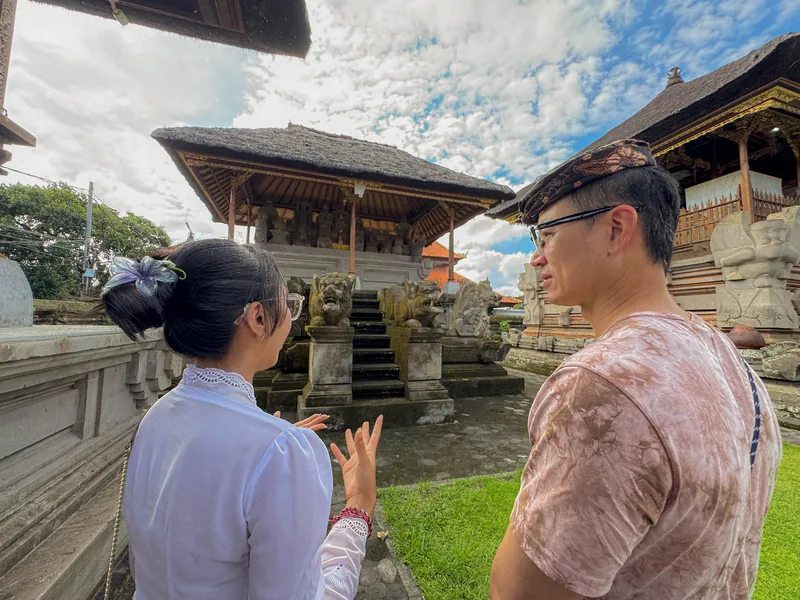
Closer to Ubud, the Living Heritage Village Walking Tour spends two to three hours in Bedulu among temples, family compounds and community spaces, and explains the role of the banjar adat in village decisions. The banjar are usually the ones behind the lomba, so in August the walk has an extra layer. It is designed for groups of five to 30.
Questions travelers ask
Is 17 August a public holiday in Bali?
Yes. It is a national holiday, so banks, schools and government offices close. Most tourist businesses stay open, and some hotels run small celebrations of their own.
Can foreigners join the village games?
Often, yes. Ask the organizers first, let local children go first in their events, and accept if someone invites you into an adult game.
What should I wear?
Normal, modest clothes you can get dirty. Red or white is a friendly touch. If you plan to watch a flag ceremony, dress as you would for a visit to an office: covered shoulders and nothing too beachy.
Cover photo: Pandi Ahmad Gunawan / Wikimedia Commons, CC BY-SA 4.0