Bali is one of the most rewarding places in Asia to take a school group. It is safe and well connected, the culture is visible in every village, and the island is dealing in real time with questions students study in class: plastic waste, coral reefs, water, tourism, food and how traditions survive change. A good school trip turns all of that into something students can see, touch and talk about with the people involved.
This guide is for teachers and trip organizers planning school trips to Bali. It covers what students can learn, how to build a program around real community projects, and the practical questions schools ask us most.
Why community-based learning works for students
Most school trips to Bali follow the same route: a temple, a rice terrace, a market, a beach. Students come home with photos, but rarely with a conversation they remember. Learning changes when students meet someone who is solving a problem in their own village, ask their own questions and get their hands dirty helping.
That is the idea behind our Heroes Journeys. Each one is built around a local hero, a farmer, teacher, conservationist or artist, and the project they lead. Five Pillar Experiences is built on five pillars, education, environment, culture, society and economy, and every visit supports the community that hosts it. For schools, that means the trip itself becomes part of the lesson about responsible travel.
What students can learn, by subject
Marine science and conservation
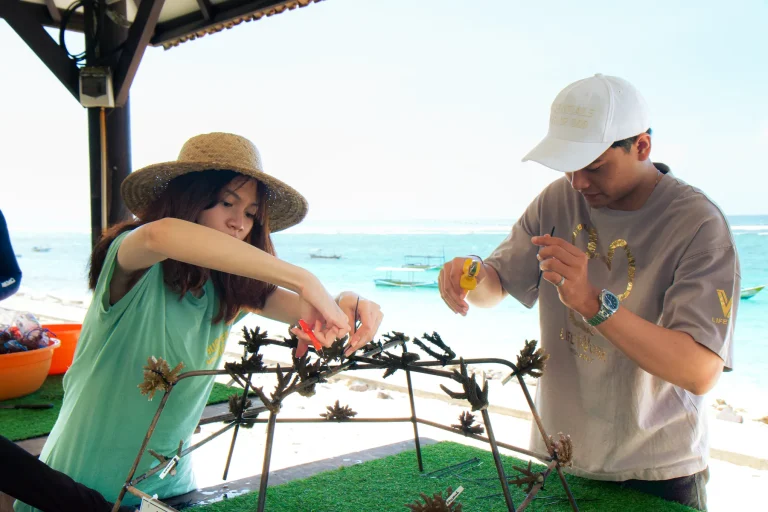
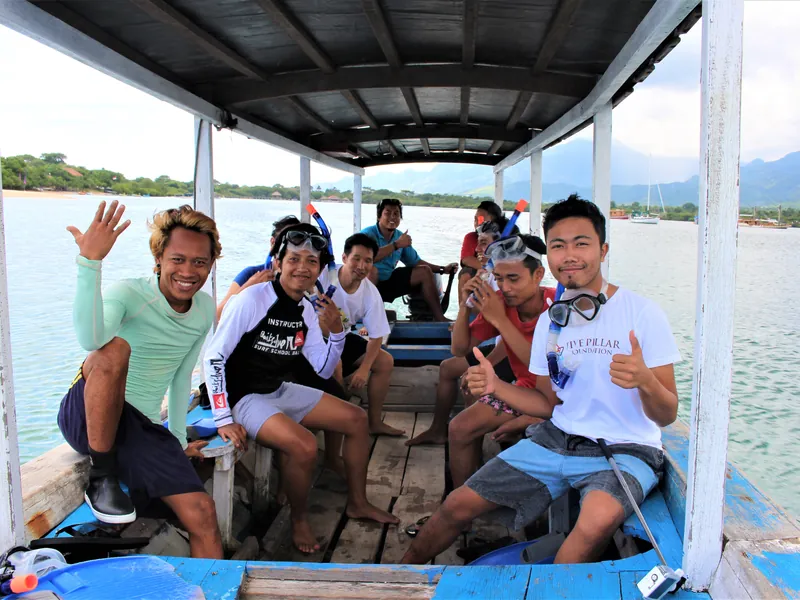
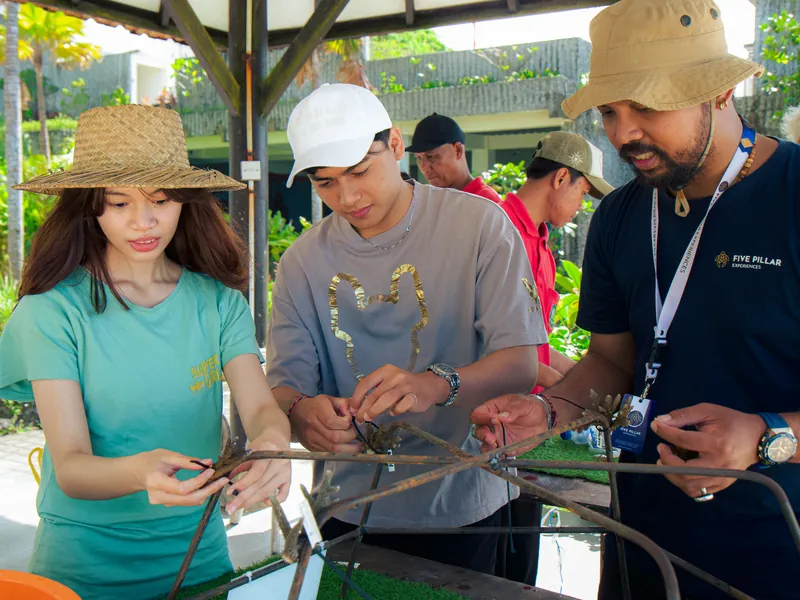
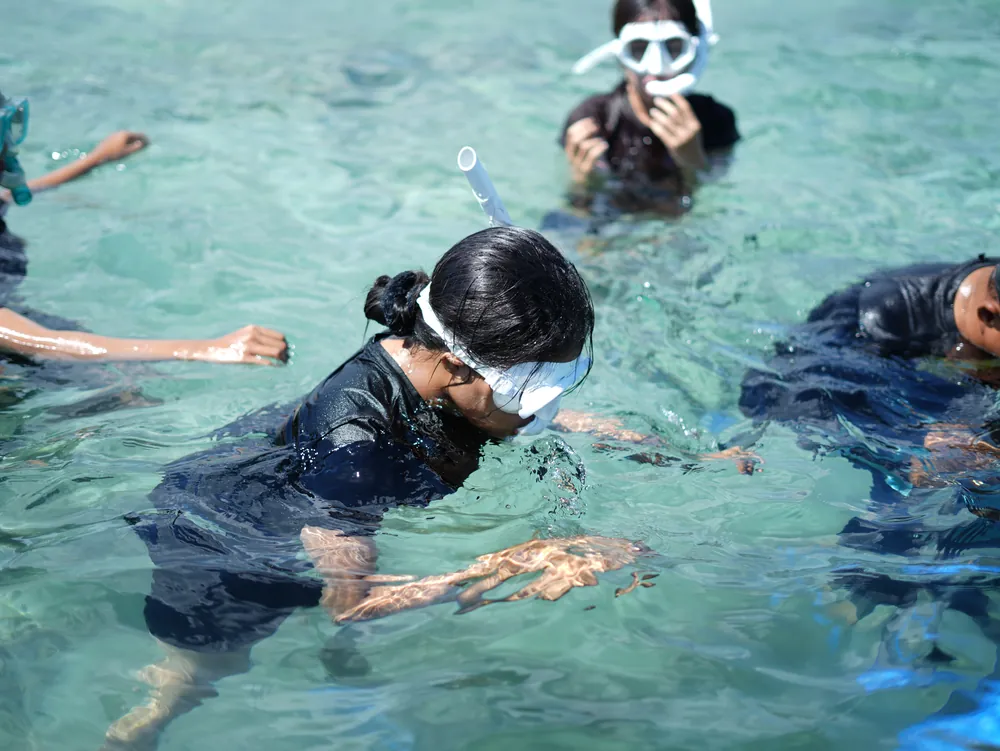
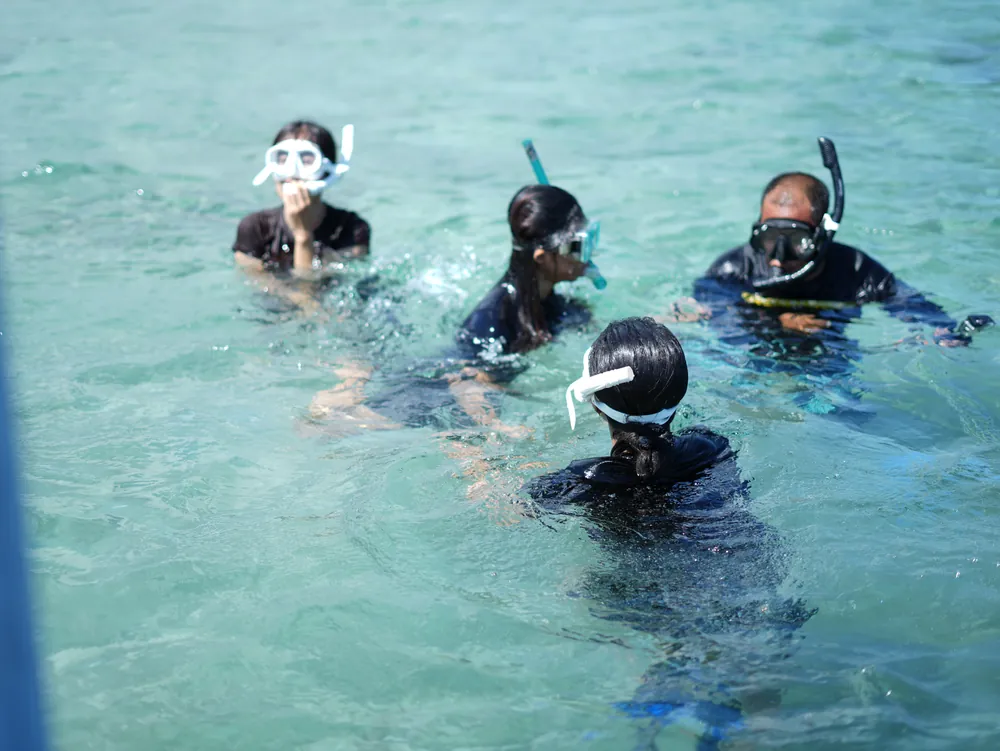
In Pejarakan, near Pemuteran in North Bali, Ketut Danu leads a reef restoration project that uses mineral accretion, a technique that runs a low electric current through steel frames to help coral grow. Students learn how it works from the team, take a short boat ride to the site, snorkel among the restored reef and explore the mangroves. Our article on growing coral on steel explains the project in more detail. Closer to the south, Coral Planting & Marine Discovery is a shorter option.
Environment, waste and the circular economy
Bali’s waste problem is visible, and so are the people tackling it. In Celuk, Pak Wayan Balik shows how his village sorts and composts household waste at the source, and students make eco enzyme from fruit scraps. In Jembrana, Meet the Prince of Trash combines waste education, recycled art and social advocacy. Our article Waste in Bali, honestly is good pre-reading.
Ecology and reforestation
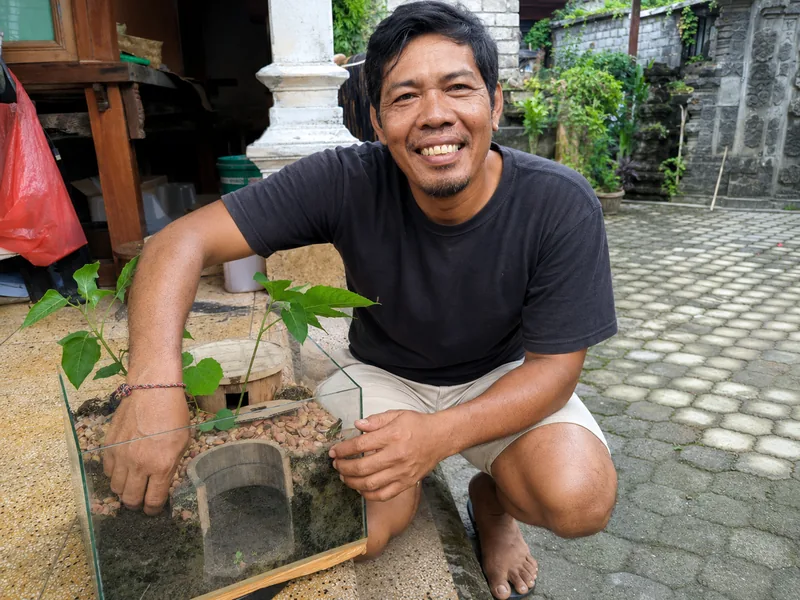
Students can plant mangroves with Pak Agus Diana’s community on Turning Ecosystems into Opportunities near Nusa Dua, or trek uphill through village land in Klungkung to plant native trees with Osila. In Jembrana, From Hunting to Protection tells how a coastal community moved from taking sea turtles to protecting them.
Culture, language and history
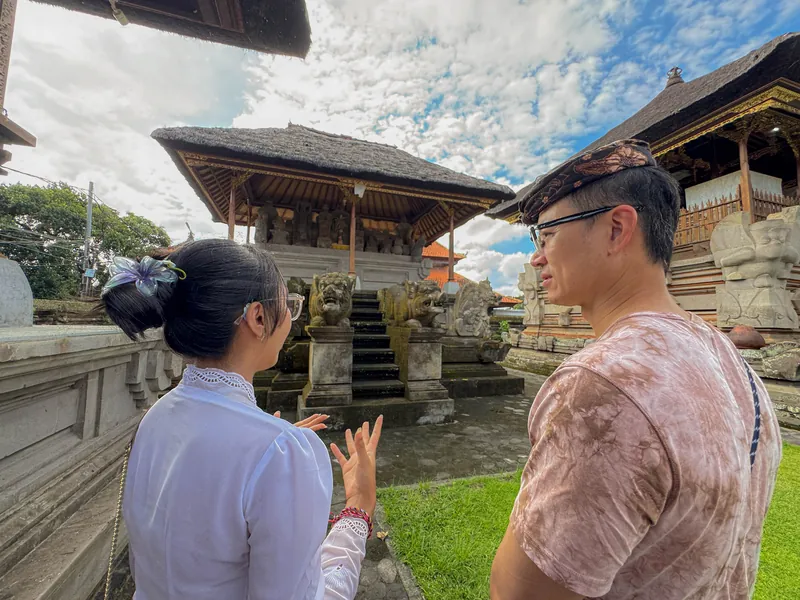
In Kerambitan, Tabanan, Pak Nyoman Widana teaches the Ancient Bali Manuscripts Class: students learn basic Balinese script and carve their own lontar palm-leaf manuscript. Around Ubud, Discovering Bali’s Tri Hita Karana explains the philosophy of harmony between people, nature and the spiritual world through the banjar, the subak and village temples. Our guides to lontar and Tri Hita Karana work well as classroom introductions.
Education and service learning
Two journeys put students alongside Balinese children. At Cemara Kasih Preschool in Jembrana, founder Ibu Agnes Rini Astuti shares how she brings nature-based early education to children who would otherwise miss out, and visitors join the children’s activities on A Revolutionary Local Preschool of West Bali. In Aan village, Klungkung, Reimagining Tradition for Future Generations combines a rice-field trek with learning and teaching English with local children and a traditional dance session.
How a school program comes together
Every school group is different, so we build each program from scratch. A typical process:
- You share the brief: number of students and staff, ages, travel dates, the subjects or learning goals you want to cover, and anything we should know about dietary or access needs.
- We propose a route: a mix of Heroes Journeys, Curated Tours and travel days that keeps drives reasonable. Bali’s regions are far apart by road, so a week often covers two or three areas, for example the Ubud area plus North or West Bali.
- We adjust together: group sizes, pace, free time and reflection sessions, until the program fits your school.
Each experience comes with a local facilitator fluent in English and Indonesian, an ethical Bali orientation at every destination, all workshop materials and an on-site first aid kit. Most Heroes Journeys host up to 20 or 25 people at a time; larger year groups are split into smaller groups that rotate between activities, which also keeps the experience personal for the host communities.
For smaller groups, or for teachers scouting a destination first, our 2 Days 1 Night journeys are a ready-made way to see one region in depth, with private transport and a guide for both days.
Questions schools ask
How many days should a school trip to Bali be?
Most international school groups stay between five and ten days. That leaves time for two or three regions, a few community experiences, rest days and reflection, without spending most of the trip on the road.
When is the best time for a school trip to Bali?
The dry season, roughly April to October, is the most reliable for outdoor activities and snorkeling. Many experiences also run in the wet season, with morning programs and indoor alternatives. Our month-by-month guide has the details.
Can you work with our existing travel agent or itinerary?
Yes. Some schools ask us to design the whole program; others add a few community experiences to an itinerary they already have. Both work.
How do we get a proposal?
Send us your dates, group size, ages and learning goals through the contact form or WhatsApp. We will reply with suggested experiences and a draft route.