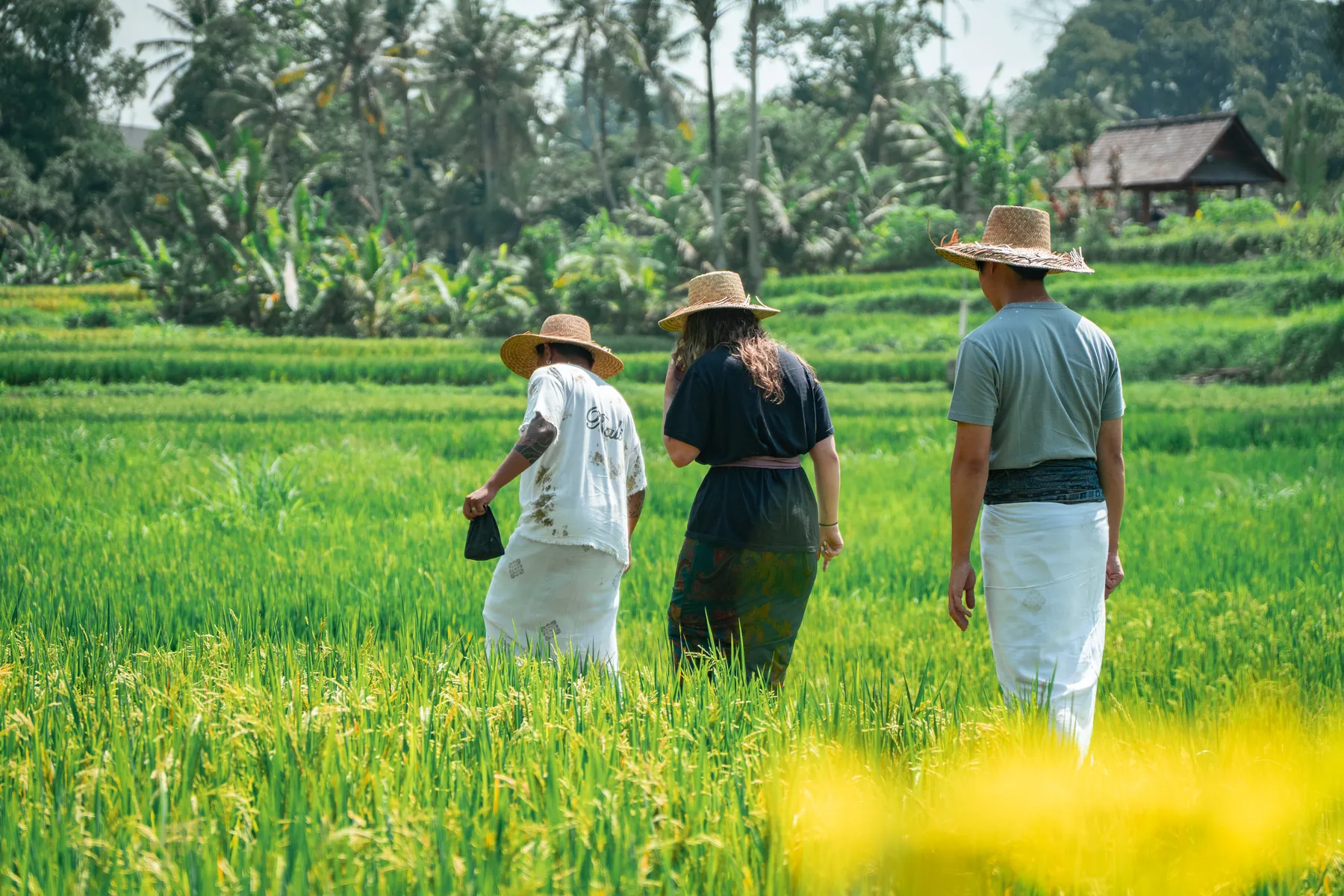
Stand on a dyke at Jatiluwih early in the morning and listen. Under the birds and the wind there is water everywhere: trickling through gaps in the mud walls, spilling over small dividers, running along channels barely wider than a hand. None of it is random. Every field is getting its share, on a schedule agreed by the farmers who work it.
That agreement is the subak. It is over a thousand years old, part of a UNESCO World Heritage cultural landscape, and still in daily use. It is also under real pressure. Here is how it works, what is changing, and how to see it with a bit of understanding.
What a subak actually is
A subak is an organization, not a canal. It is a cooperative of farmers whose fields draw water from the same source, with a chosen head, written rules, regular meetings and shared duties such as clearing and repairing channels. Membership is tied to the fields you farm. The head, usually called the pekaseh, coordinates the schedule and represents the subak at its water temple, and the written rules are its awig-awig, the same word used for a village’s customary law.
The water itself moves through a system built by hand over centuries: weirs on rivers, tunnels cut through hillsides, open canals, and dividers that split the flow in agreed proportions as it moves down the slope. The rules decide who gets water and when, how to share a shortage, and what happens when someone takes more than their due.
Why the temples are part of the plumbing
Every subak is tied to water temples, from shrines at the source down to small ones standing in individual fields. Rituals follow the stages of the rice, and temple networks help coordinate planting across neighboring subak. Researchers who have studied the system argue that this coordination does practical work as well: when neighboring fields plant and rest at the same time, pests have less to feed on.
Balinese people frame all of this as Tri Hita Karana, harmony with the divine, with other people and with nature. Our Tri Hita Karana explainer goes into the idea itself; a subak is where you can watch it doing a job.
Old, and officially recognized
Subak is not a heritage label stuck on for visitors. Irrigation works, and the specialists who dug water tunnels, appear in Balinese inscriptions from around the ninth century.
In 2012, UNESCO inscribed the Cultural Landscape of Bali Province as a World Heritage site, recognizing the subak system as an expression of Tri Hita Karana. The listing covers several areas: the Catur Angga Batukaru landscape where Jatiluwih sits, the Pakerisan watershed, Lake Batur and its supreme water temple, and the royal water temple of Taman Ayun.
The pressure on it
World Heritage status did not freeze anything. Across Bali, rice fields are being converted into villas, roads, shops and cafes, especially where the views are good and land prices high. When one field in a run of terraces is built on, the water path and the shared work around it can be disrupted for the fields below.
Farming is also a hard sell to the next generation. Rice pays little compared with work in tourism, and many young people leave the fields. Demand for water from other uses keeps growing. At Jatiluwih itself, visitors bring income and traffic in roughly equal measure, with restaurants lining the main road above the terraces.
None of this means you should stay away. The subak benefits from visitors who pay the entrance fee, hire local guides, eat local rice and leave the fields as they found them. Jatiluwih is known for its red rice, so ask for it at lunch.
Walking Jatiluwih well
The terraces cover enough ground that you could walk for hours. Marked trails range from short loops to longer routes, and a guide can match one to your legs, the heat and the state of the paths that day. A few habits make the walk better for you and easier on the fields:
- Go early. The light is softer, the paths are quieter and farmers are already at work. This is the main reason to sleep nearby.
- Stay on marked paths and dykes. The mud walls are infrastructure. Stepping on a soft edge can break it and drain water from a neighbor’s field.
- Keep out of channels and fields, however good the photo would be.
- Wear shoes with grip. Dykes are narrow, and slippery after rain.
- Leave shrines alone. The offerings in the fields are active. Do not move them, sit on them or pose with them.
- Think before flying a drone. Farmers and other walkers are there for work and quiet, and some areas restrict drones.
- Walk with a local guide. They know which routes are open and can explain what you are looking at.
Two ways to see a subak
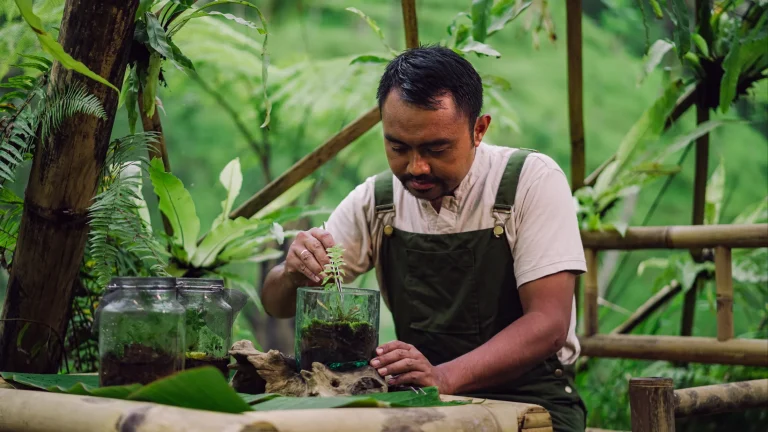
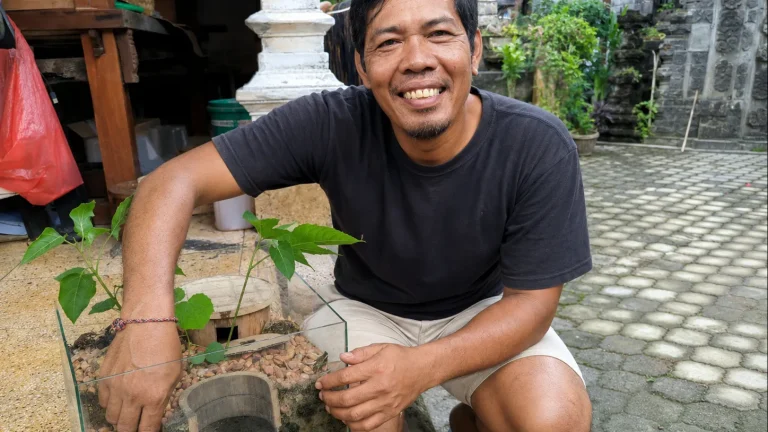
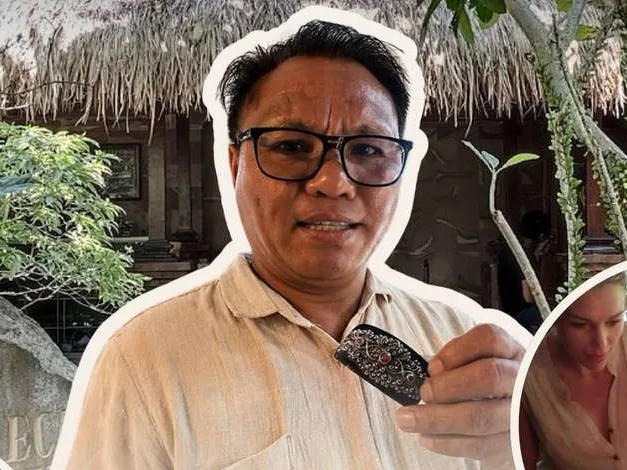
The Jatiluwih journey builds up to the terraces. Day one starts with Pakdek enJOY’s owl conservation project, where you learn how owls fit into the farming landscape of the Tabanan rice fields, then a hands-on traditional craft session with artist Pak Bhakti Wiyasa at his gallery, lunch of Lak Lak Tabanan at a local warung, and a melukat at Pura Taman Sudamala. If you have not joined one before, our melukat guide explains the ritual. You spend the night near Jatiluwih.
Day two is the walk: the White or Dark Blue trekking route through the terraces with a local guide, time to learn how the subak works and about the different kinds of Balinese rice, then Yeh Hoo waterfall and lunch at a local eco farm, looking out over the fields.
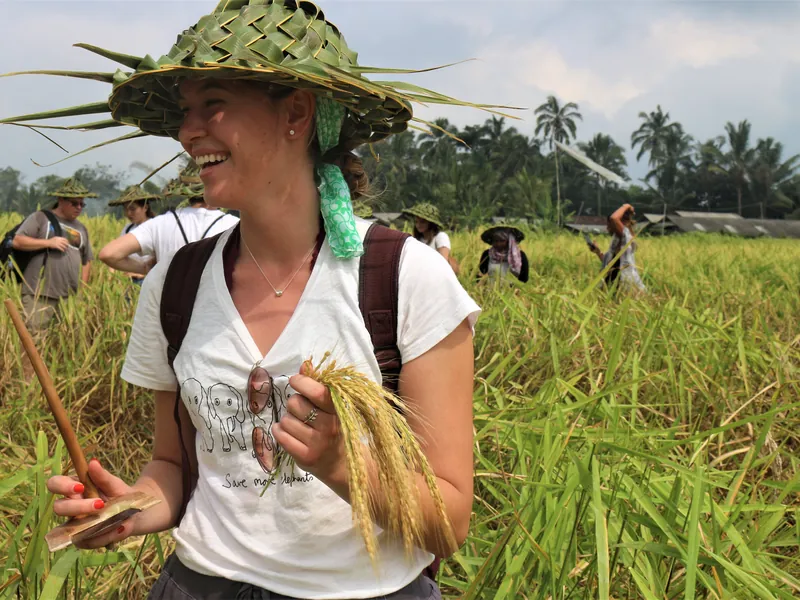
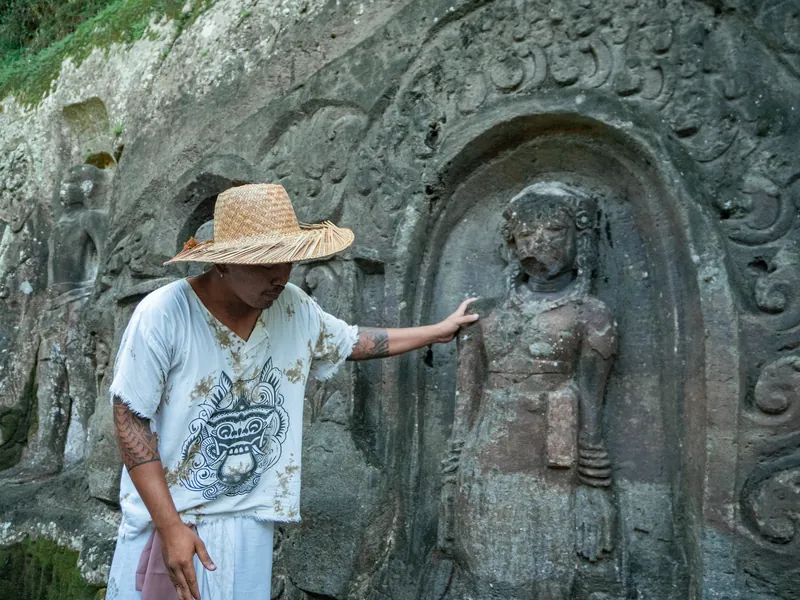
If you are based in Ubud and have a free morning, From Subak Wisdom to Ancient Relief is a two- to three-hour Curated Tour in Bedulu, about 15 minutes away. A local farmer walks you through the rice fields and the water system and talks honestly about the modern threats to it. The tour also visits centuries-old carved reliefs that tell stories of water, rice and ritual, and steps inside a traditional Balinese house. It is designed for groups of five to 30.

Which one to choose
If the terraces themselves are the draw, and you want them at dawn without the day crowd, take the overnight. If you care more about the system than the view, or you only have a morning, the Bedulu tour puts you in a working subak close to Ubud. Either way, rice fields everywhere on the island will look different afterward.
Book the Jatiluwih journey online at least three days ahead, or use Check availability on the subak tour page with your date and group size.