Fireflies are beetles, and for most of their lives they do not fly at all. They spend months, sometimes longer, as larvae in damp soil, leaf litter and the edges of streams, hunting snails and slugs. The glowing adults you see on a warm night are the short final chapter, often lasting only a few weeks.
That life cycle is why fireflies make such a good sign of healthy land. They need darkness, moisture, clean water, food and shelter, all at once and for a long time. Where they still gather in numbers, the ground around them is usually in decent shape. This piece covers what fireflies need, why they are fading from parts of Bali, three Local Heroes whose work helps, and how to behave on a night walk.
What fireflies need
- Darkness. Adults flash to find mates, and each species has its own pattern. Artificial light drowns the signal out.
- Moisture. Wet soil, stream banks, rice field edges and forest floor keep the larvae alive.
- Food. Larvae eat snails and slugs, so they depend on the small animals of healthy, damp ground.
- Few chemicals. Pesticides and herbicides can kill larvae directly and wipe out what they eat.
- Cover. Grasses, shrubs and trees along water give adults somewhere to perch and larvae somewhere to shelter.
In Indonesian they are called kunang-kunang. In Bali you are most likely to find them along rice field edges, river valleys and forest margins, well away from town lights, and many sites are livelier in the wetter months than at the height of the dry season. Numbers vary from year to year, so local hosts are the best judges of whether it has been a good season.
Why they are fading from some places
Most of the threats come from ordinary development. Street lights, villa lighting and illuminated signs spread into rice fields and river valleys. Farming in many areas relies on chemical sprays. Riverbanks are cleared or lined with concrete, and wet corners of land are filled in and built on. Each change is small. Together they push fireflies out.
The encouraging part is that the fixes mostly overlap with what helps farmers, rivers and people anyway: fewer chemicals, more trees along water, and outdoor lights that point down instead of out.
The people working on it
Wayan Wardika, Taro
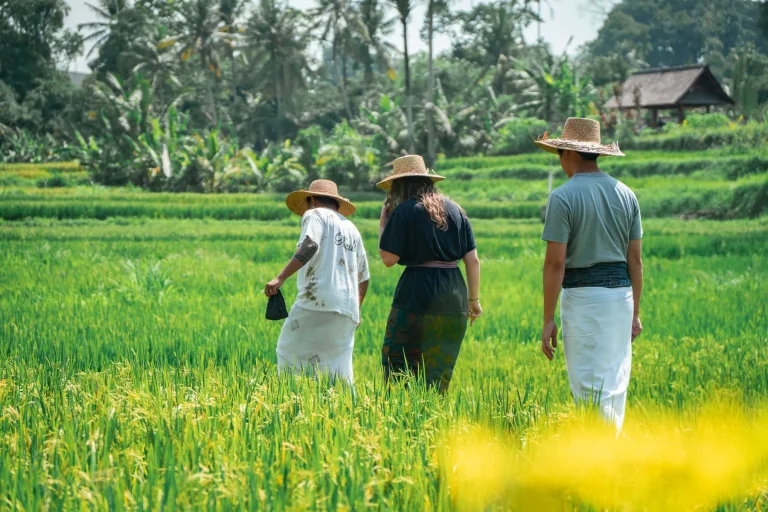
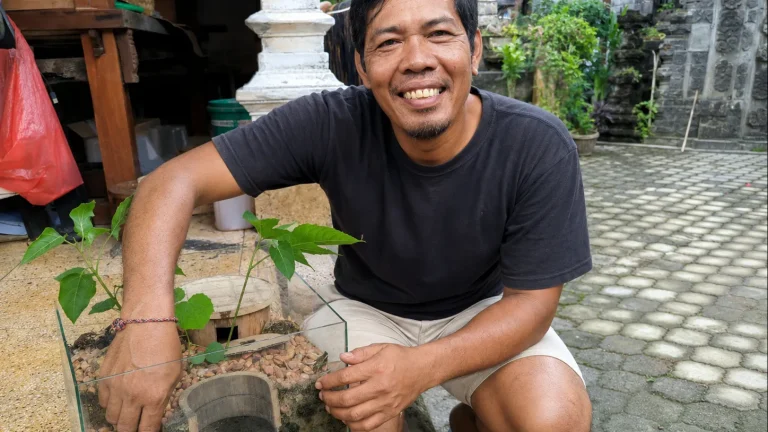
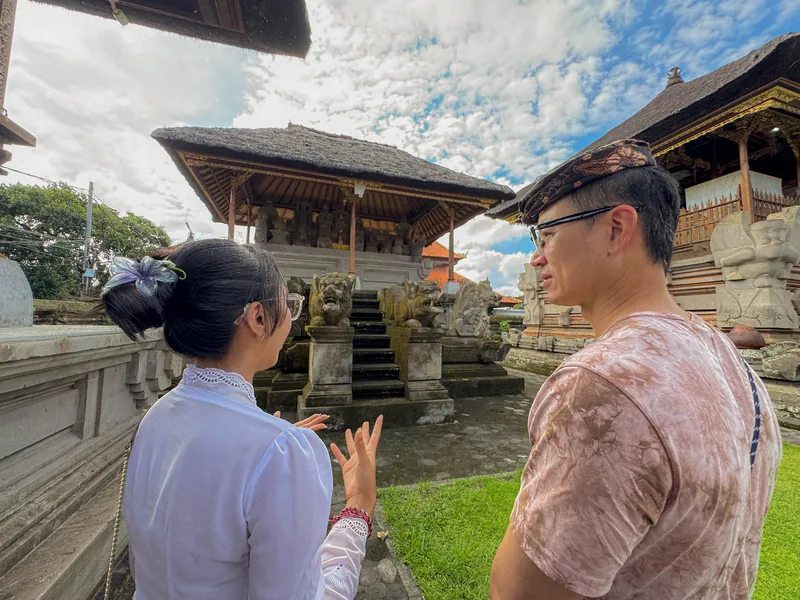
In Taro, north of Ubud, Wayan Wardika leads an initiative that protects firefly habitat and promotes sustainable farming, combining conservation and environmental education with cultural storytelling about the ecological and spiritual place of fireflies in Balinese culture. Preserving the Magic of Fireflies begins with a welcome at Pak Wayan’s family compound, an introduction to local conservation efforts, and an explanation of the philosophy behind the Balinese family compound. A guided forest walk looks at local biodiversity, and a visit to the firefly conservation house and laboratory shows how the preservation work is done. The evening ends with a local dinner and relaxed conversation with the community.
It runs three to four hours, for two to 25 people, about 30 minutes from central Ubud. Seeing fireflies in flight depends on season and weather, so ask about timing when you check availability.
Osila, Besan village
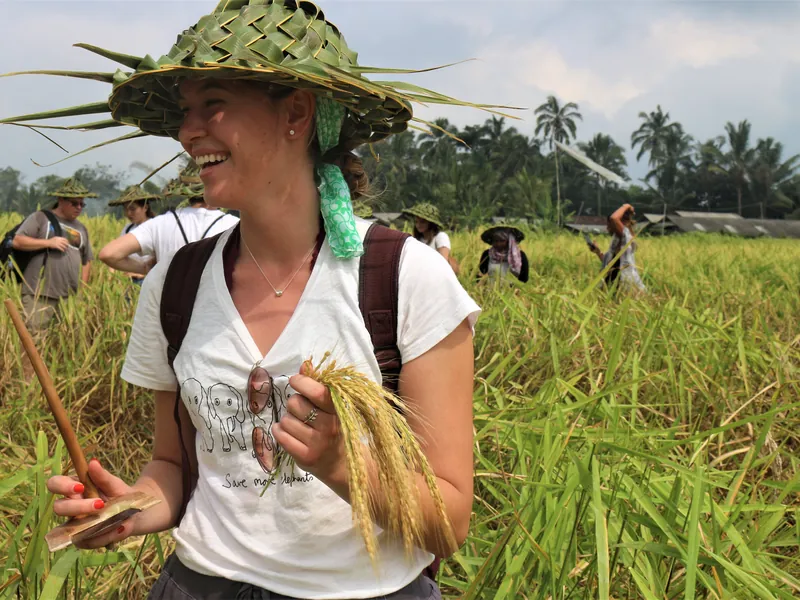
Fireflies need forest and water as much as darkness, which is where Forest Restoration with Osila comes in. In Besan village, in Klungkung regency, Osila works on forest restoration and community sustainability, planting native trees such as candlenut and kluwek and building environmental awareness among younger generations. The day includes countryside trekking with uphill stretches and village views, a tree planting session, time with residents, and a look at traditional palm sugar making. Plan on five to six hours; it is about 15 minutes from Klungkung.
Osila’s focus is forests rather than fireflies, and that is exactly why it belongs here. More native trees mean more shade, more moisture held in slopes and streams, and better ground for everything that lives there.
Komang Nana, Petang
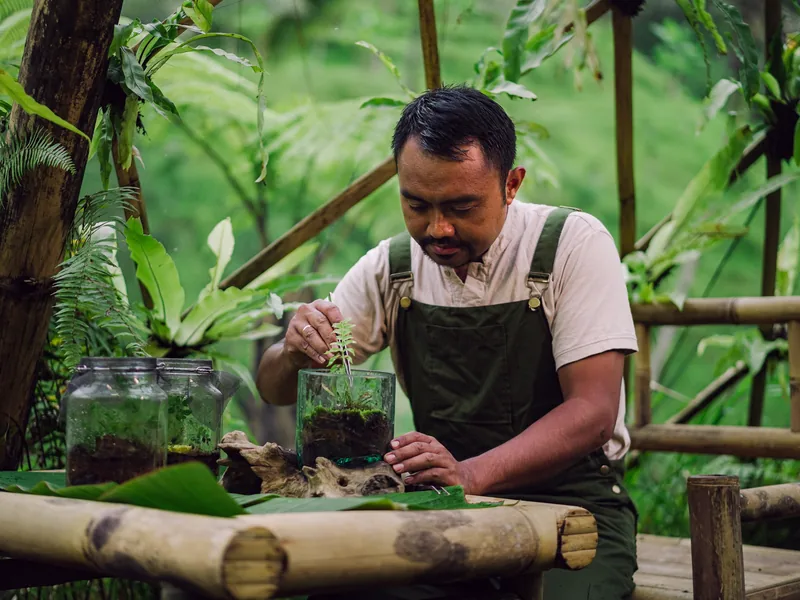
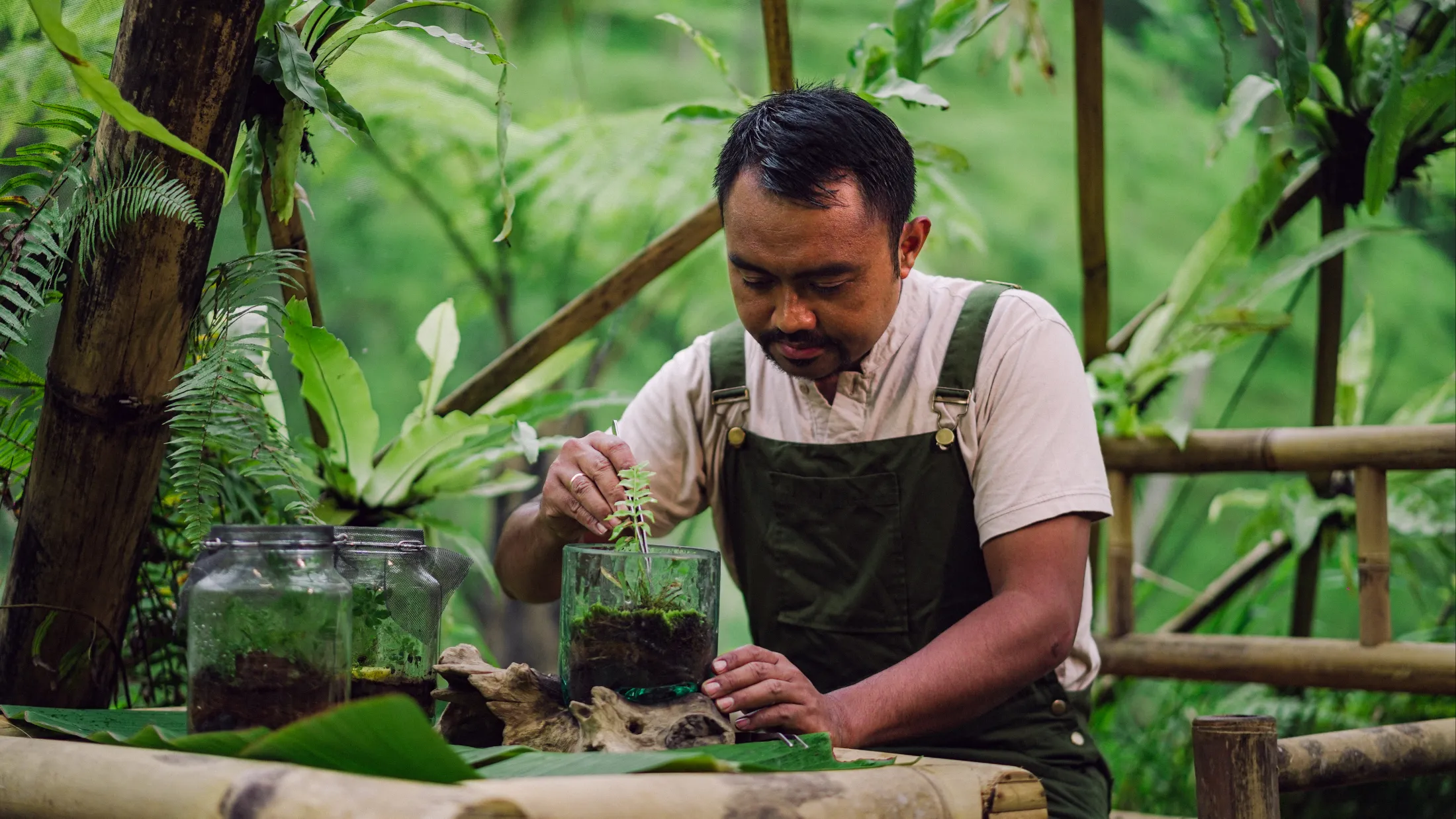
In Petang, in the uplands of Badung about 50 minutes from Ubud, Komang Nana and his colleagues founded a permaculture initiative to reconnect people with nature through sustainable gardening, with a focus on restoring soil health. Living with Nature Experience includes a guided farm tour of herbs, flowers and seasonal crops, flower and mint picking followed by herbal tea making, hands-on gardening and seasonal harvesting, creative eco-art activities and lunch with the local community. Groups are small, two to 10 people, over four to five hours.

Healthy soil, mixed planting and careful growing are the everyday version of good insect habitat. Gardens like this are how the idea spreads beyond a single protected patch.
Night walk etiquette
If you get the chance to see fireflies, in Taro or anywhere else, a few habits make a big difference to them and to your evening:
- No flash, ever. Turn it off before you arrive, not after the first light appears.
- Use red light. A red headlamp setting, or red cellophane over a torch, lets you see your feet without flooding the area.
- Dim your phone. Turn screen brightness right down, and check it as little as possible.
- Stay on the path. Larvae live in the grass and leaf litter at your feet.
- Look, do not catch. No jars, and no cupped hands for photos.
- Skip the repellent spray on site. Apply it before you arrive, away from plants, or wear long sleeves instead.
- Give your eyes time. Night vision takes around 20 minutes to settle. Talk quietly and wait.
- Cover up. Closed shoes, long trousers and a light long-sleeved top keep off mosquitoes and wet grass.
- Pick a dark night. Evenings close to the new moon, especially after rain, tend to be best.
A note on photos
Good firefly photos need a tripod, long exposures and patience, and the best ones are usually many frames combined. If you do not already shoot at night, leave the camera in your bag and just watch.
Putting it together
The three programs sit in different corners of Bali and suit different days. Taro, half an hour from Ubud, ends with dinner and is the most direct way to learn about fireflies. Petang is a half day of gardening in cooler air. Osila is a full day in the east, and it sits close to the route of the Klungkung journey, whose second day also begins in Besan village.
All three run by arrangement, so send your date and group size through Check availability on the program page. If seeing fireflies themselves matters to you, say so, and ask what the season looks like for your dates. The same habitat-first thinking runs through Ketut Danu’s coral restoration in north-west Bali, if you want to see it at work underwater.