On a handful of beaches in Bali, people pour seawater onto the sand on purpose, over and over, through the hottest part of the day. It looks like a chore with no point until you see where it ends: a trough of wet white crystals drying in the sun. This is how Bali sea salt is still made in Amed in the east, in Les on the north coast, and around Pemuteran in the north-west.
It’s old, slow work, and it only happens for part of the year. Here’s how it’s done, why it’s hanging on, and how to see it without getting in the way.
How the salt is made, step by step
Methods vary a little from village to village, but on Bali’s dark volcanic beaches the basic sequence looks like this:
- Prepare the bed. A patch of beach sand is raked flat and smooth.
- Wet it. Seawater is carried up from the shore in two pails on a shoulder pole and sprinkled over the sand, again and again.
- Let the sun work. As the water evaporates, salt clings to the grains of sand. The bed may be raked and wetted several times.
- Collect the salty sand. The crusted top layer is scraped up and packed into a filter, often a wooden or bamboo frame.
- Make brine. More seawater is poured through the sand. What drips out underneath is brine, far saltier than the sea.
- Evaporate. The brine goes into long troughs, traditionally palm trunks split lengthwise and hollowed out, and sits in the sun until it crystallizes. The crystals are scraped out by hand and left to dry.
It takes days to turn a filter full of sand into a basket of salt, and every step depends on the sun.
Why it only happens in the dry season
Rain undoes everything. It washes the salt out of the beds and dilutes the brine in the troughs, so salt-making runs through the dry months, roughly April or May to October. In the wet season, salt farmers go back to fishing, farming or other work. Even in the dry months, one unseasonal downpour can set a farmer back days, because the beds have to be rebuilt and wetted again before the salt returns. If you want to see the whole process, aim for June to September, and for mid-morning to early afternoon, when the work is in full swing.
Why it survives, and why it’s hard
The economics are tough. Carrying seawater up a beach in the midday sun is heavy work, output is small, and factory salt is far cheaper. Many younger people prefer jobs in tourism, and beachfront land that once held salt beds can be worth more as a hotel or villa plot. In several coastal villages, fewer families work the salt than a generation ago.
It survives because the salt is good and more people have started to value it. Cooks describe Amed salt as clean and mild, without the bitter edge of cheap table salt. The crystals are small and bright white and dissolve quickly, which makes them good for finishing a dish. Amed salt has also been registered as a geographical indication, a legal label that ties the name to the place, first in Indonesia and more recently in the European Union. Some of it now reaches shops and restaurants well beyond Bali. Visitors help too, simply by turning up and buying a bag at the source.
Three places to see it
Amed
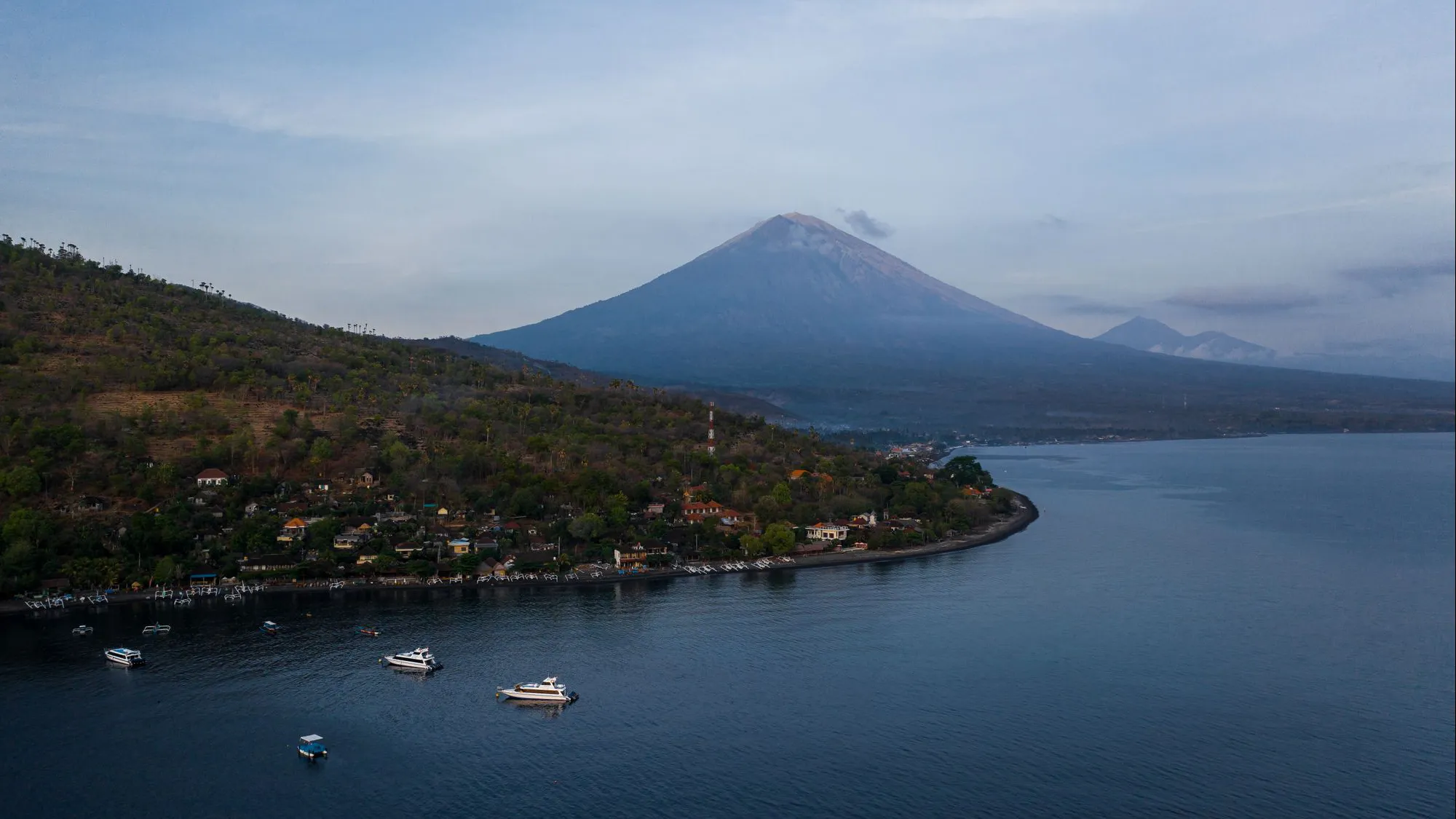
Amed is a string of fishing hamlets under Mount Agung, and its salt farmers still work the beach the old way. The Amed journey starts with the salt-making process on the beach, then Tirta Gangga, the royal water palace, a drive along the coast and sunset from a viewpoint above it. Day two begins with a sunrise boat ride and snorkeling along the Amed coast, followed by breakfast and the quiet Sibetan rice terraces.
Les, in Tejakula
On the north-east coast, the Tejakula journey is built around a host who is a salt farmer and still works the beach the way his grandparents did. Day one covers the salt pans, the lontar palms the village taps for arak, and lunch at a hillside spot he chose himself, then a walk to a waterfall. Day two is a morning snorkel off Les and a meal in a traditional wood-fired kitchen. The lontar palm has a second life as the material for Bali’s palm-leaf books, which our lontar article explains.

Pemuteran
In the north-west, the Pemuteran journey pairs land and sea. Day one takes in Pura Melanting, grape picking in a coastal vineyard and traditional salt-making with a farming family. On day two you head out to the Biorock reef restoration area, snorkel, see the mangroves of Teluk, and eat a lunch prepared by Pak Tut Danu on the beach. For more on the reef, read our story on coral restoration in north-west Bali.
Which to choose? Amed has the most varied two days and suits snorkelers and photographers. Tejakula is the most personal, built around one host and his village, with good snorkeling and food. Pemuteran suits anyone interested in conservation, with the reef work on day two.
Visiting a salt farm: what to bring, how to behave
- A hat, sunscreen and water. There’s no shade on a salt beach.
- Sandals rather than bare feet: dark sand gets painfully hot by late morning.
- Cash in small notes, to buy salt directly from the farmers. Ask the price first, and don’t haggle hard over a few thousand rupiah.
- Ask before you photograph people at work, and stay off the raked beds unless you’re invited to help.
- If you’re offered a turn with the shoulder pole, take it. You’ll understand the price of the salt in about thirty seconds.
- A bag for your salt. It keeps for a long time and makes a light, useful souvenir.
A bag of Bali sea salt is a small thing to carry home, and it lasts. Buy it from the people who make it and it will taste of the beach it came from every time you use it, including in our base genep recipe. If you’d like to see the work up close, the Amed, Tejakula and Pemuteran journeys all include hotel pickup from the south and a guide who can translate your questions for the farmers.