Most Balinese recipes written for visitors hide an hour of work in one line: “add three tablespoons of base genep.” That paste is the seasoning behind much of the island’s everyday and festival food, and nothing on a supermarket shelf tastes quite the same. The good news is that once you know what goes in and why, it’s a straightforward morning’s job, and it keeps.
What base genep actually means
Base is Balinese for spice paste or seasoning, and genep means complete. The name is literal: a paste with everything in it, meant to go into almost anything. You’ll also hear it called base gede, the big paste. Cooks use it on chicken, duck, pork, fish, eggs and vegetables, sometimes raw as a rub, more often fried slowly in oil first.
There is no single recipe. Each household has its own balance, and the same cook will push it hotter for pork and gentler for vegetables. What stays fairly constant is the cast of ingredients.
What goes in, grouped by what it does
A typical base genep uses around fourteen ingredients. Grouped by job, they’re easier to remember:
- The base: shallots and garlic, in generous amounts. They give body, and sweetness once cooked.
- Heat: chilies, usually a mix of large red ones for color and small bird’s-eye ones for bite.
- The four roots: galangal, turmeric, ginger and kencur. Kencur, sometimes sold as aromatic ginger, is small and pale and smells faintly of camphor. It’s the ingredient most visitors have never tasted, and the one that makes the paste taste Balinese.
- Richness: candlenuts, which thicken the paste and round it out.
- Depth: shrimp paste, toasted first so it smells less fierce.
- Dry spices: coriander seed and pepper, toasted and ground.
- Lift: lemongrass, the tender lower part only.
- Balance: palm sugar and salt.
In a Balinese market most of these sit on the same stall, and some stalls sell the paste ready-made for cooks in a hurry.
Why the stone mortar still wins
Balinese kitchens make base genep in a cobek, a wide, shallow stone mortar, with a stone pestle that is rolled and ground as much as pounded. It’s slow. A batch by hand can take half an hour or more, and your wrist will notice.
People still do it for texture and smell. Grinding crushes the fibers and squeezes out the oils, so the paste comes out fragrant and slightly coarse, and it fries without spitting. A blender chops instead, and usually needs liquid to turn, which gives you a wetter paste that takes longer to cook out. It still works; it’s just a different paste.
Order matters too. Hard, dry things go in first so they can be ground to a powder, then the fibrous roots, then the soft, wet ones. Add the shallots too early and you’ll be chasing whole peppercorns around a puddle.
Where the paste ends up
- Lawar: finely chopped meat or vegetables, often young jackfruit or long beans, mixed with grated coconut and plenty of base genep. It’s the dish families make together on the day before Galungan.
- Betutu: chicken or duck rubbed inside and out with the paste, wrapped, and cooked slowly for hours until it falls apart.
- Sate lilit: minced fish or meat mixed with coconut and paste, pressed around lemongrass stalks or flat bamboo sticks and grilled.
- Vegetables: a spoonful fried with water spinach or long beans turns a side dish into the thing everyone reaches for.
Our family-style version, in a small batch
This is a home recipe, not a definitive one, scaled down to fit a kitchen mortar or a small food processor. It makes about a cup of paste, enough to season around a kilo of chicken or vegetables for four to six people.
- 10 shallots (about 120 g), peeled
- 6 garlic cloves
- 4 large red chilies, seeded if you want it mild, plus 2 to 5 bird’s-eye chilies to taste
- 4 cm galangal, 4 cm fresh turmeric, 3 cm ginger and 3 cm kencur, peeled and thinly sliced (gloves help with the turmeric)
- 4 candlenuts
- 1 teaspoon shrimp paste
- 1½ teaspoons coriander seed and ½ teaspoon peppercorns
- 2 lemongrass stalks, tender white part only, thinly sliced
- 1 tablespoon grated palm sugar and 1 teaspoon salt
- 3 tablespoons coconut oil, for cooking
1. Toast. Dry-toast the coriander, peppercorns and candlenuts in a pan until fragrant. Wrap the shrimp paste in foil and toast it for a minute on each side. Open a window.
2. Grind. Grind the coriander, pepper and salt to a powder, then add the candlenuts. Add the roots and grind to a rough paste. Then the lemongrass, chilies, garlic and shallots, in that order. Finish with the shrimp paste and palm sugar.
3. Cook. Heat the oil in a wok over low to medium heat. Add the paste and stir for 10 to 15 minutes, until it darkens, smells sweet rather than raw, and the oil starts to separate at the edges.
Two notes. Candlenuts shouldn’t be eaten raw, so if you use the paste uncooked as a rub, make sure the dish itself is cooked through. For storage, a clean jar of cooked paste under a film of oil keeps for about a week in the fridge; freeze it in an ice-cube tray for longer.
Substitutions outside Indonesia
No kencur? Leave it out and add a little extra galangal. It won’t taste quite the same, and it’s better to know that. Macadamias stand in for candlenuts, and dark brown sugar for palm sugar. For a vegetarian paste, skip the shrimp paste and add a pinch more salt.
Learning it in a village kitchen
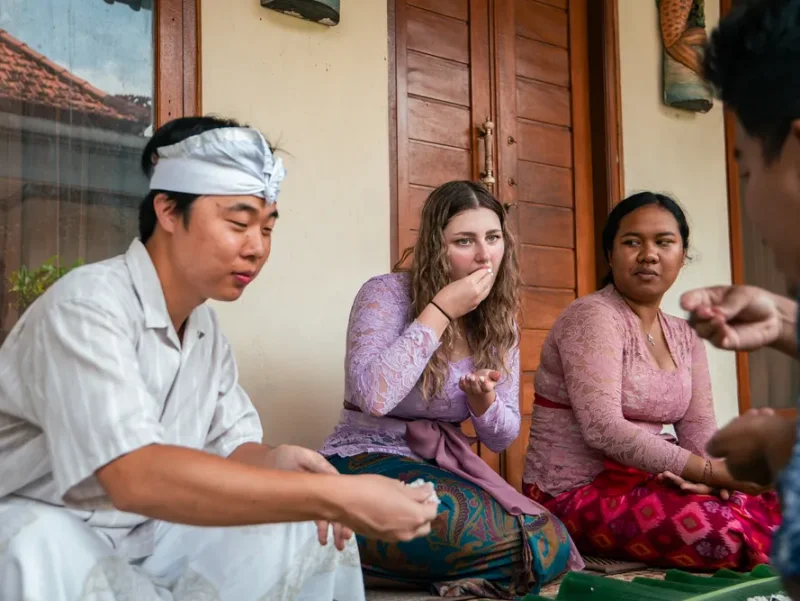
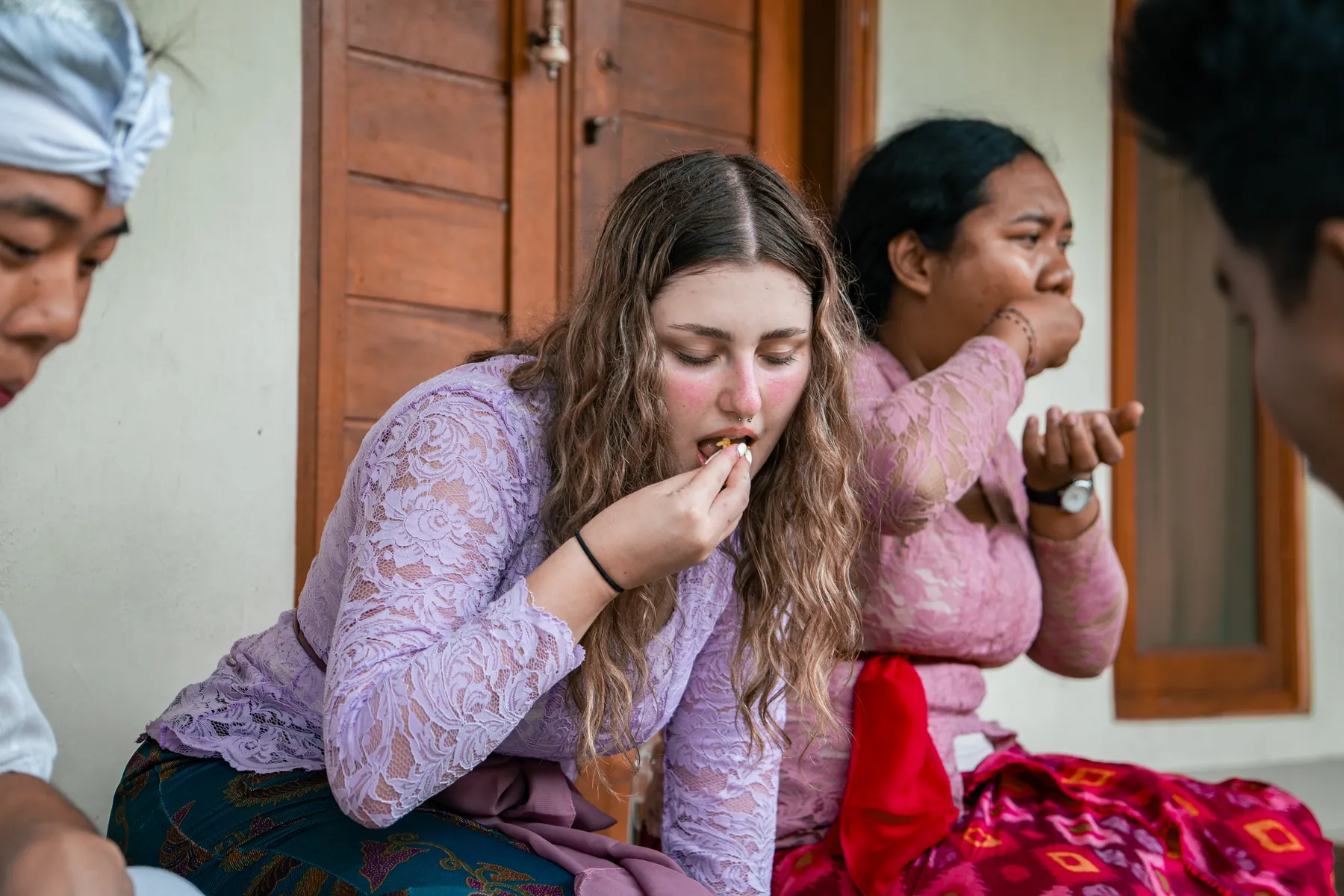
A recipe gets you close. Standing next to someone who has made this paste most weeks of her life gets you the rest: how coarse, how dark, how much chili for this dish. That’s the idea behind A Village Gastronomic Journey in Bedulu, 15 minutes from Ubud. It opens with a spice session where you smell and taste 15 to 20 of the ingredients in Balinese cooking, then you make base gede step by step and eat dishes cooked by local mothers with homemade paste. A village walk adds krupuk, jajan Bali, peanuts and tipat cantok, and you visit two homes for cakes, fruit and traditional drinks. It runs by arrangement for 5 to 20 people, takes three to four hours, and is priced on request.
If you’d rather cook as part of an overnight trip, two of our 2D1N journeys have a kitchen session. The Bangli journey includes a cooking class where you make base genep and sate lilit from scratch after a morning in Penglipuran. The Sidemen journey starts at a village market and moves into a hands-on cooking class, where lunch is whatever you’ve made. Our Sidemen guide covers the rest of those two days.

However you learn it, bring the habit home. Make a batch on a quiet morning, keep it in the fridge, and add a spoonful whenever a dish tastes flat. It’s the nearest thing Balinese cooking has to a shortcut, and it only works because someone did the slow part first.