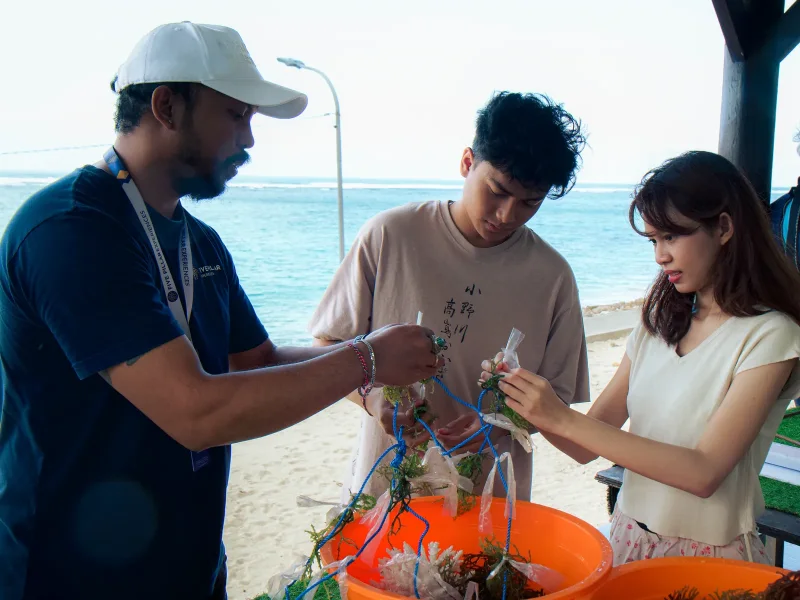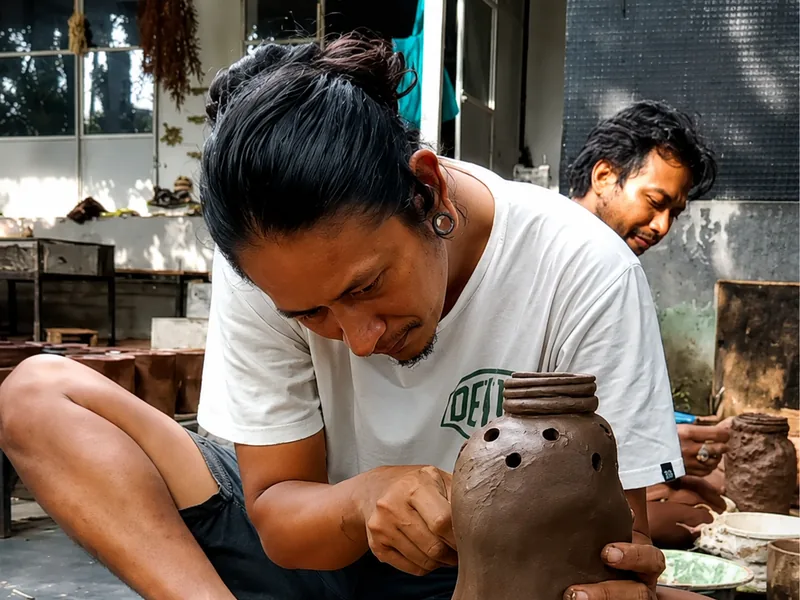
Sanur is the part of Bali’s south coast that never tried to be a party town. A reef offshore keeps the sea calm, a long paved path runs along the beach, and the town faces east, so the day starts with the sun coming up over the water and Nusa Penida on the horizon. People come here to slow down, and many of them come back.
That calm can make Sanur look like there’s not much to do. In fact, it is one of the easiest places on the island to see Balinese life up close without long drives. Here are the things to do in Sanur that are worth your time, from sunrise to the last boat of the day.
Walk or cycle the beach path at sunrise
The beachfront path runs for several kilometers past fishing boats, small shrines and old hotels, from the north end of town down to Mertasari in the south. At dawn it belongs to joggers, families taking a morning swim and fishermen bringing their jukung up the sand. Walk it at sunrise, stop for a coffee, and you will understand why Sanur appeals to so many slow travelers.
Cycling is even better. A guided cycle with a local host takes you off the beach and into the lanes behind it, past family compounds, banjar halls and temples you would never find on your own. It is flat, shaded in parts and easy for almost anyone.

Visit the Le Mayeur Museum
Right on the beach in the north of Sanur stands the house of Adrien-Jean Le Mayeur de Merprès, a Belgian painter who arrived in Bali in the early 1930s. He married Ni Nyoman Pollok, a celebrated Legong dancer who became his favorite model, and the couple lived and worked in this house for more than twenty years. After his death it became a museum.
Inside you’ll find his paintings of Balinese women, gardens and daily life, many featuring Ni Pollok, along with carved doors, old furniture and photographs of the couple. It is small, a little faded and full of atmosphere, and it gives you a sense of how Bali looked to the first wave of foreign artists. Allow about an hour.
Explore the mangroves
Behind Sanur’s southern beaches lies one of the largest mangrove forests in Bali, protected as part of a forest park along Benoa Bay. Mangroves shelter the coast from storms, filter the water and act as a nursery for fish, crabs and birds. Walking among the roots with a local guide, often in rubber boots on muddy paths, is a very different view of Bali’s coast from the beach.
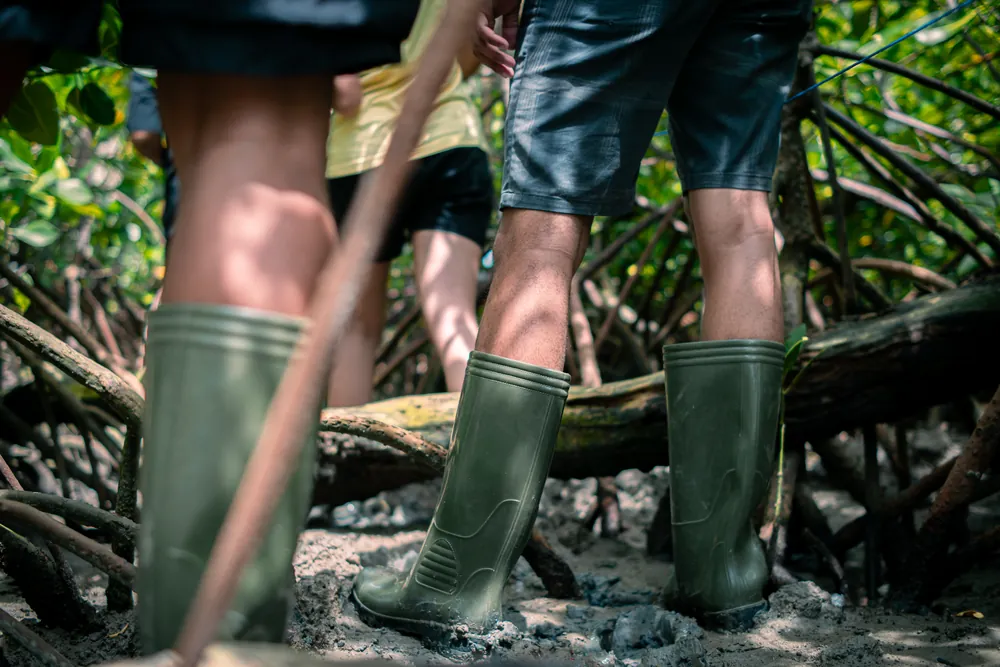
If you’re staying further south, the From Mangrove to Art experience pairs a mangrove walk with an ecoprint workshop, and Turning Ecosystems into Opportunities is a Heroes Journey about the people who protect them.
Make something with your hands
Sanur has a quiet tradition of small workshops. Two worth trying:
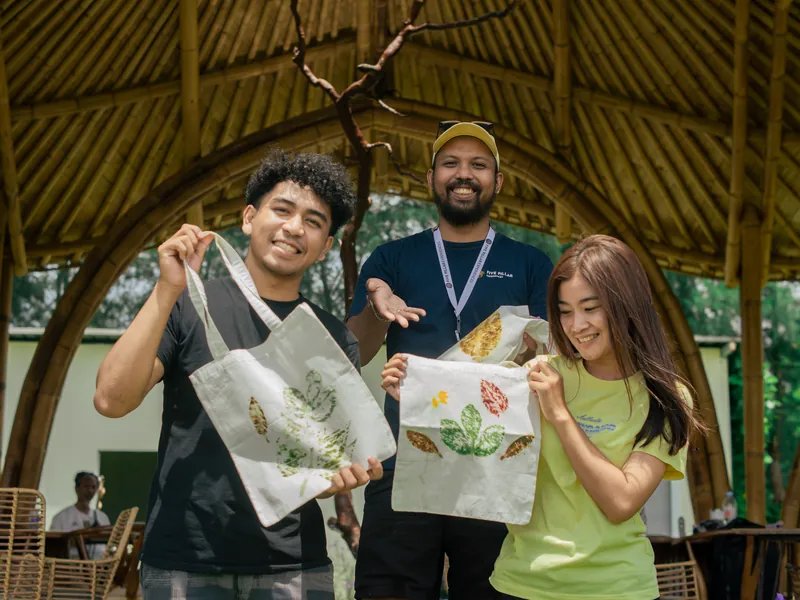
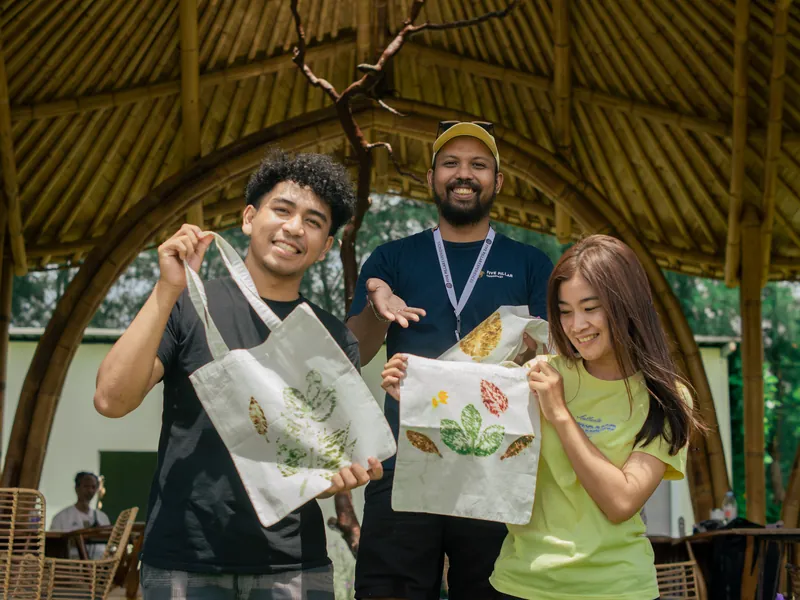
- Ecoprint pounding. Fresh leaves and flowers are laid on cloth and hammered until their natural pigment leaves a perfect print. You take home a tote bag or scarf printed with Bali’s plants.
- Natural incense making. Balinese life is full of incense: on offerings, in temples, at the start of every ceremony. Learning how it is made from natural ingredients gives you a small window into daily ritual.

Join a morning yoga session
With its calm sea and early light, Sanur is one of the easiest places in Bali to start the day with yoga. Many hotels and small studios run morning classes, and a session before breakfast sets the tone for an unhurried day.
Two days in Sanur, put together
All of the above fits into the Sanur 2 Days 1 Night journey, which is designed for travelers who want a gentle pace. Day one is a mangrove walk and lunch in the garden, then an ecoprint workshop with a local artisan and an evening making natural incense. Day two starts with morning yoga, then a guided cycle through the coast and neighborhoods with a local host, lunch, and a visit to the Le Mayeur Museum. The hotel is an optional room you can add when you book, and pickup is from your hotel anywhere in the south or Ubud.
This is one of our gentlest journeys, which makes it a good fit for families with young children and older travelers. Our guide to Bali at an easy pace has more ideas. Staying further south? See our guide to things to do in Nusa Dua with kids.
Seasonal Sanur: the kite season
From July to August, the sky over Sanur fills with enormous traditional kites, some needing a whole banjar team to launch. Kite competitions are held on the fields north of town, and it is one of the most joyful sights in Bali. Our article on kite season in Sanur explains how it works and where to watch.
From Sanur to the islands and the city
Sanur is also the main departure point for fast boats to Nusa Lembongan and Nusa Penida, so it makes a natural base before or after an island trip. The Lembongan journey starts at Sanur harbor, and the Nusa Penida journey meets you on the island. Read our Nusa Penida itinerary before you choose.
And Denpasar, Bali’s capital, is only a short drive inland. The Denpasar journey takes you through its heritage streets, a royal palace and Museum Bali, with a morning melukat on the second day.
Questions people ask
Is Sanur good for families?
Very. The water is calm at high tide, the beach path is flat and car-free, and most activities are close together.
Can you swim in Sanur?
Yes, but the tide matters. At low tide the reef flat is exposed and the water near the shore gets very shallow, so plan swims around high tide.
Is Sanur better than Seminyak or Canggu?
It is different. Sanur is quieter, older and more local; Seminyak and Canggu are livelier, with surf and nightlife. If you want an easy, relaxed base with culture on the doorstep, Sanur wins.
How many days do you need in Sanur?
Two days is enough to see the highlights at an easy pace. Many travelers base themselves here for longer and use it as a starting point for day trips and island hops.