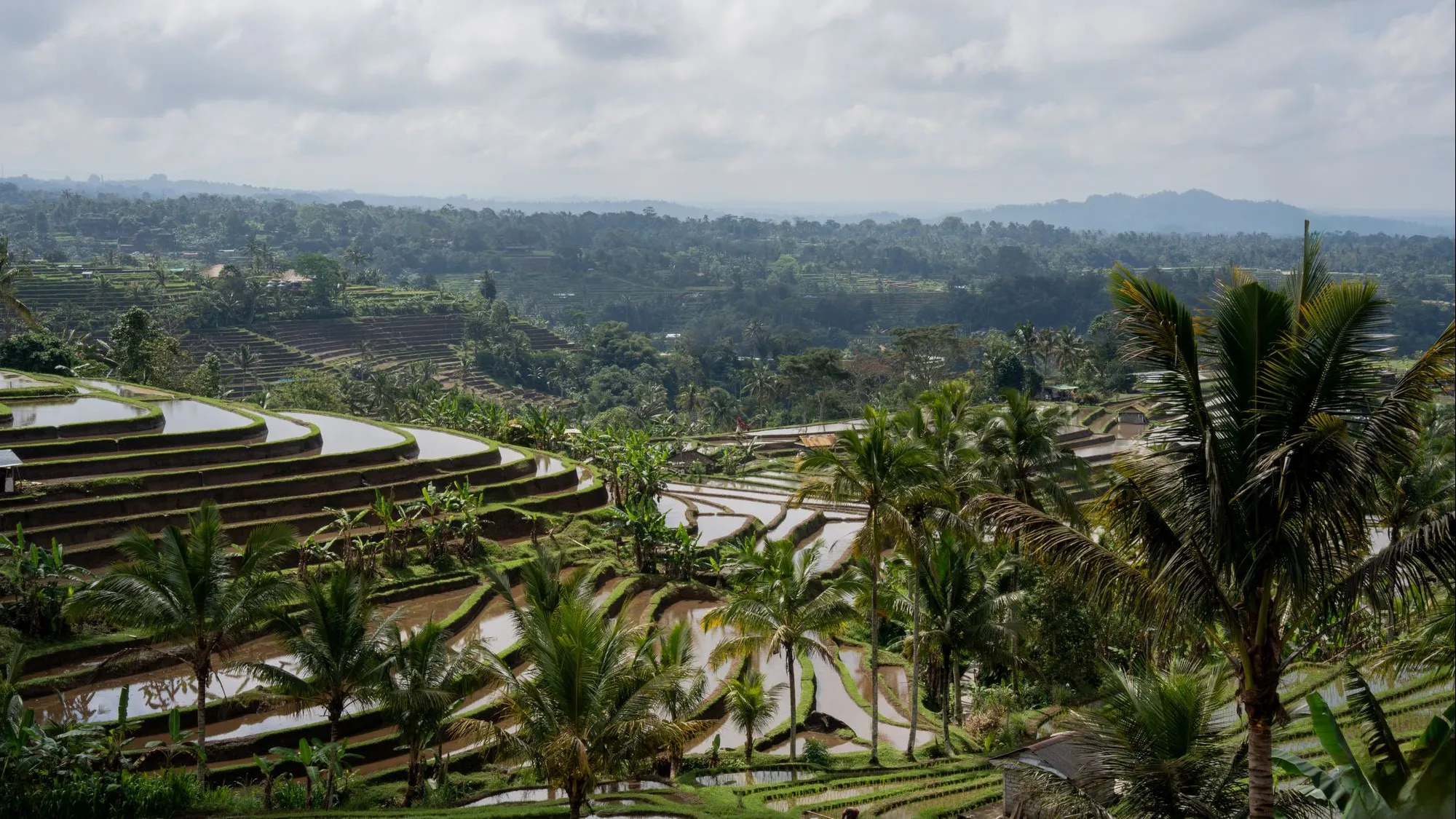
September is the month when you can still count on dry weather in Bali but no longer have to fight for a table, a driver or a hotel room. The European summer holidays are over, the August peak has passed, and many hotels ease their rates. For anyone with flexible dates, it is one of the easiest months of the year to travel well.
It is not perfect, and this guide says where it falls short. But if you are weighing September against July or August, the trade is usually in September’s favor.
The weather: dry, with a few footnotes
September sits in the second half of Bali’s dry season, which runs roughly from April to October. Most days are sunny and warm in the lowlands, humidity is lower than in the wet months, and rain, when it comes, tends to be a passing shower rather than a wet week.
The highlands are a different story. Munduk, Jatiluwih and Kintamani are noticeably cooler, especially at night, and clouds often build over the mountains in the afternoon. Mornings are the clear part of the day up there, which is a strong argument for staying the night instead of driving up for lunch.
At sea, the dry-season swell and strong currents are still around. Crossings to Nusa Penida can be bumpy, and boats occasionally wait out rough conditions. For the full month-by-month picture, see our dry season guide.
Crowds and bookings after August
The difference from August is usually easy to feel. Roads around Ubud and the south move a little more freely, popular sights are less packed in the middle of the day, and it is easier to book a good guide or a particular hotel at shorter notice.
One caveat: Australian school holidays usually begin in late September and run into early October, and plenty of Australian families head to Bali. If your dates fall in the last week of the month, book as you would for high season.
Under the water: mola mola season
For divers, September falls inside the season when mola mola, the ocean sunfish, are most often seen around Nusa Penida, usually from about July to October. They rise from deep, cold water to visit cleaning stations on the reef, and sightings depend on currents and water temperature. Nothing is guaranteed, the water at those sites can be surprisingly cold, and the conditions suit experienced divers going out with a reputable dive center.
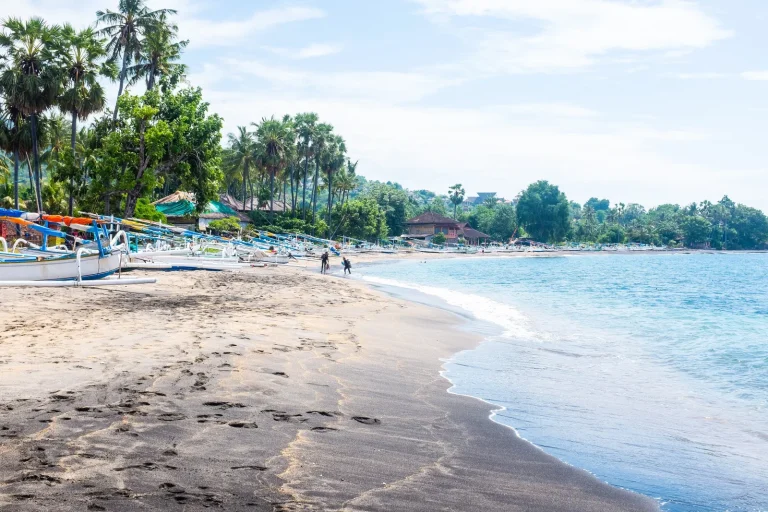
Snorkelers have easier options. The east coast, around Amed, is often calmer in the early morning, and the reef starts close to shore.
What can go wrong
- Odd rain. A stray wet day happens, and the highlands see more showers than the coast. Pack a light rain layer.
- Ceremonies and processions. Temple anniversaries happen all year, and roads close for a while when a procession passes. Build in slack, and enjoy it if you get stuck behind one.
- Rough crossings. Fast boats to the Nusa islands can be delayed or cancelled when the sea is up. Do not plan an island night right before an international flight.
- Cool nights up high. A long-sleeved layer is welcome in Munduk and Jatiluwih after dark.
- Strong sun. Clear skies mean a high UV index. Hat, sunscreen, water.
- The late-September bump. Plan around the Australian school holidays at the end of the month.
What to pack
- A light rain jacket or poncho for highland afternoons.
- A warm layer for nights in Munduk, Jatiluwih or Kintamani.
- Shoes with grip for terrace paths and waterfall trails.
- Reef-friendly sunscreen, a hat and a refillable bottle.
- A sarong and sash for temple visits, including the melukat on the Jatiluwih journey.
- Seasickness tablets if you are prone to it and heading to the Nusa islands.
Pick your trip
Each of these is a two-day, one-night journey with transport, a guide and the meals in its itinerary included; a hotel room can be added when you book. Prices are per person for two guests. If you can only do one, choose by what you want most from the dry weather: clear mornings in the hills (Jatiluwih or Munduk), calm early water (Amed), or big coastal views (Nusa Penida).
For walkers and early risers: Jatiluwih
The Jatiluwih journey spends day one with an owl conservation project in the Tabanan rice fields, a local artist’s studio, a lunch of Lak Lak Tabanan and a melukat purification at Pura Taman Sudamala. Then it stays the night, so you walk the UNESCO-listed terraces with a local guide the next morning before the day-trippers arrive. The rice could be anywhere between freshly planted and golden in September; the farmers’ own schedule decides that.
For island life and big views: Nusa Penida
Nusa Penida starts at Toyapakeh Harbour with the cave temple of Goa Giri Putri, then weaving with artisans in Tanglad, lunch in a Balinese house, the forest and natural pools of Tembeling, and dinner on the island. Day two covers Kelingking, Broken Beach, Angel’s Billabong and Crystal Bay, with light snorkeling if the sea allows. It is not a dive trip, so mola mola hunters should book a separate dive day. Fast-boat tickets from Sanur can be arranged on request.

There is more on the quieter side of the island in our Nusa Penida guide.
For coffee drinkers and cool air: Munduk
Munduk opens with a hands-on Balinese cooking class with a local host, then an afternoon walk through the coffee fields of a local plantation and a specialty coffee cupping, followed by a cool night in the hills. The next morning is a guided trek along plantation trails through the clove groves to Munduk’s waterfalls, with lunch overlooking the valleys.
For the reef and the east: Amed
Amed pairs traditional salt-making on the beach with the royal water garden of Tirta Gangga and a sunset over the coastline. Day two starts with a sunrise boat ride and snorkeling along Amed’s shore, then breakfast and the quiet Sibetan rice terraces.
Booking in September
Because September is quieter, short-notice trips are easier than in August, though not unlimited. Online booking for the two-day journeys needs at least three days’ notice. You can pay straight away by bank transfer or card, or send a request and pay later.
If you have a particular weekend in mind, or want fast-boat tickets arranged for Nusa Penida, book a week or two ahead. And if your trip runs into the last days of the month, move faster still.