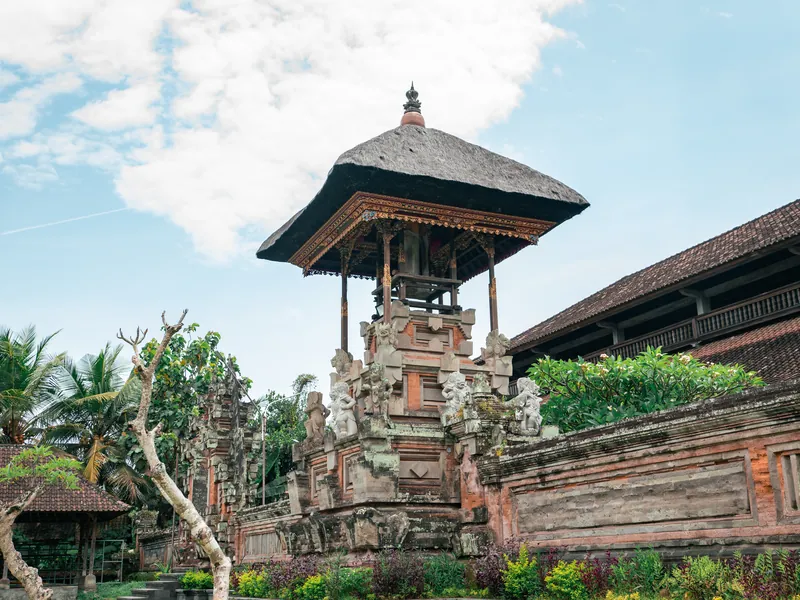
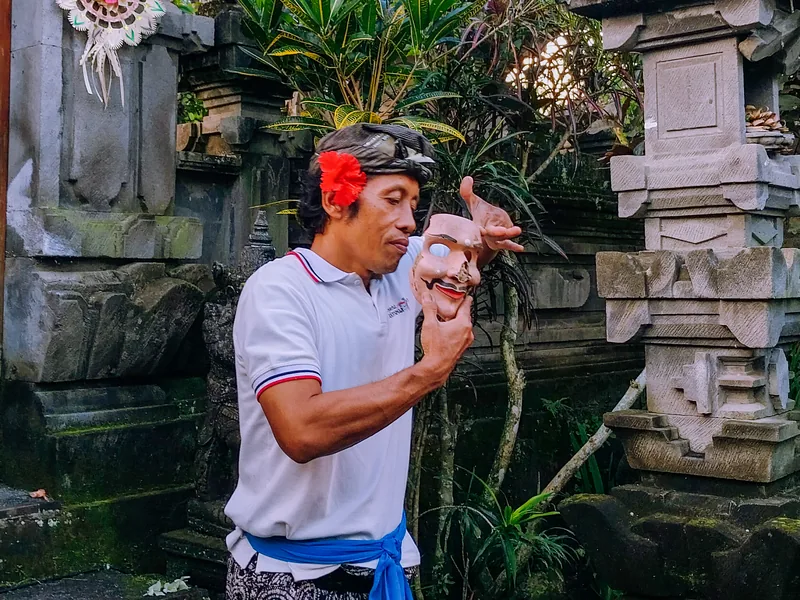
East Bali is the part of the island that most visitors only see through a car window on the way to one famous photo spot. It deserves much more. This is Bali’s oldest cultural heartland: the old royal courts of Klungkung and Karangasem, the Bali Aga village of Tenganan, rice valleys under Mount Agung, and fishing hamlets where salt is still made on the beach by hand.
It is also big, and the drives are long. An East Bali tour works best when you pick one area and stay the night, rather than trying to cover it all in a day. This guide compares the four areas we run journeys in, so you can choose the right one.
East Bali at a glance
“East Bali” usually means the regencies of Klungkung and Karangasem, and the eastern edge of Bangli. Mount Agung, Bali’s highest and most sacred mountain, dominates the whole region. From Ubud, Klungkung is the closest, under an hour away; Sidemen and Candidasa take roughly an hour and a half; Amed, on the far north-east coast, takes closer to three hours. From the south coast, add another hour or so.
- Sidemen for countryside, food and a slow pace.
- Amed for the sea: snorkeling, salt farmers and sunrises.
- Candidasa for Bali Aga culture, a royal palace and an easy snorkel.
- Klungkung for art, royal history and a mountain-to-sea village journey.
Sidemen: the valley that still looks like old Bali
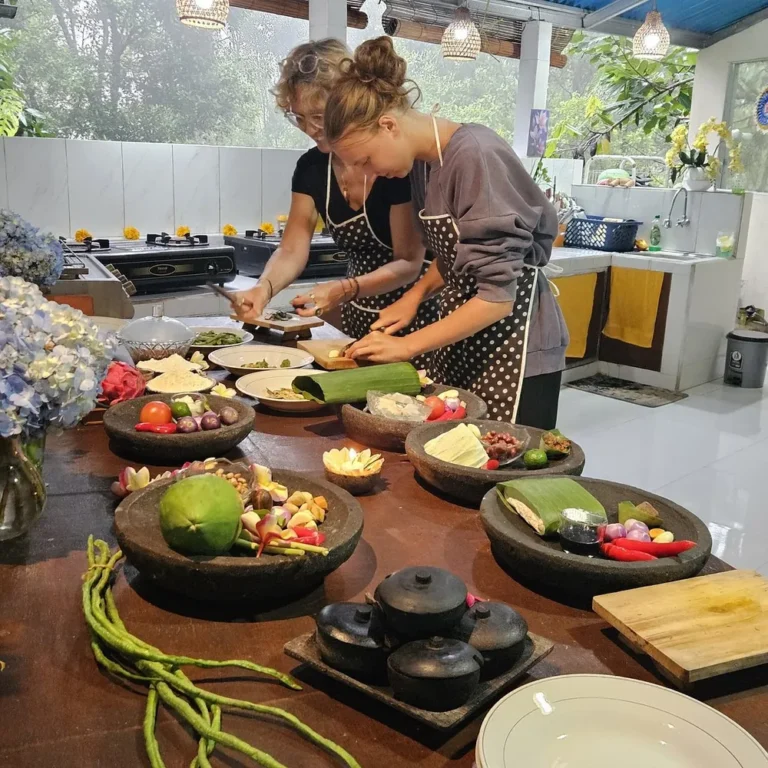
Sidemen is a green valley of terraced rice fields between Klungkung and Mount Agung, with weaving villages, small temples and very little traffic. It is the place to slow down. The Sidemen journey starts at a village market, moves into a hands-on cooking class and an afternoon making canang sari before a temple blessing, then spends the second morning cycling through the valley to Gembleng Waterfall, a local arak producer and a traditional weaving house.

Best for: couples, food lovers and anyone who wants a quiet countryside night. Our two-day Sidemen guide goes into detail.
Amed: salt, reefs and early mornings
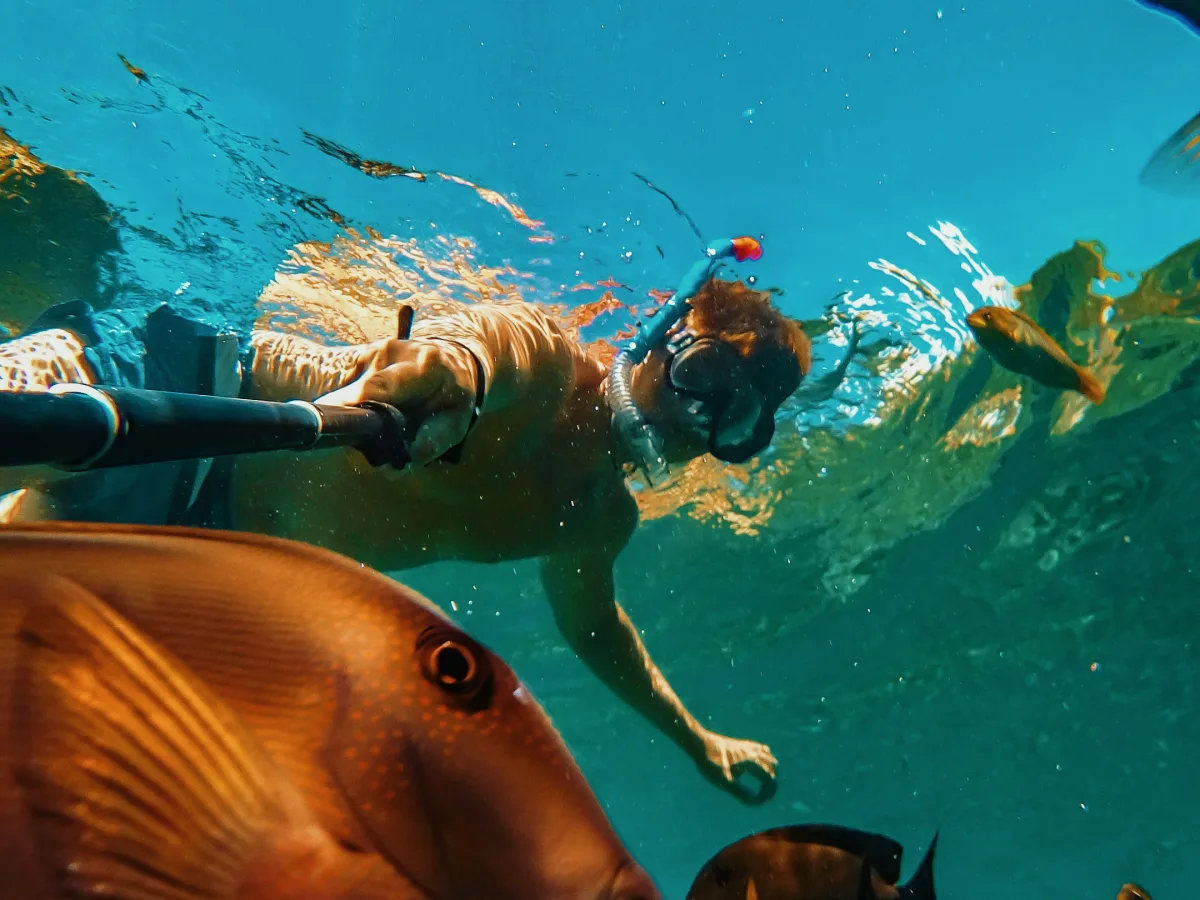
Amed is a string of fishing villages on the north-east coast, with dark volcanic beaches, calm bays and coral close to shore. The Amed journey starts with the traditional salt farmers on the beach, then heads to Tirta Gangga, the royal water palace built by the last king of Karangasem, before lunch and a sunset over the coast. The second day begins with a sunrise boat ride and a snorkel, then finishes in the rice terraces of Sibetan.
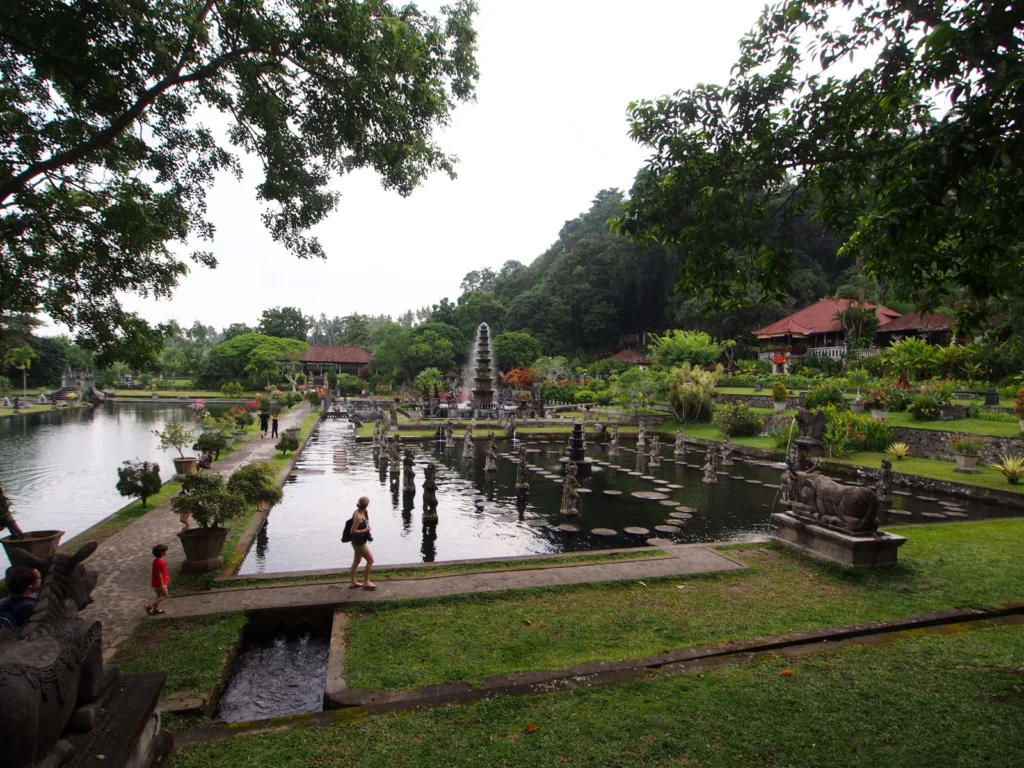
Best for: snorkelers, photographers and early risers. Read things to do in Amed and how Amed’s sea salt is made before you go.
Candidasa: Tenganan, a palace and a gentle snorkel
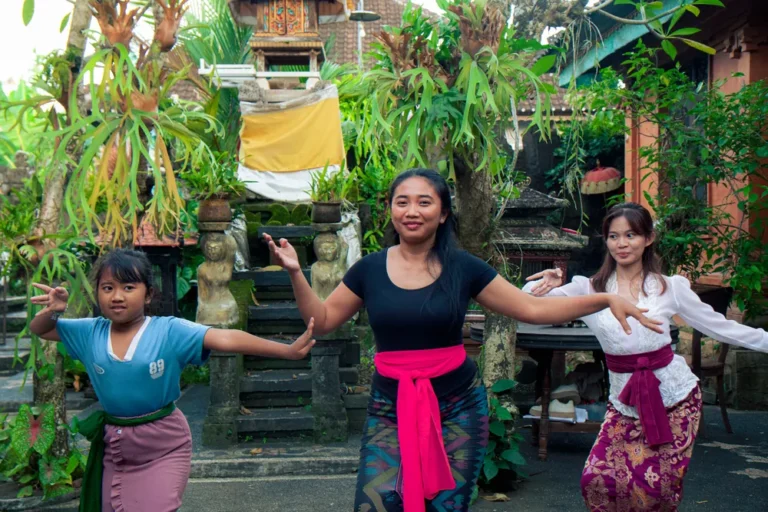
Candidasa sits on the coast between Klungkung and Amed, and its main draw is inland: Tenganan, one of the Bali Aga villages that kept their customs from before the Majapahit era. Families here still weave geringsing, a double-ikat cloth that can take years to finish, and carve palm-leaf manuscripts. The Candidasa journey walks Tenganan with a village guide, visits the courtyards of Puri Agung Karangasem, the royal palace in Amlapura, and spends the next morning snorkeling from a traditional jukung before a home-cooked seafood lunch at a fisherman’s house in Sengkidu.

Best for: culture lovers, textile fans and families who want an easy sea day. See our article on Tenganan and Candidasa.
Klungkung: royal courts, painters and Nyegara Gunung
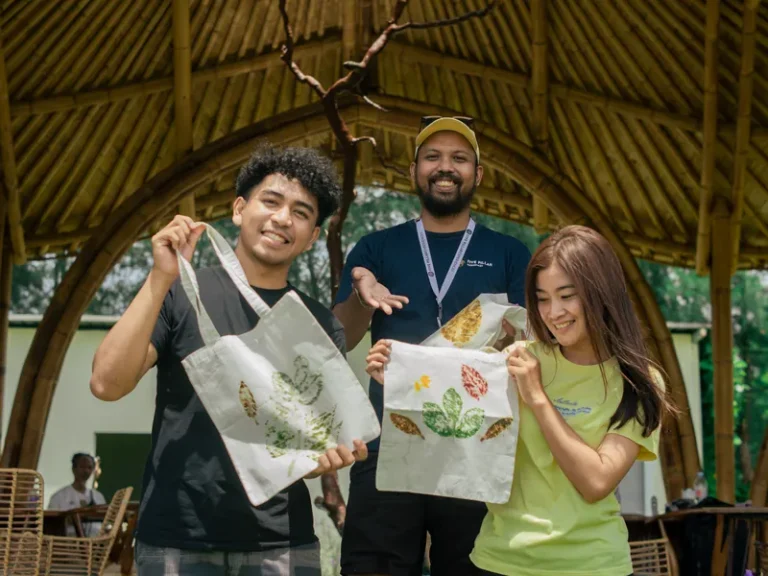
Klungkung was the seat of Bali’s highest-ranking kingdom, and it shows. Kertagosa, the old hall of justice, has ceilings painted in the classical wayang style that was born in nearby Kamasan village, where painters still work today. On the Klungkung journey you read those ceilings, browse the market, and paint your own piece in a Kamasan workshop. Day two follows Nyegara Gunung, the Balinese idea that mountain and sea are one: you meet the elders of Besan village, join a planting ritual on a sacred hill, visit a coconut-sugar maker, and end the day with salt farmers and a fishing boat on the coast.
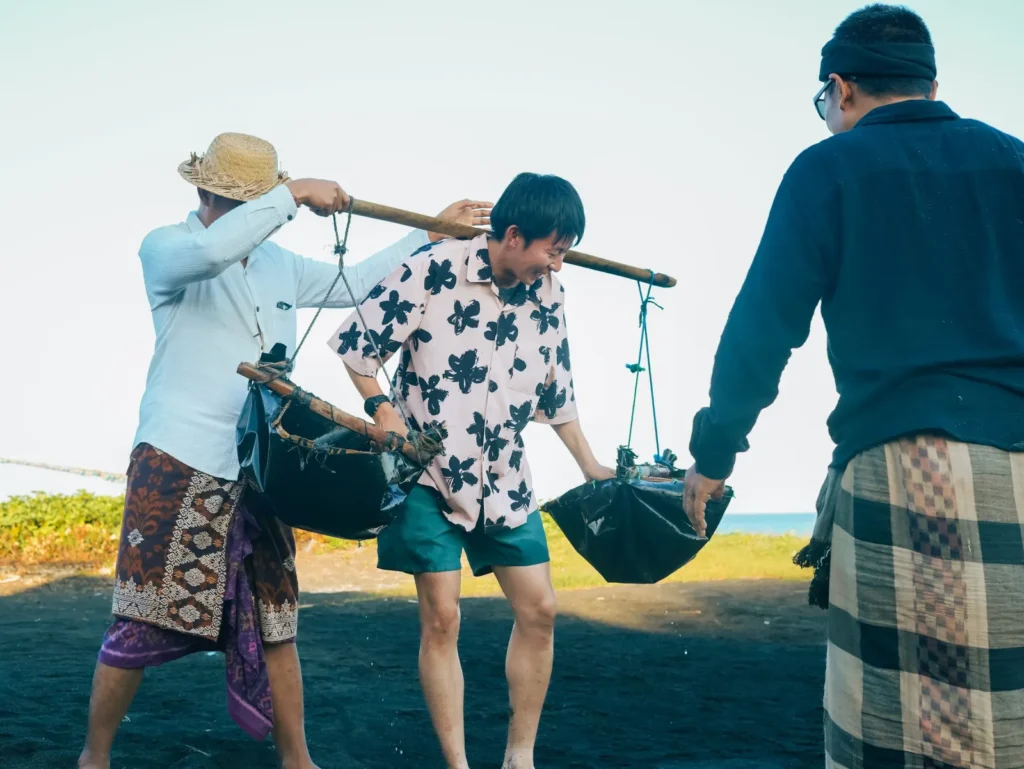
Best for: art lovers, history fans and travelers who want a deeper community experience. Our article on Kertagosa and Kamasan painting explains what you are looking at.
What about Lempuyang and the “Gates of Heaven”?
Pura Lempuyang is a sacred temple complex on the slopes of Mount Lempuyang, and the split gate at its lower temple has become one of Bali’s most photographed spots. Be prepared: in busy months the queue for the photo can last hours, and the famous “reflection” is created with a mirror under the camera. If you go, go for the temple rather than the picture, dress respectfully and arrive early. None of our journeys include it, because we would rather spend that time with the people who live in the region.
How long should you spend in East Bali?
One night per area is the minimum we suggest. The drive takes a big bite out of a day trip, and East Bali’s best moments, such as the first light over Amed’s bay, the valley mist in Sidemen or the morning ritual on a hill in Besan, happen early, before day-trippers arrive. With two or three nights, you can combine areas: Klungkung and Sidemen are close, and Candidasa and Amed join up along the coast road. Our explainer on what a 2 Days 1 Night trip looks like covers how the overnight format works.
Questions people ask
Is East Bali worth visiting?
Yes, especially if you have already seen Ubud and the south. It is quieter, more traditional and closer to the Bali many people imagine. Our guide to Bali off the beaten path covers other quieter regions too.
Can I do an East Bali tour from Ubud?
Yes. All four journeys pick you up from your hotel in Ubud, as well as Sanur, Seminyak, Canggu, Nusa Dua or Denpasar. The hotel night is an optional room you can add when you book.
Which East Bali area is best for families?
Candidasa and Sidemen, which have shorter drives, gentle activities and lots to do with your hands. Amed suits older children who are confident in the water.