A single geringsing cloth can take years to finish. Every thread is dyed with its part of the pattern before it goes anywhere near the loom, in both directions, and the weaver has to bring those two sets of dyed threads together so the design lands exactly where it should. The village that still does this is Tenganan Pegringsingan, a short drive inland from Candidasa on Bali’s east coast.
Most people give Tenganan an hour between beach days. It rewards a little more attention than that, and a little more care. Here is how to read the place, what to look for if you want to buy, and how to be the kind of visitor the village is glad to see.
Who the Bali Aga are
Tenganan is a Bali Aga village. The term refers to communities often described as the original Balinese, whose customs took shape before influence from the Javanese Majapahit kingdom reshaped much of Balinese court life and religion from the fourteenth century on. Trunyan, on the shore of Lake Batur, is another well-known example.
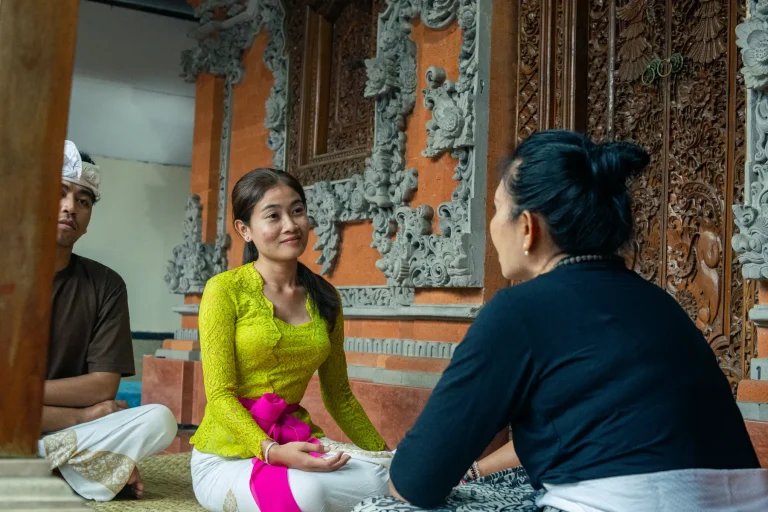
You notice the difference as soon as you walk in. The village is walled, with gates, and laid out as long rows of family compounds facing a wide central space of stone terraces and communal pavilions. Land is held by the village as a community rather than by individual families, and life runs on its own customary law and a ritual calendar of its own.
None of this makes it a museum. People live here, work, go to school, check their phones and sell things from their front rooms. Treat it as you would any neighborhood you are visiting: with curiosity, and without walking into places you have not been invited. The same principle runs through our guide to Penglipuran, another traditional village that sees plenty of visitors.
Geringsing: the double ikat
Ikat means tying and dyeing threads before they are woven. Most ikat patterns one set of threads, either the warp that runs the length of the cloth or the weft that crosses it. Double ikat patterns both, then weaves them so the two designs meet. It is one of the most demanding textile techniques there is, and only a handful of places in the world still practice it. In Indonesia, Tenganan is the one.
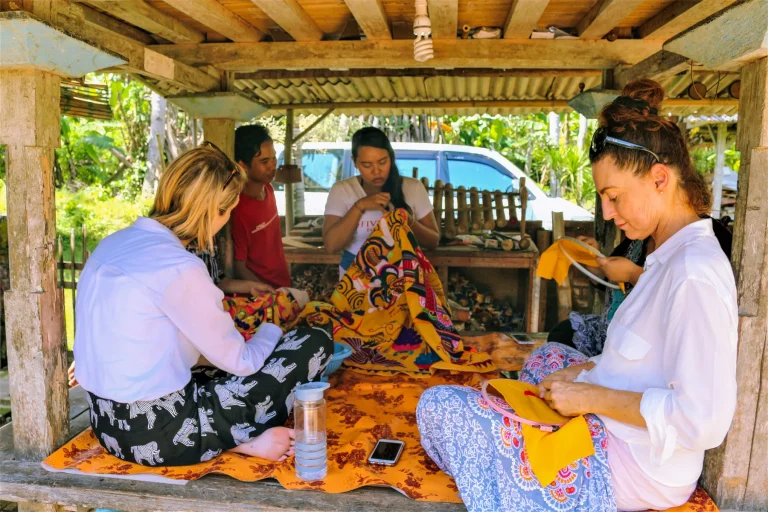
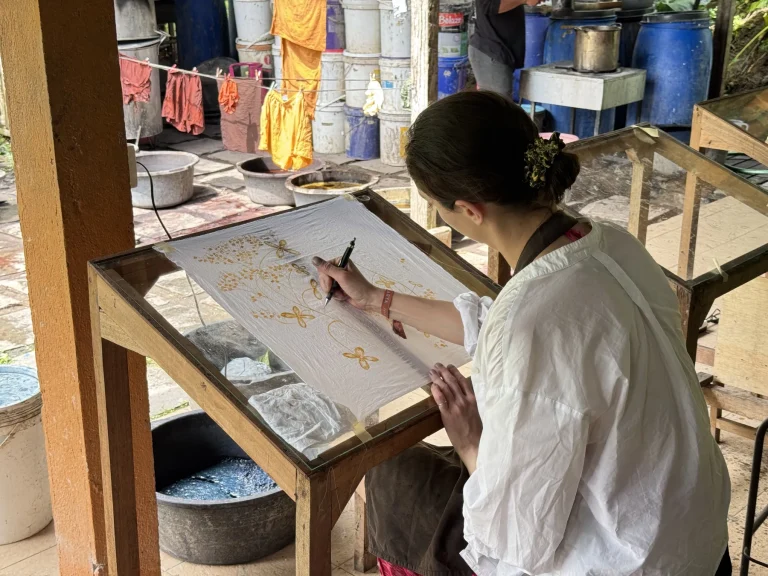
The dyes are natural and the process is slow, with long rounds of dyeing and drying between steps, which is why a single cloth can take years. The name is commonly explained as gering, sickness, and sing, not: a cloth that keeps illness away. Geringsing is worn and used in ceremonies, and it has long been valued well beyond the village walls.
How to buy one without regret
- Buy in the compound where it was made, and ask who wove it. Many homes double as small shops.
- Ask how long the piece took. The answer tells you a lot, and the question shows you know what you are looking at.
- Expect real geringsing to be expensive. Even small pieces cost more than most visitors guess, and large old cloths are priced like art.
- Cheaper textiles on sale may be single ikat, or woven elsewhere. That is fine if the price reflects it, so ask plainly.
- Bargain gently, if at all. Years of patient work is not the place to squeeze out the last few thousand rupiah.
- Take your time. Looking, saying thank you and leaving is completely normal.
The same habits work anywhere on the island, and our guide to ethical shopping in Ubud goes into them in more detail.
Lontar drawings and the pandan fight
Textiles are not the only craft here. Some families make lontar illustrations: scenes cut into strips of prepared palm leaf with a fine knife, then rubbed with a dark pigment so the lines stand out. They are often sold as long panels or small bound books. Look closely at the line work, and ask whether the piece was made in the house. If the craft catches you, our piece on lontar manuscripts explains it in more depth.
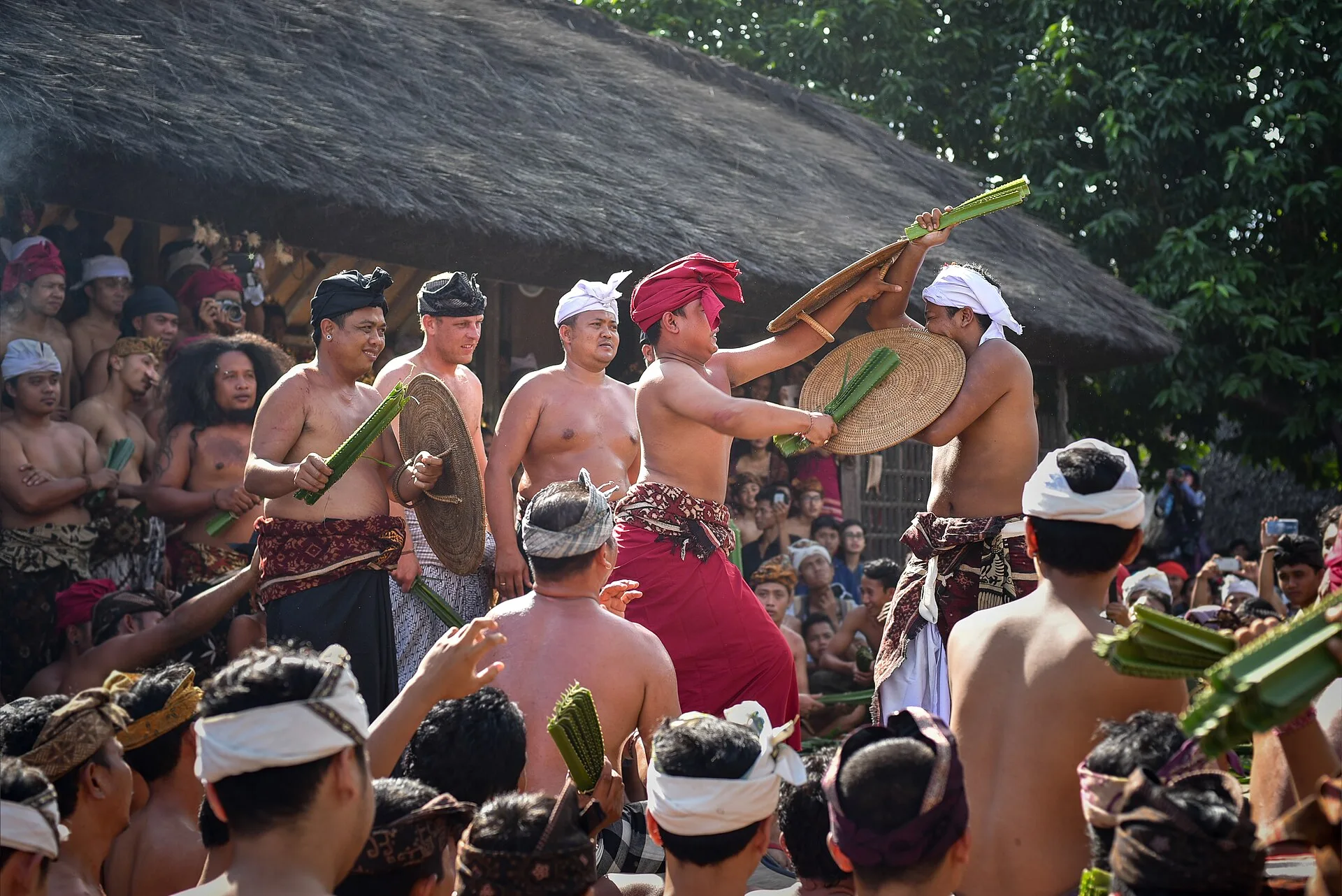
Tenganan’s best-known ritual is mekare-kare, also called perang pandan, the pandan fight. Young men face each other in pairs, armed with bundles of thorny pandan leaves and rattan shields, and the blood drawn by the thorns is an offering. It is part of a larger village festival, usually held around June, and it draws a crowd. The date follows the village’s own calendar, so check closer to your trip, arrive early, and stay out of the fighting area however good the photo would be.
Being a good guest in Tenganan
- Expect to make a donation or pay a small contribution at the entrance.
- Ask before photographing people, especially elders and anyone working at a loom.
- Stay out of temple courtyards and any space that is closed off, even if a gate stands open.
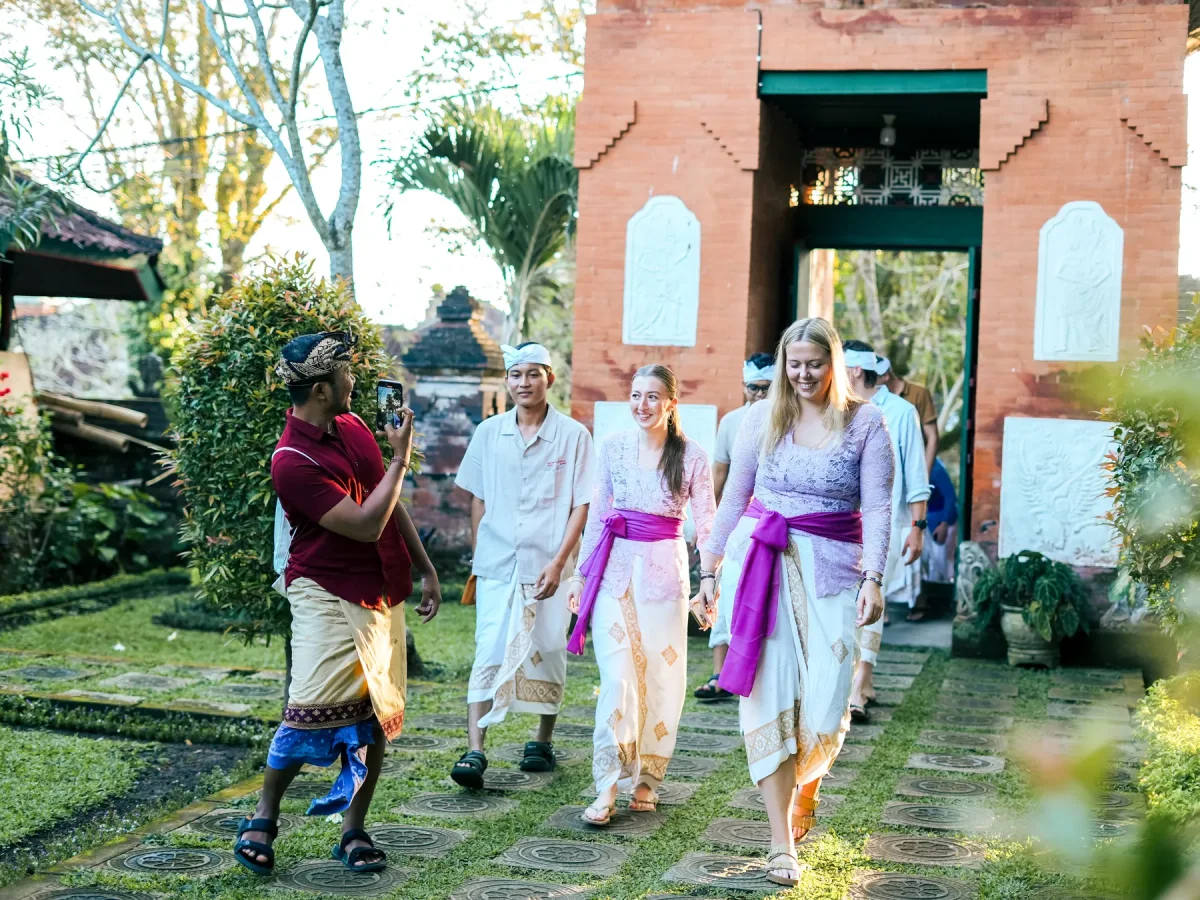
- Dress modestly. Covered shoulders and knees are a safe default.
- Go early. Mornings are quieter, and you are more likely to see work in progress.
- Expect invitations to come in and look at textiles. Looking without buying is normal, and a smile and thank you is enough.
Two days on the east coast
The Candidasa journey starts where this article does. Day one opens with a walk through Tenganan with a local village guide, covering living Bali Aga culture, palm-leaf manuscript carving and the double-ikat cloth. After lunch at a local restaurant with East Bali countryside around you, there is a guided tour of Puri Agung Karangasem, the royal palace, through its courtyards, pavilions and court history. Then you check in and have the evening to yourself.
Day two moves to the water. You board a jukung, the traditional wooden outrigger, for a snorkeling session over the reef with an experienced local guide, then drive to the fishing village of Sengkidu for lunch at a fisherman’s home: freshly caught fish grilled over coconut husks. Transfers on day two are short, so the morning is not spent in a car.
The journey includes private transport for both days, entrance fees for Tenganan and the palace, the snorkeling trip with boat, gear, guide and life jacket, both lunches and drinking water on the road. A hotel room with breakfast can be added when you book. Pickup is from Ubud, Sanur, Seminyak, Canggu, Nusa Dua or Denpasar, with other points on request.
If you want more coast and a different slice of Karangasem history, Amed is the neighboring option: salt farmers working the beach the old way, the royal water garden of Tirta Gangga, a sunset over the coast, then a sunrise boat ride and snorkel followed by the Sibetan rice terraces.

Planning your east coast days
Tenganan is around two hours or more from the southern resort areas, depending on traffic, so it works best as part of a night in the east rather than a rushed return trip. If the village is your main reason for heading this way, give it a morning, not a stop: go early, bring cash, and leave some room in your bag.
Pair Tenganan with the palace and the reef and you have the Candidasa journey more or less as written. Book online at least three days ahead and pay by bank transfer or card, or send a request with your dates and pay later.
Cover photo: Paco Pater / Wikimedia Commons, CC BY-SA 4.0