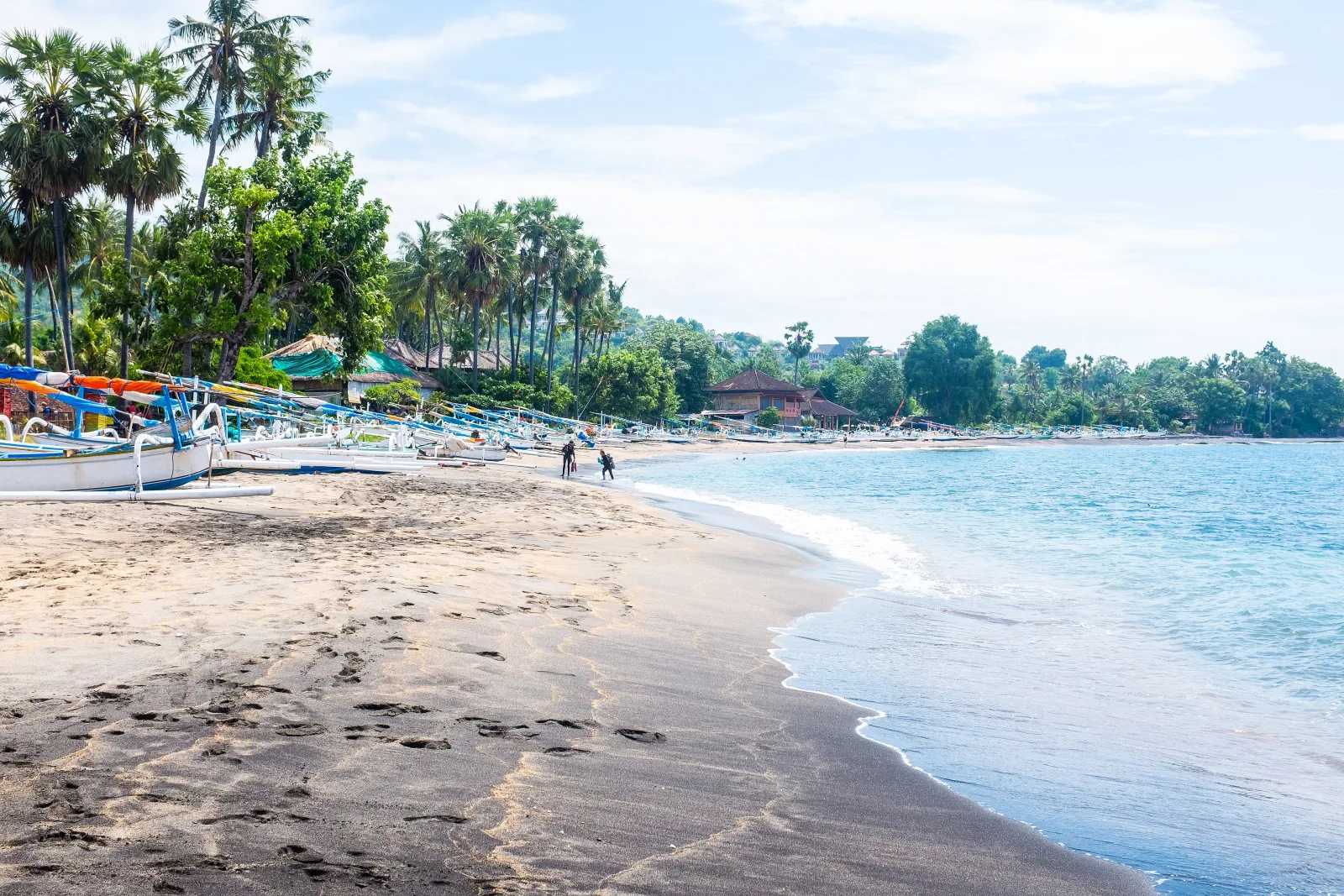
Amed starts its day early. Before it gets light, the fishermen push their jukung off the beach, and by the time the sky turns pink over the sea most of the fleet is a line of small sails on the horizon. Behind you, if the morning is clear, Mount Agung fills half the sky. Many of the best things to do in Amed happen in these first hours, which is the main argument for sleeping here rather than coming on a day trip.
Here’s what deserves your time on this stretch of East Bali, plus the practical side: getting there, when to go and how many nights to stay.
What Amed actually is
Amed isn’t one village but a string of them. The name belongs to the first village you reach from the main road, and it has come to cover a strip of about 14 kilometers along Bali’s north-east coast in Karangasem regency: Amed, Jemeluk, Bunutan, Lipah, Selang, Banyuning and Aas, with smaller hamlets such as Lean in between. One road links them, climbing over headlands and dropping into small bays of dark volcanic sand and pebbles.
The stretch from Amed beach to Jemeluk is the busiest, with most of the dive centers and places to eat. Further east the bays get smaller and the road quieter. Wherever you stay, Mount Agung is the backdrop, its slopes running almost down to the water, and the land is drier and rockier than in the green south.

Things to do in Amed under water
Amed’s reputation rests on its reefs, and the good news for non-divers is that the coral starts close to shore. Three sites cover most of what people come for.
Jemeluk Bay
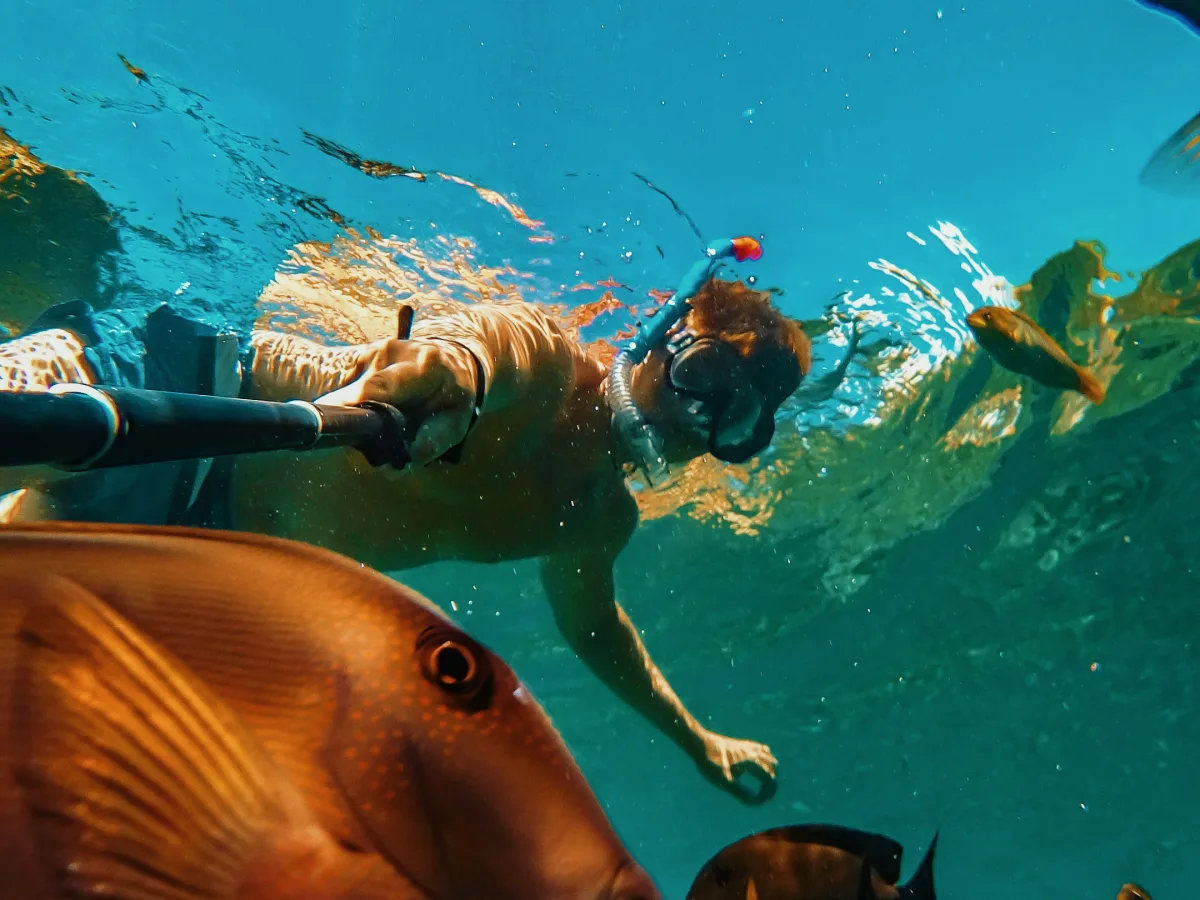
Jemeluk is the classic first snorkel. Near the beach the water is shallow, roughly half a meter to two meters, and further out the reef drops away along a wall where most of the fish gather. Small fishing boats use the bay too, so stay where your guide shows you. This is also where the Amed journey snorkels, straight after its sunrise boat ride.
The Japanese wreck at Banyuning
A few villages east, a small wreck lies just off the beach at Banyuning. It’s called the Japanese wreck, though nobody seems sure of its history, or even that it was Japanese. It sits shallow, from a couple of meters down to about 12, so snorkelers can see most of it from the surface. Go at mid to high tide, because at low tide the top comes very close to the surface, and expect a pebbly entry.
The USAT Liberty at Tulamben
Tulamben, about 20 to 30 minutes’ drive north-west of Amed, has Bali’s best-known wreck. The USAT Liberty was a US Army cargo ship torpedoed by a Japanese submarine in January 1942 and beached here by her crew. The 1963 eruption of Mount Agung is generally said to have pushed the hull back into the sea, where it now lies on a sandy slope a few dozen meters from the pebble beach. The shallowest parts are around five meters down and the deepest about 30, so divers and snorkelers both get a good look.

Salt-making on the beach
Amed’s other famous product also comes out of the sea. Families here still make salt by hand, with seawater, raked sand, sun and long troughs cut from palm trunks, and the name Amed salt is protected as a geographical indication, in Indonesia since 2015 and in the European Union since 2022. Our article on Bali’s salt farmers explains each step.
It’s dry-season work, roughly April or May to October, and it stops when the rains come. Ask before you take photos, keep off the raked beds, and buy a bag directly from the people who made it. The Amed journey begins here, with time on the beach to see the process and hear how families make a living from it.

Jukung boats and a sunrise on the water
The jukung, a slim wooden boat with an outrigger on each side, is still the working boat of this coast. Fishermen head out before dawn and come back mid-morning, and some also take visitors out for an hour at first light. On a clear morning the sun comes up over the Lombok Strait, sometimes with Mount Rinjani on Lombok faint on the horizon, while Agung catches the first light behind you.
It’s the quietest way to see Amed, and the reason the Amed journey’s second day starts early: a sunrise boat ride, the snorkel in Jemeluk Bay, then breakfast.
Tirta Gangga, the water palace
Tirta Gangga lies inland, about seven kilometers north of Amlapura on the road towards Amed. The last king of Karangasem built it in 1946 as a royal water garden, fed by springs on the higher ground above. The 1963 eruption of Mount Agung almost entirely destroyed it, and what you walk through today is the restored garden: ponds, fountains, carved guardian figures and stepping stones across the water. The spring water is still used as holy water in ceremonies.
On the Amed journey, Tirta Gangga follows the salt farmers on day one.

Lempuyang’s Gate of Heaven: an honest note
Pura Lempuyang is one of the Sad Kahyangan Jagad, the six most sacred temples in Bali, spread over the slopes of Mount Lempuyang a short drive from Amed. Its split gate at Pura Penataran Agung, with Agung framed between the two halves, has become one of the most photographed spots on the island, and that has changed the visit.
Expect a shuttle up from the parking area, a sarong and sash, and then a wait for your numbered turn at the gate. Waits of several hours are common unless you arrive very early. The reflection in those photos isn’t water: a staff member holds a mirror under your phone. If the queue isn’t for you, the temple still rewards a visit. Beyond the gate, more than 1,700 steps climb through forest past smaller temples to Pura Lempuyang Luhur at the summit, around 1,175 meters up. Allow two to four hours there and back, and treat it as the pilgrimage route it is. Lempuyang isn’t part of the Amed journey, so plan it as an early start on a day of your own.
Sibetan: rice terraces and snake fruit
In the hills of Bebandem district, about 15 kilometers from Amlapura, Sibetan is snake fruit country. Salak, the fruit with the scaly brown skin, grows here in shady groves mixed with coconut, banana and mango, and the village is counted as Bali’s biggest salak-growing area. The main harvest runs from about January to March, with a smaller one around August and September. There are rice terraces too, with Agung to the north on a clear day.
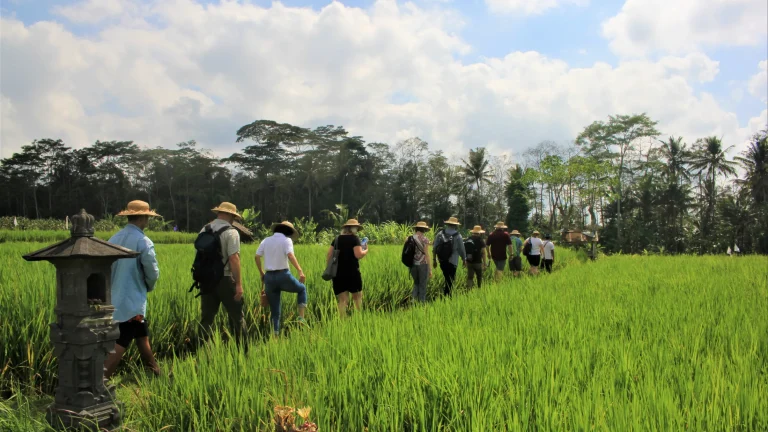
The Amed journey ends here on day two, with a walk through the Sibetan terraces to see how the village farms.
Sunset viewpoints
Amed faces east, so the sun rises over the sea and sets over the land, with Agung’s silhouette in the frame. The headlands are the place to be in the late afternoon. The best known is the viewpoint on the hill above Jemeluk Bay, a short drive up from the beach, and the road between the villages has other pull-outs with similar views. Day one of the Amed journey ends this way, with a drive along the coast and sunset from a viewpoint above it.
Things to do in Amed with kids
Amed works well for families whose children like the water, as long as you plan around the sea rather than against it.
- Swim in the morning. The water is usually calmest early, and the beaches are less crowded.
- Start shallow. The inner part of Jemeluk Bay suits beginners; the drop-off is for confident swimmers.
- Reef shoes: most beaches are dark sand and pebbles, hard on bare feet and hot by late morning.
- Shade: many beaches have little, so plan a midday break indoors.
- Life jackets: ask for a child-size one on boats.
- Land days count too: salt farmers, Tirta Gangga’s stepping stones and a dawn boat ride usually go down well.
Our guide to two-day trips with kids has more ideas for families.
Getting there, and how many nights
From the airport, allow about two and a half to three and a half hours, depending on traffic through Denpasar and Sanur. From Ubud it’s roughly two to two and a half hours, and from Sidemen about an hour and a half. Leave in the morning if you can, because afternoon traffic in the south adds time.
One night is the minimum that makes sense, because so much here happens at dawn. Two or three nights suit divers, or anyone who wants to add Tulamben or Lempuyang without rushing.
When to go
Amed can be visited all year, but the dry season, roughly April to October, brings the clearest water and the calmest seas, and it’s when the salt farmers are working. July, August and late December are the busiest weeks. From November to March conditions depend more on wind and rain: some days are perfectly good, others bring swell and cloudier water. Whatever the month, mornings are usually calmest. Our month-by-month guide to the dry season has more detail.
Being a good guest on the reef and in the temples
- Never stand on, kick or hold on to coral. If you need a rest, float, or find a patch of sand.
- Don’t touch, chase or feed fish or turtles.
- Choose a reef-safe mineral sunscreen and cover up with a rash vest, so less ends up in the water.
- Take your rubbish back and refill a bottle rather than buying new ones (more in our piece on plastic waste in Bali).
- At temples, wear a sarong and sash, cover your shoulders, and step around the small canang sari offerings on the ground.
- Ask before photographing people, especially anyone at work on the beach or in the fields.
Two days in Amed with a local guide
Amed: Heritage, Culture & Coastal Life strings much of this into two days, with pickup from hotels in Ubud, Sanur, Seminyak, Canggu, Nusa Dua or Denpasar. Day one covers the salt-making on the beach, Tirta Gangga, a drive along the coast and sunset from a viewpoint, then check-in for a quiet evening. On day two you check out early for a sunrise boat ride and a snorkel in Jemeluk Bay, have breakfast, and finish among the Sibetan rice terraces.
Private transport, an English- and Indonesian-speaking guide, activity fees and two lunches are included. Dinner and the hotel aren’t: you can add a room with breakfast when you book, or stay somewhere of your own, and your guide is happy to recommend a place for dinner.
A longer East Bali loop
With a few more days, two neighboring journeys make a natural loop through Karangasem.
The Candidasa journey begins with a walk through Tenganan, the Bali Aga village known for its double-ikat cloth, followed by lunch and a guided tour of Puri Agung Karangasem, the royal palace in Amlapura. Day two is a jukung snorkel off the coast and a lunch of fish grilled over coconut husks at a fisherman’s home in Sengkidu. Our guide to Tenganan explains how to visit the village and buy its weaving well.

Sidemen, inland under Agung, is the green counterpart: a village market, a cooking class, canang sari and a temple blessing on day one, then a cycle to Gembleng Waterfall, a stop at an arak producer and a visit to a weaving house on day two. Our Sidemen guide has the details.
Each journey is booked on its own page. If you’d like to link two of them into a longer trip, say so when you send your request. Either way, give Amed at least one dawn.
Questions travelers ask about Amed
Is Amed worth it if I don’t dive?
Yes. Jemeluk Bay and the Banyuning wreck are both good from the surface, and the salt farmers, Tirta Gangga, the sunrise boats and the viewpoints fill the rest of the day.
How many days do you need in Amed?
One night covers the highlights if you’re up for an early start. Divers, and anyone adding Tulamben or Lempuyang, will be happier with two or three.
Can I visit Amed as a day trip from Ubud?
You can, but you’ll spend four to five hours in the car and miss the mornings, which are the best part.
Cover photo: Marklchaves / Wikimedia Commons, CC BY-SA 4.0